Author: Redazione

20 curiosities about Pope Francis

20 curiosities about Pope Francis

Information about Pope Francis, curiosities and his pontificate’s special moments. A Pope who made himself loved immensely and whom we will never forget There are people who leave such a deep imprint in the fabric of history that they make the world a better place…
Ice Saints: The Phenomenon That Brings Winter into Spring

Ice Saints: The Phenomenon That Brings Winter into Spring

Contents1 Saint Mamertus2 Saint Pancras3 Saint Servatius4 Saint Boniface of Tarsus5 Saint Sophia of Rome Who are the Ice Saints, who in the heart of spring return us, for a few days, to the depths of winter? Halfway between peasant tradition and devotion, here’s what…

Our Lady of Divine Love and Her Sanctuary 

Our Lady of Divine Love and Her Sanctuary 

A place of miracles and a destination for pilgrims, the Sanctuary of Our Lady of Divine Love is one of the most cherished day trips for Romans.

In Castel di Leva, the twenty-third zone of the Agro Romano, 12 km south of the heart of the Eternal City, stands the Sanctuary of Our Lady of Divine Love, a site of pilgrimage beloved by Romans for centuries. Consisting of two churches—one dating back to 1745 and the other a modern structure built in 1999—it attracts a significant number of pilgrims each year, especially in the summer months. During this time, on Saturday nights, it is possible to take part in a nocturnal pilgrimage from Rome to the Marian sanctuary on foot.

Since November 2020, by the will of Pope Francis, the Sanctuary has been under the jurisdiction of the diaconia of Saint Mary of Divine Love in Castel di Leva.

But where does the devotion to Our Lady of Divine Love originate, and why does this Sanctuary receive so many visits?

 The Sanctuary of Divine Love in Rome

The Sanctuary of Our Lady of Divine Love is an emblematic place of faith and devotion for the people of Rome. It is intriguing to consider that, despite Rome being the city with the most churches in the world—over 900—many Romans forgo the more famous places of worship in favour of a pilgrimage to this small sanctuary in Castel di Leva, in the countryside south of the Grande Raccordo Anulare.

Understanding the reason for this influx of visitors—already exceeding two million annually in the 1970s—is not easy. It is even more puzzling when one considers that after the construction of the first small church in 1745, no religious order wanted to take responsibility for maintaining it. The location was isolated, in an unhealthy region plagued by bandits. For the first hundred years of its existence, the Sanctuary of Our Lady of Divine Love was entrusted to a hermit caretaker, with priests visiting only during Pentecost to welcome pilgrims.

Pentecost

Read more:

On the occasion of Pentecost, pray Mary that unties the knots
50 days after Easter, she will untie the knots and celebrate Pentecost, which recalls the descent of the Holy Spirit among the disciples and…

The New Sanctuary was built after World War II in fulfilment of a vow made by the citizens of Rome to the Virgin, who had saved the city. After the war, the Oblates of Divine Love and the Congregation of the Daughters of Our Lady of Divine Love took on the responsibility of managing the sanctuary, as well as the numerous activities and services that developed around it. Don Umberto Terenzi, the rector of the Sanctuary, advocated for the fulfilment of the vow and the construction of the New Sanctuary. Finally, in January 1996, Cardinal Vicar Camillo Ruini laid the first stone. Today, the New Sanctuary, designed by Franciscan friar and priest Father Costantino Ruggeri, can accommodate over 1,500 pilgrims.

Adjacent to the Sanctuary of Divine Love, on a nearby hill, stands the Sanctuary of the Gypsies and Blessed Zeffirino. Zeffirino Giménez Malla was a Catholic Romani man who was executed during the Spanish Civil War in 1936 for trying to save a priest. He was beatified in 1997. This site has become a pilgrimage destination for Catholic Romani people, blending symbols of faith with those representing their nomadic way of life—a people who have always lived by divine providence.

5 places of pilgrimage to go to at least once in a lifetime

Read more:

5 places of pilgrimage to go to at least once in a lifetime
God’s action on this Earth leaves a strong mark that attracts us: here are five pilgrimages of faith to be made at least once in a lifetime.

 Pilgrimage to Divine Love

Nocturnal pilgrimages to the Sanctuary of Divine Love are a cherished tradition, one that the faithful had to forgo during the pandemic but have now resumed. Every Saturday, from the first after Easter to the last in October, pilgrims depart at midnight from Piazza di Porta Capena (near the Circus Maximus) and walk through the night to the New Sanctuary of Our Lady of Divine Love, where they attend Holy Mass at 5:00 a.m.

Alternatively, private pilgrimages to the Sanctuary of Divine Love can be arranged by contacting the Sanctuary’s office. The facility offers prayer and meeting rooms, services for pilgrims, and everything needed for a fulfilling spiritual experience.

On 19 March, the feast of Saint Joseph, a special nocturnal pilgrimage was organised to pray for the end of the war in Ukraine. This pilgrimage, promoted by the Diocese of Rome, was also broadcast live on television and streamed on social media. A similar act of devotion took place in 1944 when Pope Pius XII urged the people of Rome to entrust themselves to Our Lady of Divine Love to protect the city from bombings and devastation.

The Most Beautiful Quotes on Peace by Pope Francis 

Read more:

The Most Beautiful Quotes on Peace by Pope Francis 
In this particular and dramatic historical moment, Pope Francis’ quotes on peace represent a beacon of hope for all of Christianity.

 The Image of Our Lady of Divine Love and Her Miracles

Image of Our Lady of Divine Love

Devotion to the Virgin Mary, of which the Sanctuary is the heart, originates from an ancient depiction of the Madonna enthroned with the Child Jesus in her arms. This image was once placed on one of the towers surrounding the old Castle of the Lions.

A unique feature of this image, and perhaps a key to understanding the sanctuary’s growing devotion, is the dove hovering above the Virgin and Child, symbolising the Holy Spirit. This very depiction played a crucial role in the first miracle that sparked the sanctuary’s veneration.

According to legend, in 1740, a pilgrim travelling to Rome became lost in this inhospitable and virtually uninhabited area. Seeking refuge among the ruins of the old castle, he was suddenly attacked by a pack of ferocious stray dogs. In that moment of desperation, he looked up and saw the painted image of the Madonna with the Child and the Holy Spirit above her. He invoked the Virgin’s help, and immediately, the dogs stopped and retreated, as if called away by some unseen force.

From that moment, the site of the miracle began to attract numerous devotees, necessitating the construction of a church to accommodate the faithful. The image of the Madonna with the Holy Spirit dove was moved to the church’s main altar in 1745. On this occasion, Pope Benedict XIV granted plenary indulgence to all pilgrims for one week.

Over the years, more miracles were reported, further strengthening the Virgin’s benevolence towards this small sanctuary. As mentioned earlier, in 1944, the people of Rome, encouraged by the Pope, turned to Our Lady of Divine Love, whose image had been temporarily moved to the Church of Saint Ignatius of Loyola in Campo Marzio to protect it from bombings. They made a solemn vow for the city’s safety. That very evening, the Germans abandoned Rome, and the Allied forces entered the city without further destruction.

Like many sanctuaries, the Sanctuary of Divine Love has received countless ex-votos—offerings of gratitude from the faithful for graces received through the Madonna’s intercession. These are preserved in a dedicated hall, but due to their sheer number, they have also been placed outside in courtyards and along pathways. Alongside the usual plaques, votive tablets, holy cards, letters, and photos, one can also find children’s garments, football jerseys from athletes, and even bicycles belonging to legendary cyclists Felice Gimondi and Francesco Moser.

The dove in Christian iconography

Read more:

The dove in Christian iconography
Even before the birth of Jesus, the dove was considered an animal with a strong symbolic value. For the Greeks was a symbol of love and…

Saint Dominic Savio, the Student of Don Bosco

Saint Dominic Savio, the Student of Don Bosco

Contents1 Don Bosco and Saint Dominic Savio2 The Miraculous Abitino of Saint Dominic Savio3 Prayer to Saint Dominic Savio Patron saint of children and expectant mothers, Saint Dominic Savio was an example of extraordinary virtue and qualities that were unparalleled, not only among his peers.…

The Major Divisions in the Christian Religion

The Major Divisions in the Christian Religion

Contents1 Catholicism2 Orthodoxy3 Protestantism The Christian religion is actually made up of many religious denominations, similar in some aspects, profoundly different in others. Let’s take a look at them. The Christian religion is one of the most widespread monotheistic religions in the world. We all…

How Pope Francis transformed the Church during his pontificate

How Pope Francis transformed the Church during his pontificate

What did Pope Francis do that was important? His pontificate was a revolution of mercy that transformed the Church, taking her from the peripheries to the heart of the world with humility, courage and openness to dialogue.

It is not easy to summarise what made Pope Francis significant. There was something extraordinarily human about Pope Francis, Jorge Mario Bergoglio, the Pope who came “from the end of the world” as he called himself on the day of his election on 13 March 2013. This made him the spiritual leader of over a billion Catholics and a father, brother, and friend to anyone who crossed his path. His pontificate represented a gentle revolution that profoundly transformed the face of the Church, making it more accessible to the least and more responsive to the challenges of our time. Pope Francis has transformed the Catholic Church into a refuge of mercy, justice and hope. Now that he is no longer among us, the whole world stops to remember the man who forever changed the face of the Church.

In recent years, he has faced immense challenges: the pandemic, the escalation of global conflicts, and the climate crisis. His voice was raised with particular force against the violence in the Holy Land, denouncing the spiral of hatred and revenge that has bloodied Gaza and Israel, and tirelessly invoking dialogue as the only way to peace.
His humility, genuine smile, and ability to speak to people’s hearts with profound but straightforward words made Francis a beloved Pope far beyond the borders of the Catholic Church. He taught that the true revolution is that of tenderness, that true strength lies in service, and that true greatness lies in humility.
His pontificate has left us a Church that is more open, more synodal, more attentive to the signs of the times. A Church that is not afraid to get its hands dirty to stand beside the least, that is not afraid to face its own contradictions to be more faithful to the Gospel. Francis taught us that faith is not a refuge for frightened people, but a courageous journey of hope and love.

The Most Beautiful Quotes on Peace by Pope Francis

Read more:

The Most Beautiful Quotes on Peace by Pope Francis
In this particular and dramatic historical moment, Pope Francis’ quotes on peace represent a beacon of hope for all of Christianity.

The Pope of the suburbs

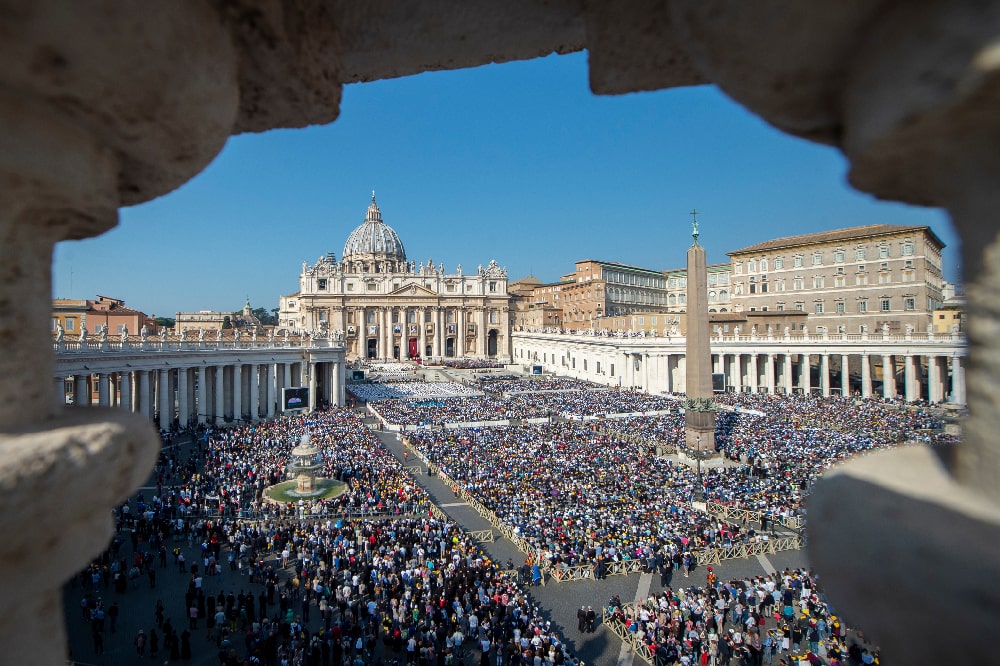
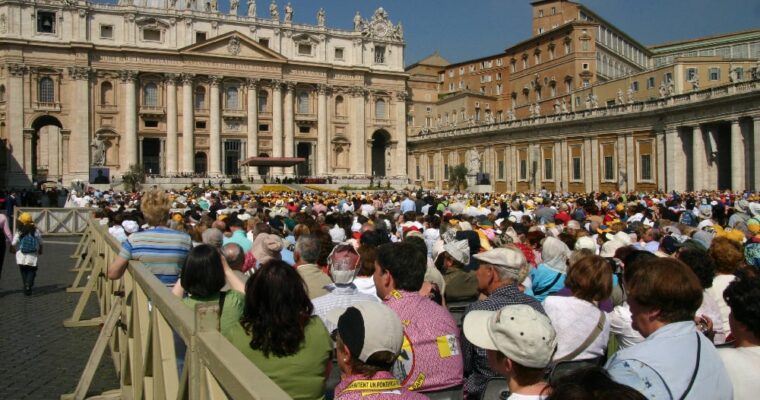
Francis was the Pope of the peripheries, not only geographical but also existential. His voice, always firm yet compassionate, has resounded in the world’s most forgotten places. Who will ever forget his solitary figure, in a deserted and rainy St. Peter’s Square, during the pandemic? That image has become the symbol of a Church that does not abandon its children in the moment of pain, but walks with them through the storms of life. Pope Francis was a man of the people. From the moment he first stepped out of St. Peter’s Lodge asking the faithful to pray with him, it was clear that his pontificate would be different. “Now let us begin this journey: Bishop and people, Bishop and people” were his words, addressed to the more than 180 thousand people who crowded St. Peter’s Square. Immediately afterwards, he rejected the pomp of papal power, preferring to live in the simple Casa Santa Marta rather than in the sumptuous apostolic apartments. This symbolic gesture was only the beginning of a journey that would bring the Church closer to the poor, the marginalised and those who had lost hope.

Reforms and Transparency: Francis’ New Church

His reform of the Roman Curia, culminating in the Apostolic Constitution “Praedicate Evangelium” (promulgated on 19 March 2022), was not only an organisational change but also a real revolution. Francis wanted a Church that was not a “customs house”, but a “field hospital”, as he liked to repeat, where to heal the wounds of suffering humanity. Francis has been able to transform the Vatican administration, making it more streamlined and oriented to the evangelising mission. But it is not just about bureaucracy: this reform was an act of justice and transparency, an attempt to restore credibility to a Church often stained by financial scandals and abuses of power.
The beating heart of this reform is evangelisation. Francis wanted the Curia to no longer be seen as a Vatican “ivory tower”, but as a living instrument to bring the Gospel to the contemporary world. A strong sign of this change is the creation of the new Dicastery for Evangelisation, placed directly under the guidance of the Pope, a choice that underlines how the spread of the evangelical message is the Church’s absolute priority.
The reform also introduces a new style of governance based on synodality, that is, on walking together. For the first time in history, lay people can assume leadership roles in Vatican dicasteries. This change reflects the vision of a Church that values all its members, not just the clergy.

The Vatican financial reform he promulgated also represented a historic turning point for the Holy See’s transparency. At the heart of this transformation was the reform of the IOR, the Vatican Bank, which had been at the centre of scandals and controversies for decades.
Francis introduced a rigorous system of controls and procedures, aligning Vatican financial practices with international standards. It created new oversight bodies, such as the Secretariat for the Economy, and implemented strict procurement and fund management rules. A crucial aspect was the adoption of anti-money laundering regulations and collaboration with international bodies to ensure the traceability of transactions. This technical and cultural reform marked the transition from opaque and self-referential management to a culture of responsibility and transparency, where every euro spent must be justified and documented.

The fight against abuse

Perhaps one of the most difficult chapters of Pope Francis’ pontificate was the fight against sexual abuse in the clergy. The Pope did not limit himself to condemning, but acted with determination, introducing strict norms and calling all the clergy to a painful but necessary examination of conscience. His authenticity in acknowledging past mistakes has paved the way for an ongoing healing process. Francis instituted rigorous norms and issued the Vos estis lux mundi (in English “You are the light of the world”), an Apostolic Letter in the form of a Motu Proprio written on 7 May 2019, which represents a decisive turning point in the fight against abuse. Before this law, there was some ambiguity in the procedures to be followed, especially when the facts involved figures of high ecclesiastical rank, such as bishops. In addition, victims often encountered significant obstacles in reporting abuse. Vos estis lux mundi establishes clear and mandatory procedures for reporting abuses. Each diocese must have easily accessible reporting systems, and all members of the clergy and religious are required to report abuses of which they become aware. Secondly, the document extends liability not only to sexual abuse of minors, but also to those of vulnerable adults and the abuse of authority to obtain sexual acts. It also includes protection for whistleblowers from possible retaliation.

Custodian of the common home and prophet of universal brotherhood

His encyclicals charted the course for a Church of the third millennium. With Laudato Si ‘ (2015), Pope Francis spoke to Catholics and the whole world. His call to care for the planet as a “common home” resounded loud and clear in an era marked by the climate crisis. It was not just a spiritual message, but a political and social wake-up call that prompted millions to reflect on their role in protecting the environment.

Amoris Laetitia (The Joy of Love) represents one of the most significant and discussed documents of Francis’ pontificate. Published on 8 April 2016, this apostolic exhortation marked a turning point in the way the Church deals with the complex family realities of the contemporary world. The document stems from the reflections that emerged during two Synods on the family (2014 and 2015), where bishops from all over the world discussed the challenges that families face today. At the heart of Amoris Laetitia is a vision of the family as a dynamic and evolving reality. The Pope recognises that family situations are not always ideal and that the Church must be able to accompany people on their concrete paths of life. Particularly innovative is the approach towards the so-called “irregular situations”, such as divorced and remarried couples, within which elements of grace and authentic love can be present. The Pope invites the Church to look beyond the categories of “regular” and “irregular” to recognise the good present in every family situation.

With the encyclical Fratelli Tutti (2020), Pope Francis offered a prophetic vision of universal fraternity in a world torn apart by conflicts and divisions. The document was signed in Assisi, on the tomb of St. Francis, a highly symbolic place, because the teachings of the Saint of Assisi on universal fraternity inspire the encyclical. The world was going through the COVID-19 pandemic, a period that highlighted global interconnections and deep social inequalities like never before. Pope Francis elaborated much of the document right during the lockdown, turning that moment of global isolation into an opportunity to reflect on the deep meaning of human fraternity. The title Fratelli Tutti takes up an expression of Saint Francis of Assisi, who used it to address all brothers and sisters, proposing a form of life that refers to the dictates of the Gospel. The encyclical fits into a particular historical moment, also in other aspects: the growing international tensions, the emergence of nationalisms, the refugee crisis, and the growing economic inequalities have made its message on universal brotherhood and social friendship particularly relevant and urgent.

Francis dreamed of a world without walls, where everyone could live as brothers. His cry of pain for wars, from Syria to Ukraine, from the Holy Land to Sudan, has always united denunciation with hope, firmness with mercy. It has also been able to revolutionise interreligious dialogue. Abu Dhabi’s historic meeting with the Grand Imam of Al-Azhar and the trip to Iraq showed that dialogue is not a utopia, but a necessity for our time.
The Document on Human Fraternity for World Peace and Common Coexistence, signed on 4 February 2019 by Pope Francis and the Grand Imam of Al-Azhar, Ahmad Al-Tayyib, is a prophetic and revolutionary statement that outlines a vision of hope for humanity. It prophesies a world founded on dialogue, peace, and justice, inviting everyone —believers and non-believers —to collaborate in building a society based on human dignity, equality, and universal brotherhood. The document denounces the divisions, wars and injustices that afflict the world, pointing to brotherhood as the only antidote to hatred and extremism, and prophesies a future in which the culture of dialogue becomes the path to prevent conflict, mutual respect replaces discrimination and collaboration between peoples becomes the method to face global challenges. In particular, it strongly condemns all forms of terrorism and violence perpetrated in the name of religion, affirming that God does not need to be defended through innocent blood. The document says this: “There is no alternative: either we will build the future together or there will be no future. Religions, in particular, cannot renounce the urgent task of building bridges between peoples and cultures. The time has come for religions to engage more actively, with courage and audacity, without pretence, to help the human family develop the capacity for reconciliation, a vision of hope, and the concrete itineraries of peace.”

The 5-Finger Prayer by Pope Francis

Read more:

The 5-Finger Prayer by Pope Francis
The 5-Finger Prayer is an effective method suggested by Pope Francis to ensure that no one is forgotten in our prayers.

A Pope on a Journey: Francis, a Pilgrim of Peace

For Pope Francis, trips were not simple diplomatic visits, but proper pilgrimages of peace in places wounded by history. Each visit left a tangible legacy: in Iraq, it rekindled the hope of persecuted Christian communities, in Myanmar and Bangladesh, it gave voice to the voiceless, and between Cuba and the United States, it helped to dissolve decades of hostility. Its ability to go to the “peripheries” of the world, not only geographical, but also existential, has redefined the role of the papacy in the 21st century.
The trip to Iraq in March 2021 represented an unprecedented historical moment: for the first time, a Pontiff visited the land of Abraham, the cradle of ancient civilisations and the scene of modern conflicts. In a country devastated by wars and sectarian violence, Francis brought a message of reconciliation and brotherhood. The meeting with Grand Ayatollah Al-Sistani in Najaf and interfaith prayer in the ruins of Ur demonstrated how dialogue between different faiths is not only possible but necessary to build peace.
In 2017, his trip to Myanmar and Bangladesh brought global attention to the tragedy of the Rohingya, a persecuted Muslim minority. In Myanmar, while maintaining a delicate diplomacy, Francis defended the rights of minorities. In Bangladesh, the moving encounter with Rohingya refugees showed the world the human face of this crisis, with the Pope asking forgiveness for global indifference to their suffering.
The visit to Cuba and the United States in 2015 highlighted the Church’s role as a bridge-builder between divided peoples. Francis played a key role in thawing relations between the two countries, facilitating behind-the-scenes diplomatic dialogue. In Cuba, he met Fidel Castro, while in the United States, he became the first Pope to speak to the US Congress, addressing crucial issues such as immigration and climate change.

A shepherd close to the weak

Pope Francis’ heart beats for the poor and migrants. In 2013, when he was just installed on the Papal Throne, he visited Lampedusa to denounce the tragedies of forced migration and transformed the Church into a tireless voice against the policies of closure and indifference. His commitment to migrants will remain one of the hallmarks of his pontificate. His voice has risen tirelessly against what he has called “the globalisation of indifference.” 
Pope Francis created the Dicastery for Promoting Integral Human Development to coordinate the Church’s social action, making the Gospel message of charity tangible. The Dicastery is a body of the Roman Curia established on 17 August 2016 with the Apostolic Letter Humanam Progressionem, dedicated to promoting integral human development in light of the Gospel and the Church’s social doctrine. It officially began its activities on 1 January 2017, incorporating the competences of four pre-existing Pontifical Councils: Justice and Peace, Cor Unum, Pastoral Care for Migrants and Itinerant People, and Pastoral Care for Health Workers.
The Dicastery deals with fundamental issues such as justice, peace and human rightshealth and dignity of the person; care for creation as a “common home”migration, humanitarian emergencies and support for the most vulnerable, such as prisoners, the unemployed, victims of armed conflicts, natural disasters or human trafficking.

The Most Beautiful Quotes on Peace by Pope Francis 

The Most Beautiful Quotes on Peace by Pope Francis 

Contents1 Quotes on Peace by Pope Francis2 The Words of Pope Francis on the War in Ukraine3 Prayer of Pope Francis for Peace In this particular and dramatic historical moment, Pope Francis’ quotes on peace represent a beacon of hope for all of Christianity. Never…

Sunday in Albis: what is commemorated and what is the religious significance of this day

Sunday in Albis: what is commemorated and what is the religious significance of this day

Contents1 What does Sunday in Albis mean?2 Sunday in Albis or Divine Mercy Sunday?3 What does Monday in Albis mean? The celebration of Sunday in Albis combines ancient rites and popular traditions. Here is how the devotions of the second Sunday of Easter originated. We…

The Celebrations of Good Friday: All the Most Important Moments

The Celebrations of Good Friday: All the Most Important Moments

On Good Friday, the Passion and death of Jesus are contemplated, in anticipation of the Easter miracle. Here are the most important moments of this solemn day.

Good Friday precedes Easter Sunday and marks the beginning of the end of Holy Week. On the afternoon of Good Friday, the Catholic Church commemorates the Passion of Jesus and His death on the cross. The choice to celebrate the Good Friday Liturgy in the afternoon originates from the Gospel tradition, according to which Jesus breathed His last at around 3:00 p.m.

As the second day of the Easter Triduum, the heart of the liturgical year, it is characterised by the absence of the Eucharistic celebration, fasting, and abstinence from meat. The date of Good Friday is movable and is not considered a public holiday.

Another important element in the Good Friday rites is silence. Just as the Holy Thursday celebration concludes with a moment of silence, so too does the Good Friday afternoon service begin in silence. It is during these days that the anticipation of Easter becomes more solemn, in an almost tangible suspension between sorrow and hope. Silence is observed out of respect, to make room for thoughts, meditations, and prayers. Even the bells remain still, mute, almost stunned in contemplation of the event unfolding in the memory of believers. The final, terrible days of Christ—from His arrest to His death, through the suffering of the Passion—are necessary stages of His greatest miracle, the fulfilment of His mission in the world.

We also recall why meat is not eaten on Good Friday, in respect of the rules of Lenten fasting, as stipulated by Canon 1251 of the Code of Canon Law. The rule of abstaining from meat strictly applies to Ash Wednesday, the Fridays of Lent, and particularly Good Friday.

Let us now look at the most significant moments of the Good Friday Liturgy, from the Readings and the homily to the Adoration of the Cross.

via dolorosa: the 14 bronze installations

Read more:

Via Dolorosa: the 14 bronze installations depicting the scenes of the Passion
It retraces the stages of the Passion of Jesus up to Calvary and it hosts a unique art installation

The Good Friday Liturgy

The heart of the Good Friday Liturgy is the so-called Liturgy of the Passion of the Lord, or In Passione Domini, an ancient rite of Byzantine origin dating back to the 7th century A.D. The Liturgy of the Passion is divided into three parts.

Liturgy of the Word

Readings are taken from Isaiah 52:13-53:12 (the Fourth Song of the Servant of the Lord, where the Servant referred to by the Prophet is identified with Christ); Hebrews 4:14-16; 5:7-9 (a meditation on the suffering and death of Jesus who, though the Son of God, allowed Himself to be killed for the salvation of all); and the Passion according to John (John 18:1-19:42).

At the end of the readings, the Universal Prayer is recited, composed of ten prayer intentions read by a deacon and interspersed with the priest’s prayers.

Adoration of the Holy Cross

The celebrant priest, the ministers, and the gathered faithful process before the Cross, kneeling before it and, in some cases, kissing it.

The Cross, covered by a veil, is brought to the high altar, flanked by two acolytes holding lit candles. The celebrant uncovers the left arm of the Cross and raises it, showing it to the faithful while proclaiming or singing the formula: “Ecce lignum Crucis.” The faithful respond: “Venite, adoremus.”

All adore the Cross in silence, remaining kneeling. The celebrant then uncovers the right arm of the Cross and raises it again, repeating the invitation. At the third elevation, the Cross is fully uncovered and placed where all may approach and venerate it.

In an alternative form, the priest approaches the church door to receive the uncovered Cross, which he carries in procession through the nave to the altar, followed by other ministers bearing lit candles. Along the way, he stops three times, and at each stop invites the faithful to adore.

During the procession before the Cross, the antiphon “We Adore Your Cross” is sung, along with other hymns and chants. At the end of the adoration, the Cross is returned to its place, and the candles and candlesticks are placed beneath it or on the altar.

Easter 10 curiosities about the symbols of the Passion of christ

Read more:

Easter: 10 curiosities about the symbols of the Passion of Christ
Among relics and legends, ancient cults and modern devotions, here they are all

Holy Communion with the Pre-Sanctified

Although the Eucharistic celebration is not held on Good Friday, the faithful may receive Communion with the Pre-Sanctified. The Pre-Sanctified are Eucharistic species consecrated on the evening of Holy Thursday and distributed to the faithful in place of the Eucharist.

At the end of the service, no blessing is given. The celebrant and ministers, after genuflecting before the Cross, return to the sacristy in silence, without hymns or music.

Ambrosian Rite

The Good Friday celebration of the Passion of the Lord is slightly different in the Ambrosian Rite.

It is divided into two liturgical moments: the celebration of the Passion of the Lord in the afternoon, and the celebration of the Lord’s Deposition in the evening. The afternoon celebration begins with the announcement of the Lord’s Death, with the reading of the Passion according to Matthew (Matthew 27:1-56), and continues with the Adoration of the Cross and the Universal Prayer.

The evening celebration commemorates Christ’s deposition from the Cross, the preparation of His body by Joseph of Arimathea, and His burial, as described in Matthew 27:57-61.

Also, in the Ambrosian tradition, the Eucharist is not distributed on Good Friday or on any Friday during Lent.

The Way of the Cross

Another Good Friday tradition, usually held in the evening, is the Way of the Cross. The most important takes place in Rome at the Colosseum, where it was first celebrated in 1750 by Benedict XIV, Pope Lambertini, who dedicated the Colosseum to the Passion of Christ and the Martyrs and had the 14 stations and a large Cross erected.

Through various historical changes, the custom of the Way of the Cross at the Colosseum was maintained, abandoned, and later revived depending on the period. In 1965, it was reinstated by Paul VI and broadcast for the first time on RAI’s Eurovision. From 1977, the broadcast became worldwide and in colour. John Paul II wished that the meditations linked to the various stations be written not only by religious figures but also by laypeople.

Walking the Way of the Cross in silence and prayer is a way to feel closer to Christ, to follow His steps towards Calvary and death, a path traced by the Holy Spirit, which descends upon those who choose to follow the same journey.

Here are the 14 Stations:

  1. Jesus is condemned to death
  2. Jesus takes up His cross
  3. Jesus falls the first time
  4. Jesus meets His mother
  5. Simon of Cyrene helps Jesus carry the cross
  6. Veronica wipes the face of Jesus
  7. Jesus falls the second time
  8. The women of Jerusalem weep for Jesus
  9. Jesus falls the third time
  10. Jesus is stripped of His garments
  11. Jesus is nailed to the cross
  12. Jesus dies on the cross
  13. Jesus is taken down from the cross
  14. Jesus is laid in the tomb
Chrism Mass and the blessing of holy oils

Chrism Mass and the blessing of holy oils

The chrism mass celebrates the mystery of the church, its unity and communion while waiting for Easter. It is also the occasion on which the sacred oils are consecrated Chrism Mass is celebrated on the morning of Holy Thursday or the afternoon of Holy Wednesday.…

Easter Around the World: Traditions and Curiosities from Other Countries 

Easter Around the World: Traditions and Curiosities from Other Countries 

Contents1 Easter in England2 Easter in Spain3 Easter in France4 Easter in the Netherlands5 Easter in Greece How is Easter celebrated around the world? Many customs, traditions, and curiosities from each country for a single, great Christian celebration. In Italy, Easter is undoubtedly one of…

How to Explain Easter to Children: Here Are Our Tips 

How to Explain Easter to Children: Here Are Our Tips 

Some advice on how to explain Easter to children, starting with stories suitable for them and Easter symbols they can recognise and appreciate.

Explaining Easter to children is a delicate and precious moment. It may seem impossible to make the youngest ones understand complex and solemn concepts, such as the Death and Resurrection of Jesus, why He came into the world and became man to save us from original sin and give us new hope. Even the concepts of sin and salvation are complex for us adults, let alone for them!

In reality, explaining Easter to children can be a moment of great growth for both them and us. Children are special; they understand things in their own way, but if we manage to explain Easter using words and Easter symbols within their reach, they will be able to follow along and learn a spiritual lesson that will stay with them forever. Above all, it is important to help them understand that Easter is not just about eating a chocolate egg and having a picnic outdoors if the weather is nice. It is about the salvation of the human soul, the immense gift of forgiveness and Paradise from a merciful God the Father.

However, by starting with symbols and elements dear to childhood, such as Easter bunnies, or spending time together decorating Easter eggs, we can find ways to guide them through this new and wonderful experience. There are also books containing stories that explain Easter to children—our store offers a wide selection suitable for all ages. These can make excellent Easter gifts for children, increasing their anticipation for this important celebration.

Additionally, the many Easter traditions in Italy can help us. By participating in processions and events close to their world, it will be easier for children to engage with the celebration. One Easter tradition that you can easily recreate at home and that can help you tell children the story of Easter is the Easter Nativity Scene. Born as a variation of the Christmas Nativity Scene to help those who could not read understand the episodes narrated in the Gospels and the life of Jesus, the Easter Nativity Scene instead depicts scenes from His Passion: the Last Supper, His meditation in the Garden of Gethsemane, Pilate’s judgement, all the way to the Crucifixion, Death, and Resurrection.

Let’s look at some ways to explain Easter to children.

The Easter Nativity scene

Read more:

The Easter Nativity scene, an ancient tradition to be rediscovered
Easter Nativity? Of course! In our country, it is an ancient and…

Decorating Easter Eggs

The best way to introduce young children to Easter is by involving them in stories and activities linked to Easter symbols. Animals, above all, have always been loved by the youngest ones. They will find it interesting to learn that many animals they know and love have long been associated with this solemn occasion—doves, lambs, and bunnies, for example.

The Easter egg, aside from being delicious, is also connected to an ancient symbolism that takes on new meaning during this celebration. Since ancient times, the egg has been a symbol of rebirth and new life. For Christians, the egg becomes a symbol of Christ rising from the dead. Children know that an egg holds new life inside, and we can explain to them that, in the same way, Jesus promises eternal life, full of happiness and love, to those who believe in Him.

Giving Easter eggs as gifts is an ancient tradition, as is painting them. A coloured egg is a lucky gift for the person receiving it. An old legend about the Resurrection of Jesus tells that when Mary Magdalene and the other women returned from the tomb and told the apostles that they had found it empty and that Jesus had risen, Saint Peter replied: “I will believe what you say only if the eggs in that basket turn red!” And miraculously, the eggs really did change colour.

https://www.holyart.com/special-occasions/easter-nativity/resurrection-of-jesus-scene-4-pcs-hand-painted-resin-10-cm

Read more:

The animal symbols of Christian Easter
Doves, rabbits, lambs: as animals and other elements of the natural world become symbols of Easter…

Easter Bunnies

The Easter Bunny is a sweet and irresistible character for young children, but it also carries a deeper symbolism. Always an emblem of fertility, abundance, and love—like the hare—the Easter Bunny is a more secular symbol, yet equally powerful. Since the 15th century, it has been adopted in a Catholic context precisely because of its ancient meaning of life renewal with the arrival of spring.

Planting Wheat Sprouts for Easter

Around twenty days before Holy Wednesday, it is customary to prepare the Sepulchres—small plates with wheat sprouts to be taken to church or the cemetery at Easter. This very ancient but still widespread tradition originates from a passage in the Gospel of John, in which Jesus says: “Very truly I tell you, unless a grain of wheat falls to the ground and dies, it remains only a single seed; but if it dies, it produces many seeds” (John 12:24).

This Gospel passage was combined with older rituals celebrating the transition from winter to spring, the rebirth of nature, leading to the beautiful practice of the “Holy Wheat,” which is germinated in the dark and then brought into the light, symbolising Christ emerging from the tomb and resurrecting from death to ascend to the splendour of Heaven.

The wheat seeds are placed inside damp cotton or cloth in a small dish or pot. The cotton is then covered with a little soil and stored in a dark, unventilated place. Within a couple of days, the wheat seeds will begin to sprout, and soon they will turn into green seedlings. Water them every other day with a spray bottle to keep the soil moist.

The Story of Saint Gemma Galgani, the Saint of Lucca

The Story of Saint Gemma Galgani, the Saint of Lucca

Contents1 The Diary of Saint Gemma Galgani2 The Sanctuary Dedicated to Saint Gemma Galgani3 Prayers to Saint Gemma Galgani Saint Gemma Galgani was a mystic and seer from Lucca who died very young. Closely associated with the Passionist movement, she never entered a monastery, but…

Colouring Easter Eggs: An Ancient Tradition

Colouring Easter Eggs: An Ancient Tradition

Contents1 What Does the Egg Symbolise?2 Why Do We Paint Eggs?3 The Story of Mary Magdalene’s Red Eggs Colouring Easter eggs is a joyful way to prepare for the holiday, but it also holds deep symbolic meaning. When did the custom of colouring Easter eggs…

Via Dolorosa: the 14 bronze installations depicting the scenes of the Passion

Via Dolorosa: the 14 bronze installations depicting the scenes of the Passion

The Via Dolorosa in Jerusalem retraces the stages of the Passion of Jesus up to Calvary. Today it hosts a unique art installation

From 6 October 2019, Christians who go on pilgrimage to Jerusalem can admire a truly surprising artistic installation. Along the Via Dolorosa, which follows the route taken by Jesus to the site of his Crucifixion, 14 bronze sculptures representing His Passion and death have been placed. These bronze tiles are placed at each station of the Via Crucis and received the applause of Pope Francis, who blessed them on 21 September 2019 in the Clementine Hall at the Vatican, and were unveiled after a solemn mass celebrated in the Basilica of San Savior in Jerusalem on October 6, 2019.


via dolorosa
Figure 1 Pope Francis blesses the 14 installations of the Via Dolorosa

This work is particularly close to our hearts because an Italian heart beats in the bronze that animates these splendid works of art. In fact, the tiles were created by the artistic foundry Bmn Arte of Verona and designed by the sculptor Alessandro Mutto. It fills us with pride to think that the millions of pilgrims who go to Jerusalem to follow the Via Dolorosa retracing the Via Crucis of Jesus can gather in prayer in front of these symbols of faith, but also of Italian artistic excellence. The idea behind creating it came from the founders of Bmn Arte. The Veronese foundry had already created the Door of Peace in 2003, a bronze portal located along the path that leads from the Basilica of Santa Caterina to the Basilica of the Nativity in Bethlehem, and which depicts episodes of the birth of Jesus.

The Via Dolorosa: The True Way of the Cross

This unique street, one of the sacred places for Christianity, is located within the walls of ancient Jerusalem. Let us remember that the execution of Jesus, like all death sentences, took place outside the city walls. Starting from the Church of the Flagellation, adjacent to the esplanade that once housed the Temple of Jerusalem and today is known as the Esplanade of the mosques, continue for about a kilometre, uphill, to reach the Basilica of the Holy Sepulchre, built where once there was the Calvary and later the tomb of Jesus.

holy sepulchre in jerusalem

Read more:

The Basilica of the Holy Sepulchre in Jerusalem
A spiritual landmark for Christians worldwide, regardless of their denomination.

Pilgrims make this route, stopping to pray along the stages of the Via Crucis, now highlighted by bronze panels by Alessandro Mutto. The Way of the Cross has been since ancient times a way to bring man closer to God, To allow Christians who lived even very far from Jerusalem and could not undertake a pilgrimage to the Holy Land to retrace the terrible events of the Passion and history of salvation, almost tangibly. All the more so for those who travel along the Via Dolorosa, which was truly the scene of the last moments of life and saw the Passion of Jesus Christ.

The blessing of Pope Francis

The panels received the blessing of Pope Francis, in the presence of a representative of the Custody of the Holy Land, the order of Friars Minor from all over the world who have promoted the initiative, and that comes from the Overseas Province of the Franciscan order established by Saint Francis in the Chapter of Pentecost of 1217. By the will of the Franciscan Fathers nine of the panels, precisely from I to IX, were hung on the wall of the Via Dolorosa, while the other five were placed in the Chapel of the Custody of the Holy Land inside the Holy Sepulchre.

The Passion of Christ Panels

Most churches and places of worship host a Via Crucis, arranged according to precise geometric and symmetrical canons codified over the centuries. The number of stations varies, although usually there are 14, as do the shapes and materials of the elements that distinguish the various stations. They can be paintings, sculptures, bas-reliefs, art objects made of brass or bronze, wood pulp, ceramics, refractory clay and other materials. The 15th station depicts the Risen Christ.  In our online store you will find many articles for the Stations of the Cross, and among them also works by the same authors who created the wonderful bronze installations along the Via Dolorosa. The 14 stations of the Way of the Cross produced by Bnm Arte are made entirely of alloy with an octagonal finish and have two feet thanks to which it is possible to hold them vertically. Each station is 7.5 cm high and 6.8 cm wide. The details on each of the stations are meticulous, the result of careful work by a skilled and experienced craftsman. The reproductions of the Via Crucis of the Via Dolorosa are made in Italy. Alessandro Mutto, the artist who created the project, is a young promise among emerging Italian artists, with a long family tradition in marble processing.

By purchasing these products, you contribute to the maintenance of the Custody of the Holy Land, whose friars strongly wanted and promoted this project. On the occasion of last Easter, to meet the needs of the many faithful blocked by the pandemic and unable to travel to Jerusalem, Father Francesco Patton and his confreres have transmitted a series of videos made along the Via Dolorosa, accompanied by readings from the Gospel and moments of prayer and meditation.

bronze way of the cross 14 standing stations
First station Via Dolorosa
Buy on Holyart
bronze way of the cross 14 standing stations
Second station Via Dolorosa
Buy on Holyart
bronze way of the cross 14 standing stations
Third station Via Dolorosa
Buy on Holyart
bronze way of the cross 14 standing stations
Twelfth station Via Dolorosa
Buy on Holyart
Luce & Friends: The Jubilee Mascot and Her Companions

Luce & Friends: The Jubilee Mascot and Her Companions

Contents1 Luce and Santino Like St. Roch and His Dog2 Fe, Xin, and Sky: Luce’s Travel Companions3 Other Symbols Accompanying Luce Luce, the mascot of Jubilee 2025, does not embark on her pilgrimage of faith and hope alone: with her are many small friends who…

The miracles of Jesus in the four Gospels

The miracles of Jesus in the four Gospels

Contents1 The miracles of Jesus shared by all four Gospels2 The multiplication of loaves and fishes3 The resurrections: Lazarus and the daughter of Jairus4 Healings and exorcisms The miracles of Jesus mentioned in the Canonical Gospels are considered historical events, although told from a theological…

How to Ask for a Miracle: A Journey of Faith and Prayer

How to Ask for a Miracle: A Journey of Faith and Prayer

How can we ask God for a miracle? Prayer and Faith are the most powerful tools we have to invoke His help. Here’s how to offer them to Him.

The Catholic Church acknowledges the existence of miracles—events that transcend the laws of nature, escape human understanding, and testify to God’s love for His creatures. However, it is also very rigid and strict in recognising what constitutes a miracle, whether it be miraculous healings or unexpected salvific events. Naturally, it is reasonable to think that God cannot grant miracles to everyone who asks, not because He loves some of His children less than others. His omnipotent love embraces us all, but His choice to perform miracles is closely connected to His divine plan. Thus, in most cases, if a miracle is not granted, it is not because God does not love us enough or because we have failed to recite the right prayers. Whether or not He intervenes in our lives is part of His plan of salvation, and it is not for us to criticise it. However, there are measures we can adopt. Why might we not have yet received a miracle from God? What is the right prayer to ask for a miracle? Here’s how to ask for a miracle, with prayer habits, correct or incorrect attitudes that, when adopted, can prove useful in seeking God’s help.

How to Pray for a Miracle

There is no single way to ask God for a miracle. Just as each of us is unique and different in His eyes, so too varies the way we approach Him. The starting point should always and only be Faith, complete trust in His listening, even when things are going wrong, even when we doubt that He is listening. Faith is also continuing to pray and believe in the miracle when it seems beyond all hope. Without Faith, it is utterly useless to ask for a miracle.

Once Faith supports us, asking God for a miracle becomes truly a personal matter, just as prayer does. Some pray in total silence, others by reading the Bible, some by singing! What’s important is to surrender completely to God when doing so, allowing His grace to guide us with an open and free heart, letting emotions flow without repression. This makes the prayer more effective than any choice of words, and the truly powerful prayer to obtain a miracle can only be found within us.

When speaking with God, we must banish negativity, forget fears and anxieties, and never become impatient. Faith and patience are the key to pursuing the miracle, which should be asked for and asked for again, with precise and clear phrases, simple words coming from the heart.

Another fundamental aspect is to praise God. This should not be a way to curry favour, a sort of exchange between praise and the promise of a miracle. God should be thanked regardless of whether He grants our request, with sincerity and a pure heart, for everything He already does, not with a view to what He might do additionally!

Moreover, we must be at peace with God and with others around us. We should ask Him for forgiveness for our sins and apologise to those we have hurt. Only with a pure soul free from guilt will our words become truly effective, ascending to God with greater strength, to advocate for what we hold dear.

Above all, the most effective prayer for obtaining a miracle is… asking for the miracle! We must not be afraid to do so, nor should we feel foolish or ridiculous. God listens to us and grants miracles every day without us asking for them, so it is unthinkable that He cannot grant those we truly desire. A miracle is born from desire and from how much we are willing to commit to obtaining it. For miracles, there is no “everything and immediately,” as the modern world makes us believe in every field. There are things that only God can do for us, desires that only He can fulfil. If we do not tire of praying, with Faith, hope, and patience, He will listen to us.

Saint Anthony of Padua

Read more:

Saint Anthony of Padua, the Saint of miracles
Saint Anthony of Padua was already one of his contemporaries master of Christian wisdom and an author of immortal works.

Finally, we must always remember that it might be God’s will for the miracle we deem so important not to happen. It may be that what we consider good, in His infinite wisdom and omniscience, is not. God does not want us to suffer; He does not send us adversities, illnesses, sufferings, or grief. But these things happen; they are a fundamental component of human life, and God allows it so that we may grow, both as humans and Christians, to become stronger and to increase our Faith in Him. In the end, only His will matters, whether we accept it or not.

Miraculous Prayers

Is there a specific prayer to obtain a miracle? No. And yes. Prayers should never be considered as magical formulas but as a dialogue that brings us closer to God, a recognition of His love and omnipotence.

Each of us can create our own prayer for a miracle, perhaps to seek healing for ourselves or for a loved one. Here is an example of a prayer for healing:

Lord Jesus, I acknowledge You as the absolute Lord of my life and our lives. Heal and cure all those infected by the virus, heal and deliver us from our fears with the strength and power of Your healings; and let the Holy Spirit introduce us into Your healing lordship. I place my suffering and illness at Your feet. Heal me, Lord, through the power of Your glorious wounds, Your cross, and Your Precious Blood. You are the Good Shepherd and I am one of the sheep of Your fold: have mercy on me. You are the Jesus who said: “Ask and it will be given to you.”

Or here is another miraculous prayer:

Jesus, miracle worker,
You who died on the cross for my sins,
who gave hearing to the deaf and speech to the mute,
You who gave sight to the blind,
made the lame walk,
and raised the dead.

Increase my faith,
increase my hope,
nourish my faith,
let the Holy Spirit take care of me,
so that I am not weakened
in the face of life’s problems.

Dear Jesus, Your grace is my strength.
Exalted be Your name forever
and Your love announced everywhere,
glorified and blessed be Your presence
among us.

Thank You for listening, Lord.
Through this prayer,
I entrust all my problems to You.
And I will trust,
because I know that You are acting for me
and transforming my life.

Amen.