Author: Redazione

Bottega Tifernate: pictography and Italian craftsmanship

Bottega Tifernate: pictography and Italian craftsmanship

Contents1 History of Bottega Tifernate2 The Pictography Technique3 The Essential and Retouch Finishes4 Bottega Artigiana Tifernate Catalogue Thanks to the pictographic technique, applied in the Essential and Retouch finishes, Bottega Tifernate in Città di Castello combines the aesthetic and artisanal excellence of the Renaissance artistic…
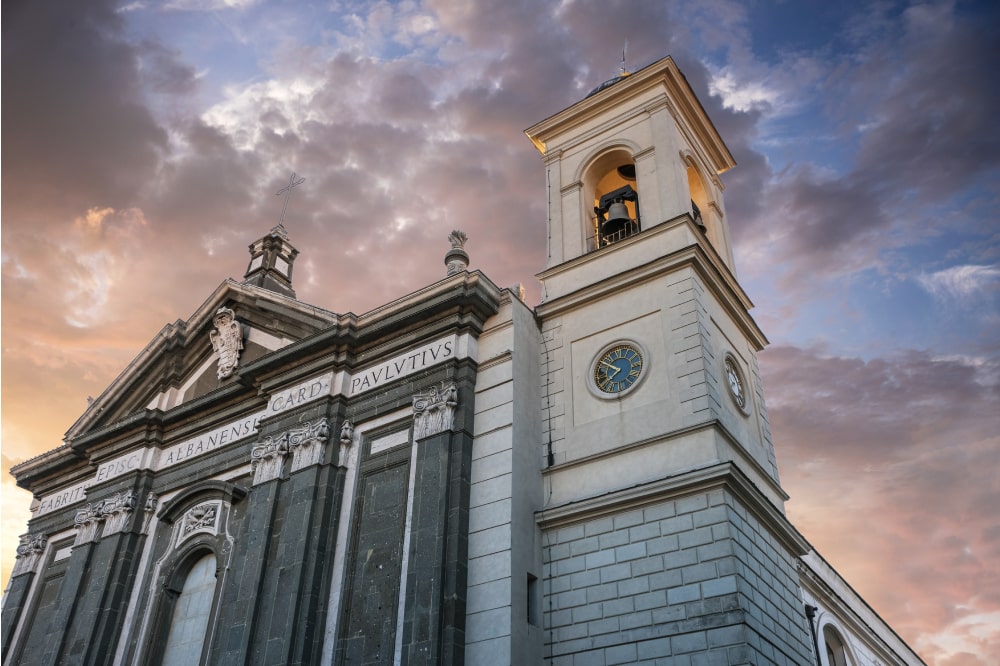
Cross of Hope designed by Stefano Lazzari for the Jubilee 2025

Cross of Hope designed by Stefano Lazzari for the Jubilee 2025

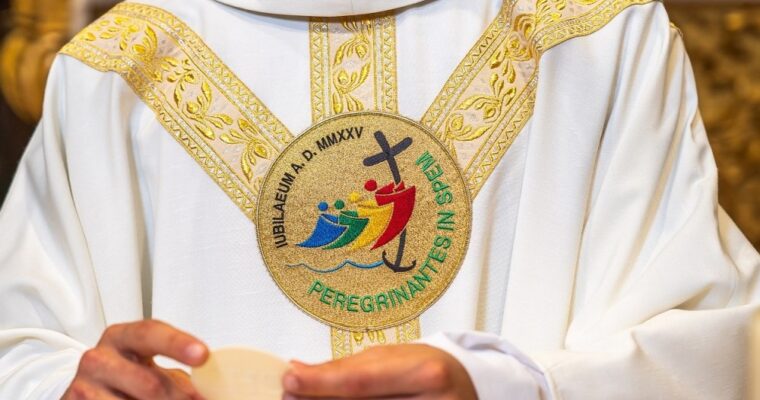
The Cross of Hope, created by Stefano Lazzari for the Jubilee 2025, combines medieval tradition and innovation, symbolising the journey of faith. Made of brass with an antique gold finish, it represents excellence in Italian craftsmanship. Among the many initiatives linked to the celebrations for…

Here are the best films to watch at Easter

Here are the best films to watch at Easter

From The Greatest Story Ever Told to The Passion of the Christ, including Jesus Christ Superstar. Films to watch at Easter to reflect on the life of Jesus.

In today’s world, where technology and media dominate many aspects of our daily lives, it’s inevitable that even profound themes, such as religion and the stories of events and figures associated with it, are conveyed through new communication methods. However, when it comes to films about Jesus, we must go far back to find the first attempts by directors and producers to narrate the human story of the Saviour. One of the earliest films in this regard is Christus (Italian title Cristo), directed by Giulio Antamoro in 1916. Using the expressive style typical of silent cinema, it portrays the life of Christ through a series of tableaux vivants reminiscent of great masterpieces of Renaissance sacred art.

The Story of Jesus

Read more:

The story of Jesus: the most important events of His life
The story that changed the fate of the humanity, between the Gospel story, historical reality and devotional legend the human story.

Closer to our time, there are many films about Jesus’ life to consider for Easter viewing. Cinema has often approached the figure of Christ in a dual manner. On one hand, especially between the 1920s and 1960s, major American productions tended to present a somewhat stereotypical depiction, emphasising His solemnity and divine mystery. In most films where Jesus appeared, He was often not shown directly (for instance, in Ben-Hur, where His face is never visible). This portrayal was hieratic, entirely devoid of human frailty or doubts, which are hinted at in the Gospels.

Later, filmmakers began to challenge this sanitised and embellished view, as well as their own beliefs, producing original films that often sparked heated discussions, controversies, and even violent protests. This was the case with Martin Scorsese’s The Last Temptation of Christ, a film accused of blasphemy, which shocked the Catholic world and led to attacks on cinemas where it was screened.

Even The Gospel According to St. Matthew, directed by Pier Paolo Pasolini in 1964, though faithfully recounting the life of Jesus as described in the Gospel of Matthew, was considered overly anti-dogmatic and sparked intense debate.

Other directors have chosen to adapt Jesus’ story to their own time and cultural changes, such as Norman Jewison with Jesus Christ Superstar (1973), inspired by the musical by Andrew Lloyd Webber and Tim Rice, heavily influenced by the hippie movement.

Still others, like the British comedy troupe Monty Python, opted for parodies that generated considerable controversy, such as Life of Brian, directed by Terry Jones in 1979. This film humorously depicts the misfortunes of Brian, an unlucky character in Roman-occupied Judea whose story inadvertently intersects with that of Jesus.

Listing all films about Jesus would be impossible, so we have selected a few noteworthy films to watch at Easter, offering a unique perspective on the mystery of Easter.

The Passion of the Christ

We have already discussed The Passion of the Christ (2004), a blockbuster written and directed by Mel Gibson, which portrays the final 12 hours of Jesus’ life. This intense, unflinchingly brutal film graphically depicts the suffering and violence endured by Jesus (played by James Caviezel) from His arrest to His crucifixion. Its stark violence, deemed excessive by many, drew criticism, along with accusations of antisemitism. Gibson drew inspiration from the Gospels and the visions of Blessed Anne Catherine Emmerich, a German mystic whose work, The Dolorous Passion of Our Lord Jesus Christ, describes the Passion of Christ in chillingly vivid and realistic detail. The film was shot in Latin, Hebrew, and Aramaic, with subtitles, making the viewing experience all the more immersive and unsettling.

The Last Temptation of Christ

Martin Scorsese’s The Last Temptation of Christ (1988), mentioned earlier, was deeply influenced by his personal spiritual and human journey. Based on the novel The Last Temptation (O teleftéos pirasmós) by Greek writer Nikos Kazantzakis, it initially recounts Jesus’ final days, focusing on His doubts and human frailty in the face of the immense mission God has entrusted to Him. The narrative then takes an unexpected turn, presenting an alternate reality in which Jesus descends from the cross and starts a new life, marrying Mary Magdalene and living as a husband and father. This section of the film, revealed to be a devil-induced hallucination, provoked outrage and intense controversy.

Mary Magdalene and Jesus

Read more:

Mary Magdalene wife of Jesus: let’s clarify
What is the truth about Mary Magdalene? Wife of Jesus or simple disciple? Let’s find out in this article.

Jesus Christ Superstar

Jesus Christ Superstar (1973), directed by Norman Jewison, is deeply rooted in the cultural and social ferment of the 1970s. Based on the acclaimed musical by Andrew Lloyd Webber and Tim Rice, it tells the story of a group of hippie actors staging the final week of Jesus’ life. They travel to a desert area, becoming so immersed in their roles that the boundary between actors and characters blurs. The central question, still relevant today, is how events might have unfolded if Jesus had come into a world dominated by mass media rather than 2000 years ago. Notable is the portrayal of Judas (Carl Anderson), depicted not as a traitor but as a tool of God and a complement to Jesus (Ted Neeley) on His path to the cross. Though the film sparked controversy at the time for its unconventional approach to religious themes, it is now recognised even by the National Commission for Film Evaluation of the Italian Episcopal Conference.

passion of Jesus

Read more:

The events of the Passion of Jesus: from the Last Supper to His Crucifixion
From the Last Supper to the deposition in the tomb let’s see how the last days on Earth have been

King of Kings

Inspired by the Gospels, King of Kings (1961), directed by Nicholas Ray, was the first film to show Jesus’ face. Filmed in Spain, it narrates Jesus’ story from before His birth, beginning with the destruction of Jerusalem by Pompey, to the historical events of the era, including Roman rule and the cruelty of King Herod, culminating in the Crucifixion. A historical epic filmed with great sensitivity and depth, it weaves in the stories of many New Testament figures, such as John the Baptist. Jeffrey Hunter’s portrayal of Jesus is both poignant and poetic.

the face of jesus

Read more:

The face of Jesus: let’s reconstruct his true likeness
A question that has fascinated and divided scholars and theologians for two thousand years

The Gospel According to St. Matthew

Written and directed by Pier Paolo Pasolini and featuring non-professional actors, The Gospel According to St. Matthew (1964) recounts Jesus’ life as described in the Gospel of Matthew, from the Annunciation to Mary, through the temptations in the desert, His preaching, arrest, and death. Matthew’s Gospel focuses on Jesus’ teaching of love, the “11th commandment,” and this theme resonates throughout the film. Jesus’ immense love, leading Him to sacrifice Himself for humanity, is central to the narrative. The film concludes with Christ’s Passion and Resurrection. Audience and critics were deeply divided in their responses.

saint matthew

Read more:

Saint Matthew, apostle, evangelist and martyr
On 21 September, Saint Matthew is celebrated evangelist, apostle and martyr. Who was he and how did he become an apostle?

The Greatest Story Ever Told

The Greatest Story Ever Told (1965), directed by George Stevens, began as a radio series in 1947. It recounts the life of Jesus (Max von Sydow) as told in the canonical Gospels, from the Magi’s arrival in Bethlehem to the escape into Egypt, Jesus’ Baptism, His preaching, the Last Supper, His arrest, trial, Passion, and death. With a massive budget, the film is perhaps the most spectacular cinematic retelling of Jesus’ life, filmed with the spiritual reverence and historical accuracy the subject demands.

escape to egypt
Escape to Egypt in painted Valgardena wood
Buy on Holyart
baptism of jesus
Scene of the baptism of Jesus with John the Baptist
Buy on Holyart
jesus arrives into jerusalem
Scene of the Christ arriving into Jerusalem
Buy on Holyart
last supper
The Last Supper scene in resin
Buy on Holyart
condemnation of Jesus
Christ life scene: condemnation of Jesus
Buy on Holyart
Jesus on the cross with Mary at His feet
Jesus on the cross with Mary at his feet scene
Buy on Holyart
The story of Pontius Pilate and his involvement in the condemnation of Jesus

The story of Pontius Pilate and his involvement in the condemnation of Jesus

Contents1 Who was Pontius Pilate?2 Jesus’ entry into Jerusalem3 The trial of Jesus4 Pontius Pilate washes his hands5 Exile and suicide A controversial and tragic figure, Pontius Pilate has gone down in history as the man who condemned Jesus to death. But who was he…

Lenten fasting: what it means and how to practice it

Lenten fasting: what it means and how to practice it

Contents1 Who is required to fast during Lent?2 How to fast during Lent3 What is not allowed to be eaten on Fridays during Lent? Lenten fasting is a practice of preparation for Easter that should be accompanied by prayer and almsgiving, as Pope Francis wrote…

Who is Simone Legno, the Designer of the Jubilee 2025 Mascot

Who is Simone Legno, the Designer of the Jubilee 2025 Mascot

Let’s get to know Simone Legno, the eclectic Italian artist and creator of Luce, the mascot of Jubilee 2025

In recent months, there has been much talk about Luce, the adorable mascot of Jubilee 2025. Some have criticised her appearance, clearly inspired by Japanese manga and anime, and therefore considered culturally at odds with the Catholic Church. Others have noted resemblances to Greta Thunberg, the environmental activist. Finally, some have criticised the choice of the creator entrusted with the task of designing the little character. This is Simone Legno, founder of the Tokidoki brand, an iconic lifestyle brand that blends elements of Japanese culture, street art, and graffiti. Beyond any controversy, we must not lose sight of a simple fact: it was the Vatican that entrusted the young artist with the task of inventing a mascot for the Holy Year. Legno immediately proposed a character inspired by pop culture, capable of bringing the Church closer to young people’s tastes, and, drawing on his experience with the brand he created, he introduced Luce.

luce, mascot jubilee 2025

Read more:

Luce, the Mascot of Jubilee 2025: A Symbol for All Pilgrims
Inspired by the aesthetics of Japanese manga, representing a new openness of the Church towards pop and youth culture.

Simone Legno, Founder of the Tokidoki Brand

Simone Legno, born in Rome in 1977 and from a Catholic family, although not a practising believer, has been collaborating for years with brands such as Hello Kitty, Karl Lagerfeld, and Marvel. From a young age, he showed a passion for drawing and a particular fascination with colours, elements that have influenced his artistic style. In 2001, with the creation of a personal website, he was able to express his art and design. This online portfolio attracted the attention of Pooneh Mohajer and Ivan Arnold, American entrepreneurs who contacted him in 2003 and convinced him to move to Los Angeles to develop his ideas and found Tokidoki, LLC. The brand was officially launched in 2005. Tokidoki, which means “sometimes” in Japanese, reflects his vision of how random encounters can change destiny. With his inspiration drawn from Japanese culture and kawaii aesthetics, Simone has helped create iconic characters that have become a global phenomenon.

Today, Simone Legno is internationally recognised. He lives in Japan with his family and continues to be actively involved in Tokidoki’s creative process and collaborates with world-renowned brands. His dedication to art and pop culture makes him an influential figure in the contemporary scene. He also participates in cultural events and charitable initiatives worldwide, demonstrating great sensitivity towards social issues. In 2011, he took part in fundraising for the victims of the tsunami that struck Japan, contributing with his artworks and action figures of his characters.

In addition to Luce, the mascot of Jubilee 2025, he has recently created Italia Chan, the official mascot of the Italian Pavilion at Expo 2025 in Osaka, where Luce will also be present as a symbol of the Holy See’s pavilion.

jubilee 2025 events

Read more:

The Jubilee 2025 Events Calendar
Twelve months of occasions to deepen faith, live fraternal communion, and walk together as “pilgrims of hope.”

Simone Legno and Luce: The Birth of the Mascot

To create Luce, the official mascot of Jubilee 2025, commissioned by the Vatican, Simone Legno drew inspiration from the Japanese culture he loves so much, particularly the world of kawaii art, a Japanese artistic style that features cute and adorable characters and objects, with soft shapes, large eyes, and pastel colours. The term “kawaii” literally means “cute,” and this style has spread worldwide, establishing itself not only in art but also in fashion and design. Kawaii characters have large, innocent eyes, sweet smiles, and this is how Luce appears, the little pilgrim who, wrapped in her yellow raincoat, embarks on the great journey of life with bright eyes in which the shell symbol of the Camino de Santiago shines. Her role is to express hope, the central symbol of Jubilee 2025, embodying all those Pilgrims of Hope preparing to experience the Holy Year with prayer and spiritual and human growth.

meaning of the jubilee logo

Read more:

The Meaning of the Jubilee 2025 Logo: Pilgrims of Hope
A symbol of hope and fraternity that will guide us in the faith pilgrimage of the Holy Year.

To also symbolise the Church’s openness to different cultures, Luce is accompanied by other characters, such as Fe, Xin, and Sky, little human friends with diverse facial features representing Asian, Latin American, and African cultures, as well as Santino, a friendly little dog symbolising faithfulness and providence, the guardian angel Iubi, and Aura, a dove of peace.

The Mascot’s Presentation to Pope Francis

On 28 October 2024, Luce was officially presented to Monsignor Rino Fisichella, Pro-Prefect of the Dicastery for Evangelisation. Simone Legno personally handed a plush toy of Luce to Pope Francis, who initially observed it with some perplexity but then showed his appreciation for the gift and gently patted the doll’s head.

How Filigree Jewellery is Made

How Filigree Jewellery is Made

Contents1 What is the filigree technique?2 Melting3 Rolling and Drawing4 Twisting, Shaping, and Filling5 How is filigree worked?6 What materials are used to make filigree jewellery?7 Holyart’s catalogue of filigree products8 Filigree jewellery on Holyart9 Chalices, Ciboria, and Patens decorated with filigree on Holyart Filigree…

The symbols of the Evangelists and their meaning

The symbols of the Evangelists and their meaning

Contents1 Saint Matthew the Evangelist2 Saint Mark the Evangelist3 Saint Luke the Evangelist4 Saint John the Evangelist Winged man, ox, lion, and eagle. The symbols of the Evangelists have been part of the history of sacred art and theology for centuries. Here is how they…

The meaning of coral in Christian symbolism

The meaning of coral in Christian symbolism

Let us uncover the secrets and significance of coral, a precious material that has always fascinated humanity. An amulet against evil and misfortune, it has been associated by the Church with the Blood and Passion of Christ.

Since ancient times, humanity has attributed special meaning and properties to coral. Our prehistoric ancestors believed it had medicinal virtues and magical powers since the dawn of time. Perhaps this stems from its very nature, from the fact that it is a living organism—or rather, a part of one. What is coral, after all? It is nothing more than the exoskeleton, or armour, that a colony of small polyps constructs to protect and support its soft body by secreting calcium carbonate, forming the fascinating branching structures we recognize. As these secretions layer over time, coral fuses with other coral, resulting in extensive formations—think of coral reefs. This growth is endless, for when a colony of polyps dies, the coral is colonized by new polyps.

Fragments of red coral found in Neolithic burial sites indicate that it was already being used as a protective amulet for the deceased. The Egyptians also made extensive use of it in this way, even spreading coral powder mixed with seeds over fields to promote a good harvest. The Greeks and Romans used coral as a remedy for various ailments and as a protective charm for newborns, a tradition that persisted into later centuries. Many Renaissance paintings depict children wearing coral amulets. In the medieval period, red coral was believed to protect against lightning and sudden death. In medicine, it was used as a treatment for hemorrhages and as a coagulant for wounds and ulcers, likely due to its colour.

Considered for centuries to be an effective remedy for illnesses, as well as for epidemics, infertility, and bad luck—as evidenced by the enduring tradition of coral lucky charms in Naples—coral has also been widely used in Christian symbolism. Inevitably, it was connected to the blood of Christ and His Passion, adorning reliquaries and sacred paintings.

Let us explore the various meanings of this fascinating material and why it is beneficial to wear coral jewellery.

The meaning of coral

There are many legends about the origin of coral. For the Greeks, it was born from the blood of the Gorgon Medusa, decapitated by the hero Perseus. Just as the fearsome Medusa turned anyone who met her gaze to stone, so her blood, dripping from her severed head, was said to have turned sea foam into the red, hard material we know as red coral. Roman writers such as Ovid in the Metamorphoses and Pliny the Elder in Natural History perpetuated this theory about coral’s origins. Over the centuries and across various civilizations, coral has been considered alternately a mineral or a plant. Its proper classification as part of the animal kingdom was only recognized in the 18th century.

Valued and sought after for its rarity and transformative qualities, coral has always been used as adornment, especially as an amulet.

The principal characteristic of red coral has always been its protective virtue, whether to prevent illnesses and accidents, ward off plagues, or protect the deceased from the perils of demons and monsters in the afterlife. More recently, it has been used as a charm against the evil eye, curses, and misfortune. Gifting a piece of red coral or coral jewellery was a way to wish someone good luck and happiness, as well as to express love and affection, since coral is believed to awaken vital energy, love, and sensuality. Roman matrons, for instance, wore coral earrings to captivate the hearts of men, and in the 16th century, coral powder was burned as incense to encourage romantic endeavours.

While red coral is thought to stimulate vital energy and help balance one’s internal energy, fostering positive internal changes, white coral is said to dispel nervousness and fear and combat depression and panic attacks. Finally, pink coral is believed to help one live each day with inner peace and harmony.

Coral in Christian iconography

The Christian Church adopted many attributes previously ascribed to red coral in pagan traditions, reframing popular magical beliefs in favour of Christian symbolism tied to the Blood of Christ and His Passion. The branched and cruciform shape of coral twigs also evokes blood circulation, the tree of life, and the Cross—thereby conveying ideas of salvation and redemption.

The meaning of the Tree of Life

Read more:

The meaning of the Tree of Life
All religions, since the origins of mankind, are somehow tied to trees. We already explored this subject in a previous article…

Coral and the Passion of Christ

As mentioned earlier, coral amulets often appear in paintings depicting the Christ Child, such as Piero della Francesca’s Madonna of Senigallia or Andrea Mantegna’s Madonna della Vittoria. In some works, coral is shown as an amulet worn around the young Saviour’s neck, while in others, it appears as a symbolic element within the painting.

Later, artists focused on the symbolic connection between the salvific blood of Christ shed during the Passion and the red coral, whose colour and appearance evoke it. Stripped of its pagan associations with protection and good fortune, coral became a symbol of Christ’s death and human suffering—both necessary to purify humanity from sin and offer hope for salvation. Representing the blood of Christ, coral also alludes to His dual nature, both human and divine.

The events of the Passion of Jesus

Read more:

The events of the Passion of Jesus: from the Last Supper to His Crucifixion
The Passion of Jesus is the highest and most terrible moment…

Coral jewellery on Holyart

Coral has always been crafted into various forms, including bracelets, necklaces, and amulets. The Romans were the first to carve coral into small sculptures. Over the centuries, jewellery-making techniques have become increasingly refined, making coral a central feature of both Italian and international fine jewellery.

On our online store, you’ll find coral jewellery, such as the charming 925 silver bracelet, suitable even for younger people, featuring a classic chain adorned with 11 coral beads and a finely crafted small trefoil cross. This is a unique artisanal creation, as every stage of production is entirely handcrafted by highly skilled professionals.

From traditional designs, we offer stunning 800 silver crosses with a coral circle at the centre and a magnificent burnished silver pendant cross with a pierced design and a central red coral oval—both handcrafted.

The 800 gold-coloured silver rosary features coral beads and is made in Italy by expert silversmiths.

When it comes to coral jewellery, if you’re wondering how to clean coral, remember that it is highly sensitive to corrosive substances such as perfume, soap, and detergents, and should be kept away from heat sources. Over time, coral inevitably loses its shine, but you can restore it by soaking it in a bowl of lukewarm water with two handfuls of coarse salt for 10 minutes and then drying it thoroughly with a soft cloth. It will look as good as new! If the jewellery or coral object is very dirty, you can add a few drops of detergent to the lukewarm water (but don’t overdo it) and remove dirt using a cotton swab.

Silver bracelet and coral beads
Bracelet in silver 925 and rose coral beads. This rosary bracelet has a classic silver chain, a trilobate cross and it is finely adorned with 10 coral beads.
Buy on Holyart
Pectoral Cross in silver 800 filigree with coral stone
Pectoral Cross in silver 800 filigree with coral stone. This high quality silver 800 made pectoral cross is completely handmade in Italy by skilled craftsmen.
Buy on Holyart
Pendant cross in bronzed silver and coral
Pendant cross in bronzed silver with a red coral oval in the centre. The whole cross is finely worked and perforated. This jewel is 100% made in Italy and is made of 925 silver.
Buy on Holyart
Rosary of gold-plated silver and coral beads
Rosary of gold-plated silver and coral beads. Rosary made of gold-plated silver with beads of coral, made in Italy by craftsmen specialized in silversmithing.
Buy on Holyart
Luce, the Mascot of Jubilee 2025: A Symbol for All Pilgrims

Luce, the Mascot of Jubilee 2025: A Symbol for All Pilgrims

Contents1 The Meaning of Luce, the Jubilee Mascot2 Luce, a Pilgrim in Manga Style3 From the Jubilee to Expo Osaka 2025 Meet Luce, the mascot of Jubilee 2025, a character inspired by the aesthetics of Japanese manga, representing a new openness of the Church towards…

Valentine’s Day Traditions: How the Saint is Celebrated in Italy and Around the World

Valentine’s Day Traditions: How the Saint is Celebrated in Italy and Around the World

Contents1 So, who was Saint Valentine?2 Valentine’s Day in Terni3 Valentine’s Day in the rest of Italy4 Valentine’s Day around the world Chocolates, flowers, cards, but also love letters from God. Here are the Valentine’s Day traditions in Italy and around the world. There are…

The Miracles of Our Lady of Lourdes from Her First Apparition

The Miracles of Our Lady of Lourdes from Her First Apparition

The Church has recognised seventy of the seven thousand healings that occurred in the town of Lourdes as miracles of Our Lady. What makes the water of Lourdes so special?

Among Marian apparitions and miracles linked to the Virgin Mary, those of Lourdes are among the most famous and well-remembered. The reasons for this fame lie in the particularly tender relationship that developed between the Virgin and Bernadette Soubirous, the fourteen-year-old peasant girl who reported meeting the “beautiful Lady” no fewer than eighteen times. It is to Bernadette that we owe the description of what has become today’s most widespread iconography of the Virgin Mary: dressed in white with a blue sash. Thanks to these apparitions and the miracles of Our Lady of Lourdes, this small Occitan town in the heart of the Pyrenees has become one of the most visited pilgrimage sites in the world.

But what exactly happened in the grotto near Massabielle, and how has the Church addressed the miracles of Lourdes?

The apparitions of Lourdes were formally recognised as authentic by the Catholic Church as early as 1862, following a long and thorough examination of Bernadette’s accounts. This is what the Bishop of Tarbes wrote in the pastoral letter concluding the investigation:

“We judge that Mary Immaculate, Mother of God, truly appeared to Bernadette Soubirous on 11 February 1858 and on subsequent days…; that this apparition possesses all the marks of truth, and that the faithful may believe it to be certain.”

In 2018, seventy of the seven thousand healings of sick pilgrims visiting Lourdes were officially declared miraculous. The most recent recognition occurred in 2018 and concerns Sister Bernadette Moriau, who had been confined to a wheelchair for 42 years due to a severe spinal nerve condition. In 2008, after receiving the blessing of the sick during her pilgrimage to Lourdes, she stood up and walked.

Marian Apparitions Worldwide The 10 Most Important Ones

Read more:

Marian Apparitions Worldwide: The 10 Most Important Ones
The many names by which Christians address the Madonna largely derive from the numerous Marian apparitions around the world.

11 February, the Anniversary of Lourdes

The anniversary of the first apparition at Lourdes falls on 11 February. It was between 11 February and 16 July 1858 that Bernadette encountered the “beautiful Lady” in a small karst grotto near Massabielle, a place previously used for pig grazing.

“I saw a Lady dressed in white. She was wearing a white dress, a white veil, a blue sash, and a yellow rose on each foot.”

This is how Bernadette described the first apparition of the Virgin on 11 February 1858. The young girl had gone to the area near the grotto with one of her sisters and a friend to gather firewood. The Gave de Pau river flows nearby, and as the girls were removing their stockings to cross it, Bernadette heard a rustling sound like the wind in the trees, which made her look towards the grotto. That is when she saw the mysterious Lady, dressed in white, with a veil partly covering her, a blue sash, and a yellow rose on each foot. On that first day, Bernadette prayed the Rosary with her, and at the end of the prayer, the woman disappeared.

The Water of Lourdes and Its Miracles

During another apparition, the ninth one on 25 February 1858, Bernadette, following the instructions of the “beautiful Lady,” discovered a spring at the back of the grotto at Massabielle. It was one of the eight springs feeding the river. Bernadette herself dug with her hands until the spring began to gush forth, and from the start, the water that flowed from the earth was revealed to be blessed. Bernadette was the first to drink it, and many quickly followed her example. News of the miraculous properties of the spring spread rapidly.

Over time, the water was channelled into fountains and pools so that devotees could immerse themselves in it and drink it. Most of the healings recognised as miracles of Our Lady of Lourdes occurred after the sick came into contact with the water of Lourdes or were immersed in the pools.

From a biological standpoint, Lourdes water is perfectly normal water, devoid of any substances that could explain its healing and salvific effects—or almost.

Various researchers have studied the water. The Italian biologist Enza Ciccolo, an expert in auriculomedicine (the study of the effects of light on the human body), found it to possess particular light frequencies that inhibit the proliferation of germs and bacteria. This would explain why no one has ever fallen ill from immersion in the Lourdes pools, despite the water not being changed frequently. Additionally, these frequencies are said to have beneficial effects on the body, particularly against skin and nervous system diseases.

Japanese researcher Masaru Emoto conducted experiments on the shape water takes when it transitions from liquid to solid states. When freezing Lourdes water, he obtained crystals of transcendent, extraordinary beauty.

Luc Montagnier, who discovered the HIV virus, admitted that the powers of the water from Massabielle are inexplicable and that the miracles of Our Lady of Lourdes transcend science and medicine.

In her simplicity, Bernadette revealed from the beginning the true miracle hidden in Lourdes water: “One takes the water like a medicine… one must have faith, one must pray: this water would have no virtue without faith!”

Just as Bernadette dug with her hands into the mud in the dark of the grotto, so too must each of us, drinking the water that springs from that darkness, search within ourselves for faith and embrace it with the same childlike trust and innocence that guided Bernadette. Only then can we hope for healing.

The Miracles Recognised by the Church at Lourdes

As mentioned earlier, only seventy of the healings attributed to Lourdes water have been recognised by the Church as miracles of Our Lady of Lourdes and officially validated by the Bureau des Constatations Médicales (Office of Medical Observations). This body, established in 1905 at the Lourdes Sanctuary, collects testimonies and rigorously examines various cases of alleged healings before presenting them to the Comité Médical International de Lourdes (CMIL) in Paris, composed of medical specialists from around the world.

The Catholic Church recognises a healing as miraculous if it meets certain conditions:

– The original diagnosis must be verified and confirmed beyond any doubt.

– The disease must be deemed incurable according to current medical knowledge.

– The healing must be immediate, with rapid remission of symptoms or signs of the illness.

– The healing must be complete, with no residual disorders.

– The healing must be definitive, with no relapses.

More broadly, we must bear in mind the Church’s definition of a miracle, which is any occurrence not attributable to natural causes but rather justified by divine intervention.

A look at the long list of recognised healings—those miracles of Our Lady of Lourdes that the Church has acknowledged as genuine—reveals the diversity of stories, diseases, origins, and personal histories of those involved. Some of these individuals never visited Lourdes but declared themselves healed through the Virgin’s intercession.

Here are a few examples:

Louis-Justin Duconte-Bouhort, just eighteen months old and suffering from tuberculosis with paralysed legs, was close to death. On 2 May 1858, his mother, a neighbour of Bernadette, immersed him in the grotto’s water. The next day, the child stood up from his cradle and began to walk.

Pieter De Rudder, aged 44, had been crippled for eight years after a log crushed the bones in his leg. On 7 April 1875, after visiting the sanctuary of Our Lady of Lourdes in Oostacker, he returned home without crutches.

Marie Biré, paralysed in one foot and one arm since 1904, received communion in the grotto of Massabielle on 5 August 1908 and regained her mobility.

Francis Pascal, who became blind and paralysed after contracting meningitis at age three, was healed after being immersed in the Lourdes pool.

Vittorio Micheli, suffering from an osteosarcoma in his pelvis that destroyed his bones, was immersed in the Lourdes spring. Subsequent X-rays showed bone regeneration, enabling him to walk and work again over time.

Delizia Cirolli, afflicted by a malignant tumour in her tibia, was healed after her mother poured Lourdes water daily on her diseased leg. The tumour vanished, and she began walking again.

Chalices, ciboria and patens: how to clean liturgical accessories

Chalices, ciboria and patens: how to clean liturgical accessories

Contents1 How to clean metal chalices2 How to clean silver chalices3 How to clean wooden chalices Liturgical accessories are a fundamental part of the celebration of Mass. However, they require frequent cleaning and specific care. Here’s how to keep them clean without damaging them. The…

Proverbs about Candlemas: Traditions Linked to the Celebration

Proverbs about Candlemas: Traditions Linked to the Celebration

Contents1 The Childhood of Jesus2 Candlemas Day3 Proverbs about Candlemas The proverbs about Candlemas belong to the folkloric heritage of our country, but they also draw from the very origins of this feast, blending religion and paganism. Everyone is familiar with the proverbs about Candlemas.…

The Differences Between the Anglican and Catholic Religions

The Differences Between the Anglican and Catholic Religions

The Anglican religion does not recognise the authority of the Pope, rejects the dogmas related to the Virgin Mary, and dismisses devotion to Saints. Yet, in many ways, Anglicans are quite close to Catholics. Let’s see how.

We have already explored the main differences between Catholics and Protestants in a previous article. While both expressions of Christian faith stem from the Nicene Creed, so named because it originated from the Council of Nicaea in 325 AD, they present several fundamental differences, ranging from the interpretation of the Scriptures to the authority of the Pope and clergy, as well as the Sacraments. A separate discussion is necessary when it comes to the Anglican Church—the religion of the English—founded in England in the 16th century when King Henry VIII, discontented with papal authority, decided to separate the Church of England from the Church of Rome. Thus, Anglicanism was born, incorporating many elements from Lutheran and Calvinist Protestantism, but also retaining aspects of Catholicism. In fact, even though Henry VIII initiated the schism, he had been a strong supporter of the Catholic religion against Protestantism and considered Martin Luther a heretic.

The main differences between Catholics and Protestants

Read more:

The main differences between Catholics and Protestants
The differences between Catholics and Protestants are fundamental to the history of the Christian religion and the birth of Europe as we know it.

Founded on the sanctity of the Holy Scriptures, the traditions of the Apostolic Church, and the apostolic succession (the Christian theological doctrine that Bishops are the successors of the Apostles), the Church of England recognises the English Sovereign as its only head. Until recently, this was Queen Elizabeth II, one of the longest-reigning monarchs of the United Kingdom, with 70 years on the throne.

Let’s now explore the main differences between Catholicism and Anglicanism regarding the Sacraments, and how the Anglican Church has coexisted with other faiths over time.

Anglican Church: Sacraments

Unlike the Catholic Church, which recognises seven Sacraments, the Anglican Church only recognises Baptism and the Eucharist as sacraments but also celebrates the others, considering them sacramental.

The Eucharist is offered to all, including divorced and cohabiting individuals, and is only denied to those guilty of violent crimes.

Marriage is also viewed differently by Anglicans: the Anglican rite does not require both spouses to be baptised or confirmed. Additionally, since 2014, the Archbishop of Canterbury has announced a possible openness of the Anglican Church towards same-sex marriages. Divorce is accepted and not condemned.

Holy Orders, that is, the sacrament of ordination, are not reserved for men but are open to both men and women at all three levels: deacon, priest, and bishop. Celibacy is not required; priests are allowed to marry and have children.

Priestly Ordination

Read more:

Priestly Ordination: Here’s How One Becomes a Priest
With Priestly Ordination, a man becomes a priest in every sense. Here’s how the rite unfolds, how his life changes,…

Like Lutheran, Calvinist, Anglican, and Anabaptist Protestants, Anglicans consider Baptism a sign of God’s grace and the regeneration of the individual through faith, without implications of original sin or the devil’s temptations.

Who Is the Head of the Anglican Church?

Although, as mentioned earlier, the head of the Church of England and supreme governor is the Sovereign—Queen Elizabeth II until recently and now King Charles III—the highest spiritual authority for Anglicans is the Archbishop of Canterbury, who before the schism was the Catholic Primate of England.

The current Archbishop of Canterbury is Justin Welby, who is, first and foremost, Bishop of the Diocese of Canterbury, Metropolitan Archbishop of the Ecclesiastical Province of Canterbury, which covers two-thirds of England, Primate of All England, and symbolic leader of the Anglican Communion.

The Archbishop resides at Lambeth Palace or the Old Palace next to Canterbury Cathedral.

The Meeting Between Queen Elizabeth and Pope Francis

Although Anglicans do not accept the authority of the Pope, do not share certain Catholic dogmas, especially those concerning Mary, the Mother of God (the dogmas of the Immaculate Conception and the Assumption), and do not recognise devotion to Saints—considering doctrines of images, relics, and invocations to be baseless beliefs—Anglicans have always demonstrated greater openness towards Catholics compared to other Protestant denominations.

It is no coincidence that, during her long reign, Queen Elizabeth II, whenever visiting Rome, never failed to meet the Pope, from her meeting with John XXIII in 1961 to John Paul II in 1980 and 2000. Pope John Paul II was also received at Buckingham Palace, and in 2010, the Queen met Benedict XVI at Holyrood Palace, the royal residence in Edinburgh.

The last meeting was in 2014 with Pope Francis, who welcomed both her and Prince Philip at the Vatican. Queen Elizabeth II gave the Pope a basket filled with British culinary specialties, advising him not to share them with anyone.

Recognized Miracles by the Church: All the Healings and Extraordinary Events

Recognized Miracles by the Church: All the Healings and Extraordinary Events

Contents1 Miracles of Jesus2 Miracles of Lourdes3 Testimonies from Medjugorje What are the miracles recognized by the Church, and which ones are still under investigation? From Lourdes to Medjugorje, including miraculous healings and testimonies of inexplicable events. The Catholic Church acknowledges the existence of inexplicable,…

Saint Francis de Sales, the Patron Saint of Journalists 

Saint Francis de Sales, the Patron Saint of Journalists 

Contents1 Saint Francis de Sales, Bishop and Doctor of the Church2 Philothea, the Work of Saint Francis de Sales3 Prayer to Saint Francis de Sales Saint Francis de Sales made love for God and gentleness in expressing one’s faith the most powerful weapon of his…

Blue Monday: How to Tackle the Saddest Day of the Year

Blue Monday: How to Tackle the Saddest Day of the Year

Why Blue Monday? What makes the third Monday of January the saddest day of the year? And how can we face it?

An old proverb says: “Monday is Saint Grouchy!”—a way of highlighting how the first day of the week, with its return to work and the end of Sunday rest, is marked by bad moods, gloom, and general sadness. However, there is one Monday in particular during the year when this proverb takes on even greater significance: the so-called “Blue Monday“, the saddest day of the year.

The English term “blue” is commonly used to describe something sad, and “Blue Monday” is precisely that—a “sad Monday,” in fact, the saddest Monday of the year.

But what makes Blue Monday so sad? It’s simple. It is the day that marks the definitive end of the Christmas holidays. While in the past people would say “Epiphany brings an end to all festivities,” in today’s world, this role has shifted to the third Monday of January. On this day, people realise that the festive season is truly over, life has returned to its usual routines, and they begin scanning the calendar in a desperate search for the next bank holiday or opportunity to relax.

What happened to the fourth Wise Man

Read more:

What happened to the fourth Wise Man?
The Three Wise Men have always had a great fascination, although nothing is known about them.

This is why Blue Monday is known as the saddest day of the year.

It was Cliff Arnall, a psychologist at Cardiff University, who identified the date and the equation to explain it. His work aimed to pinpoint a date that would be favourable for travel companies to offer attractive deals to clients, knowing that people would be more inclined to book a holiday when feeling down. He based his calculation on factors such as the weather, accumulated debts, the end of Christmas, the failure of past New Year’s resolutions, and anxiety about new ones. These elements were combined into a formula to determine the date.

Some experts even consider Blue Monday to be “Divorce Monday“, the day with the highest number of divorce proceedings initiated.

But “science” has also identified the happiest day of the year—the “Happiest Day of the Year“. This is the summer solstice, between the 21st and 24th of June, when the magical combination of sunny weather, outdoor activities, time spent in nature and with others, warm temperatures, anticipation of holidays, and nostalgic childhood memories come together to create joy.

Why Is It Called Blue Monday?

We already know that Mondays aren’t exactly beloved. They’re often referred to as Saint Grouchy’s day or, as they say in Spain, the “día de bajón” (day of the slump), or in Portugal, “o dia cinzento” (the grey day).

In English-speaking countries, the term “Smonday” has emerged to describe the depression that begins on Sunday in anticipation of the impending Monday (“Sunday” + “Monday” = “Smonday”). This concept echoes the sentiment expressed by Giacomo Leopardi in his famous poem “The Saturday of the Village”, where he compares Saturday to youth, full of happiness and expectations for maturity, and Sunday to adulthood, a time of disillusionment where dreams shatter, leaving only boredom and sadness:

Of all the seven, this is the happiest day, full of hope and joy: tomorrow will bring sadness and boredom, and each will return to their usual toil.

In Turkey, they speak of “pazartesi sendromu” (Monday syndrome), while in Germany, “Montagsautos” (Monday cars) are defective vehicles produced by car manufacturers on Mondays.

But why is the colour blue associated with sadness? The first known link comes from Geoffrey Chaucer, the famous 14th-century English writer. In one of his most celebrated poems, “The Complaint of Mars”, he wrote: ““With tears of blue and a wounded heart.”” Since then, numerous expressions in English and other languages have tied the colour blue to sadness, such as “feeling blue” in English or “avoir le blues” in French.

The term “Blue Monday” was first used in a press release by British television channel Sky Travel in 2005, referencing Arnall’s equation. While there’s no scientific basis behind the idea that the post-holiday slump hits hardest on this day, it’s undeniable that after spending time with family and friends in a special atmosphere far removed from everyday life, it’s normal to feel a bit down.

Prayer against depression to Our Lady of Smile

Read more:

Prayer against depression to Our Lady of Smile
How was prayer against depression born and who was the first to manifest his devotion to Our Lady of the Smile?

Additionally, after the holidays, people often feel tired, weighed down by the indulgences of festive meals, and out of step with normal routines. New Year’s resolutions blend with regrets about the past year, and outside, the days are short, the light fades quickly, and the cold seeps into both body and spirit. It doesn’t take much to feel low, does it?

How to Recover After the Christmas Holidays

So, how can you bounce back from the post-holiday blues? Prayer can help, as it often does, but sometimes a little natural assistance can work wonders in restoring balance after the indulgences of Christmas.

We recommend relying on monastic products, which offer a variety of natural supplements and herbal teas to help you recover. For those who gained a few extra kilos over Christmas, the invaluable advice of Saint Hildegard of Bingen—a pioneer in healthy eating—is always worth considering.

Our online store features excellent herbal teas with surprising effects. For example:

– “CL9 Herbal Tea“: Made with dandelion and speedwell, it offers anti-inflammatory and liver-detoxifying properties, as well as diuretic and purifying effects, perfect for normalising cholesterol levels.

– “LS3 Herbal Tea“: Combines mallow and couch grass to stimulate sluggish intestines, along with strawberry to promote youthfulness and aid weight loss.

– “DG4 Herbal Tea“: Achillea-based, it provides natural relief for heartburn and digestive discomfort, making it a great remedy for post-holiday stomach issues.

To detox and stimulate metabolism after rich meals and festive drinks, the “Snella Herbal Tea” from Camaldoli features a blend of peppermint, lemon balm, couch grass, fennel seeds, mallow, anise, chamomile, lemon, and liquorice. This herbal tea, crafted by the Ancient Pharmacy of the Camaldolese Monks using a traditional recipe, also comes in a “Digestive Herbal Tea” variety, which promotes natural digestion with its pleasantly herbal flavour.

For those struggling with Monday blues—whether post-holiday or otherwise—the “RL1 Herbal Tea” is an excellent choice. Made with plants like hawthorn, lemon balm, and passionflower, it helps relax the nervous system and combat anxiety and stress.

brews
Finalpia Herbalist brew for cholesterol
Buy on Holyart