Author: Redazione

The medal of St. Benedict

The medal of St. Benedict

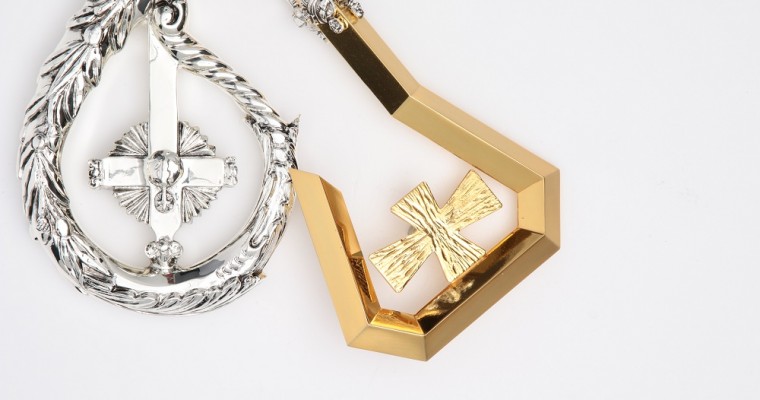
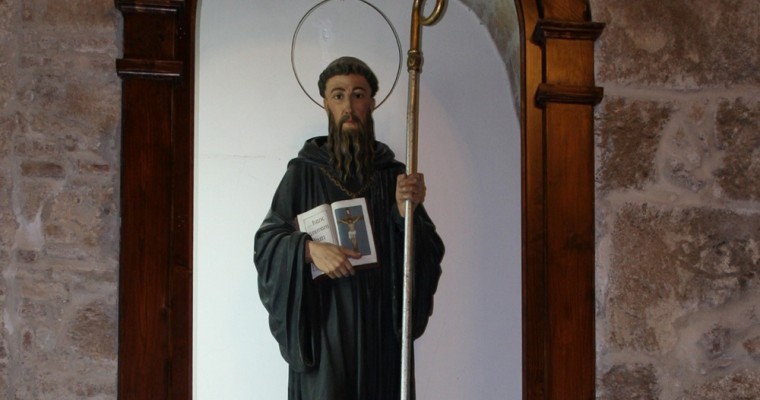
The medal of St. Benedict is a widespread sacred symbol among the Catholics. It reminds the faithfuls who wear it, the constant presence of God and his protection. On one side of the St. Benedict medal, a cross is depicted on which the Benedictine order’s…

Prayer Kneelers

Prayer Kneelers

The prayer kneeler belongs to typical furnishings of churches and chapels since the fifteenth century. It is a piece of furniture, usually made of wood, used to kneel and pray. The kneeler can be placed before the tabernacle, an altar, a statue of a saint…

Our Lady Of Guadalupe

Our Lady Of Guadalupe

Our Lady of Guadalupe is considered the patron saint of all Spanish-speaking Catholics in the world, especially those living in South and North America. Her cult was born in Mexico in the sixteenth century, when the Virgin Mary appeared repeatedly to Juan Diego Cuauhtlatoatzin, an Aztec convert to Christianity.

On the occasion of the first apparition, Our Lady of Guadalupe ordered the man to erect a chapel in her honor in a place indicated by her. During subsequent appearances, she gave him miraculous and compelling evidence to overthrow the skepticism of the bishop and of those who did not believe his story.

A chapel was erected on the site and over the centuries, a shrine and finally the Basilica of Our Lady of Guadalupe followed it.

The name Guadalupe has mixed origins. It would be Our Lady of Guadalupe herself that suggested it to Juan Diego, or perhaps it was the seer that reconnected the appearance with Real Monasterio de Nuestra Señora de Guadalupe in the Spanish municipality of Guadalupe in 1340. Still, there are those who suggest that Guadalupe is the translation in Spanish of the Aztec word Coatlaxopeuh, “she who crushes the serpent“, a name often associated with the Madonna.

At the Basilica of Our Lady of Guadelupe the cloak (tilmàtli) of Juan Diego is kept. When he presented himself to the bishop, bringing him flowers that grew on the site of the apparition wrapped in the cloak, unrolling it the image of Mary was fixed on the fabric. This image, preserved intact over the centuries, is the object of veneration comparable only to the Holy Shroud.

Since Our Lady of Guadalupe appears with dark skin and mixed race features, the faithfuls have nicknamed her Virgen morenita (“mixed race Virgin“).

Her feast is celebrated on December 12th.

On Holyart.com you will find many Our Lady of Guadalupe statues, of different sizes and price ranges.

Metal Paten

Metal Paten

The metal paten is a small round plate on which the host is placed before and after being consecrated during Mass celebration. The metal paten is also used by the priest to catch any crumbs of the host and to cover the chalice. The paten…

St. Anthony of Padua

St. Anthony of Padua

The life and Christian experience of St. Anthony of Padua arises in an era of great historical, social and spiritual changes. It would be impossible to understand the depth and the meaning of this great figure of Catholicism without taking into account the historical environment…

Votive Candles

Votive Candles

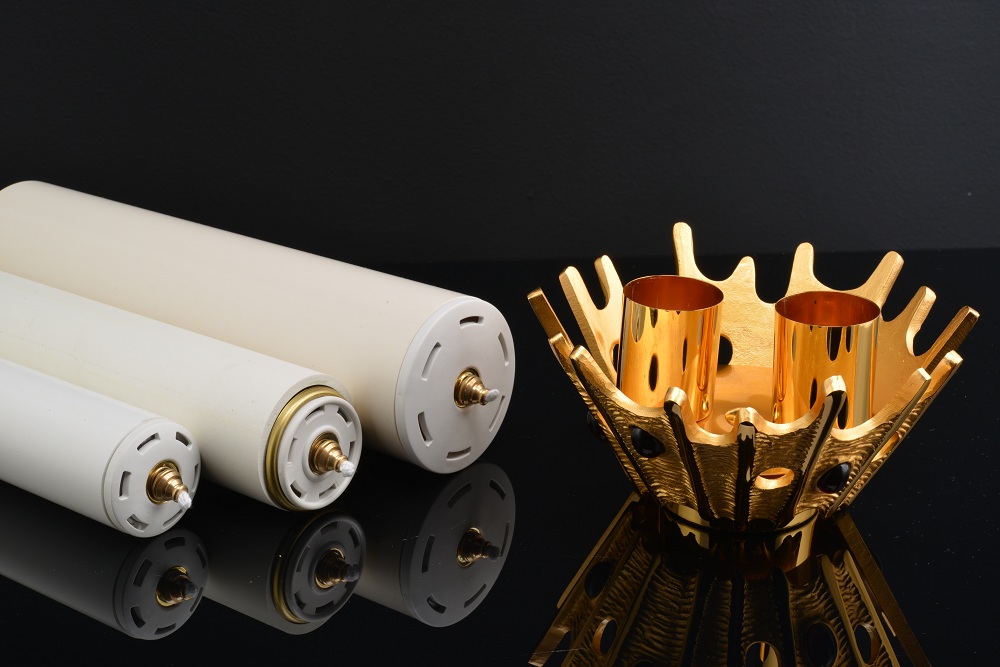
Votive candles are of great importance in all religions of the world, but in the Christian one, they take such a strong symbolic meaning that they have become over the centuries an indispensable element both in celebrations and in the decoration of churches and places of worship.

Votive candles in fact represent the light of the Risen Christ, who defeated death and forced darkness to retreat. Because of this value are often placed on the altar. In particular, all votive candles refer to the great paschal candle placed beside the altar and is lit for the Easter Vigil and blown out at Pentecost, symbolizing Jesus as “Light of the World.

Votive candles also recall the tongues of flame with which the Holy Spirit descended on Mary and the Apostles on Pentecost, investing them with the mission to bring the Word of God among all the tribes, languages, people and nations.

Votive candles also serve as an aid to prayer. In front of chapels or statues of the Madonna or the Saints they are often lit as a symbol of faith and hope; an act of devotion which is also a call for help, protection, a little light, but vivid, brilliant, in the frightening darkness of existence.

Although these days electric lights are considered to be more comfortable and safe, the suggestion created by the beat of the flames of votive candles in the naves of churches or chapels is a heartbreakingly beautiful spectacle which is difficult to give up. Of course, would have no meaning if they were not supported by prayer. When lit, it is appropriate to dwell on the symbolic value of the gesture that is happening, on how the votive candles are a symbol of light and how light is present, act of faith and hope.

Church supplies

Church supplies

With Church Supplies we mean the set of objects that are used to worship, especially for the celebration of the Eucharist, but also to adorn the altar, the church and the person of the priest (in this case we speak more properly of liturgical vestments),…

Saint Rita of Cascia

Saint Rita of Cascia

Saint Rita of Cascia was an Augustinian nun who lived in 1400. Born in Cascia (PG), was beatified 180 years after her death and proclaimed Saint after 453 years. Saint Rita is the subject of an extraordinary popular devotion, and is certainly one of the…

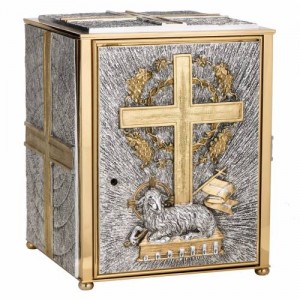
Metal ciborium

Metal ciborium

The word ‘ciborium‘ probably comes from the Greek πυξίς, generic name for any vessel intended to contain small objects. It was mostly hardwood boxes but soon came used to define containers of metal or clay, ivory or bone.

In the Middle Ages people began to use the name “metal ciborium” to define the container intended to preserve the consecrated hosts, the sacred vessel kept in the Tabernacle and covered by a veil.

Initially metal ciboriums were cylindrical containers, intended only for the storage of hosts. Over time, metal ciborium became the container intended to distribute Holy Communion, in addition to storage of the consecrated hosts not consumed. Metal ciborium then assumed the shape of a chalice, with a much wider cup and the foot and the stem less tall of a common cup. The top is closed by a rounded cover surmounted by a small cross or by a statuette of Christ.

The ciborium is usually made of precious metal (gold, silver, gilded silver, etc.) with golden cup, being a sacred vessel in direct contact with the consecrated hosts.

Metal ciborium containing the hosts is usually preserved in the tabernacle. Only during the Eucharistic celebration, metal ciborium may be placed on the altar, as an object of devotion.

Metal ciboriums are always made of gold, silver and other precious metals and decorated with ornaments and carvings.

There are several types of metal ciboriums:

Tower Ciborium, the oldest, a cylindrical shape with hinged lid;
Chrism-Ciborium cross-shaped, where in the central part the host is kept and in the lower the holy oil;
Viaticum Ciborium, to bring the Eucharist to the sick;
Suspended Ciborium, with a ring on the lid that allows you to suspend it over the altar.

Saint Francis of Assisi

Saint Francis of Assisi

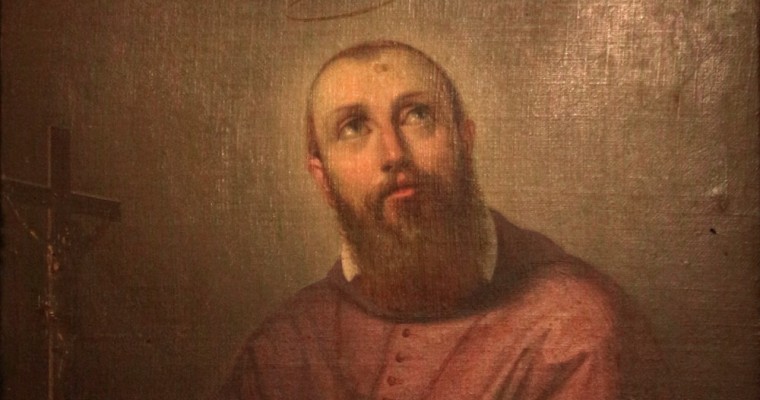
Hard to write something new about Saint Francis of Assisi, one of the most beloved saints and revered by the Catholic Church, proclaimed along with Saint Catherine of Siena the main patron saint of Italy by Pope Pius XII. Moreover, it is no coincidence. St.…

Metal chalice

Metal chalice

Metal chalice is indispensable and important furnishings for the celebration. In fact, it is in the consecrated chalice that transubstantiation happens, and the wine becomes the blood of Christ. The uniqueness and greatness of this revelation has led over the centuries to the need for…

Travel mass kits

Travel mass kits

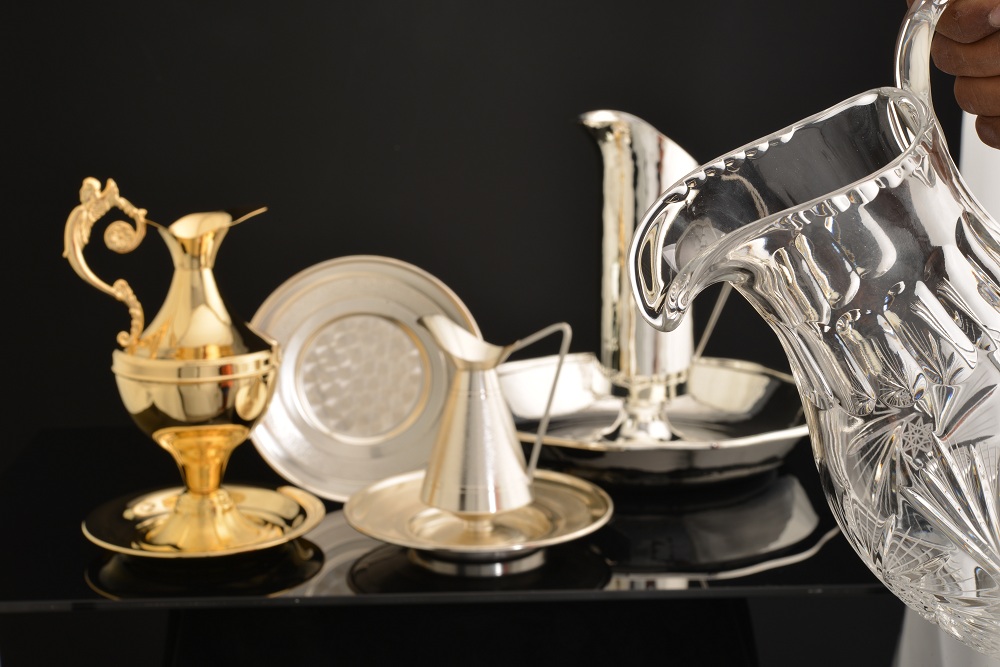
Travel mass kits are indispensable objects for modern priests, called much more than their colleagues of the past, to be ready to celebrate Mass everywhere, in different environments, often not equipped for this purpose. This makes inevitable the endowment of travel mass kits, real kits composed some with only few essential pieces, other more complete. We can find then travel mass kits composed of only bottles for wine, holy water and pyxes for the hosts, while others also include chalices, ciborium, tablecloths and even liturgical candlesticks and church furniture apt for travelling.

The importance of the travel mass kits is exemplified if you think of the work of missionaries, who since ancient times were required to carry all the equipment needed for the liturgical rites, even consecrated portable altars, stole and liturgical spool, ampoules and even tabernacle. Materials often delicate and awkward to move, especially for long trips and in inhospitable and desolate landscape.

Modern priests are surely benefited from the existence of travel mass kits. Robust, compact and essential, catholic mass kits contain everything needed for the liturgy in a small space and easy to handle, and can be conveniently transported to celebrate Mass wherever is required: outdoors, camping and even on a boat. Another series that makes portable mass kits essential is the need for the priest to be able to visit those who, for one reason or another, can not go to church. We think to facilities like hospitals, clinics, nursing homes, but also schools or prisons. Irreplaceable tools, therefore, travel mass kits are the symbol of the itinerant priests, called to carry the Words of God everywhere.

On Holyart.com you will find more than 50 different models of Travel mass kits.

The Ambo

The Ambo

The ambo is a typical piece of furniture of the Christian Church since its origins. It is an elevated platform of various dimensions and materials, always decorated with engravings of solemn symbolic value. In its simpler forms, it is comparable to a normal lectern but…

Altar candles

Altar candles

Already when we were kids, we used to light a candle in the church, a gesture that almost seems like a game, but full of meaning. And this gesture means light. The light was first created by God and illuminates our lives since the beginning,…

Our Lady of Medjugorje

Our Lady of Medjugorje

Our Lady of Medjugorje is the always benevolent and sweet mother that welcomes, protects and accompanies Christians along their path.

Our Lady of Medjugorje is, in particular, the one who guides believers toward Peace, showing them a faithful road, made of daily devotional and loving acts.

For her special vocation, Our Lady of Medjugorje is also called the “Queen of Peace” and this last one is achievable thanks to five steps:

– Reciting the rosary every day;
– If one is healthy, fasting every Wednesday and Friday. Elderly or sick people, instead of fasting, can make an offer to Our Lady of Medjugorje;
– Reading daily the Holy Bible;
– Taking the Eucharist, better if every day.

To whomever follows these five rules, Our Lady of Medjugorje guarantees salvation and her support toward God.

Moreover, it is said that Our Lady of Medjugorje revealed to her prophets “ten secrets” that will be unveiled at the right time and place in the future.

Our Lady of Medjugorje, our lovely Queen of Peace, is a symbol of hope for many believers that speak to her, in order to find a connection or dialogue with God. Many also travel to Medjugorje so they can personally live this wonder.

Liturgical vestments

Liturgical vestments

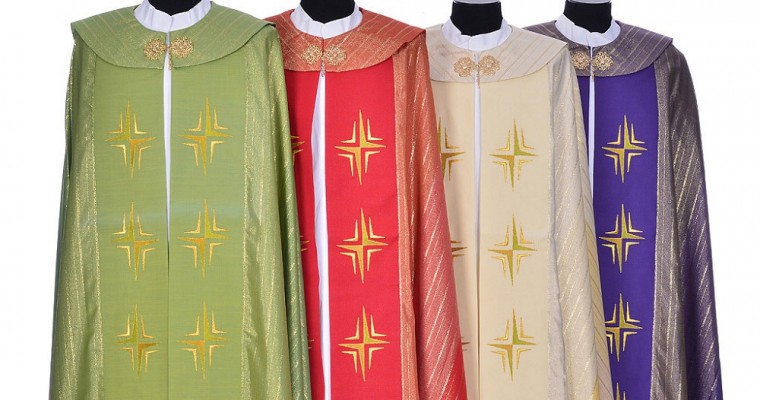
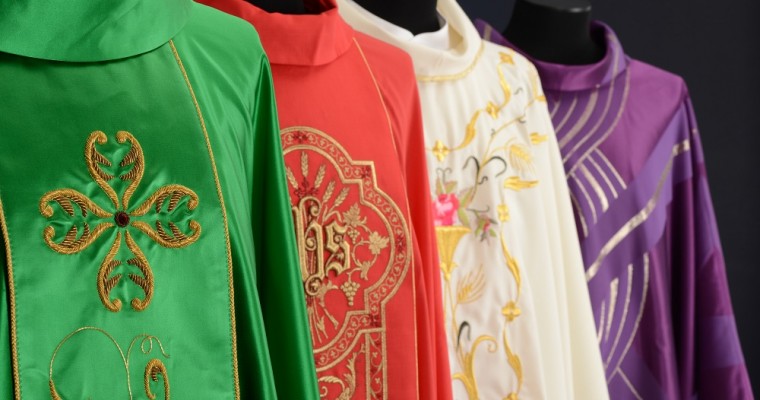
With Liturgical Vestments, or Sacred Vestments we intend all clothes and linens, vestments and altar cloths used during mass celebrations from clergy. “Liturgical Vestment” has taken over in time of the previous definition “Sacred Vestment”, especially after the Liturgical Reform. Apparel has an important role…

The Communion chalice

The Communion chalice

The practice of passing round a chalice during a meal from which all those present drink as a sign of communion, is as ancient as humanity itself. For a Christian, there is no greater moment of the communion of the Eucharist, when the bread of…

Virgin Mary statues

Virgin Mary statues

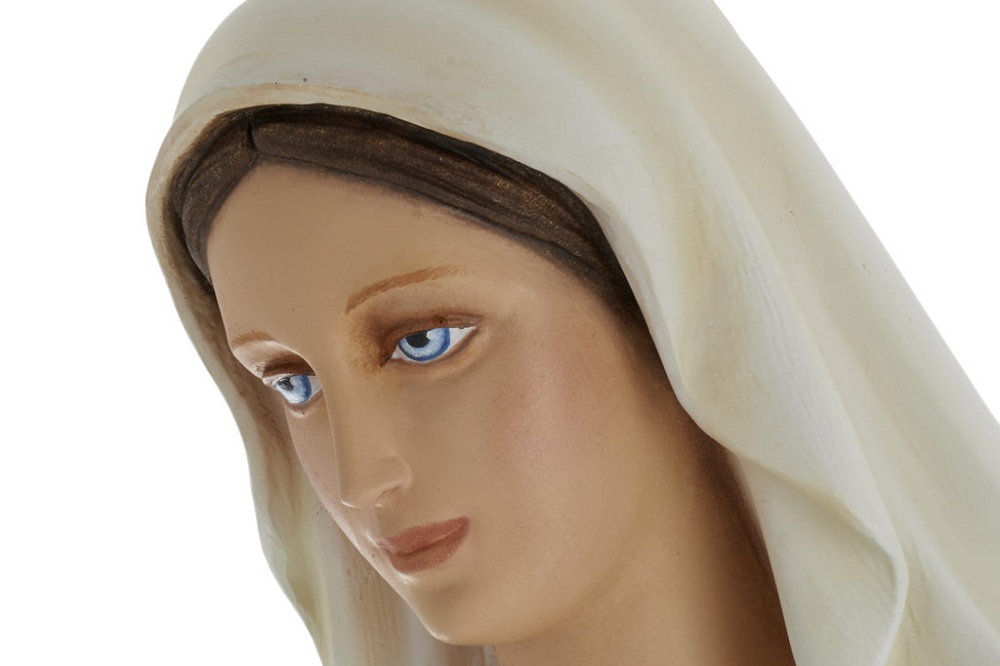
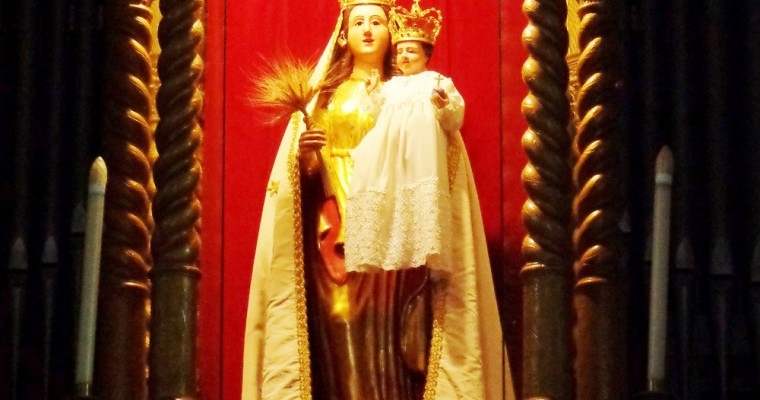
Amongst the various duties of a good Christian, the veneration of the Virgin Mary is the one which above all, gives voice to a need. The intrinsic need in the heart of every man, in any time and place, to be able to turn to a benevolent and infinitely compassionate presence, even if it’s in the form of a simple Virgin Mary statues, who reaches out with her merciful hands to receive the soul, to give them peace and forgiveness.

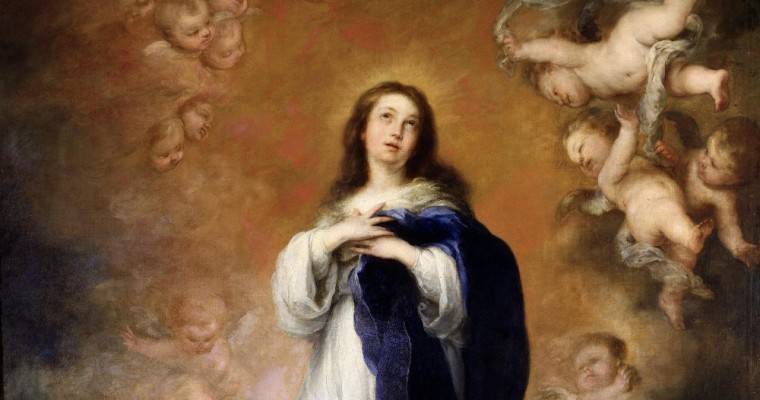
Being aware of this need, the Church has always encouraged the adoration of Mary through various representations, such as the Virgin Mary statues, which can be found inside all churches. Mother of Jesus and of every man, the most sublime creature of the creation, willed by God for the wonder of heaven and earth.

In this women full of Grace, flow the desires and hopes of all sorrowful men, which in her name and semblance, find the most pure, authentic and unconditional love. That of the mother which receives and consoles, which comforts and soothes, which above all, forgives even the worst sinners, giving them hope. It is not by chance that Virgin Mary statues often represent her with a child in her arms, to symbolize her fundamental role as mother of every man.

Mother of immense love, mother of immense pain, in the ultimate sacrifice of her only beloved son. To this symbol of purity and love are dedicated a place of honor in the liturgy. A good Christian is called upon to manifest his dedication every day, with exercises of devotion and piety.

Virgin Mary statues adorn churches and sanctuaries all around the world, an intangible sign that this faith needs love. The statues which represent her, although very different from one another, nonetheless, express the same concept of kindness, compassion and benevolence. In the shadow of the virgin clothing, in which the Mother Mary statue is often seen draped, the soul finds enlightenment, kindness and respite. It does not matter if the material used to create the statue of Mary is humble or magnificent. It can be made from chalk, wood, marble, or more modern resin, and PVC. It does not matter, if She is adorned with gold or precious stones, or made as a simple white effigy.

Virgin Mary statues are sentinels of grace placed to guard the heart; they are safe sanctuaries, symbols of the authentic devotion, and reciprocal love.

Here some of our Virgin Mary statues, present on our Holyart.com catalogue.

Immaculate Madonna 100cm statue in painted reconstituted marble
Immaculate Madonna in reconstituted marble
Our Lady of Lourdes fiberglass statue 100 cm
Our Lady of Lourdes fiberglass statue
Our Lady of Fatima fiberglass statue 120 cm