Author: Redazione

Benino, the sleeping shepherd

Benino, the sleeping shepherd

Among the many characters that are part of the Neapolitan nativity, there are those whose stories are handed down in a very charming and fascinating tradition. The Neapolitan nativity scene, more than any other, is made up of symbols embodied by men and women, figures…

Christmas Home decorations

Christmas Home decorations

The Christmas spirit is unique and indescribable. It slowly seeps into houses, spreading around like a nice perfume, a past scent that reminds you of comforting memories and a golden, unforgettable childhood. Maybe in contrast to the outside cold, a new heat spreads around inside…

Christmas Candles: Christmas scents in your home

Christmas Candles: Christmas scents in your home

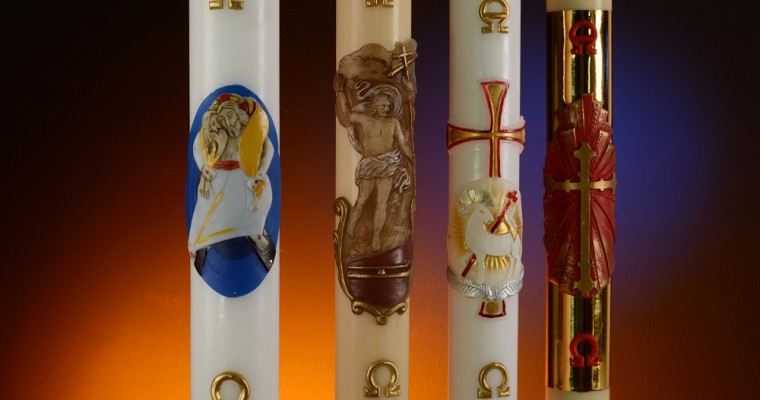
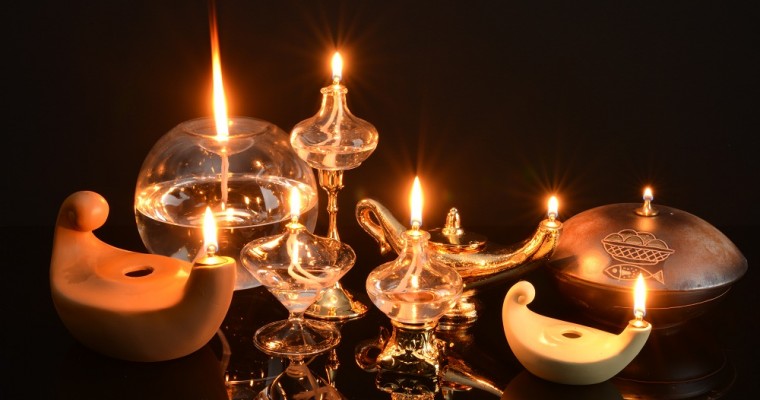
What would Christmas be without the subtle, magic atmosphere that only festive candles can create? The whole house seems to be lit with pulsating lights that emit a lovely heat, making you feel united and closer together!

Christmas candles are refined compliments suitable for all types of houses and furnishings. They give a sense of festive spirit and make the house feel special, lighting it up with its bright lights, red, white, gold, and silver, and with their shapes and refined decorations.

You can put them anywhere, even with holly decorations, or together with a table centrepiece decorated with red berries. Christmas candles make the festive season even more special and unrepeatable. The wax scent spreads around, bringing out the soul and warming up your heart.

Placed on the meal table, or simply lit every night to warm up the house, Christmas candles cannot be absent from the celebration period. The house will become more welcoming, wrapped up in a magical atmosphere.

Christmas candles can also be sculpted into real works of art, or be in the shape of angels, Christmas trees, stars, pine cones, or flowers. An endless range of subjects and colours for all tastes and houses. There are also Christmas candles enclosed in delicate glass candleholders, decorated in gold and silver or with Christmas pictures. Little by little, the wax takes over and the light becomes even warmer, dimmer, making the beautiful decorations glimmer.

On colder nights, on the Night of all nights, the warm Christmas candle light designs a fluttery and magical pathway, a quivering glitter, that goes up from the warmth of every single house to the night sky like a procession of pulsating stars.

Animated Scenes – Shepherds

Animated Scenes – Shepherds

The nativity scene has an ancient tradition that is renewed every year in homes and churches all over the world. This charming custom would be difficult to give up, as it remind us of childhood Christmases and the magnificent appearance of all these unique and…

10 decorations for your Christmas tree

10 decorations for your Christmas tree

The summer seemed to be over in the blink of an eye, and it is weird to think about Christmas already. Yet, as autumn turns the leaves gold and the first cold invites you to get out your warmer, softer, cozier clothes, while the sunset…

DIY Nativity: create your own small masterpiece

DIY Nativity: create your own small masterpiece

The tradition of the nativity scene has always been very strong in Italy. Nativities made of every material and size enrich Italian homes, small and large churches, and all places where the Christmas spirit lingers and spreads.

In recent years, this tradition has taken on a new and very particular ‘trend’: assembling your own crib by yourself, according to your whim, creativity and own tastes. Almost a child’s game, you create a perfect detailed little village, but it is a very serious game, which in certain cases results in small works of art, as used to happen with dollhouses.

The DIY Nativity offers an infinite range of possible combinations. In addition to sets and locations for DIY nativities made of real moss, cork and wood, you can buy accessories that allow you to customise it to the tiniest detail: animals of the manger, miniature food, gates, railings and balconies, lanterns and lights cribs, lichen and moss plants, pumps and electric motors for electric fountains, electric mills, furnaces, waterfalls, streams, even tiles for the roofs of houses! Backdrops and panels can be useful to create even richer and more suggestive scenes.

This wealth of detail guarantees the DIY nativity a wonderful realistic effect. The manger comes alive with small details that seem to live their own lives. The commitment and dedication in achieving such a work reflects the spirit of devotion, which manifests itself in an activity, which is at the same time old and new, requiring care, imagination, and attention. The DIY manger is an act that enriches its creator that forms small, special and unique worlds, making a manifestation of an inner vision of spirituality, tradition and beauty.

The Christmas items to rediscover the value of communion and the spirituality of Christmas

The Christmas items to rediscover the value of communion and the spirituality of Christmas

Christmas is perhaps the most heartfelt and celebrated occasion by Christians around the world. It is especially due to its religious significance, the perpetual renewal of the immense mystery of the incarnation of God becoming man, of his miraculous birth, a prelude to eternal salvation…

Clergy shirts

Clergy shirts

With the term clergy we generally define the religious suits consisting of trousers, shirt and black or gray jacket, worn by priests outside of the celebrations. More in particular, however, the definition is referred to the typical clergy shirt, which characterizes unequivocally this attire. The…

Padre Pio statues

Padre Pio statues

The sort devotion around the figure of Pio of Pietrelcina, better known by the faithful as Padre Pio, exceeds in dissemination and ardor that dedicated to many other saints and famous historic holy.

This affection and enthusiasm come from the same religious character of Pietrelcina, from his deep humanity, from his being entirely and constantly straining toward the people, his people, who loved him and always followed, attracted by his sanctity and his mystery. His fame as a miracle worker did not only increase the affection and devotion of his devotees

After his death and canonization, the figure of Padre Pio has assumed a magnitude even greater and his veneration has reached global proportions.

Padre Pio statues are among the objects to which more the worship of the devotees to the Holy targets.

Padre Pio statues, both those produced in series and the real sculptures and monuments, are works that attempt to give the grace of the Holy in the materials of all kinds, to allow anyone to feel closer.

Padre Pio statues are often made of wood, natural and living material, which over time acquires greater beauty and value. However, Padre Pio statues in any shape and size, can also be made of bronze, fiberglass, marble, glass, clay.

They are often unique pieces, hand worked, precious and refined artistic achievements, but mass production is also widespread: daily devotional objects, that protect and preserve the house, offering in every instant comfort and support to those who live there.

Padre Pio statues often hark back to the original created in San Giovanni Rotondo, by local artisans: the Holy usually appears in blessing position, his face bathed in sweetness and devotion, the secret hope of those who know they have been chosen to bring Love in the world.

Metal pyxes

Metal pyxes

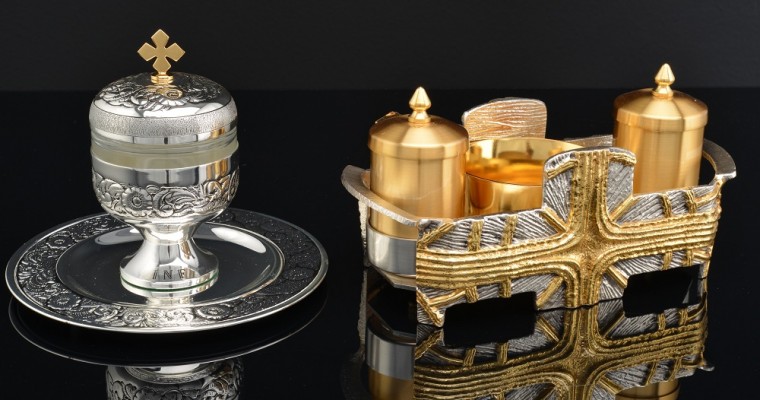
Metal pyxes are containers designed to enclose the consecrated hosts. The Eucharistic pyxes are usually made of enamel plate, pewter, silver plate, gold-plated brass, aluminum, but can also have inserts of other metals, or glass, or even be in olive wood. They are small size…

Our Lady of Mount Carmel

Our Lady of Mount Carmel

Our Lady of Mount Carmel (or of Carmine) is one of the oldest and most beloved forms of worship to Christians. It is celebrated on July 16th, when, in 1251, Our Lady of Mount Carmel would have appeared to the English priest Simon Stock, then…

Monstrance stand

Monstrance stand

The monstrance stand is a shelf upon which the monstrance is placed.

The monstrance is the sacred container used for the exposition of the Blessed Sacrament to the faithful. Such exposure takes place during worship and Eucharistic blessing. The very name of this furniture fully symbolizes its use: it comes from Latin, meaning “to show”. Such an important and solemn object requires an equally valuable support surface.

The monstrance stand thus became a church good of primary importance. Usually these are small thabors in brass or gilded and silver bronze used as basis for the exposition of the Blessed Sacrament, but can also be made of wood, glass, and other materials.

Often the monstrance stand is enriched with decorations and sculptures: praying angels, evangelists, perforated crosses, doves, fish, deers, grapevines, grapes, and other sacred symbols linked to the figure of Christ and the mystery of his death and resurrection.

Some monstrance stands, for the value of the materials and the artisanship with which they are made, rise to the value of true works of art, further enriched by the monstrance to them combined.

From the 15th century, it developed and spread the monstrance of the “architectural” form, shaped like a tower or pointed temple, usually in gold or silver, decorated with pinnacles. For this type of monstrance in particular, the base had to be equally rich and artistically drawn. This form of monstrance and monstrance stand is still used in the Ambrosian liturgy. The thabor (or throne) is another type of monstrance stand. It is a sort of kiosk, or small temple, in wood (but also in silver and other precious metals), surmounted by a canopy. This monstrance stand is exposed on the altar for adoration and Eucharistic blessing.

Our Lady of Fatima

Our Lady of Fatima

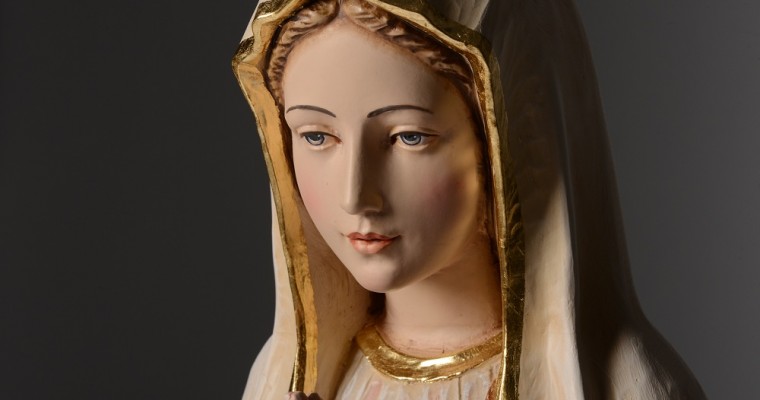
Our Lady of Fátima, or Our Lady of the Holy Rosary of Fátima (Nossa Senhora de Fátima), is one of the names by which Mary, mother of Jesus is known and adored around the world. It derives from the Portuguese town of Fatima, where in…

Holy Family statue

Holy Family statue

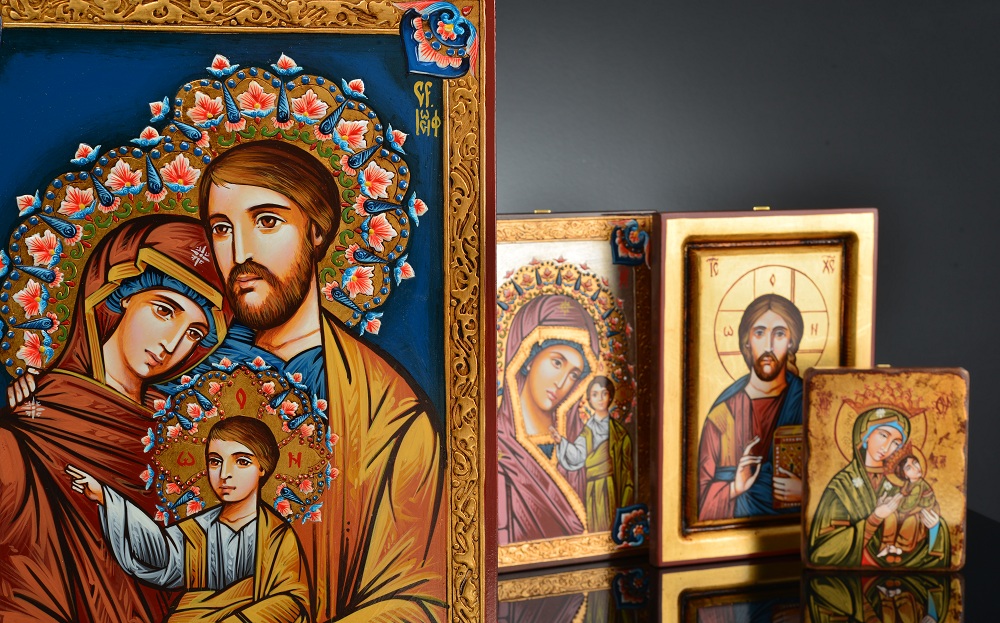
With Holy Family we commonly define the family of Jesus, Mary and St. Joseph. It is also known as the Family of Nazareth, after the city where they lived. The Holy Family has provided since the beginning of the church the model to which every…

Lecterns

Lecterns

Lecterns are an essential church supplies. Usually the lectern is placed before the altar, on the presbytery. Its name derives from the greek λογειον, loghĕion, “pulpit” from which it differs in some features. While the pulpit is for the preaching, the lectern serves as a support for the liturgical book during the readings.

In ancient times, it was the deacon who was holding up the book, and this happens even on the occasion of the solemn masses. In time, the lectern took place, complementing the other structures, such as the ambo.

Over the centuries, the lectern, like all other church supplies, suffered inevitable stylistic and structure changes, adapting itself to the development of the arts. Carvings, gilding and bas-reliefs transformed the lecterns in true works of art and the use of precious metals in their construction, made them objects of immense value. Often the support column was replaced with an anthropomorphic sculpture of great symbolic value.

Approaching the 19th century, even the lectern is moving towards a more sober and straightforward style, consisting of a metal column or sculpted frame (eagle with spread wings). The column can be carved, decorated with friezes and gilded, or twisted. For modern lecterns is preferred solid wood, but some lecterns are also made with different materials, such as aluminum, steel, plexiglass.

The lectern can be adjusted to suit the needs of the readers and the church that houses it.

Liturgical chasubles

Liturgical chasubles

Liturgical chasubles are what the priest wears during the celebration of Holy Mass. It is one of the most important sacred vestments and its use is linked to a specific coding and specific rules. Liturgical chasubles can be of various shapes. It should be worn…

Metal reliquaries

Metal reliquaries

The metal reliquaries are containers made of different materials and with the most varied forms, designed to contain and preserve the mortal remains of the saints, or what remains of them, like fragments of bones or other body parts. The word “reliquary” comes from the…

Our Lady of Lourdes

Our Lady of Lourdes

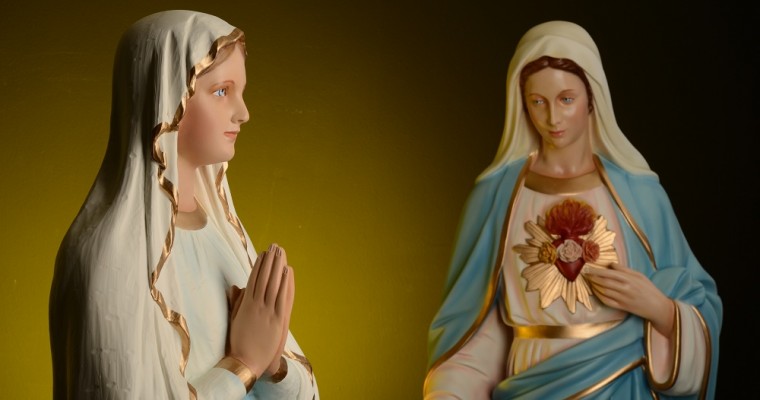
With the Our Lady of Lourdes epithet, Catholic refer to Mary, mother of Jesus, who in 1858 appeared eighteen times to Bernadette Soubirous, a fourteen year old peasant who lived in the French town of Lourdes. The girl claimed to have seen a “beautiful Lady” dressed in white and with a blue belt in a grotto at Massabielle. This description of Our Lady of Lourdes sanctioned in a sense the typical iconography of the most common figure of Mary to the present day.

Although there were those who from the beginning doubted the words of Bernadette, near the place where the girl said to have witnessed the apparitions was erected a statue of Our Lady of Lourdes. In the following years, at the cave, there arose a great sanctuary dedicated to Mary of Lourdes.

According to the detractors, Bernadette would be crazy, while for others, her visions of Our Lady of Lourdes would have been invented by Abbot Aravent, a family friend, to exonerate her father, unjustly arrested for theft. From the beginning, in any case, the debate about Our Lady of Lourdes took on national proportions, and was influenced by political and social motives as well as religious.

On the other hand, however, the devotion of the faithful to Our Lady of Lourdes, fueled by the belief of the peasant girl Bernadette, and later of her supporters, like Peyramale pastor, became so great as to warrant a formal recognition by the Church. This recognition came in 1862.

Today the sanctuary of Our Lady of Lourdes has three main basilicas of the shrine at Lourdes, as well as the tent and Adoration Chapel, located at the grotto of the apparitions.

The worship of Our Lady of Lourdes is associated with many miraculous healings that have taken place over the years and brings thousands of people especially the sick and infirm to visit the shrine, to bathe in pools filled with water from the spring that flows from the grotto of the apparitions and drinking Lourdes water, which flows from the many fountains.