Author: Redazione

The symbology of the orthodox cross

The symbology of the orthodox cross

The Orthodox cross is a particular version of the cross, characterised by some symbolic elements that make it unique to its kind. It is divided into a vertical line crossed by three diagonal bars. In a stylised way, these bars represent the crucifixion of Jesus:…

The colours of the Catholic liturgy and their meaning

The colours of the Catholic liturgy and their meaning

The liturgical vestments of Catholic priests during religious celebrations and the many sacred vestments used by them, differs according to a range of colours that have a precise symbolic meaning. The colours of liturgical vestments, such as the cope, chasuble, dalmatic and the stole, refer…

The great master of spirituality, St. Francis de Sales

The great master of spirituality, St. Francis de Sales

The Patron Saint of Journalists, an eminent figure of the Counter Reformation and the French Catholic mystic, St. Francis de Sales was an authoritative doctor of the Church, but a man of his time first.

Born in 1567 and raised in a family of ancient Savoyard nobility, he enjoyed all the privileges that his birth gave him, living between France and Italy, and pursuing his education at the most prestigious schools and universities.

Despite the infinite possibilities that his position and his name would guarantee him, he preferred to follow a religious vocation. He took orders and immediately devoted himself to preaching, especially against the Protestant Reformation.

Voluntarily, he chose to settle in Geneva, symbol of Calvinism and maximum headquarter of the reformers, and in a few years, he became bishop of the city. His method was based primarily on dialogue, and on the belief that the divine presence was present in men, supporting their actions. Especially in the early years of his preaching, the ‘manifests’ he affixed in public places were famous, as were the papers that he slid under doors to reach the faithful via written word for those he could not reach in person.

It was this unusual and new use of written communication that made him the patron of journalists and writers. He was the author of important religious works, which are still considered today to be among the most important texts of the Church, such as the “Introduction to the Devout Life” and “Treatise on the love of God”. His idea of love of God was at the root of all his preaching and work, and allowed him to convert also many Huguenots and Calvinists to Catholicism. In this sense, he was one of the main representatives of devout humanism. He was beatified in 1661, less than forty years after his death, and he inspired many congregations, particularly the Salesian Family created by Saint John Bosco, with regard to the education of children, especially those of the poorest classes.

The importance of the tabernacle in the Catholic Church

The importance of the tabernacle in the Catholic Church

The tabernacle is the place of the church that holds the ciborium containing the Eucharist. This makes the tabernacle the heart and the cornerstone of each church; it is the reference of those who come to pray and worship the body of Christ even outside…

St. Agnes: story of a virgin and martyr

St. Agnes: story of a virgin and martyr

St. Agnes is the patron of virgins, fiancées and girls of marriageable age. Inevitably, if we think of her history, it is as tragic as it is poignant. She was a young girl belonging to one of the most powerful aristocratic families of Rome, who,…

Russian painted eggs: symbol of the Resurrection of Christ

Russian painted eggs: symbol of the Resurrection of Christ

The egg is always, in every culture, a symbol of life. The tradition of giving real eggs painted or made of various materials, is both religious and secular in all countries. It has origins in paganism: the egg as a symbol of rebirth and fertility, with its yellow yolk that symbolises the sun and life.

The tradition has existed in Russia since ancient times and has reached levels of truly impressive artistic craftsmanship. Especially at Easter, it is a widespread custom to give painted and decorated eggs.

It seems that this custom’s origin harks back to the legend that Mary Magdalene came to Rome to preach the Gospel, and offered to Emperor Tiberius a red-coloured egg and said, “Christ is risen.” Since then giving painted eggs has become a way of celebrating the Resurrection.

Initially these were chicken eggs or eggs from other birds painted by women, but they later became true works of art. The most striking case is undoubtedly that of the imperial Fabergé eggs, real jewels enriched with precious stones, varnish, diamonds, and pearls, made from its homonymous company and donated by the last Tsar of Russia to the women of the imperial family.

Even the traditional Russian painted eggs have always been very popular. Usually made of wood, but also with other materials that are can be precious, or even humble, like papier-mâché, have difficulty not indifferent to their form, on which is not easy to paint, which is what makes them so special.

The best icon painters and Russian miniaturists ventured in the difficult art of painted Russian eggs by using a magnifying glass and a single bristle brush for the details of faces and detailed environments in surprising ways.

In more recent times, some artists have chosen to use the decoupage technique on Russian painted eggs, by applying silkscreen icons onto the surface of the egg.

Russian painted eggs’ decoration follows a precise colour and symbol code. The subjects are the same as those reproduced on Russian icons, with a particular occurrence of the figure of the Virgin and Christ the Resurrected.

Religious marble statues in Christian tradition

Religious marble statues in Christian tradition

The production of religious marble statues belongs to the artistic tradition of Christianity dating back to the antiquity. Particularly in Italy, the influence of firstly Greek then Roman sculpture decisively influenced the evolution of religious art. The models and the classical pagan and Roman sculpture…

Immaculate Virgin Mary as a symbol of the Redemption

Immaculate Virgin Mary as a symbol of the Redemption

The immaculate Mary is a definition of the Virgin Mary that highlights her lack of original sin from birth. Namely, the immaculate Virgin Mary was born without original sin, contrary to what the Church states for all other human beings. Her conception was normal, like…

The story of St. John the Baptist

The story of St. John the Baptist

St. John the Baptist is one of the most important figures, not only for the Catholic Christian religion, but in general, for all Christian Churches and Islam, which considers him one of the most important prophets that preceded Muhammad.

The Lord Himself said that nobody born from a woman was greater than John the Baptist.

The statues depicting Saint John the Baptist often depict him as a child, to symbolise his precocious vocation. In fact, Catholics venerate him as the Precursor of Christ, the one who was appointed, whilst still in the womb, to prepare the coming of the Savior.

When Mary went to visit Elizabeth, her mother, the baby leapt for joy in her womb in awareness of the imminent birth of Jesus. His birth was announced by the archangel Gabriel, who made the announcement to Mary, and was, as he was his whole life, prophetic for the coming of Christ. Statues in San Giovanni Battista often have a lamb in their arms, a sign of his pastoral dimension of souls.

Patron of the monks, was an ascetic, a hermit and the founder of a community that promises in verses that which was later created by Jesus of Nazareth. His preaching was focused on the imminent breakthrough represented by the advent of Jesus, John referred to as “stronger”, a bearer of salvation.

Giovanni Battista practised baptism as an act of penance, that is to say, immersion in the Jordan River as a sign of penance. The baptism of John the Baptist was not a mere ritual ablution, as mentioned previously among the Jews, but an authentic and conscious act of ‘conversion’ and spiritual choice. The statues representing John the Baptist as an adult show him dressed in leather. He is often wielding an axe, with which, according to tradition, he said he would sever the roots of the trees that would not have borne good fruit.

Pitchers for manuterges in religious ceremonies

Pitchers for manuterges in religious ceremonies

The act of washing has always played a very important role in religious ceremonies. Judaism has spread real baths, which go back to the baptism of John the Baptist, while the Koran prescribes the washing of the face, arms and feet before prayer. As part…

The value of the pastoral staff in Catholic symbolism

The value of the pastoral staff in Catholic symbolism

The pastoral staff is a symbol of ecclesiastical power, which usually designates the role of the bishop or abbot. It is a long rod with one curved or spiral end, fixed to the support by a collar and by a node. The staff symbolises a…

Saint Benedict of Norcia: patron of Europe

Saint Benedict of Norcia: patron of Europe

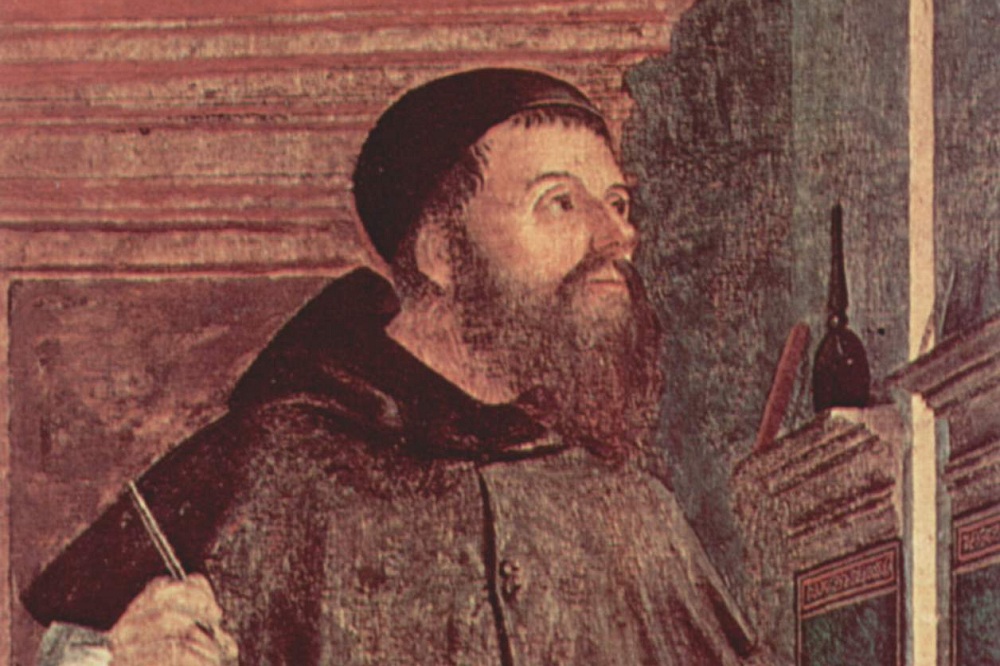
Saint Benedict of Norcia, patron of Europe, protector of monks, speleologists, architects and engineers, was an abbot born in Norcia in Umbria. After completing his studies in Rome, he retired to live as an anchorite first in Subiaco, then in Cassino. There, surrounded by numerous converts, he founded a monastery and defined his rules based on prayer and work (‘Ora et labora’), and became probably the world’s most well-known monk.

St. Benedict preached the alternation of prayer, reading the Word of God, with intense work, in an environment of love and mutual service between the brothers and to all the faithful.

A concrete man, St. Benedict wanted to leave a lifestyle aimed at perfection and spiritual elevation, but not limited to transcendence. How God intervenes in the concrete situations of human life, of every man, so man himself must never forget his presence, glorifying Him with prayer but also with everyday actions, with work, and charity. Action and contemplation, therefore, is not only for monks, but also for anyone who wants to approach God and live in his light, in his way, following in the footsteps of Jesus Christ, embracing labour and daily commitments with humility and joy.

The statues of St. Benedict are devotional objects dear to the faithful of the whole Catholic world. In them, the Saint is depicted with his order in his hand, in the form of a book or sheets.

In some cases, in St. Benedict statues other symbolic elements appear related to the life and experience of the Holy, such as the chalice or the crow. In both cases, St. Benedict statues refer to two episodes in which the monk risked being poisoned by his enemies, but God saved him, preserving him.

There are St. Benedict statues of all sizes, made of different materials, from wood to resin. In any case, St. Benedict statues provide a constant life and prayer reference valuable for anyone who wants to embrace his model and his choice.

The history of host moulds

The history of host moulds

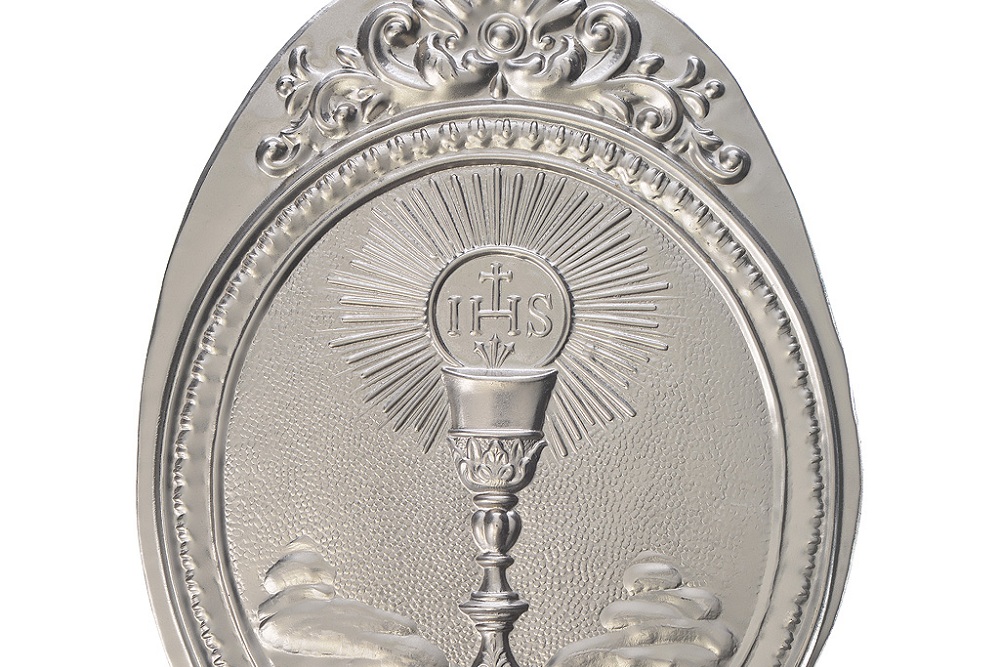
The tradition of giving consecrated bread a flat, round shape harks back to the end of the fourth century, in the Orient. After the fifth century, such customs also arrived in the West. We should not think, however, that the hosts made then are similar…

Liturgical bells in religious celebrations

Liturgical bells in religious celebrations

The use of liturgical bells in religious celebrations has very old origins. The bells were certainly known and used by all people in the antiquity, and have even been found in prehistoric tombs. The origins of the liturgical bells, which are still used in religious…

Our Lady of Providence: the incarnation of all grace

Our Lady of Providence: the incarnation of all grace

The Catholic Church attaches great importance to the figure of Mary, mother of Jesus, the incarnation of all grace. In her is manifested the infinite goodness of Christ, his immense sacrifice for his beloved children.

Our Lady of Divine Providence is one of the names the Church uses for Mary to remember this particular aspect of her figure. The word ‘Providence‘ brings together the concepts of the Incarnation and Redemption attributed to Christ.

The title Madonna of Providence is said to derive from Scipio Pulzone’s ‘Mater Divinae Providentiae’. Painted in 1580, it was exhibited in the Church of San Carlo in Catinari in Rome by the Barnabites fathers, to whom it was donated by the painter. The Secular Confraternity of Our Lady of Divine Providence, recognised by the Pope, was later created around the painting. It is a devoted charity and Christian mercy.

No incarnation of Mary is closer to the figure of the Mother than Mary of Providence.

With this title, we celebrate the superior will of God, in the name of providence and His ineffable love for us. He ordered that the Blessed Virgin became the Mother of Christ. Our Lady of Providence embodies in herself the mother who comforts, supports, protects and assists in times of need and in the worries of everyday life.

Our Lady of Providence acts as intermediary between the infinitely merciful Christ, her son, and the faithful, an unbreakable and strong bond, a sweet and solemn promise of salvation. We turn to her with devotion and hope, because nothing is more gentle and convincing than the voice of a mother who speaks in defence of her own children.

In addition, it is to this blessed Mother that Jesus entrusted all of his children from the cross. Our Lady of Providence is a bearer of Grace. She benevolently looks upon all acts of mercy and charity, which common people have devoted to her over the centuries, but also by Popes and future Saints.


A comfortable and functional alternatives to real candles: PVC candles

A comfortable and functional alternatives to real candles: PVC candles

PVC candles are comfortable and functional alternatives to real candles; can also be cheaper and safer than traditional candles made of beeswax, vegetable wax, or paraffin, and their effect in terms of atmosphere and solemnity is not envious of traditional ones. They use glass or plexiglass…

Liturgical cope: The vestment worn by priests in celebrations

Liturgical cope: The vestment worn by priests in celebrations

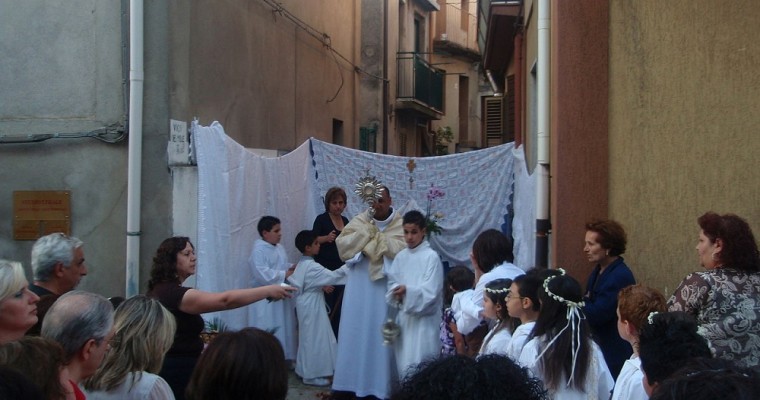
The liturgical cope is a vestment worn by priests in celebrations that take place outside of Mass or outside of the church itself. In fact, during Mass the celebrant only wears the chasuble. The liturgical cope is instead used in processions, Eucharist benedictions, vespers and…

DIY – Snowy Nativity

DIY – Snowy Nativity

Nativity lovers know it well: making realistic snow is not easy.

Although it is unlikely that there was snow in Palestine the night when Jesus was born, from the beginning there has been the tendency of setting the Nativity in the environment in which they lived. Hence the need, in some cases, to add realism to the scene with the snow.

Various methods have been devised over time to reproduce it, both more or less realistic. In the past salt, flour, powdered sugar, talcum powder, cotton wool, soda, chalk were used. Today they often use synthetic materials, such as sodium polyacrylate or the instantaneous snow spray.

Nevertheless, nativity lovers go further. There are real electronic systems to make very realistic and beautiful snow. With the aid of an aerator or a nebuliser, you can recreate the illusion of real snowfall, even creating the intensity and texture of the flakes.

A unit of LED lighting (snow generator) with electronic effects can recreate snow and ice on any surface, while a sound system will give realism to the scene with the sound of wind or flakes falling. Others prefer to use slides depicting the snowy landscape.

Then there are machines that create the snow, which allow you to reproduce spectacular snowfalls with flakes that really dissolve. They are scenographic-patented devices for the production of artificial snow. The snow machine is created to produce real snow starting from a liquid ingredient, with the ability to adjust the intensity and direction of the flakes according to their needs. The technology ensures low noise and almost dry, light snow that dissolves as it touches the ground. Alternatively, you can set up a very intense snowfall that will play during a few minutes of the nativity with a beautiful and realistic white blanket.