Author: Redazione

The Miraculous Madonna

The Miraculous Madonna

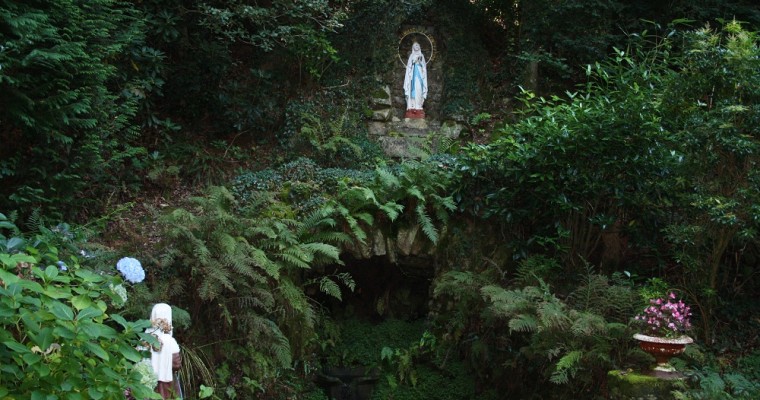
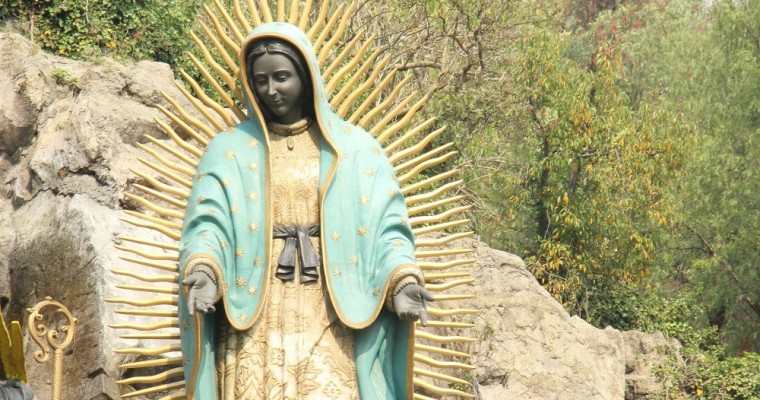
With Miraculous Madonna, the Catholic Church defines a miracle that took place in the Church of Saints James and Philip in Taggia, in the province of Imperia. Here, in 1855, while the population was gathered in prayer, the faithful noticed the eyes of a plaster…

Processional crosses

Processional crosses

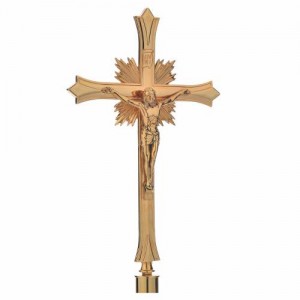
Processional crosses are mounted on long beams, which allow you to carry them in procession; are carried by an altar boy or a minor priest and usually lead the procession. In most cases, once you enter the church and reach the presbytery, processional crosses are set…

The beneficial properties of natural incense

The beneficial properties of natural incense

Incense has been used by mankind for thousands of years, since the ancient civilisations of Africa and Asia.

Its extraordinary effects on the body and mind have caused it to be considered from the beginning a kind of miraculous substance, suitable to the adoration of the gods, religious celebrations and in general to all that concerned the sphere of spirituality. The use of incense, as well as bark and fragrant wood, needed to appease the gods, to bring people together with them, or with the afterlife. The incense was also used to purify the environment and the body.

In all ancient cultures and in the great sacred texts of all religions, from the Bible to the Qur’an, there are references to the use of incense.

But what is the incense? It is a resin secreted by some in particular trees, dried and often mixed with aromatic wood, leaves, flowers and berries, which give the substance a different fragrance. The purity, the color and the size of the grains defining the various types of incense.

Even today there are many types of natural incense, incense mixtures, fragrant incense, balms and essences based incense. The use of incense is no longer limited to the environment and religious occasion, but also for example to the fragrance of the domestic environments and in many cases is aimed at the welfare of the person. In fact, many ancient medicines, such as Ayurveda, has always professed the benefits that natural incense can bring to the welfare and physical and spiritual health, and today the incense is widely used in the pharmaceutical industry, as well as in that of perfumes. It is used to produce creams and ointments, as an antiseptic for the lungs, as an adjunct in meditation, and in many other cases.

Even aromatherapy uses it extensively: there is evidence that the different types of incense may have significant effects on mood, stress reduction, anger, hormonal balance, and libido.

A fascinating feature is that you very often choose to work this precious substance according to ancient traditional methods, to maintain intact all the exceptional properties.

How to decorate the table at Christmas

How to decorate the table at Christmas

Christmas is the holiday that more than any other influences every year all aspects of daily life. Even those who choose not to celebrate it cannot help but be fascinated, be wrapped and infected by the atmosphere that is created in the streets, in shops,…

The Camaldolese Congregation of the Order of St. Benedict

The Camaldolese Congregation of the Order of St. Benedict

The Order of St. Benedict covers all autonomous monasteries and congregations who live according to the rule established by St. Benedict of Norcia. That rule, drawn up by the Holy and asserted 1817 onwards is based on the motto Ora et labora, pray and work.…

Complete Nativity Sets for those who didn’t have time to make their own

Complete Nativity Sets for those who didn’t have time to make their own

It is always good idea to be able to build a homemade nativity scene, customising and enriching it with unique details, populating it with figures chosen on the basis of their own experience, childhood memories, or just for the sake of finding something familiar and intimate in a tradition so old and beautiful.

But unfortunately we are always in a hurry, and very often the Christmas holidays coincide with periods in which work becomes even more pressing, commitments thicken, and the time to devote to what we really like diminishes more and more. This does not mean having to give up the nativity, not at all. Fortunately there are beautiful nativities that are sold ready-made, with all the accessories and figurines.

These are beautifully-made nativity scenes with huts, villages and perfectly reconstructed environments. They can be small, medium and large, depending on your needs and available space, and can be made of different materials, from stone to wood maple or olive, to porcelain, resin, for all tastes and all budgets.

Even the styles vary greatly: there are complete nativity scenes that recall the great Italian nativity traditions, from Neapolitan scenes to those of Val Gardena.

Buying a complete crib is comfortable and ensures a safe outcome for each type of house and furniture. Moreover, in this kind of nativity, the figurines are already all perfectly coordinated with each other, in a harmony of shapes and form that add elegance and sobriety. An order that is often lacking in DIY nativities is where figures differ to each other in size and style, and looking at them together is not always pleasant. Some of these ready-made nativities, then, may turn out to be real furniture and design objects, that will give value to your home or the home of friends who choose to give them away.

How to tell your child about the birth of Jesus

How to tell your child about the birth of Jesus

For today’s children, accustomed to a constant and often too hectic flow of information, it is not easy to understand the true spirit of Christmas. For many of them it is just an opportunity to receive gifts and special attention, but it would be really…

10 characters that cannot be missing from your nativity

10 characters that cannot be missing from your nativity

When St. Francis of Assisi had the idea of reproducing the birth of Jesus, his intention was to make an important and beautiful passage of the Gospels available to the poor and illiterate, unable to read for themselves the events which are so valuable for…

Sleeping Saint Joseph: Pope Francis’ patron saint

Sleeping Saint Joseph: Pope Francis’ patron saint

The human and religious history of Jorge Mario Bergoglio, the future Pope Francis, has been linked from the outset to a particular figure dear to Christians all around the world: that of St. Joseph. A thin connections, made of often fortuitous coincidences and a chain of small and large pieces that can, over time, create an extraordinarily vivid design with strong symbolism.

It is in the San Jose Buenos Aires church in 1953 that seventeen-year-old Jorge Mario Bergoglio discovers his vocation and decreed his desire to dedicate his life to God and mankind. So many years later, on the day of St. Joseph, March 19, 2013, that this boy became a man is devoted to the role of the Pontiff and Father of the Church.

Pope Francis had a long, arduous journey which he faced with courage, determination and optimism. It is journey that he has not undertaken alone. Pope Francis wanted St. Joseph with him, a good guide, a silent but attentive protector. Even today, in the private study of the Pope at Casa Santa Marta, there are two statues depicting the saint. One in particular is very dear to the Pope and has accompanied him since his life in the College Maximo San Miguel where he was rector. It is an unusual image for us, but very common among the Latin American faithful: a statue of St. Joseph sleeping.

Sleeping Saint Joseph
Sleeping Saint Joseph on Holyart.com

The Pope wanted it with him when he moved to Italy from Argentina. It is a wooden statue, simple in the same way as the man depicted was himself, wrapped in his humble and true red robes. Yet the symbolic value of this picture is great. When sleeping, Joseph receives the messages of God who warned him of the danger posed by King Herod, and advises him to love and protect Mary and the Child. It is in this dream that Joseph takes on his putative role of Father of Jesus and of all people, an archetypal figure, protector, defender, comforter. Joseph is the careful and tender guardian of the family, the man, who welcomes and guards the mysteries of God, as he has consciously chosen to accept and protect Maria, the woman that God willed to be the holy and immaculate mother of his only Son . Joseph is the archetype of the Christian bishop, father and protector of the Church and all men and women who make it up.

This is why the Pope has the habit of putting cars under the statue of the sleeping saint that contain problems, requests for grace, and prayers of the faithful. It’s like inviting Joseph to ‘sleep on it’, and perhaps put in a word to God to solve difficult situations and help the needy, thus renewing his role as the merciful and protective father to those he loves.

“I also want to tell you something very personal. I really like St. Joseph, because he is a strong and silent man. On my desk I have a picture of St. Joseph sleeping. And while he’s sleeping, he takes care of the Church! Yup! He can do it, we know that. And when I have a problem, a difficulty, I write a piece of paper and put it under St. Joseph, because he dreams about it! This gesture means: pray for this problem! “

This is what Francesco said on the January 16, 2015 to the families gathered in the Mall of Asia Arena in Manila. It was a very beautiful scene of simple and profound devotion which has prompted many faithful Italians to follow the example of the Pope and to put a statue of St. Joseph sleeping in their house. He is a really special saint that protects and even helps while he is sleeping!

Minimalist nativity for a Modern and Chic Christmas

Minimalist nativity for a Modern and Chic Christmas

Everyone has their own nativity. Not everyone sticks to the traditional nativity scene, which, we understand, is derived from many regional traditions in our country, like the Neapolitan terracotta nativity, or the wooden one from Val Gardena, the Lecce papier-mâché nativity or the ones in…

Miniature food for your nativity

Miniature food for your nativity

It’s the small details that make everything special. This is true in every creative, artistic and even culinary sector. The art of the nativity, both with its centuries-old tradition from artisans and excellent masters and its yearly renovation in homes, is not an exception. For…

10 Fun Facts about Nativity

10 Fun Facts about Nativity

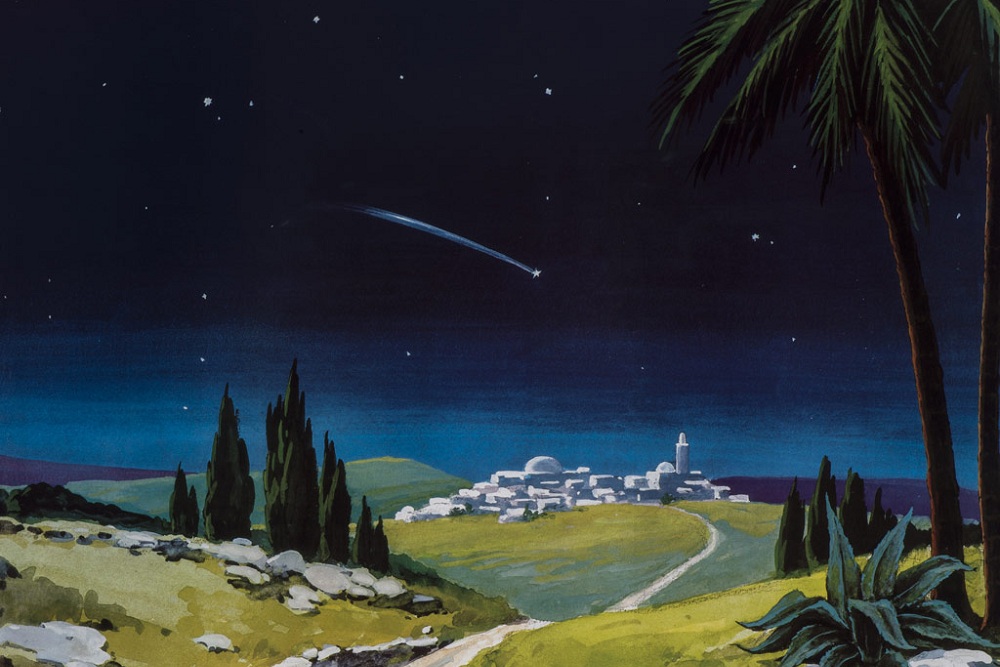
Christmas is getting nearer and children are buzzing, waiting to pull the first nativity statues out from the loft. Today we want to talk to you about the Nativity itself and 10 interesting things about of the most important Christmas symbols.

  1. Etymology of the word “Presepe” (Nativity)

We begin with the word “presepe” (nativity), an interesting word whose meaning is interesting to look into. Therefore, the word “presepe” comes from the Latin “praesepe”, which simply means “crib”. So baby Jesus’ improvised crib ended up being the name for the whole scene that reminds us of his miraculous birth every year!

Even words that define the nativity in other languages are derived from a Latin word meaning crib: “cripia”.

There is “creche”, “cribe”, “krippe”, “krubba” or even “presepe” in French, English, German and Swedish. The words “szopka” in Polish and “wertep” in Russian still mean crib and are used to define the nativity.

  1. The first Nativity in history

It was San Francesco d ’Assisi who wanted to represent the Birth of Jesus in a realistic way.

He particularly did it to benefit illiterate Christians who could not read the New Testament, particularly the sections about this extremely important event. This was December 1223.

  1. The world’s oldest nativity

The oldest nativity in the world is preserved in Bologna in the Basilica di San Stefano. It dates back to the 13th century. It is very big and the characters are real statues made by master sculptors and decorators.

  1. Lecce’s papier-mâché nativity

A Lecce nativity has always been known for being made out of papier-mâché. At the end of the 1800s, there were barbers who made papier-mâché and then made nativity statues and sold them at the Santa Lucia Fair to thicken up their miserable wages.

  1. Azteca: a Guinness nativity

In the Azteca stadium in Mexico City, there is a Guinness nativity scene made by primates, populated by more than 1500 statues, many of which are mechanised.

  1. Nativity statues of Via San Gregorio Armeno (Napoli)

In via San Gregorio Armeno, in Napoli, nativity artisans make statuettes every year made with traditional methods, but they use contemporary famous figures, like politicians, actors and people in show business. Matteo Salvini is one of the most popular figures.

  1. The Australian nativity

In Australia, the nativity is made on the beach, naturally using sand.

  1. Cesenatico’s floating nativity

Cesenatico’s famous floating nativity is made up of old boats in the canal harbour, which house the Sacred Family and all characters with greatness.

  1. Manarola: a sustainable nativity

In Manarola, in Liguria, ex-railway worker Mario Andreoli made one of the biggest nativity scene sin the world. It is situated on a hill that dominates Cinque Terre, and it is exclusively composed of figures made of scrap and recycled material. At dusk, a system of solar panels illuminates the whole side of the hill, creating a really impressive display.

  1. Forni: a nativity made of bread

In Forni, in Sardinia, the area’s bread makers make all the nativity characters with bread dough, then dress them in traditional Sardinian clothing.

Build your own Nativity Scene

Build your own Nativity Scene

Our country has a very illustrious and ancient tradition when it comes to nativity scenes. Since the medieval period, there has been a tradition of recreating scenes inspired by the night that baby Jesus was born in Bethlehem. It is a custom that expresses deep…

Christmas magic in Dyker Heights, New York

Christmas magic in Dyker Heights, New York

Maybe not everyone knows that Dyker Heights is a pretty residential neighbourhood in Brooklyn, which famous in the mid-80s for its very unique character. In fact, every year its residents begin a true decoration race in preparation for Christmas, rushing to be the first to…

The monastic community of Camaldoli

The monastic community of Camaldoli

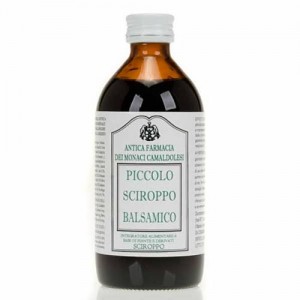
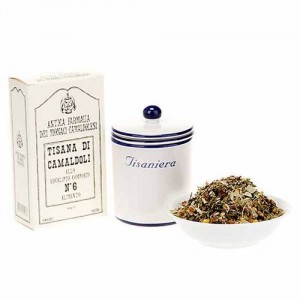
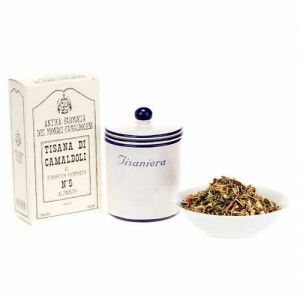
The Monastery of Camaldoli is in the heart of a secular forest, in one of the wild and impenetrable areas of the central Appennine ridge. It was built there in 1024, on the Tosco-romagnolo Apennines near Arezzo, by San Romualdo, a monk and Benedictine abbot, who made it the hub and center of the Camaldoli Congregation.

Faithful to Benedictine tradition, the monks of Camaldoli have always combined, over the centuries, contemplative, spiritual, productive and working life. In particular, given the unspoiled and isolated nature of the area, those who decided to dedicate their lives to God in the Monastery of Camaldoli, from the start they began to produce all that could guarantee their survival: food, medicines, cosmetics and hygiene products.

The dense forests surrounding the monastery provided them with the raw materials needed for this production. In addition, the interest of the Camaldolese monks in the study of nature in all its forms helped them exploit the surrounding natural resources. This has allowed over the centuries the emergence of a production of cosmetics and essential oils that still today make the monastic community of Camaldoli famous worldwide.

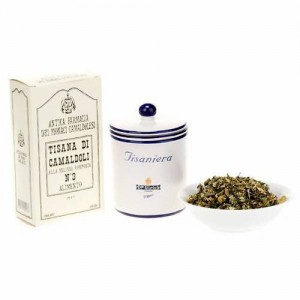
The ancient pharmacy of the Camaldoli Monks is one of the first examples of hospital ever recorded: aromatic herbs and medicinal herbs were studied here, and they prepared powders, infusions, decoctions and anything else that could contribute to the healing of not only the monks, but of the many pilgrims in search for help as well.

In the Old Pharmacy there were antidotes against every poison, creams to treat wounds, patches, but also essential and cosmetic oils for hygiene and body care. The extraordinary products produced in the Camaldoli Antique Pharmacy became well known over time, and are still sold and used all over the world. We think of Oil 31, consisting of 31 essential oils extracted from as many officinal herbs, renowned for its endless healing, refreshing, balsamic, toning and disinfecting properties, made according to a particular recipe passed over the centuries, or Laurus 48, a liquor made from the infusion of several medicine plants collected in the area of ​​the monastery with tonic and digestive properties.

The expressiveness of the Willow Tree collection

The expressiveness of the Willow Tree collection

The uniqueness that embodies the enchanting works of Susan Lordi, an American artist from Kansan City, most likely resides in their infinite expressiveness. It may sound like a contradiction for those who know her work. In fact, the feature that’s immediately evident when admiring these…

Pope John Paul II: 10 curiosities you might not know

Pope John Paul II: 10 curiosities you might not know

Pope John Paul II, or Pope Wojtyla, made the history of the twentieth century with his pontificate. He directed the Church for 27 years, establishing relationships with rulers and heads of state, taking part in the most significant events of our time with his constant presence…

The host in the Eucharistic celebration

The host in the Eucharistic celebration

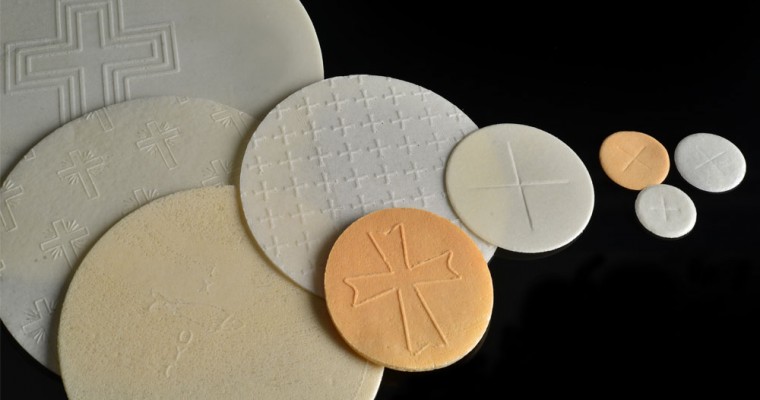
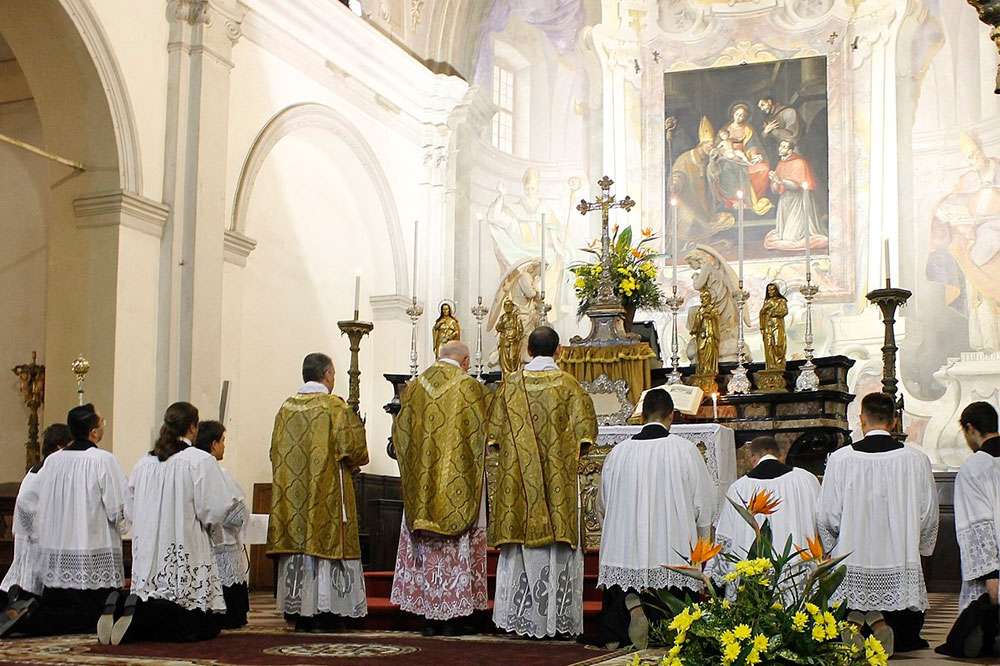
The host is the unleavened bread that symbolizes the body of Christ during the celebration of the Eucharist, the celebration which started by Jesus during the Last Supper. In fact, the host is not just a vehicle between us and Jesus, but, after the consecration it becomes his body. During the Last Supper, Jesus offered his disciples bread and wine as his body and blood, inviting them to do the same in the centuries to come, to renew his sacrifice for the salvation of men. The Eucharist is therefore one of the fundamental celebrations of Catholicism, a moment when Jesus returns to become a man and to sacrifice himself for all his children once again. In Catholic and Orthodox Church the transformation of bread into the body of Christ is called ‘transubstantiation’, and in Protestant Christian Churches ‘ Consubstantiation’.

In Eucharistic celebration, the host is made of wheat, and is usually round. It takes its name from the Latin word ‘hostia’: a sacrifice to the gods. It is made with unleavened bread as required in the Exodus book. The Easter Jewish required unleavened bread and bitter herbs for dinner too, to remember the liberation from Egypt. Christian Easter, which resumes every Eucharistic celebration, marks the renewal of the new covenant through the body and blood of Christ.

Only in the Catholic Church the sacred bread becomes the Holy Eucharist and is offered to the faithful. The hosts left are kept in the tabernacle and can be regarded as Jesus himself.

Every Eucharist is a celebration of immortality and communion with Christ, who offers himself as nourishment to men and to the Church.

Thomas of Aquino wrote in the Sacramento Altaris that in every Eucharist some miracles were performed: bread is the true Body of Christ, equal to that born and to the spiritual body of the risen Christ; all the substance of bread has been transformed into Christ, therefore the bread as such no longer exists; the substance of bread is transformed into the Body of Christ, but the inconsistencies remain, the qualities of bread, which, however, does not duplicate or diminish, remains the same and intact, even when eaten by the faithful; bread as Body of Christ is present simultaneously  everywhere the Eucharist is celebrated.