Author: Redazione

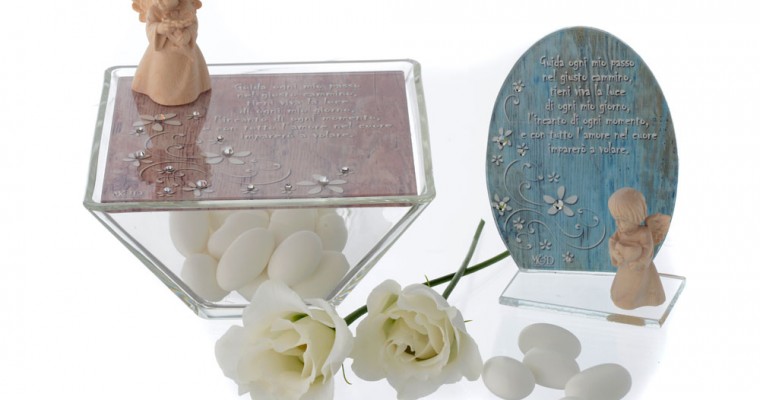
Catholic gifts for your child’s godfather and godmother

Catholic gifts for your child’s godfather and godmother

We have already discussed the importance of the figures of the Godfather and Godmother on the occasion of a Confirmation. Their role is really important, and not just on the occasion of the sacrament itself. The Godfather and Godmother for the Confirmation will have to remain…

The different uses of incense

The different uses of incense

Incense has always been linked to the idea of ​​the sacred, and the divine. Since the earliest times, its use has been attested in ancient civilizations, almost always for religious purposes. Their intense and aromatic scent was considered to be appreciated by the Gods, as it…

Church devotions for every month of the year

Church devotions for every month of the year

At the time of the ancient Roman civilization in situations of extreme gravity, a commander could decide to sacrifice his life to ensure the victory of his own troops and the salvation of his men. To do so, he pronounced a vow to the gods of the underworld, with which he pledged to offer himself to them, and the enemy army. This act had the name of devotion, from the Latin deuouere, meaning “to make a vow”.

Devotion can therefore be summarised in an act of love and trust pronounced by man towards God.

In a Christian context, it is not necessarily an extreme sacrifice, with which the faithful offers his own life, but a religious practice addressed to God, to Our Lady, to a Saint, composed of spiritual love and fervent prayer. Indeed, devotion becomes a form of prayer that is optional, compared to the official Liturgy and that of the Hours, but which has spread over time in various forms, giving rise to celebrations and moments of prayer that have now entered the life of every Christian. RosaryLet’s think about the recitation of the Rosary, the Way of the Cross, at the Angelus, but also about processions, pathways of prayer and spiritual meditation, such as the Sacred Mountains, devotional walks through sacred scenarios that offered to the fifteenth-century pilgrims a less expensive and more viable alternative to pilgrimage to the Holy Land.

Devotional practices are a way in which the Church celebrates every day of the year with solemnity and fervour, turning her attention and her love to one saint, then to another, then to a particular characteristic of Mary or of Jesus. Although in some cases devotional practices have, over time, assumed a folkish dimension, it would be profoundly wrong to limit the importance of this phenomenon to picturesque festivals and popular processions alone. On the contrary, the popular feasts dedicated to the Saints, to Jesus and to Our Lady, as well as the main festivities such as Christmas and Easter, risk making us forget the true devotional and ascetic spirit from which they were born, which has been overwhelmed by consumerism and a culture that depletes these occasions of their solemnity. Instead, they are celebrations closely linked to the history and social development of the communities in which they developed, and were created to enrich the spiritual life of those who celebrate them, to make every day of every month, special and pleasing to God.

Let’s look at a few of them, sub-divided by the months in which they are celebrated.

January

The month of January is dedicated to the baby Jesus and in particular to the Most Holy Name of Jesus. Eight days after Christmas, the devotion of the Most Holy Name of Jesus is honoured, to celebrate the day when St. Joseph made circumcised him and gave him the name. This devotional cult has been celebrated since the origins of the Church. In fact it seems Saints Peter and Paul contributed to its spread, and later, in the Middle Ages, Saint Francis of Assisi was a proponent. San Bernardino and his confreres made it a liturgical feast. The devotion of the Most Holy Name of Jesus is focused on the power of the name of Jesus, as a defence and ornamentation for the faithful, a protection against evil and a precious talisman against demons, diseases and infirmities. Jesus revealed to Sister Saint-Pierre, the Carmelite of Tour, the Apostle of Reparation, the devotion to the Holy Name of Jesus of Jesus, which is recited on this occasion as a way of offering her unconditional love to Jesus:

Always to be praised, blessed, loved, adored and glorified, the Most Holy, the Most Sacred, the most adored – yet incomprehensible – Name of God

In heaven, on earth or in the underworld, from all the creatures that come out of the hands of God.

For the Sacred Heart of our Lord Jesus Christ in the Blessed Sacrament of the altar.

Amen

February

The month of February is dedicated to the Holy Spirit, the third person of the Most Holy Trinity. The Holy Spirit is God, and at the same time, the gift of love that God gives to his devoted children. It descends on believers like a burning flame and makes their words winged, so that they can reach the Father. February   devotions also include those to the Holy Family, the family par excellence, the one composed of Jesus, Joseph and Mary. The prayers and litanies are all dedicated to this perfect example of Love and Faith, to which everyone should look to live in serenity and fullness. The devotions to the Holy Family express the will to do what pleases Jesus, Mary and Joseph and to avoid what could displease them.

March

The month of March is dedicated to devotion to Saint Joseph, which is celebrated on March 19th. St. Joseph is an example of a good and loving father par excellence, of a faithful and caring husband, but also of humble servant of the Divine Will, as he accepted his role as the husband of Mary and putative father of Jesus without questioning the design of God. St. Joseph is greatly honoured by the Catholic Church and enjoys a role of great importance in many prayers of the Roman rites.

He is also the protagonist of many devotional practices, such as the “practice of the Seven Sorrows and Joys of St. Joseph”, as well as many Litanies, such as the Cingolo or Cordone di San Giuseppe, the Coroncina di San Giuseppe, the Scapular of San Giuseppe, Sacred Mantle, the Perpetual Novena, the Perpetual Crown, the Perpetual Court. We turn to him to ask for graces and intercessions.

April

April devotions are addressed to the Eucharist, to the Divine Holy Spirit and to Divine Mercy. The Eucharist symbolises the sacrifice of Jesus, which is renewed at every Mass, and His being descending on those He loved to protect them and guide them after His death. The Eucharist contains in itself all the love of Jesus, in all its forms: crucified, unitive, adoring, contemplative, praying, intoxicating. To reserve time and attention to this devotion leads to the attainment of many graces and a sense of closeness to the priceless love of God. Jesus dictated the Chaplet of Divine Mercy to Saint Faustina Kowalska in 1935, promising that whoever recites this prayer would have the certainty of dying in peace and grace, and of letting those who   have listened to them die peacefully. This devotion guarantees forgiveness even to the most hardened and recidivist sinners, showing the immensity of Jesus’ mercy.

May

The month is dedicated to Mary, the Mother of Jesus, who is blessed among women and mothers. Mary is a symbol and a role model for all women, of sacrifice, of humility and immense love. Wherever you go you will find statues of the Madonna in all her grace. In May, Mary is the protagonist of many festivals: on May 13th, Our Lady of Fatima, May 31st, Visitation, Mother’s Day. With devotion to Mary we turn to her as an intermediary between man and God, a sweet and loving spokesman for the troubles of humanity, a receptacle of dreams, desires, hopes. In this, Mary is the only one able to bring together those who have been lost to God, accepting prayers and repentance and raising it to heaven with the power of his love.

June

The Great Promise made by Jesus in Santa Margherita Maria Alacoque in 1620 started the devotion from the Sacred Heart of Jesus, which sees June as its reference month. Jesus said to the Saint:

My divine Heart is so passionate about love for men, that since it can no longer contain the flames of its burning charity  …I have chosen you to fulfill this great design.

The devotion to the Sacred Heart of Jesus is therefore addressed to the merciful Jesus, reaching out to men, ready to forgive their sins, their weaknesses. Devotion to the Sacred Heart of Jesus protects from evil and purifies the heart of every sinner. Litanies and prayers celebrate this devotion, besides observing the three rules imposed by Jesus on the Saint with the Great Promise:

  1. Coming to Communion in the grace of God: If one is in mortal sin, confession is necessary.
  2. Devotion must be continued for nine consecutive months. For those who omit even one communion, must start all over again.
  3. Pious practice can start on the first Friday of any month.

The Sacred Heart of Jesus guarantees that none of those who have done the Nine First Good Friday will die in mortal sin.

July

Month dedicated to Precious Blood of Our Lord, the true salvation of the world, symbol of the sacrifice made by Jesus to cleanse humanity of all sins. The first Sunday of the month is consecrated to the Most Precious Blood of Our Lord, which should be honoured by showing repentance, temperance, moderation in passions, to prove worthy of the sacrifice of Jesus and the immense saving power of his Blood. This festival, is in some ways the crowning of the month of the Holy Heart that has just ended (June), as established by Pope Pius IX.

August

The month of August is dedicated to God the Father, to which a feast is dedicated during the liturgical year.

It was through mother Eugenia Elisabetta Ravasio (1907-1990) that the Father asked for a feast to be established in his honour. In this month, we should turn to God the Father, renewing his Will to entrust ourselves completely to him, consecrating ourselves to his will and invoking grace for ourselves and those we love.

September

September is the month dedicated to angels, the messengers between God and men, custodians and guides of our every step, in day dreams. We turn to them, invoking their protection and help, because they watch over us and give us the strength to believe and love God with all the strength we are capable of.

Octoberstatues of Mary

The month of October is dedicated to the Holy Rosary. The recitation of the Rosary has always been connected to the promise of obtaining a plenary or partial indulgence. Reciting the Rosary allows us to obtain graces and consolations through the intercession of the Virgin Mary. The name rosary derives from “crown of roses”. The rose is the symbolic flower of Mary. In fact, in the Middle Ages statues of Mary were decorated with rose crowns as a sign of love and devotion. The crown of the Rosary was born from these crowns, and used to pray and meditate. It was the Cistercians in the thirteenth century who contributed the devotion to the Virgin with the prayers to be recited using the Rosary. In 1571, on the occasion of the battle of Lepanto, Pope Pius V invited all Christians to pray with the Rosary to invoke the victory of Christians against the Ottomans. The victory of the Madonna della Vittoria festival originated in this victory, and later came the feast of the Madonna del Rosario (October 7th).

Other devotees and blessed, like Alano della Rupe, St. Louis Marie Grignion de Montfort and Blessed Bartolo Longo gave vigour to devotion, just as, more recently, the apparitions of Mary at Lourdes and to Fatima did.

The Holy Rosary is the most effective prayer against Satan.

November

November is the month dedicated to Souls of the Dead, and their memory. The devotion manifests itself through actions of suffrage for deceased loved ones, but also for the dead in general, and with a profound meditation on the transient nature of human life, and on its frailty before God. The prayers recited in the context of this devotion not only allow access to plenary indulgences, but also contribute towards purifying the souls of the dead, and saving them from Purgatory.

December

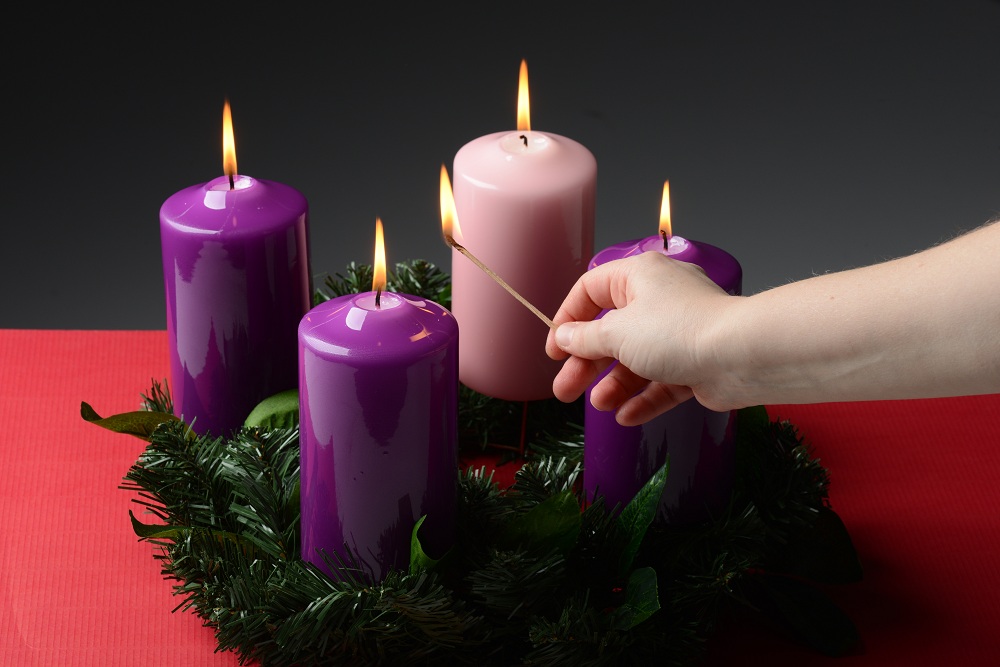
The month of December is naturally focused on preparations for Christmas, which celebrates the birth of Jesus, but also the Immaculate Conception of Mary, born without sin, pure and unique among women. For Christians the week of Advent represents a period of greater spiritual meditation, in view of the renewal of the birth of the Saviour, and offers numerous occasions for common prayer with the family and other faithful.

The Egg as a symbol of Easter

The Egg as a symbol of Easter

Whenever we think of Easter, apart from the religious significance of this festival for Christians, the first thought that probably comes to mind is chocolate eggs, which we give away as gifts for the occasion. The Easter egg is a form gluttony covered with coloured, shiny…

How to recite the Chaplet of Divine Mercy

How to recite the Chaplet of Divine Mercy

The Chaplet of Divine Mercy is a devotional prayer that guarantees those who recite it, especially at the point of death, the grace of conversion and the forgiveness of all sins. It is also a prayer that invokes God’s mercy on all humanity, offering the Passion…
The Novena to Mary that loosens the knots

The Novena to Mary that loosens the knots

The Novena is a Christian devotional form that is usually practiced on a religious recurrence or a particularly important holiday, like at ChristmasEasterImmaculata or Pentecost. It involves reciting a particular prayer for nine consecutive days, or different prayers, addressed to God, and usually aimed at requesting the intercession of Our Lady, of a Saint or the angels to give comfort, protection, ask for a favour or the resolution of a particular problem.

Meaning of Devotion

The Novena, which takes its name from the medieval Latin ‘novenus’, arises from Jesus request to his disciples to pray after his death while waiting for the Holy Spirit to manifest. Thus Our Lady and the Apostles prayed together for nine days, from the Ascension to Pentecost, when the Holy Spirit finally descended upon them. This episode, reported in the Acts of the Apostles, gave rise to this practice, which is particularly valuable for those who are in a situation of trouble and suffering for themselves or for someone they love. Jesus had already revealed what it was necessary to do to find peace: “pray always without getting tired“(Lk 18.1). To pray with humility, with absolute trust, without believing that prayer is a sort of magic formula that will solve every problem by magic, but we should be aware of the fact that, by praying, we are entrusting ourselves to God and to his infinite mercy.

In this context, the practice of a particular form of Novena was born and developed: the Novena to Mary that loosens the knots. A bizarre name, but one that perfectly embodies the spirit of those who are preparing to recite this particular prayer and to face the spiritual path it requires.

Dissolve the knots that generate pain

mary untier of knots statue
Buy on Holyart
Mary untier of knots statue multilingual prayer

The image of Mary who melts knots expresses very well the need of the faithful to receive help from the Blessed Virgin to solve a problem, find comfort and a solution when in a particularly difficult situation. In a word, dissolving a knot that prevents him or her from living well, which blocks their life, interrupting their natural flow. The knots that can create discomfort are of various kinds and entities. Some knots we carry with us for years without even knowing it, others are open and apparently incurable wounds, which poison our days. A quarrel with a family member, a lack of communication or respect, a sick child, or being prey to a habit that consumes their life, someone we love and who has turned away from God, the pain caused by a child who takes drugs , who is sick or who has left home, guilty of mistakes made in the past, incurable diseases, depression, awareness of having sinned in a way that they consider cannot be forgiven. With this Novena, the intercession of Mary is requested to dissolve any knot that causes us pain. This may be a problem related to everyday life, work, a family problem, a sick relative, or a situation of physical or mental discomfort, a personal quarrel with a partner, a child, a parent. Whatever the knot that prevents us from living peacefully, which makes our days heavy and burdensome, we can ask Mary to help us to untie it and find peace. Mary is particularly suitable as a reference for a prayer of this kind, she who has always been considered the Mother of all mothers, the reference point for those who are lost in a stormy and dark sea and vaguely search for a star to guide them. It is no coincidence that San Bernardo di Chiaravalle referred to her as “Stella del Mare” (The Star of the Sea).

The first Novena to Mary who breaks the knots was written in 1998 by an Argentinian priest, Juan Ramón Celeiro. With his sensitivity, he was able to give voice to the devotion of many people, even far from the Church, who were able to find in Mary the help and intercession needed to solve their problems. Mary, Virgin and Mother, who was consoling and merciful, opened her hands and her heart to those who were able to believe and rely on her. Immediately appreciated and authorised by the Church, this Novena spread rapidly, thanks above all to Cardinal Bergoglio, then Pope Francis, who sustained it immediately.

How do you pray the Novena di Maria who melts the knots?

mary untier of knots rosary
Buy on Holyart
Rosary with Maria that loosens the knots

The Novena di Maria who melts the knots is recited for nine consecutive days as a prelude or tail of the Holy Rosary. First you need to make the Sign of the Cross and recite the act of contrition. At this point, with the soul predisposed to prayer, we turn to Mary reciting the “Supplication to Mary who Melts the Knots”. Alternatively, the petition can be recited at the end of the Rosary. This prayer is found in a booklet specially written to help the faithful in their devotional practice.

Then the real Rosary begins, with the first three dozen, the Meditation corresponds to each day of the Novena, the last two dozen, followed by the “Salve Regina” and another prayer to Mary that loosens the knots. But in reality the scheme can be varied depending on the possibilities and conditions of those who pray. The important thing is the attitude with which one asks oneself to pray. If on the one hand we must avoid thinking of prayer as a sort of magic formula, covering the words or the way in which they are recited with an entirely external importance, devoid of spiritual depth, it is, on the other hand, necessary to trust prayer with complete confidence along with the effects we hope to achieve with it.

In this, as in every other practice, what matters is how we place ourselves, with humility, availability, an open soul, elevated to God, the spirit free from doubts and hesitation. We are supplicants, and as such we must address ourselves to Her who, in her infinite goodness and love, can solve our problems only if we are willing to trust in her help.

Archangels: who are they and what is their function?

Archangels: who are they and what is their function?

The Catholic Church recognises the existence of only three Archangels, or the three mentioned in the Scriptures: Michael (“Who is like God?”), Gabriel (“God’s Power”) and Raphael (“God’s Doctor”). This clarification is needed, because one could object that in the texts of the past, other archangels have been mentioned, the same as…

How to explain Confession to your child

How to explain Confession to your child

It isn’t easy to explain what a Confession is to a child. It isn’t easy because it isn’t easy to explain what the concept of Sin is to them. Yet it is fundamental for a child’s growth as a human being, and as a Christian, that they understand what…

Who your Guardian Angel is and what they do: 10 things you should know

Who your Guardian Angel is and what they do: 10 things you should know

According to Christian tradition, every one of us has a guardian angel, who accompanies us from the moment we’re born until the moment  of our death, and stays at our side at every moment of our life. The idea of ​​a spirit, of a supernatural entity that follows and supervises every human being, was already present in other religions and in Greek philosophy.  In the Old Testament, we can read that God is surrounded by a genuine court of heavenly figures who worship Him and perform actions in His name. Even in these ancient books, there are frequent references to angels sent by God as protectors of people and individuals, as well as messengers. In the Gospel, Jesus invites us to respect even the smallest and humble, in a reference to their angels, who watch over them from heaven and contemplate the face of God at every moment.

The Guardian Angel, therefore, is linked to anyone who lives within God’s grace. The Fathers of the Church, like Tertullian, Saint Augustine, Saint Ambrose, Saint John Chrysostom, Saint Jerome and Saint Gregory of Nyssa, maintained that a guardian angel existed for each person, and although there was not yet a dogmatic formulation concerning this figure, already during the Council of Trent (1545 – 1563) it was stated that every human being had their own angel.

From the seventeenth century onwards, the spread of popular devotion increased and Pope Paul V added the festival of guardian angels to the calendar.

Also in sacred representations and above all, in the images of popular devotion, Guardian Angels began to appear, and were usually depicted in the act of protecting children from harm. In fact, it is especially by children that we are encouraged to talk with our Guardian Angels, and to address our prayers to them. As we grow up, this blind trust, this unconditional love towards an invisible yet extraordinarily reassuring presence, fades.

The guardian angels are always near to us

Here’s what we should remember whenever we want to find it near to us:Guardian Angel

  1. Guardian angels exist.

The Gospel affirms this, the Scriptures support it by countless examples and episodes. The Catechism teaches us from an early age to feel this presence on our side and to trust in it.

  1. Angels have always existed.

Our Guardian Angel is not created with us at the time of our birth. They have always existed, from the instant at which God created all of the angels. It was a single event, a single moment in which Divine Will generated all the angels, by the thousands. After this, God no longer created any other angels.

  1. There is an angelic hierarchy and not all angels are destined to become Guardian Angels.

Even the angels differ from each other in their tasks, and above all in their positions in heaven compared to God. Some angels in particular are selected to take a test and, if they pass it, they are qualified for the role of Guardian Angels. When a child is born, one of these angels is chosen to stand by his side until death and beyond.

  1. We all have one
angel with lyre
Buy on Holyart:
Statue of an Angel with a Lyre

… and only one. We cannot sell it, we can not share it with anyone. In this regard also, the Scriptures are full of references and quotations.

  1. Our Angel guides us on the pathway to Heaven

Our Angel cannot oblige us to follow the path of goodness. He cannot decide for us, impose choices on us. We are and remain free. But his role is precious, important. As a silent and trustworthy advisor, our angel stays by our side, trying to advise us for the best, to suggest the right path to follow, to obtain salvation, to deserve Paradise, and above all to be good people and good Christians.

  1. Our Angel never abandons us

In this life and in the next, we will know that we can count on them, on these invisible and special friends, who never leave us alone.

  1. Our Angel is not the spirit of a dead person

Although it might be nice to think that when someone we love died, they became an Angel, and as such returned to be by our side, unfortunately, this isn’t so. Our guardian angel cannot be anyone we have known in life, nor a member of our family who has died prematurely. It has always existed, it is a spiritual presence generated directly by God. This does not mean that it loves us less! We should remember that God is Love first and foremost.

  1. Our guardian angel has no name

… or, if he has, it is not our job to establish it. In the Scriptures, the names of some angels are mentioned, such as Michael, Raphael and Gabriel. Any other name attributed to these celestial creatures is neither documented nor confirmed by the Church, and as such it is inappropriate to claim it to use for our Angels, especially by pretending we’ve determined it using a fanciful method like the month of our birth, etc.

  1. Our Angel fights on our side with all his strength.

We must not think of having a tender plump cherub at our side playing the harp. Our Angel is a warrior, a strong and courageous fighter, who ranks at our side in every battle of life and protects us when we are too fragile to do it alone.

  1. Our guardian angel is also our personal messenger, charged with bringing our messages to God, and vice versa.

It is to the angels that God addresses himself in communicating with us. Their job is to make us understand his Word, and move us in the right direction.

Baptism: meaning, symbols and how to organise one

Baptism: meaning, symbols and how to organise one

Baptism is the first of the sacraments that enshrine the true birth of a Christian. It is through Baptism that we are purified from original sin and become part of the Church and of the body of Christ. Thanks to Baptism, we have access to the…

The Rosary for the unborn children

The Rosary for the unborn children

The Rosary for unborn children is a particular type of Rosary. It is made of crystal beads, which symbolise the tears of the Madonna. Each ‘tear’ represents the mother’s womb and contains within it the image of an unborn child. The Crucifix is golden, as a…

Thuribles in liturgical function

Thuribles in liturgical function

The term ‘censer‘ comes from the Latin thus, Thuris “incense.” This is also the origin of censer’s synonym is derived: it is sometimes called ‘incense‘. In Latin, it was also referred to as thymiaterium, incensorium, and fumigatorium.

The thurible is a metal container, usually a vessel, equipped with a cover provided with openings. Inside the jar, on a thin layer of embers, is incense surrounded by grains. This causes the thurible to spill around a fragrant and aromatic smoke. This occurs during Catholic religious services, although the custom of burning incense or other fragrant essences always belonged to human religiosity, and similar objects to the thurible are present in many other cults and rituals.

Anciently thuribles were open, little more than boxes. They could be transported or hanged, but not shaken. Today there are fixed thuribles, also called incense burners: they are small open braziers or can be equipped with a perforated lid, but they can not be shaken. In the Ambrosian and the Eastern liturgy are still in use these thuribles.

The thuribles commonly used in Western religious services are equipped with four chains that make possible the suspension and ripple ritual with which they are shaken on the assembly of the faithful. Three of the chains are used to hold up the thurible, the fourth also serves to raise the lid and insert the incense.

The thurible is always accompanied by a further smaller vessel, the incense boat, which accommodates the incense stock. The altar boy clerk in charge of the thurible brings the latter in his right hand and the boat in his left hand, except he reverses his hands when presenting the two objects to the priest.

The thurible is used in some of the key moments of the Eucharistic celebration: the beginning, before the reading of the Gospel, during the Offertory, and at the moment of consecration.

During the funeral, the priest spreads the smoke of the thurible on the coffin containing the corpse to bless and purify it. Similarly, representations of the Virgin Mary and the saints are censered.

Censers and boats can be manufactured today with different materials, usually brass or bronze. They are often finely crafted, silver, gold, smooth, hammered, and decorated with high craftsmanship.

The role of the Godfather and Godmother

The role of the Godfather and Godmother

Whoever is chosen as Godfather or Godmother for a Baptism or a Confirmation, is called on to undertake a truly valuable and important task. Very often, in the modern world, we lose sight of the true value of this role, but it shouldn’t be this way. When the parents…

The cassock in the Catholic Church

The cassock in the Catholic Church

Religious clothes have always been considered a sort of ‘uniform’ requested to priests to differentiate themselves from the common people. This is because since the origins of religion, there was the need to identify members of their communities even based on specific clothing. In particular,…

Ancient Russian icons: humanity’s heritage

Ancient Russian icons: humanity’s heritage

Ancient Russian Icons are paintings of inestimable value and absolute beauty.

Only revealed to the world in the early 1900s during an exhibition in Paris, they won unanimous approval and were immediately recognised as not only part of Russian heritage, but as something that belongs to all of humanity.

This immense value and global recognition derives from the artistic beauty of ancient Russian icons itself, but above all from the deep symbolic meaning and devotion of which they are imbued.

The true face of medieval piety is found in ancient Russian icons, devoid of all trappings and superstructure inevitably accumulated over the centuries and in the succession of the various world art trends. It is not just the appearance of the paintings, but also of materials used, the choice of colours, the context for which the icon had been made, the same approach you would take looking at a work of art.

The vision of God and the religion of our forefathers is revived in ancient Russian icons with shocking intensity, both from artistic and human points of few. Whole generations of painters drew inspiration from their vision, upsetting the history of art and decreeing a real revolution in markets and among investors worldwide. The ancient Russian icons market still remains among the most prosperous and sought after. Every authentic Russian icon must be accompanied by photos with valuation prepared by experts of the Ministry of Russian culture and export documents.

The origin of ancient Russian icons dates back to the fifth century and refers directly to the portraits of Mary attributed to Luke the Apostle, the Shroud and other depictions of Jesus and ancient Mary. The term ‘icon’ is derived from the Russian “икона”, from the Greek eikénai, ‘look like’, ‘appear’, or eikona that means ‘image’.

Ancient Russian icons are sacred images reproduced on usually lime, larch or spruce wood, covered with several layers of rabbit glue and plaster that were then smoothed with dried fish skin or sandpaper. In this way, they obtained a smooth finish without roughness, called levkas, perfectly accommodating painting and gilding. The colours were natural, of vegetable or mineral origin, mixed with egg yolk.

A characteristic feature was the frame, part of wood which contained the painting itself and represented the gap between heaven and earth, and the terrestrial and divine plan. Another feature was the gold plating of all parts and the use of dark colours alternating with clear ones to obtain a three-dimensional effect.

The cult of Mary Help of Christians

The cult of Mary Help of Christians

Mary has always been seen as the ideal mediator between God and men, the one who, by her very nature, can take to the ears of our Heavenly Father the pain, afflictions, prayers of his children. With the name of Mary Help of Christians, from…

Candle holder

Candle holder

The candle holder is a church supply in every church and placed on the altar. It is a candle holder intended to support a single candle. Its use dates back to the very origins of the church, and is clearly linked and indissoluble to the…

Liturgical stoles

Liturgical stoles

The liturgical stoles are a vestment worn by deacons, priests and bishops just under the chasuble. In particular, the deacons wear the liturgical stoles on the shoulders, passing on the left shoulder and tying them under the right arm; priests and bishops wear them simply around the neck, loose on the chest.

The liturgical stole stated itself as a typical vestment of the deacon, the priest and the bishop only in the 10th century. Originally, it was called “map” or “sudarium”.

The deacon liturgical stole would come from “map” which was brought by the ancient priests on the left shoulder and worn to serve during the pagan sacrifices.

The “sudarium” was instead a cloth that speakers wore around their neck to dry and wipe away the sweat during the oratorical disputes; later, the priests began to use some sort of shroud to protect the face from the cold in winter or to wipe away the sweat.

Both these vestments, in time, would take the typical form of a strip, typical of current liturgical stoles, about 200-250 cm long and 8-10 cm wide.

The liturgical stole is usually made of silk, but it can also be packaged in another fabric.

Before the liturgical reform, liturgical stoles had a cross in the middle and at the bottom of each strip. Very ornate and rich patterns existed. Today the liturgical stoles tend to be much simpler.

The color of the stole depends on the occasion and the celebrations and follows the liturgical colors.