Author: Redazione

The funeral from classic Greece to our day

The funeral from classic Greece to our day

A person’s death has always represented an important moment in any human community since the origins of civilization. For this reason, funeral rites have always existed to celebrate this transition. These rituals change over time, and depending on geographical location, civil and religious costumes of…

A sweet gift for your baby: candy and confectionery from the Monasteries

A sweet gift for your baby: candy and confectionery from the Monasteries

Monasteries are not just places of gathering, spirituality, and prayer. Over the centuries the monks who lived there have deeply interacted with the surrounding area, learning to exploit its features and producing what’s necessary for their sustenance. Some monks decided to focus on a sweet…

The ancient tradition of painted Greek icons

The ancient tradition of painted Greek icons

The term ‘icon’ describes a sacred painting depicted on board. Actually, the word could be used for any image, regardless of materials and techniques that were used. But generally speaking, works on board produced in the Byzantine and Slavic cultures fall into this definition. The word ‘icon’ comes from the Russian “икона”, which in turn comes from the ancient Greek εἰκών -όνος, from the verb eikénai, which means ‘to like’, ‘to appear’. Another origin is from the Greek-Byzantine word eikón, which can be translated as ‘image’.

The icons are works that transcend their material and the deep symbolism they present. Every detail, even the most insignificant, expresses a concept and alludes to a superior meaning, a precious reference to an evangelical episode, or a spiritual message. The creator of the icon is more a writer than a painter, with a theological mission rather than an artistic one.

The rules that define the icons can be found in special manuals, called hermeneia, which the iconographer must observe strictly. Among the many traditional types of icons, those in Greek-Byzantine style are certainly the most fascinating.

These icons are often painted on both sides, or diptychs or triptychs that can be easily transported. Greek icons are related to some recurring subjects, and are characterized by common elements.

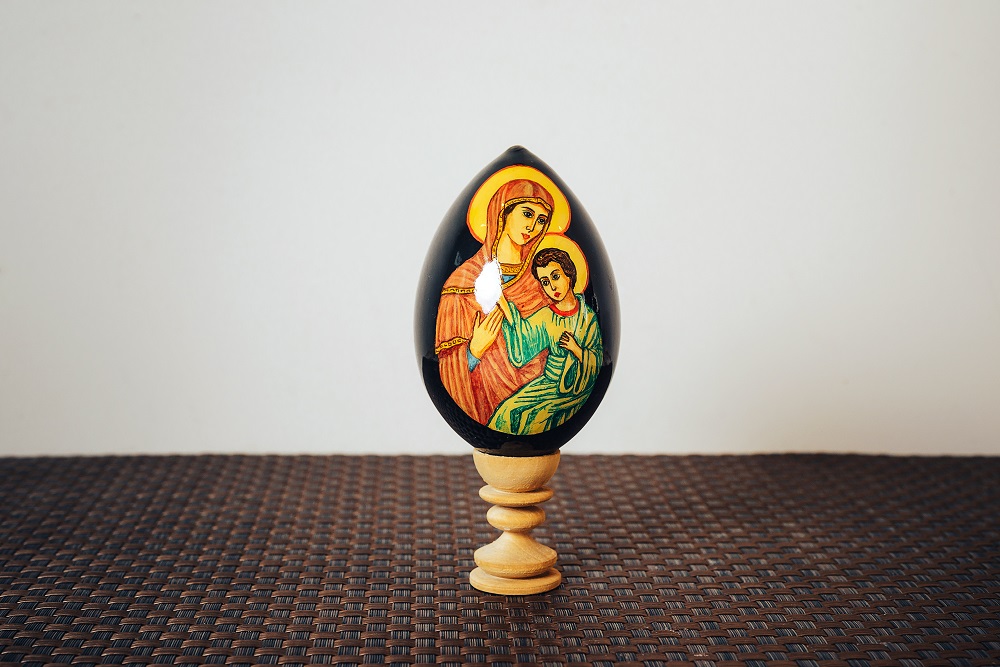
Icons of the Holy Mother of God, dedicated to the widespread love in the Byzantine world for the Mother of God (Yperaghia Theotkos); in this works the Virgin is usually represented as Mother, with the Son in her arms, wearing a a tunic and a mantle decorated with three stars that symbolize her everlasting virgin.

Icons of Saint Savior, where Jesus is represented half bust and with a book in his left hand, in the act of blessing with his right hand. He wears a dark tunic that recalls his earthly nature, while the blue mantle symbolizes his divine nature.

Melchite icons, Middle Eastern icons depicting Christ, angels and saints with Arab textures.

Moving Holiday icons, for celebrations that do not occur on a fixed calendar date but are linked to the Easter cycle. They are usually dedicated to the Passion, Death and Resurrection of Christ

Fixed Holiday icons, for celebrations fixed in the liturgical calendar.

Saint Paul of Tarso: story of a missionary

Saint Paul of Tarso: story of a missionary

Saint Paul of Tarso can be considered the first great missionary of the Christian Church. His work as proselyte and contribution to spreading the Gospel throughout the Mediterranean find no equal. His excellence is even more remarkable because of his conversion, from the fierce persecutor…

Oil 31: Uses, Benefits and Properties

Oil 31: Uses, Benefits and Properties

Oil 31 is a mixture of natural oils extracted from pharmaceutical plants. Made of 31 essential oils extracted from as many herbs, Oil 31 has many healing, refreshing, balsamic, toning and disinfecting properties. The many uses and benefits that this product can bring to our…

The story of Mother Teresa of Calcutta

The story of Mother Teresa of Calcutta

We will always remember Mother Teresa of Calcutta for her untiring will to help the last ones, the deprived and poor. Today she is a Saint, celebrated all over the world, and surely one of the most important figures in modern history, awarded with the Nobel Peace Prize and countless other awards.

But we must not forget that she was first of all a woman: a simple woman who has consciously decided to devote all her life to others.

We should never forget this because it’s from this that we can find the will to imitate, in our small, such important and precious figures.

Mother Teresa of Calcutta statue
Buy on Holyart

Santa Teresa of Calcutta (Anjezë Gonxhe Bojaxhiu) was born in Albania. After a difficult childhood with the premature death of her father, she shows an early interest in charity and mercy; she became nun at eighteen and, after a short stay in England and Ireland, she was sent to India. Since very young she showed her love towards this country in her close correspondence with the Jesuit missionaries in Bengal.

Since then, Saint Teresa lived between Calcutta and Darjelling, divided between prayer and charity, until in August 1946 when, while Calcutta was bloodied by independent fights, she was reached by the ‘call within the call’. She understood that she had to leave the quiet life of the convent to fully immerse in the poverty of those who lived in the street. Saint Teresa considered it as a precise order of God.

Since then, even by fighting the rejected of the Church itself, she began her true mission as the poorest among the poor. She abandoned the black veil and assumed citizenship in the newly independent Republic of India. Soon her example was followed by others. Around her began a bigger network of volunteers: their tasks ranged from distributing food, teaching, assisting the sick and dying.

In 1950, Mother Teresa founded the Missionaries of Charity, a congregation devoted to the mercy and care of the poor and those in need. As a robe Mother Theresa chose a white sari with blue stripes, the colors of the caste of the Untouchables.

Mother Teresa’s influence grew rapidly, also thanks to the worldwide media attention. With the help of local and foreign personalities, she opened reception centers and care for the poor, sick and lepers. She received the visit of heads of state, the most powerful men in the world, and had a long friendship with Pope John Paul II, who already considered her a living Patron of Hospitality.

She remained in charge of her congregation as long as health permitted her to, continuing to serve among her people, and died in her Calcutta the age of 87. John Paul II started a special beatification process for her, only two years after her death, to confirm the holiness that accompanied her throughout her life.

Pentecost: the day when we celebrate the Holy Spirit and the birth of the Church

Pentecost: the day when we celebrate the Holy Spirit and the birth of the Church

Pentecost is perhaps, after Easter, one of the most important festivities of the Catholic Church. It’s the celebration of the descent of the Holy Spirit, the third person of the Most Holy Trinity, after the Resurrection of Jesus and, in a sense, the very birth…

The feast of Corpus Christi

The feast of Corpus Christi

The feast of Corpus Christi (“Body of Christ”) ends the festival that follows after Easter. It is celebrated on Thursday after the celebration of the Holy Trinity, although in many countries it falls on the following Sunday. The feast of Corpus Christi celebrates the real…

The role of the priest in the Holy Communion

The role of the priest in the Holy Communion

The role of the priest in the Communion’s preparations is important and complex in its gestures, words and symbols, defined since the origins of the Church in a precise and recurring ritual.

The purpose of this ritual is to prepare the group of Faithful to the moment when, by consuming Bread and Wine, the sacrifice of love of Jesus Christ will be renewed once again, and His promise of hope offered to all men of goodwill.

The priest who prepares the faithful to the Holy Communion becomes the guide and vehicle not just to the Eucharist, but to Jesus Himself represented by it. The common prayers, the Pater Noster above all, a sign of respect and solemnity, symbolize the path of faith, our internal journey together with the other faithful. The Eucharist is, above all, a moment of community and devotion, and needs to be celebrated as such.

Following the prayers and the exchange of the sign of peace, a gesture that confirms the will of communion and unity of the assembly, the priest breaks the bread, symbolized by the Great Ostia, eats a piece, raises the chalice and recites: “The Body And the Blood of Christ, together in this cup, are for us food of eternal life”. From that moment, the host and the chalice are in all respects the body and blood of Christ, with His blessing and grace.

Agnus Dei is also a time for meditation and community prayer, when the faithful are preparing themselves to accept Communion. The priest prays too, silently, and asks to be purified through the Body and Blood of Christ, which become for him and for all a protection for the soul. Communion is followed by a moment of silence: the immensity of the mystery, and the fact that we just received the body and blood of Christ, requires it even during a moment of community and devotion.

The prayer after the Holy Communion, and the Amen with which the faithful responds to it, brings the ritual of Communion back on a communal level and to its end.

Sant’Agostino d’Ippona: philosopher, bishop and theologian

Sant’Agostino d’Ippona: philosopher, bishop and theologian

Very few men of faith can be compared to Sant’Agostino d’Ippona. He was not only a great theologian and bishop, philosopher and doctor of the Church. Sant’Agostino d’Ippona put his higher sensitivity and genius in the service of Faith as a priest, but also as…

13 May 2017 – Fatima’s centenary

13 May 2017 – Fatima’s centenary

On 13 May, faithful throughout the world celebrated the Holiday of Our Lady of Fatima. This year, however, it was a very special celebration: it was the centenary of Mary’s first appearance to the three shepherds Francesco, Jacinta and Lucia. On May 13th, 1917, the…

5 questions and 5 answers to the altar wine

5 questions and 5 answers to the altar wine

During the Last Supper, Jesus offered his disciples bread and wine, celebrating therefore the first Eucharist. Bread becomes body, wine becomes blood, in a solemn ritual that transcends every human understanding, but which has been renewed every day for thousands of years, throughout the world, in the name of infinite love: a promise of hope, salvation and freedom from sins for all men. Beyond the theological and indisputable dogma which this statement is based on, there are some lovely human curiosities we would like to explore with you.

For instance, what wine is used for Mass?

A natural wine, produced according to Article 924 of the Code of Canon Law. It can be produced by a convent or by a laic business: the important thing is that it has received permission from the curia, and meets the chemical requirements. Wine can be either white or red. For example we suggest Martinez’s mass wine, a sweet and liqueur wine produced by the historic Martinez company under the supervision of the Vicar of Fornae, with the Bishop’s permission, or the Morreale’s mass wine, also produced according to the applicable Canon Law and with The bishop of Mazara del Vallo’s permission. The choice of liqueur wines is because they’re easier to preserve.

Is it correct to mix wine and water?

Absolutely yes. In addition to the fact that it was normal to dilute the wine with water at the time of Jesus, there is also a symbolic reason. Water symbolizes the human nature of Jesus mixed with the divine one, represented by the altar wine. Furthermore, mixing water and wine reminds of Jesus who, by taking our sins on him, erases them.

Bread and wine have the same importance in the Eucharist?

Yes. The Priest is obliged to consecrate both and consume them during the celebration. If he’s a non-drinker, it can be limited to a minimum quantity of wine, or even just dip the consecrated host. Instead, the priest can decide whether to give the faithful only one of the two elements or both, since Jesus is present in both bread and wine. The choice in this case depends on the priest.

What to do if the wine falls

Consecrated wine is, in all respects, the blood of Christ, and as such sacred. It can’t be poured in vain, it absolutely can’t be thrown away, and punishment is excommunication. If there’s wine left in the cup, the celebrant must drink it. Throughout the rite, wine must be covered by a small veil, because no external body can contaminate it. If it falls accidentally, it is necessary to wash the area with water which will then be poured into the sacristy of the sacristy.

And what if a non-priest drinks wine outside the Mass?

Well, it’s wine, which could be more or less nice. What makes it special is not the taste, but its consecration. If, however, it’s drunk outside the Mass with a blasphemous purpose, the punishment is excommunication.

Birth and evolution of confraternities: from Roman times to today

Birth and evolution of confraternities: from Roman times to today

Confraternities are associations of laic Christians who decide to gather together to promote aggregation, increase devotion and worship, and perform charity, penance and catechesis. They’ve existed since the origins of Christianity in Roman times, and quite likely the first confraternities took inspiration from secular institutions…

Combine elegance and faith: Discovering the Holyart Jewelery

Combine elegance and faith: Discovering the Holyart Jewelery

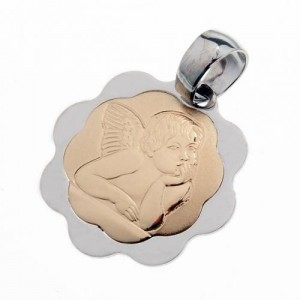
Who said that you can’t combine beauty, elegance and faith into a single, perfect combination? Holyart has tried to do so with its collection of exclusive jewels handmade by Italian jewelery masters, beautiful to wear and unique. These are jewels made of gold, silver, hard…

Here are some gift ideas for your wedding day

Here are some gift ideas for your wedding day

The wedding day is a very important, precious, and unique moment. It definitely is so for those who get married and see their dream of love coming to life with the person they chose to be their companion or partner for life. It is also for relatives and friends who are invited to take part in the celebration and party that seals this union of love.

Like every celebrations, marriage is also characterized by the presence of gifts. Gifts for the spouses, who often choose to make a wedding list, to receive help from the one who love them to furnish and decorate their new home; but not everyone follows this path, leaving friends with the task of finding the right gift for the occasion.

Gift ideas for a wedding can be of many kinds, but always need to be really special. You can opt for jewels like rings, bracelets, pendants, crosses, crucifixes. There are also wonderful religious statues depicting happy couples, porcelain or silver bas-reliefs that can adorn the house of the newlyweds with solemn and valuable icons. However, even a simple greeting card if chosen correctly and written with love, can be a precious and welcome gift suitable for all pockets.

There are also the gifts that the bride and groom offer to their guests like the bonbonnieres, memories, small items, but that will leave a precious and imperishable memory. There are all kinds and materials, for all tastes and pockets, in a square shape to hang or lean, or in the shape of a heart, drop, or leaf. Gift ideas for the wedding day can be made with metallic and silver decorations, Murano glass, silver foil or crystal inserts. Even in this case, creativity and ‘feeling‘ always win: a card or a cardboard with words of poetry or a particularly significant song for the bride will have even more value than a precious metal object. In the end and from both sides, the important thing is to put our heart on it.

The Dominican’s Rosary Movement

The Dominican’s Rosary Movement

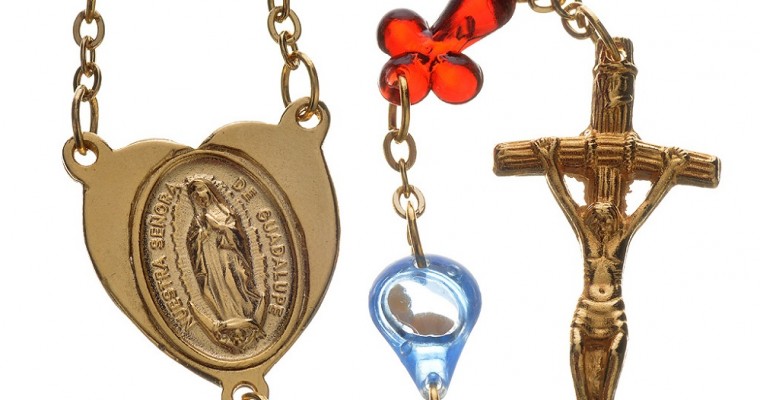
The Dominican’s Rosary Movement shows both the desire for community devotion and the desire to promote Dominican Spirituality and the philosophy of love linked to the Holy Rosary. Dominicans daily lives involve searching for truth and intimacy with Jesus, pursued by daily actions, but above…

Veneration of sacred images

Veneration of sacred images

The Catholic Church has always used sacred images and statues for the practice of worship. Naturally it doesn’t come to mind that the first Christians were forced to hide their faith and to lead their worshipping in secret places, where, at most, they could use…

The cult of Divine Mercy

The cult of Divine Mercy

The cult of Divine Mercy started rather late. It was a cult started by Maria Faustina Kowalska, a Polish nun canonized in 2000 by Pope John Paul II.

A member of the Congregation of the Sisters of Our Virgin Mary of Mercy, Sister Faustina showed mystical qualities since very young age. Her diary contains many dialogues that took place over the years between her and God. Thanks to this this connection with the Lord, in addition to graces, revelations, visions, stigmata and numerous other gifts to raise her to the role of Saint.

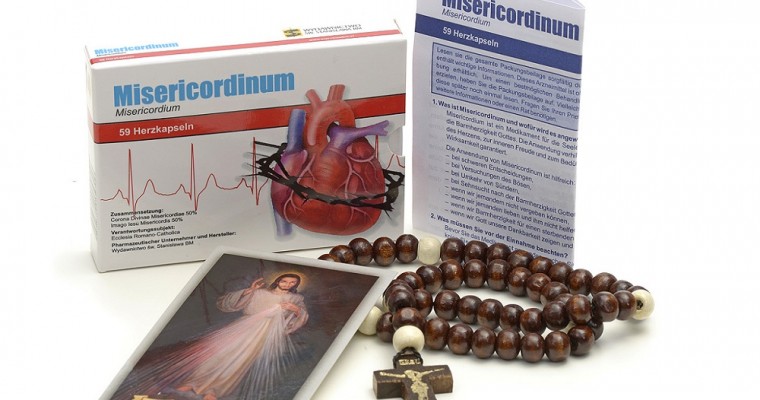
The cult of Divine Mercy started from a vision Sister Faustina had in 1931: Jesus appeared in his cell dressed in white, with one hand raised in blessing and the other resting on his chest, from which two protruding shining rays: one pale and the other red.

Jesus explained that the pale ray represented the Water which represents the souls, and the red the blood, which is life.

The Lord ordered her to paint Him in this way and make sure the image was revered around the world. He also said that the celebration during which the image was to be blessed should take place on the first Sunday after Easter. Pope John Paul II canonized Faustina, and decreed that the Feast of Divine Mercy was to be celebrated every year on that date.

In another appearance, Jesus dictated Sister Faustina the Chaplet of Divine Mercy, a devotional prayer that gives special favors to those reciting it, in particular the promise of a peaceful death. Even the worst sinners reciting once the Chaplet of Divine Mercy can find in it the last lifeline and the forgiveness of all sins. The prayer of the Divine Mercy is a heartfelt plea to Jesus, a merciful Father, ready to welcome at any time in His embrace the suffering children, ready to pick up and comfort all their troubles.

Simply recite the Chaplet of Divine Mercy to find relief from worries and a new intimate and profound joy to face life with.