Author: Redazione

Novena to Saint Joseph for Labor Day

Novena to Saint Joseph for Labor Day

Saint Joseph in an unmissable figure when we think about Jesus life and work. Even though he was probably already dead when Jesus began his mission, it is true that his role of Mary’s husband and foster father of our Savior places him among the…

First Communion: princes and princesses for a day, but…

First Communion: princes and princesses for a day, but…

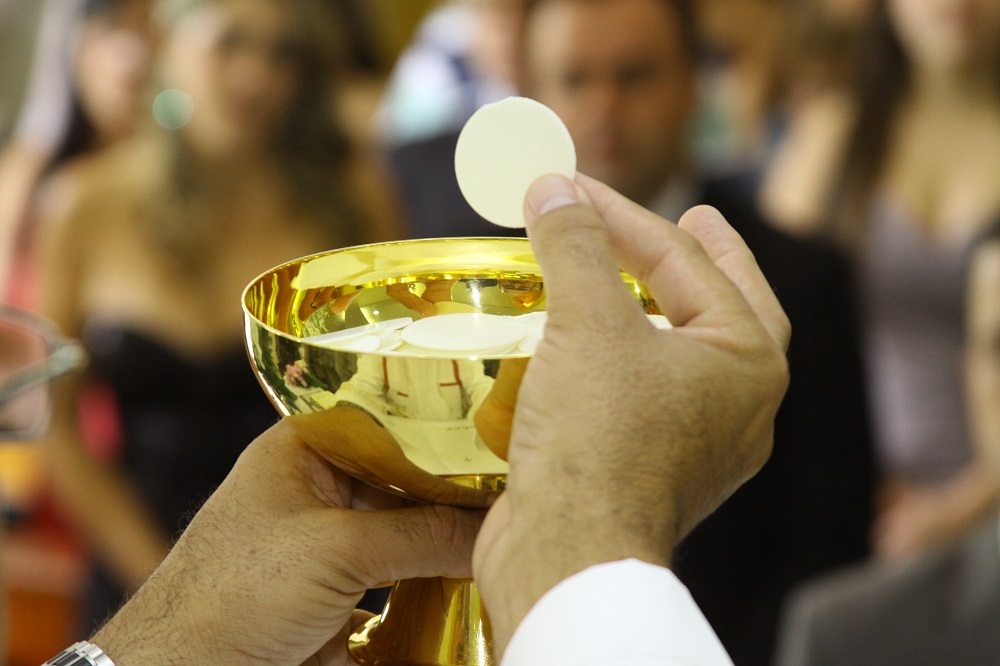
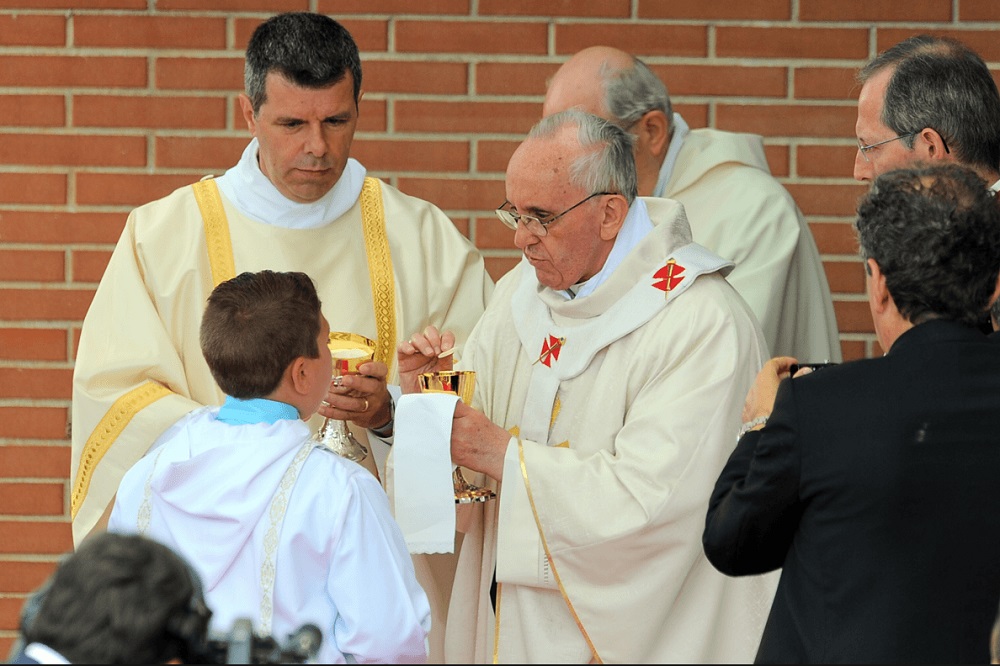
May is the month of Holy Communions. The First Communion is one of the most important and precious sacraments in the life of a young Christian. It celebrates the moment when, for the first time, he or she will be able to approach the Holy…

Calendula cream: properties and benefits

Calendula cream: properties and benefits

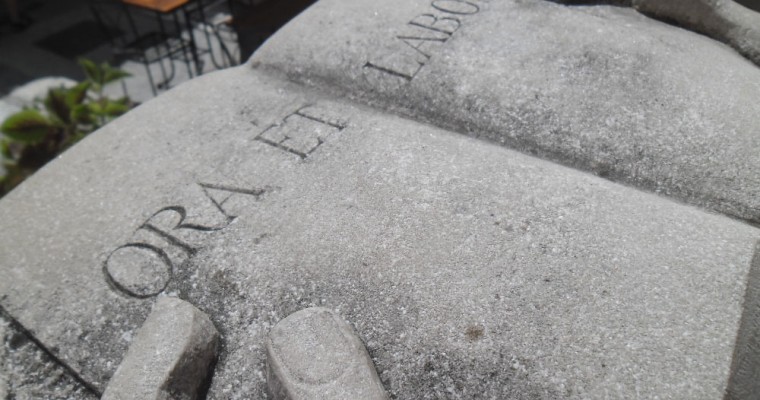
Since their origins, monasteries have not only been centres for meeting and prayer, but also the guardians of ancient knowledge, bulwarks of faith and spirituality even in times when ferocity and barbarism dominated the known world. The fall of the Western Roman Empire (476 AD) and the barbarian invasions, created a general climate of fear and uncertainty, erasing, in an often irremediable way, the memory of the great civilizations of the past. The task of preserving the precious manuscripts that escaped destruction, and, more generally, of passing on the knowledge of the West, was entrusted to monasteries and abbeys. But that’s not all. Monasteries, particularly the Benedictine monks, who made the work of worship the very symbol of their order (“Orat Et Labora”), catalysed the economic, commercial and social development of many regions around their buildings.

In addition to copying books and codes, some handed down to us due to the work of a skilled amanuensis, and watching over Christian communities, from the Middle Ages onwards, monasteries were places where the use of plants and medicinal herbs to produce healing compounds was studied and  effective remedies for all kinds of diseases were discovered. The ancient Greek and Latin texts had devoted ample treatment to the study of natural medicine, not to omit the even more advanced medical knowledge of the Arabs, which had to be safeguarded and disseminated.

Christianity in particular, embraced what was called Galenic medicine, which derived from the theories of the physician Galeno, the most significant of those who lived in Roman times. A Greek, originally from Pergamon, he followed the same clinical approach as Hippocrates, but combined it with the philosophical approach of Aristotle, according to whom, on a medical level, every effect was determined by a cause. A principle which, although on an exquisitely spiritual level, also belonged to Christian philosophy, which is why the doctor’s theories were embraced and followed with conviction for a long time.

Another task of the monks was to gather the raw materials for manufacturing the drugs. To start with, monastic communities limited themselves to gathering wild herbs from the meadows and woods around the buildings, but soon within the walls of monasteries and abbeys, monks began to create medicinal herbs gardens, which supplied them with the ingredients they needed to make their medications.

In this way, enchanting places began to arise, which not only recalled the beauties and delights of the earthly Paradise, but also proved to be very useful for providing the raw materials for medicine, even in times of war, when it was impossible to venture outside to collect what was needed.

Hortus conclusus
The Hortus conclusus

The ‘Hortus conclusus’, or enclosed garden, was a genuine garden, where everything spoke of beauty and harmony, full of bright flowers, fruit trees and fountains.

Next to it the Hortus simplicium, the Orto dei Semplici, housed exactly the necessary herbs from which to extract the precious natural healing principles. These principles extracted directly from nature, were called “Simple”, to distinguish them from “Composite Medicines”, which were obtained by treating the medicinal plants in various ways, cooking, drying, macerating and mixing according to the ancient knowledge.

Over time, the monks deepened their medical knowledge, gathering the testimonies of travellers who came from everywhere and were hosted in their forests. While the outside world was changing, devastated by wars and pestilence, the patient, constant work of these men of faith, who belonged to different orders, but were united by the desire to learn more to benefit people, never ceased.

And it continues to this day. Nowadays, many monasteries have sales outlets inside them, where monks sell natural products for the health, healing remedies and even cosmetics and perfumes, in mass-produced packs. What’s more, many online stores offer products made by the monks, and make them available for purchase all over the world. But the most fascinating fact is that everything once created by the wise hands of the monks and herbalists, is still being prepared by following the same recipes, the memory of which has been lost to the indistinct echoes of history, but remains a secret and fascinating prerogative of these timeless communities.

The Camaldoli Monastery – an ancient pharmacy

Consider, for example, of the monastery at Camaldoli, and, in particular, its ancient pharmacy. Camaldoli is one of the most important examples of activities carried out by monasteries from the Middle Ages onwards. Founded in 1025, it quickly gave life to one of the largest and most active Benedictine communities in the West, and became not only a religious and spiritual centre, but also the cultural heart and collection point for ancient knowledge from our territory, and much more.Oil 31

From 1046, the Camaldoli monastery housed a small hospital, which provided free support to those living in the areas nearby and to pilgrims passing through. The hospital was combined with a galenic laboratory, a Pharmacy practical, where the monks made the medicines needed for the hospital’s activities using herbs as ingredients.

That pharmacy still exists now, and there are ancient recipes dating back to the fifteenth-sixteenth century, in addition to the tools used by those ancient herbalist monks.

The products manufactured by the monks of Camaldoli ranged from antidotes to toxins, warming ointments, balsamic potions, tonics, antiseptic plasters, as well as essential oils and cosmetic products for  cleansing and beautifying the body. Many of these products are still packaged and sold by the Camaldoli monks today. One for everyone, is Oil 31, a real panacea for endless disorders, major and minor. It’s an oil that is distilled from thirty different herbs mixed together using a recipe handed down for centuries, for creating a product with incredible virtues refreshing, balsamic, toning and disinfectants. In addition to Oil 31, the ancient pharmacy at the Camaldoli monastery still offers an endless variety of natural products for the care and regeneration of the body, like creams for the skin of the face and body, shampoos, essential oils, bubble baths, balsams, natural toothpastes, perfumes and other cosmetic, curative and soothing products.

Calendula Cream

Calendula
Calendula officinalis

Among the curative and cosmetic products produced at the Camaldoli Monastery, a special mention should be made of the face creams.

Its marigold cream, for example.

Calendula is a herbaceous annual plant, with characteristic yellow-orange flowers collected in the flower heads, from which a series of substances with exceptional beneficial properties are extracted. In addition to the precious essential oil, the flowers of the calendula contain flavonoids, which are powerful antioxidants, very useful to prevent serious diseases; triterpenoids, which have a great pharmaceutical versatility; sterols, which fight ‘bad’ cholesterol; carotenoids, which slow down the formation of free radicals; pyrogallic tannins, with powerful astringent, antibiotic and haemostatic functions.

In addition to the many uses to which it is suitable in the field of medicine, calendula is very valuable also in the production of creams for the face and body.

Calendula CreamCalendula cream is manufactured according to an ancient recipe from the Camaldolese Monks, is exceptionally nutritious, emollient and rich. In fact, it contains all the properties of calendula officinalis described above. This cream has incredible antibacterial and lenitive properties, which make it effective for a whole range of uses, from mosquito bites, to the treatment of boils, small burns, and couperose to herpes. Its composition, which is high in nutrients and beneficial substances, promotes the regeneration of tissues and the healing of wounds, and ensures a constant antiseptic and disinfectant action. It is also suitable for small burns. But we shouldn’t forget its exquisitely aesthetic properties too. All of its distinguishing characteristics, in fact, make it a precious ally for the care and beauty of all types of facial skin. It is especially suitable for dry and delicate skin. It’s amazing refreshing and protective power helps the skin to cope with everyday stress, keeping it fresh and hydrated. Calendula cream renovates cells and prevents the signs of aging, smoothing the first wrinkles and giving the skin brightness, firmness and turgidity. Used over the entire body, it also has a highly soothing effect after exposure to the sun.

Other valuable products

Even avocado is an excellent beauty ally. The Camaldoli monks discovered it and made it the basic ingredient of many products dedicated to the care and beauty of the face and body.

Avocado oil serves as a base for these products; rich in vitamin A, group B vitamins, vitamin D, unsaturated fatty acids (‘good’ fats), as well as lecithins, antioxidants and mineral salts. All these substances naturally stimulate cell regeneration, with a moisturizing, anti-wrinkle and firming effect.

The avocado oil from the Camaldoli Monastery is absorbed on light massage and is suitable for care of the face and neck skin, but not just that. Even the body can gain exceptional benefits, thanks to its toning properties, which tone the tissues of the legs, buttocks and abdomen, and shrinks stretch marks. The high content of vitamins and nutrients makes it suitable for well-being of the hair, for which it can be used as a compress that regenerates and renews dry and dehydrated hair.

Likewise avocado cream restores tone and elasticity to tired skin, making it look more relaxed and youthful. Ideal as an intensive beauty treatment, it has to be applied at night to nourish and moisturize the skin of the face. It penetrates deeply, without being greasy, prevents wrinkles from forming and reduces those that already exist and generally makes the skin of the face look revitalized and rested.

Another very effective product for the care of the face and its natural beauty is the beeswax cream, always produced in the Camaldoli Monastery. Produced by bees, it contains water-repellent lipids and other precious substances that create a sort of emollient and protective film on the epidermis. This film protects the skin from atmospheric agents, and keeps its hydrated, making it fresher and younger. The beeswax cream also has remarkable healing and purifying properties, thanks to the vitamin A and carotenoids it contains. Highly effective against cracking, it protects the skin of the face from cold air and wind in the winter season and regenerates it naturally.

There is also a face cream with olive oil to prevent skin aging and guarantee hydration. The high content of unsaturated fatty acids, vitamins and olive oil antioxidants makes it a panacea to keep even dry skin elastic, young and fresh. Olive oil produces a natural protective film that prevents the dehydration and peeling of the epidermis. It also nourishes and moisturizes deeply, with an emollient and refreshing effect.

Crucifix of San Damiano

Crucifix of San Damiano

The Crucifix of San Damiano is the one in front of which St. Francis was intent on praying when, in the distant year of 1205, he received from the Lord the call to work to restore his church. The Saint of Assisi believed at first…

Ideal favours to choose for your son or daughter

Ideal favours to choose for your son or daughter

Baptism, communion, Confirmation. Three of the most important sacraments for a Christian. Baptism establishes the entrance of the new faithful in the womb to the church, with redemption from original sin through water and its rebirth as a new man; the Communion establishes the first,…

An Explanation of the Our Father

An Explanation of the Our Father

We’ve often referred to the importance of prayer for a good Christian. Although the time we can devote to it every day is small, even if we cannot recite the Rosary very often, finding a time of recollection just for us, to speak with God and address our thinking, isn’t that difficult. Indeed, it’s vital to find similar moments, throughout the day, to help us live serenely and with greater spiritual force through all the beautiful and bad things that happen in life.

Sometimes there are small tricks that help to remember this need. Prayer rings, for example, are a great reminder. Worn every day, as fashion accessories and as ‘talismans’, they bear the words of the most famous prayers engraved on their surface, and although wearing the prayer ring cannot replace the act of praying, it constitutes a a sort of preferential channel to God, a contact that is always open and known by him. Every time our gaze falls on the Our Father prayer ring, every time our eyes see the ancient and powerful words engraved on it, or even simply when we become conscious of its presence on our finger, it is as if the words of prayer resounded in the our mind, and everything else, stopped being important.

Prayer rings

The prayer that perhaps features most often on prayer rings is also ancient and important, for Christians, being the one Jesus himself taught to His disciples (Matthew 6: 9-13 and Luke 11: 2-4): the “Our Father” “.

In Matthew 6: 9-13 we read: “So you pray like this:Our Father who art in heaven, hallowed by thy name; thy kingdom come, they will be done on earth as is is in heaven. Give us this day our daily bread, and forgive us our trespasses, as we forgive those who trespass against us. And lead us not into temptation, but deliver us from evil’“.

Here it is, the prayer of all prayer, the first taught to us when we are children, when obviously we are not able to fully understand its meaning. And this prayer, more than many others, is full of meanings that transcend the words it is made of; the formulas that we are accustomed to hear repeated, too often mechanically, sometimes hastily, considered by some as spells.

The Our Father is much more than that: it is God who teaches us to turn to Him, in our heart, asking for all the things we can and must desire, in the right order. God certainly does not care whether we recite words by heart, or demonstrate to Him what a beautiful intonation we have! Words are mere words, if behind them there is no heart to give them a voice.

Matthew writes: “Instead, when you pray, go into your room and, closed the door, pray to your Father in secret; and your Father, who sees in secret, will reward you.

But when ye pray, use not vain repetitions, as the heathens do: for they think that they shall be heard for their much speaking. So do not be like them, because your Father knows what things you need even before you ask them“(Matthew 6.6-6.8).

In this sense, the Our Father is not only a prayer, but a “guide” about how we should pray. Paradoxically, we could elaborate a personal version of ourselves, one of Our Father, to address our Heavenly Father.

The Our Father and his formula

But let’s look at the Our Father in detail, his words, his formula.

Silver rosary beads
Over 350 Silver rosary beads

Already, the opening says everything: Father. This is how we turn to God Almighty, Creator of all things, beginning and end of existence. He is so great, He is everything, and we call him ‘Father’, with an intimacy, a confidence that would be unacceptable and inconceivable if He was not also and above all a God of Love.

The opening of the Our Father already defines the nature of our relationship with God: a son who turns to the Father, with respect and reverence, but above all with total trust and love, with the certainty of always being able to listen, forgive, welcome, a safe place to come back and find shelter.

And that isn’t all. God is not only My Father. He is the Father of all men and women, without distinction. It does not matter where one comes from, what its history is, what we have done good or bad. God exists, for him or her, and he is ready to welcome him in his embrace in every moment. For this we say Our. His love is unconditional, boundless, addressed to all His children, one by one, in equal measure and yet taking into account the nature of the individual, his history, his frailties and fears. His infinite generosity led him to give himself to men, to sacrifice himself to give us hope, salvation. This is also why He is ours, because he has made of His Body and His Blood the vehicle for an eternal bond.

After the opening, the prayer continues with other phrases that identify God, not only as a Father, but also as the Lord of everything. We called him Father, we said that he is Our, and yet we do not forget His greatness, His omnipotent, omniscient being, Lord of the Earth and of Heaven. In fact, let’s say that you are in Heaven‘, not to indicate that He is far from us, but to remember that, from where he is, He knows everything, He sees everything, He can do everything, and this does not stop being our Father.

Prayer

The three statements

From this point onwards there are three statements that manifest our commitment to the part of us witness “Let your name be sanctified”, to fidelity “Come your kingdom” and love and total trust in God “Your will be done”.

Let’s say ‘Hallowed be thy name” as it should be, because every believer’s task has always been to glorify the name of God and make it known to all, even to those who don’t  know him. With this formula we preserve the name of God from contempt, from the blasphemy of those who do not recognize it, we praise Him with respect and joy, hoping that it will be respected and loved by everyone.

Also ‘Thy kingdom come’ it is a wish for more to ourselves than to God. He certainly does not need our encouragement! But hoping that His kingdom will come, let us manifest on the one hand our hope that His will be done, that Jesus will return, for the salvation of men, on the other our will to do our best because every day, around us , the kingdom of God exists, alive, also thanks to our good deeds, to the good we do for our brothers. Heaven can be much closer than one might think, if we try to make it real, to build a piece of it every day.

The next formula, ‘Thy will be done in the same way it is not so much directed to God as to ourselves, because we learn every day to recognize the will of God, to accept it with humility and faith. When we say ‘your will be done’ we do nothing but recognize the superiority of God’s will, of His great, immense design, compared to our fallacious and selfish will. We will never be far-sighted enough, wise enough, to know the great divine plan, but recognizing and requesting its fulfilment we can equally be part of it.

This is also clarified by what follows, “on earth as it is in heaven”: as in heaven the angels surround the celestial throne, glorifying God at every instant, so it should also be on earth, as should all of us, however small, unworthy. It is another way of reminding us that paradise begins here on Earth, and that it is up to us to build it, with God’s benevolence.

The request of the God’s support

Rosary in silver 800 with freshwater pearls

Three requests follow: the request of the God’s supportGive us this day our daily bread“, that of the forgiveness of sinsForgive us our trespasses“, and finally that of salvezzaAnd lead us not into temptation, but deliver us from evil”.

Give us this day our daily bread‘ is a request to God to give us what we really need, what really matters. No frills, no desires useless, deceptive. We live in an age devoted to the superfluous, to the non-essential, often to the detriment of what is really necessary. For us faithful there should be nothing more necessary than the Bread, Body of Christ, symbol of the Salvation that God has prepared for us. And since we also have needs, real needs, linked to the limits of our body, of our being alive, who better than God can decide what is really useful for our livelihood? So we ask God to give us what we need, and, implied, to free ourselves from the desire for what is superfluous.

We also ask God to forgive our sins, but not just that: we also ask him to enable us to forgive those who have committed against us. We are the first proponents of our salvation: if we do not learn to forgive our enemies, how can we expect God to forgive us? Here is the formula ‘forgive us our trespasses, as we forgive those that trespass against us’, that is, make me like Christ, who has forgiven those who were scourging him, who crucified him, and for his executioners he had only words of forgiveness and love. No prayer has value if it is not supported by good deeds, by sincere repentance, by the real will to do good.

Even the third request, ‘and do not lead us into temptation‘, refers to the need, on our part, to live with righteousness and virtue, to show strength, courage when faced with adversity, and temperance and wisdom before sin, to the temptations that the devil puts along our path. That is why we pray to God, not so much because he does not let us meet these temptations, but because he makes us strong enough to face them and overcome them.

Jesus has won his battle down here, for all of us. His is Glory, forever and ever. When we ask God ‘but deliver us from evil‘ we ask him to support us in our daily battle, because we are not yet like Jesus, we are not as strong as He, great as He is, and we alone sometimes struggle to fight against evil that manifests itself with deceits, temptations, difficulties, troubles . Once again, what we ask of God is not that He is fighting for us against evil, but that makes us strong enough to face and overcome our daily war. As children frightened by monsters in the darkness, we ask our Father for infinitely good help and protection, and so prayer closes, as it began, in the comfortable embrace of God, beneath his benign gaze.

The Our Father is a prayer, but it is also a return home, the most precious home we can ever have, the safest place we will know in all our lives and beyond.

How Royal families celebrate Christmas

How Royal families celebrate Christmas

Christmas is probably the ultimate family holiday. However, there are different types of families. Or not? How do Royal families celebrate Christmas, for example?  Are their traditions the same as ours, like decorating the tree and exchanging gifts? The English Royals, as usual, are very,…

The enchanted atmosphere of Christmas in North Europe Stockholm and Gothenburg

The enchanted atmosphere of Christmas in North Europe Stockholm and Gothenburg

In Sweden, Christmas looks even more magical. Maybe that is because winter is colder and darker than in other countries, and people need to concoct something to warm up their bodies and hearts. Or maybe that’s because the traditions of that country are so suggestive…

Outdoor Christmas decorations: luminaries

Outdoor Christmas decorations: luminaries

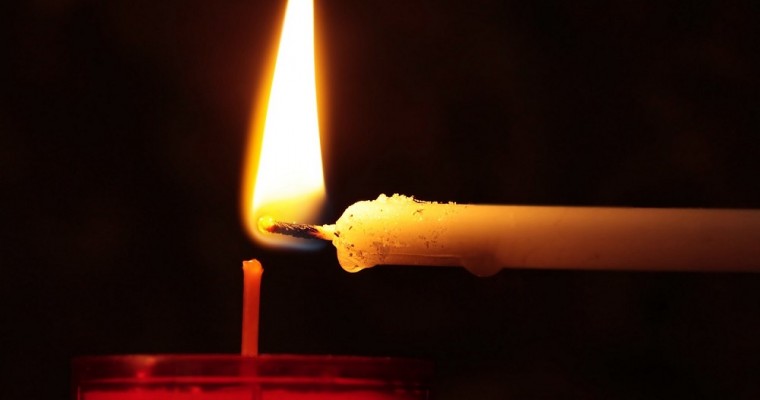
In Christian religion, light has always had a very important symbolic meaning. That is demonstrated by the fact that it was used since the origins of fire during celebrations, and also by the fact that the use of candles spread not only as a source of lighting in churches, but as votive offers and as elements that are strongly connected to the most meaningful events of a devotee’s life.

Under that point of view, the tradition of decorating the house with luminaries during Christmas holidays acquires a value that goes beyond the simple beauty, the mere desire to astosnish your neighbours with a display of colored and flickering lights.

A house, covered in flickering bulbs that create intermittent light games and brighten up the dark of night, becomes a magical place, some kind of reference point not only for the family living in there, but also for those looking at it while passing by. Decorating the outdoor of a house with colored lights is a gift for the whole neighborhood, a joy to be shared, as if all the people who live in that house wanted to share the atmosphere of joy, happiness and warmth typical of Christmas also with their neighbors.

Christmas luminaries have the special power to make everyone feel like kids again. One just cannot be indifferent when watching the shiny lights chasing each other during the foggy and cold nights before Christmas. Light triumphs during holiday nights, chasing bad thoughts, worries and fears away. It brings comfort and joy in the Ultimate Holiday, welcoming anyone who stops to admire its movements and colors in its joyful embrace. All of a sudden, even cold seems less intense, the night less dark, as if a swarm of little luminescent fairies decided to chase each other around the terraces railings, among the branches of the trees in the gardens, through the spruce canopies and the holly berries decorating doors and windows. It really is holiday, for everyone.

An ornament that cannot be missed in every home: the Advent Wreath

An ornament that cannot be missed in every home: the Advent Wreath

The Advent Wreath is at the same time a Christmas ornament that embellishes your home and an object of great sacred value for believers. As a matter of fact, the Advent Wreath accompanies the devotees for four weeks until Christmas. It is made of many…

Getting ready for Christmas while having fun with your child

Getting ready for Christmas while having fun with your child

Christmas is the family holiday, the occasion where all gather to celebrate and spend some time in peace and harmony. Wouldn’t it be nice if the family was involved in the organization of such celebrations and in the decoration of the house? Especially for the…

Decorate your house for Christmas in complete safety

Decorate your house for Christmas in complete safety

When a little child lives in the house, you need to opt for a series of indispensable precautions to avoid unpleasant accidents which can also have serious consequences. It’s a well known fact that kids are curious by nature. The youngest ones crawl in every direction, lured by every object that can catch their attention. Under this point of view, Christmas decorations are an irresistible temptation. But it’s precisely for them, for the youngest, that we want to decorate our home, so that it looks more beautiful and warm, and to let them feel the spirit of love for the family even more.  To let them experience Christmas atmosphere from their very first moments. So, what should we do? There are a few small precautions that we can keep in mind to decorate our home in safety ad make it more beautiful and festive, without risks.

The tree, first of all, should be made of fireproof material, and guaranteed by the CE marking. It must be placed on a stable base, and preferably tied to a piece of furniture, or anyway secured in a way that it cannot fall in case curious little hands will grab on to its branches.

Also for the lights that will decorate it, or that will decorate any other part of the house, it is better to choose safely and buy CE marked objects, realized according to all appropriate safety regulations. Kids love colored and bright things and they would never worry about the possible danger of a live wire or a non adequate light bulb! One more precaution will be to switch everything off when going to bed or out.

About tree ornaments, all fragile materials should be avoided, at least until the young ones will be old enough. So, say yes to shatterproof balls, fabric ornaments, and say absolutely no to decorations with small parts that could come off and be ingested by mistake.

Watch out for the Christmas Rose too! It’s beautiful and decorative, but its leaves secrete a toxic and stinging liquid, dangerous not only for children. Better place it in an unreachable spot!

Let’s not give up the tradition of decorating our homes for the best Christmas ever, but let’s do an extra effort to avoid hassles in days that should only be serene.

Christmas markets in Bolzano and Bressanone

Christmas markets in Bolzano and Bressanone

Few places call to mind holidays atmosphere as much as Christmas markets do. They are definitely not usual markets, as we are used to see all year round in our cities. Christmas markets are veritable events, which change the look of the streets and squares…

Animals that should not be missing in your nativity scene

Animals that should not be missing in your nativity scene

Among the many characters in a nativity scene, you just cannot ignore the large amount of animals of any kind. The most “famous” are surely the ox and the donkey, which warmed baby Jesus with their warm breath. The former is said to have lured…

Chocolate Christmas

Chocolate Christmas

Dessert should not be missing from the holiday table. Let alone on the table of the Ultimate Holiday! During Christmas sweets of all kind play a fundamental role in Italian meals. The great classics, as panettone, pandoro and nougat, industrial Christmas desserts; in addition we can also find handmade desserts, made especially for Christmas, recipes that are passed on from generations, which recall the tradition of family or the region they come from.

Their scent, their taste, tell a story made of memories and people, of lives indissolubly, deeply and preciously connected. Chocolate is the king in many Christmas recipes. For example, the Christmas Log, or Buche de Noel, a dessert made of rolled up sponge cake filled with cream and covered in chocoled glaze, lined with a fork to resemble a tree bark. Alternatively, simple pastry biscuits, shaped as Christmas trees, guiding stars, angels, decorated with dark chocolate glaze; or also the mostaccioli, typical Christmas desserts from the south of Italy, filled with honey and cinnamon.

Furthermore, you can fill up your pandoro with a creamy chocolate mousse, orange-scented or filled with rainsins soaked in rhum. And then, the chocolate salami with dried fruit, the delicious panforte, so crunchy and so rich in different flavors that you can taste bite after bite, or filled chocolate rolls cut as delicious tasty spirals!

But there are no limits to creativity. You can find so many recipes, both for traditional or unusual dessert, such as Christmas balls made with chocolate sponge cake filled with cream cheese and decorated with fondant. Beautiful, and so yummy!

8 ideas for a religious Christmas gift

8 ideas for a religious Christmas gift

Christmas, time for gifts. Actually, someone has already begun his rush to Christmas shopping; woe to those who find themselves unprepared, woe to those waiting till last minute, and make someone unhappy. It is such a pity that to some extent the fever for gifts…

The birth of Baby Jesus: the deepest meaning of Christmas

The birth of Baby Jesus: the deepest meaning of Christmas

The Nativity of Jesus surely symbolizes the highest and most meaningful moment of the Christian calendar. Every year this miracle repeats itself, along with its promise of salvation. The statues of Baby Jesus that look upon us from nativity scenes in churches, squares and in…

The story of Saint Roch of Montpellier: French pilgrim and thaumaturge

The story of Saint Roch of Montpellier: French pilgrim and thaumaturge

Saint Roch of Montpellier has many traits in common with Saint Frances of Assisi, whom he whorshipped and fervently imitated. He came from a rich family too, was also very good-looking, had an active and rich mind, nurtured by university studies and a natural curiosity towards the world. Since a very young age, Roch manifested an amazing devotion. Educated and encouraged by his mother, a faithful and pious woman herself, he decided soon to dedicate his own life to prayer and most of all to other people wealth.

He lived in Europe during the XIV century, while plague was devastating. This young and delicate man, as pictures and statues that can still be found in churches all over the world represent him, left the safety of his family home with no hesitation, to travel the world and bring comfort and salvation to the sick and suffering people. It was in Italy that his thaumaturgical gifts showed to the world: the mere touch of his blessed hand was enough to heal sick people abandoned by their own families.

The statues represent Saint Roch as a pilgrim, wearing a tabard, a wide-brimmed hat, a walking stick with shells on it, which he used to collect water and an empty pumpkin where he stored it, and a shoulder sack. Other statues of Saint Roch represent him showing his healer skills: he was also a former medicine student; therefore, pictures show him holding the small scalpels used to cut plague buboes in his hands. Since he got infected too at some point, he was also represented with the signs of the disease, a wound on his thigh that seems bleeding.

It is said that he had a cross shaped birthmark on his chest, right where the heart is. That is why pictures of Saint Roch often show this particular detail on his clothes.

In the Saint’s pictures, there are often an angel and a dog too: both used to comfort him during his disease, the former promising healing, and the latter bringing him a piece of bread everyday so that he could eat.

Saint Roch went back to his home country and was imprisoned by his own relatives who didn’t recognize him and mistook him for a spy. Only after his death in prison, they did recognize him. Next to his body, the Saint left a board saying: “Anyone who will pray to me against the plague will be freed from this scourge” That is why he is still today the protector of infectious People, Disabled and Prisoners