Author: Redazione

The miracles of Saint Gerard Majella

The miracles of Saint Gerard Majella

Contents1 Saint Gerard and the religious call2 Miracles of Saint Gerard3 Prayer to saint Gerard Majella The miracles of Saint Gerard Majella let the world know the human and spiritual story of this exceptional young man. Let’s find out more about the saint Patron of…

What is the Scapular?

What is the Scapular?

The scapular has evolved throughout time, from being a work garment for monks to becoming a devotional object used also by lay people. What is its meaning? And most of all, how can we wear it without falling into error? At the beginning, the scapular…

5 religious key chains to give on 5 different occasions

5 religious key chains to give on 5 different occasions

What could be a not too expensive gift, but which can also let the people we love know that we think about them? Have you ever thought of a religious key chain? Small, practical, useful, it is the perfect gift for any occasion. And for all budgets.

There are times when we would like to express our support to someone who is going through a hard time or is about to begin a new important experience. A new job, a journey or a new home.

Or maybe, we would like someone dear to think of us every time they look at a particular object, even a small one and of common use, but which is able to remind them of our love at any moment.

We are not talking of big events, important and solemn gifts, which can be of course very expensive. What we have in mind are small thoughts turned into objects, the materialization of a good wish, hope and love message.

Holyart offers a nice and greatly versatile solution, which is perfect for all those times we would like to give someone something small, but we really don’t know what to look for: religious key chains.

What can be more simple yet useful and necessary? We all have keys nowadays: house keys, car keys, work keys. They get lost inside too big bags very often, or even worse, they can be lost due to their small size. A key chain can be the perfect solution to such problem. A key chain does not only hold our keys in place, or even contains them, but makes them easily localizable in our bags, pockets or homes.

Of course, there are many types of key chains.

Holyart offers you a wide variety of religious key chains. That’s right, our key chains are embellished with sacred images, small crosses, angels wings, even rosary decades, so that we can always carry a little help for our prayers with us, besides being a practical container for our keys! Holyart religious key chains are made in Italy, according to the highest quality standards and by specialized companies and skilled artisans.  In our catalog, you will find key chains made of wood, especially olive tree, silver plated metal, leather, and decorated with holy images, but also small, elegant and modern decorations. Because spirituality does not have to ignore fashion.
More, among Holyart religious key chains you fill find leather key chains-rosary cases, so that you can always carry your rosary with you.

Holyart religious key chains are so beautiful and well-crafted that many choose to use them as party favors for Confirmation and as small memories to give to relatives and friends on special occasions.

How to choose the perfect religious key chain for the different occasions.

We propose 5 ideas that can match 5 different occasions. The rest is left to your fantasy and desire to surprise or just elicit a smile on those you love!

  1. Key chain shaped as a Franciscan sandal
    This key chain is handmade by a small Italian company, leader in the leatherworking; it’s the perfect gift for someone dear who is about to leave for a journey, on a pilgrimage, or on a spiritual trip such as to Medjugorje, Lourdes or the Route to Compostela. Our key chain will be a cute gift for those who are about to set out on their journey, so that they can find out something new about themselves, or feel closer to God. The shape itself of this key chain, a small, nice Franciscan sandal, recalls the idea of walk, a real walk, but most of all, a walk of faith. The sandal-shaped key chain is 100% Made in Italy.
  2. Real leather key chain with image
    This key chain with six practical hooks is particularly indicated for distracted people or for those who have many keys. In fact, its six hooks can hold many keys in one practical, protected and compact solution. It is indicated for grandmothers and grandfathers. It is handmade with real leather by a small specialized Italian company, and is decorated with an image of Merciful Jesus or the Virgin Mary, which makes it even more special. The small image is inserted in a small plaque fixed outside, on the lower right.
  3. Rosary Case Key Chain
    This rosary case-key chain is an example of how key chains can become the perfect idea for party favors for Confirmation. These cute handmade leather bags can contain rosaries with wooden or metal beads of max 4 mm. An automatic button guarantees a discreet and perfect closure. The rosary case-key chains are decorated with a small Marian image, hot stamped in gold. They are also available in different colors: beige, red, blue, dark brown, black, cream white.
    The pro of these beautiful rosary case-key chains is that if you order more than 300 pieces, you can replace the writing ‘Ave Maria’ with the name of your parish, sanctuary, association, movement, or a sentence that recalls a special event or occasion. Just like a First Communion or a Christening indeed.
  4. Key chain made of zamak with image of the Holy Family
    This cute key chain is made of zamak, a cheap and practical alloy of resistant zinc. The key chain is embellished with an image of the Holy Family. It can be a nice gift for a friend or an acquaintance who just bought a new house, or for a new family, as a wish of serenity.
  5. Key chain with Confirmation images
    This beautiful key chain is made of steel, and was designed as a party favor for Confirmation. It is decorated with a small plaque representing the symbols of the sacrament of Confirmation. Available in two shapes, oval or rectangular, this party favor-key chain will be a perfect and elegant memory for such a big event.

Franciscan sandals keychain in real leather
Buy Now
Key case in leather with 6 hooks, Jesus image
Key case in leather with 6 hooks, Jesus image - 150x150
Key case in leather with 6 hooks, Jesus image
Buy Now
Key-ring rosary case
Key case in leather with 6 hooks, Jesus image
Buy Now
Keyring in metal with symbols of the Confirmation
Buy Now
Zamak Keychain with Holy Family
Buy Now

Murano (Venetian) glass: the making and its characteristics

Murano (Venetian) glass: the making and its characteristics

Contents1 History of the glassmaking art in Murano2 Murano glassmaking3 Murano glass crosses4 Murano glass jewels5 Murano glass crosses Murano is a wonderful island that has been guarding the secrets of a unique and inimitable artisanal craft for centuries. Let’s discover the Murano glass jewels…
History of Saint Peter’s Baldachin

History of Saint Peter’s Baldachin

Contents1 Artistic value2 Characteristics and peculiarities3 The dynamism of shapes Saint Peter’s Baldachin is one of the most spectacular monuments we can admire inside Saint Peter’s Basilica. What is it? Who made it? Let’s get to know this sumptuous baroque art piece, which is admired…
There is a guardian angel in your baby’s room

There is a guardian angel in your baby’s room

The guardian angel. An imaginary friend when we are young, a constant and comforting presence next to us when we grow up. Let’s find out (and rediscover) the importance of such celestial presence that protect us for life.

When we are young, it is easy to believe that we are never truly alone. When the night falls, and we face darkness for the first time in our beds, it is nice to think that there is a silent and careful presence next to us, which keeps monsters away and watches over our sleep. The wonderful part is that such presence is real! Not just that, it never leaves us, stays next to us even when years go by, when the ‘monsters’ we have to face are much more real and the pain that overwhelms us is not just a bruised knee.

We are talking about angels, the guardian angel in particular, the one we are entrusted to in the very moment we are conceived, when the soul is infused in what will be our body, and that will accompany us throughout our whole existence. Its pure and unconditioned love protects us from evil, gives us the strength to face the difficulties we experience every day with courage, whether small or big. It tries to save us from pain, and when that’s inevitable, it comforts and consoles us. Just think that the only love that can be compared to that coming from our guardian angel is the one coming from our mother. Is there anything more intense and strong? Padre Pio used to talk about his guardian angel very often, next to him since he was very young; he was also in contact with everyone else’s guardian angels, asking to pray for him.

padre pio

Read more:

Padre Pio and his favorite prayer
Padre Pio is a figure that was controversial and debated in the Catholic Church sphere for a long time.

What exactly do guardian angels do?

Besides protecting and comforting us, they intercede for us to God, showing Him the prayers of good people, pleading for protection and grace, and from Him, they draw strength and love to help and comfort those who deserve it. Basically, their existence is a constant back and forth from the sky to the Earth and vice versa: they ascend to take our prayers, and come back down to bring us God’s gifts. Furthermore, the guardian angel teaches us to pray. Especially for children, it is important to understand that the secret of real happiness is in prayer since the beginning, which is a way to talk to God. Who can teach them better than a beautiful angel?

So, it is very important to let the children know this extraordinary friend since the first years of their lives. Kids, thanks to their innocence, resemble angels the most. Another miracle given to us by the love of God Father, which makes sure these creatures of light never leave our side, is that thanks to confession and penitence we can go back to our original pureness. No guilt, no sin, and we are once again innocent as children, who confide their secrets to their guardian angels, listening to them in the darkness of the night.

Guardian Angel

Read more:

Who your Guardian Angel is and what they do: 10 things you should know
According to Christian tradition, every one of us has a guardian angel

They are important figures, which are too often left out and forgotten in the daily devotion gestures, but there are many and simple prayers we should address to our guardian angels to show them all our gratitude for what they do for us. The most famous we all know, but don’t recite enough, comes from a poem written by an English Benedictine monk in the XI century: ‘Angel of God who is my guardian, enlighten, watch over, support and rule me, who was entrusted to you by the heavenly piety. Amen’. We should teach it to the younger ones, so that they can say it every day to their invisible friend and thus strengthen their connection.

Let’s teach children to get to know and love their guardian angel then. How should we do that? For example, we could decorate their bedroom with small objects recalling such brilliant beings. Some ideas? We can start right from the very first day with a beautiful crib medal, a medal whose duty is to protect the little ones from evil and watch over their sleep to guarantee their protection also from Jesus, Mary and the guardian angel. It comes from the ancient tradition to hang devotional medals and small fabric and metal creations, real sacred images, over the newborns’ cribs. The crib medal is often a gift to the parents from the Godfather or Godmother for the baby’s Christening.

Holyart catalog: guardian angel items

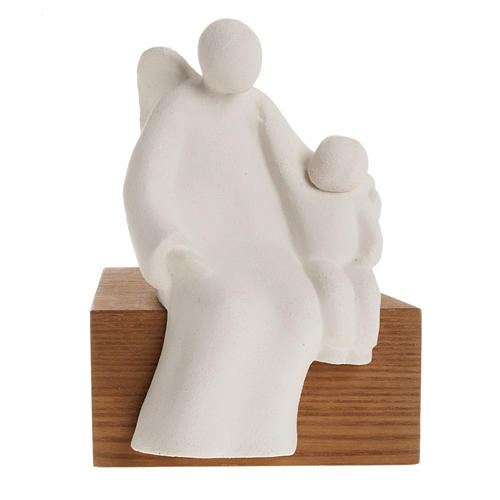
Besides crib medals, Holyart catalog offers a wide variety of decorative objects, statues, pictures whose theme is angels in general, and the guardian angel in particular.

Crib medal

Read more:

Crib medal for newborns: the joy of welcoming a new life
The arrival of a baby in a home is always a reason for joy. A gift that has to be accepted as such, with all the responsibility and love…

Products by Azur Lopiano, for example, are thought especially for the younger ones, to decorate their bedroom with color and joy, and tell them about the presence and existence of guardian angels in the most delicate way possible. They are all handmade objects by the Focolare Movement, one of their towns being in Loppiano. What do Azur Loppiano produce? We are really spoilt for choice.

In the section dedicated to them in our online store you will find articles that can be suitable to be party favors, objects to commemorate Anniversaries, ceremonies, music boxes for children, angel-themed prayer plaques with pictures and low relief, the olive line and the particular wooden stylized crucifixes, and tau crosses.

The articles are thought to catch the younger’s attention. Beautiful, colorful, safe (almost all of them are made of wood), are perfect to decorate children’s bedrooms, but can also be wonderful gift ideas for Christenings, birthdays or any other special occasion.

Many of the products by Azur Loppiano are available in blue for boys and pink for girls, but if your children share the same room and you cannot choose one particular color over another, there are also yellow and orange models.

Lets’ take a look at some of the Azur Loppiano products that are in Holyart catalog.

Music box with star and cherub
It is a very beautiful decor that is perfect for any child’s bedroom. Made of wood and star-shaped with a cute embossed musician angel, this music box activates by pulling a small cord, producing a pleasant melody. It can be hanged to the wall in complete safety, and it is a beautiful gift idea for Christening as well.
Music box suitable to be hanged to the wall.

Round plaque Angel with heart
Wooden prayer plaques with low relief of an angel, in pink or blue, for your girl’s or boy’s room. They can be hanged to the wall and bring immediate color, sweetness and joy. Suitable also for any special occasion.

Low relief Angel of God with child prayer plaque
Another wooden prayer plaque representing a stylized angel with a sleeping child. Oval, it is perfect to decorate children’s bedrooms, and is available in pink or blue. Below the low relief the prayer ‘Angel of God’ is written with childish font.

Clock prayer plaque with angels
A very colorful clock-prayer plaque that can be hanged to the bedroom wall. Two embossed cherubs let a cascade of stars fall down. Made of wood in Italy, it is a beautiful gift idea.

Diptych Hail Mary and green Angel on pink wood
Double wooden prayer plaque, can be hanged to the wall or placed on a piece of furniture. The low relief represents a cherub with a lantern, while on the other side there are the words of the Hail Mary.

Musical box, star with guardian angel
Musical box, star with guardian angel-150x150
Musical box, star with guardian angel
Buy Now
Round panel, angel with heart
Buy Now
Clock relief with angels
Clock relief with angels-150x150
Clock relief with angels
Buy Now
Oval bas-relief panel, angel and sleeping baby
Oval bas-relief panel, angel and sleeping baby-150x150
Oval bas-relief panel, angel and sleeping baby
Buy Now
Hail Mary diptych with green Angel in pink wood 10x15 cm
Buy Now

Easter Blessings to families

Easter Blessings to families

The tradition of blessing during Lent and Easter is very ancient and represents one of the most important moments of the liturgical year, not only for the faithful receiving it, but also for the priests giving it. Let’s find out why. We talked previously about…

Blessed olive branches at Easter: should you keep them or throw them away?

Blessed olive branches at Easter: should you keep them or throw them away?

Contents1 But why olive branches?2 And once Easter has passed, what should we do with the olive branches?3 How can we keep the olive branch without ruining it? When we go to Church on Palm Sunday, the last one before Easter, we receive a blessed…

Types of Crosses and their meanings

Types of Crosses and their meanings

The cross is an ancient symbol, with many variations throughout time. For Christians, it is of the utmost importance. Lets’ discover the different types of crosses, their history and their symbolical meaning.

What is a cross? Most of the people we know would answer such question by saying that it is the Christian symbol par excellence since it recalls crucified Christ, who sacrificed himself for the salvation of humankind. This is of course true, but the symbolism of the cross is older than that.

What shape is a cross? The geometric shape of a cross is rather simple: two lines crossing themselves at a straight angle, splitting themselves in half in some cases, or the longer line is divided so that it has a longer and a shorter beam. Such a shape is so easily replicable that we understand why it is one of the most ancient symbols of humankind.

Christianism was not the first religion to use crosses as objects of devotion. Since the Stone Age, and until the pre-Christian era, there were many pictures shaped as crosses. The so-called Celtic cross was the symbol of the god Odin for the Northmen. It represented a cross enclosed in a circle. Even in ancient Egypt, a symbol recalled a cross, the ankh, the symbol of life. Islam on the contrary, never recognized the cross as a religious symbol, because it denies Jesus’ death on the cross and states that he was replaced by a lookalike.

The word ‘Cross’ comes from the Latin word Crux. For the Romans, it was an instrument used to inflict tortures, crucifixion indeed. However, in the sphere of symbols, we remind that in Roman numbers, number 10 is an X, an element that resembles a cross very much.

10 crucifixes for your home

Read more:

10 crucifixes for your home: check them out on Holyart
Keeping a crucifix in your home. A choice for many, a duty and a need for a Christian. Symbol of Jesus’ sacrifice…

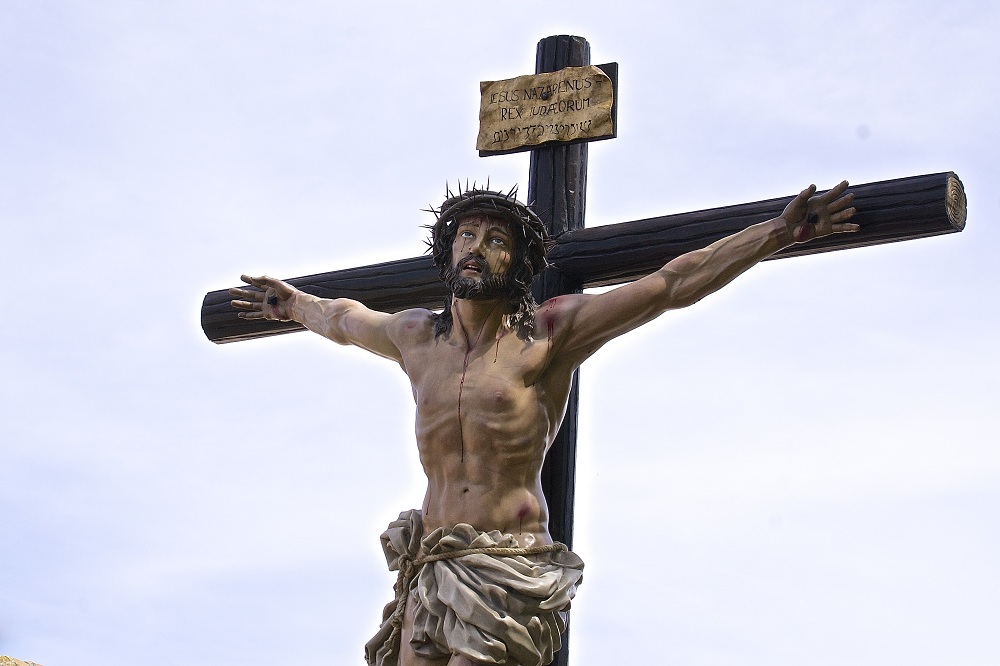
Getting to Christianism, as we revealed earlier, the cross is the main symbol of the religion. In fact, it recalls Jesus’ death, crucified by order of Pontius Pilate, Roman Procurator of Judea, who sentenced him to death. Paradoxically, even though it came from such a brutal and terrible act, the cross is reborn, and has been passed on with a positive value, since Jesus’ passion and death coincide with the fulfillment of his mission of salvation for all men.  A symbol of absolute love then, and of extreme sacrifice.

Yet, the cross and the crucifix took a bit more time to spread and be recognized. They began being used in an important way only from the IV century. The habit of placing a cross over the altar in churches actually began during the Medieval age.

Let’s take a look at the various types of crosses and crucifixes that became popular during the centuries, as symbolic-decorative elements and with particular symbolic meanings.

Latin Cross

It is the most typical, the one that represents Jesus’ crucifixion for Christians. It has two perpendicular beams, the horizontal one being shorter than the vertical one.

Greek cross

It is composed of four arms of the same length, crossing each other at a straight angle. It is typical of the Byzantine art, alternating with the Latin cross as base diagrams for churches. Its four equal beams and the fact that it can be contained in a square, make it the idealized cross, which represents the Divine Nature of Christ.

Tau cross, also known as Saint Anthony the Abbot cross or Crux Commissa.

The Tau is the last letter of the ancient Jewish alphabet, which represented the fulfillment of the whole word revealed by God. Its shapes recalls a cross indeed, but with no upper beam. That’s why the Christians adopted it. Since it is the last letter of the Jewish alphabet, another reason is that it contained a prophecy about the End of Time, just like the Greek letter Omega.

It owes its popularity and diffusion mainly to Saint Francis, who chose it as his symbol of devotion and as a seal, strong in his spiritual belief that the salvation of every man lied in Christ’s cross.

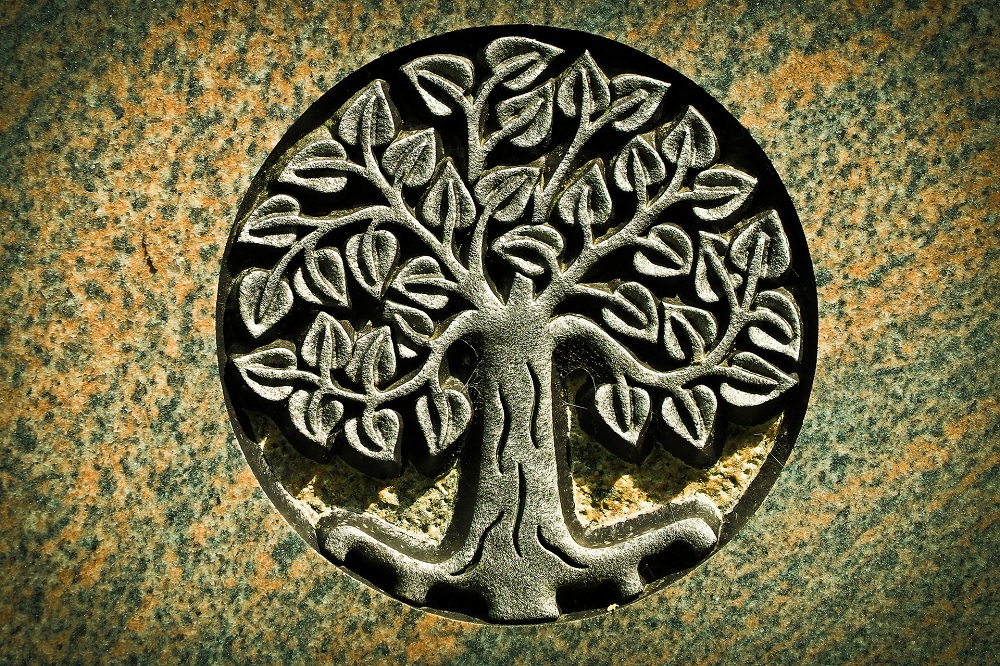
Tree of Life Cross

The connection between the cross and the tree of life is also fascinating.

A legend says that the tree used to make Jesus’ cross was born from one of the three seeds (cedar, cypress and pine) placed into Adam’s mouth when he died. Another legend says that when Adam died, his son Set put a twig from the Tree of Life in his mouth, given to him by the Archangel Michael. A new tree would grow from that twig.

The tree of life cross beams resemble the roots of a tree, full of leaves, flowers and fruits. Besides those legends, its symbolism is clear. The cross is the new tree of life thanks to Jesus’ sacrifice, who stated his identity: ‘I am the life‘ (John 14,6; 6,53).

Eight pointed Cross

The eight pointed cross, also known as the Maltese Cross, or saint John’s cross, was the symbol of the maritime Republic of Amalfi at least since the XI century. It was also the symbol of the Knights Hospitaller of Jerusalem, upon whose clothes it stood out in white, recalling the Pureness of the Beatitudes.

The eight pointed cross has Byzantine origins. The eight points probably symbolize the Beatitudes listed by Saint Matthew:

  1. Blessed are the poor in spirit, for theirs is the kingdom of heaven
  2. Blessed are the meek, for they shall inherit the earth
  3. Blessed are they who mourn, for they shall be comforted
  4. Blessed are they who hunger and thirst for righteousness, for they shall be satisfied
  5. Blessed are the merciful, for they shall obtain mercy
  6. Blessed are the pure of heart, for they shall see God
  7. Blessed are the peacemakers, for they shall be called the children of God
  8. Blessed are they who are persecuted for the sake of righteousness, for theirs is the kingdom of heaven

As an alternative, they could represent the Christian virtues:

  1. Loyalty
  2. Mercy
  3. Frankness
  4. Courage
  5. Glory and honor
  6. Scorning death
  7. Solidarity towards poor and sick
  8. Respect for the Church

Or more, the eight principles that were the foundations of the mission of the Knights of Saint John:

  1. spirituality
  2. simplicity
  3. humility
  4. compassion
  5. justice
  6. mercy
  7. sincerity

Cross of Saint Aemilian of Cogolla

Also known as the Visigoth cross, it is a cross with anchor-shaped beams, that is, with the tips curved towards the outside like anchors. This cross is connected to the figure of Saint Aemilian, a hermit who lived in Spain during the VI century. That is why the cross is also known with the Spanish name of Cruz de San Millán.

The twelve tips of its beams represent the twelve apostles. The fact that the tips are facing towards the outside or the inside indicates the weakness of the Church, made of men, saints and sinners. The decor that leads towards the inside is made of nettle leaves, as a reminder that following the path of God can turn out to be very painful. The center of the cross of Saint Aemilian is made of a flower with eight petals, symbolizing the eight beatitudes. In the middle, a point symbolizes God. Four trilobed blossoms branch off, representing the Trinity.

The Coptic Cross

Also known as crux ansata or Egyptian Cross, it is shaped as an upside-down drop, placed in the middle of the horizontal beams. It looks like a key, and that is why it is also called Cross of Life, Nile cross or Ankh Cross, in memory of the ancient Egyptian symbol for eternal life.

The Coptic cross is nothing but an evolution of the ancient Egyptian ankh, which decorated Pharaohs tombs and was often represented in the hands of the gods. The orthodox Coptic Church made this symbol its own, and transformed it until it reached its current aspect.

Cross with trilobed terminals

It is typical of the Orthodox Russian Church and has two perpendicular crossbeams, plus a slanted one below the others. This last one recalls the stand for Christ’s feet when he was crucified. The crossbeams are closed by trilobed tips symbolizing the Trinity, like the shamrock this cross takes its origins from.

Russian Cross

Also known as Byzantine or Orthodox Cross, it has three crossbeams: the higher one is the titulus crucis, the sign showing the reason behind Jesus’ sentence; the lower one, diagonal, is the suppedaneum, the wooden support for Christ’s feet when he was crucified. It was born in the Byzantine era, it is the symbol of the Orthodox Russian Church and other Slavic churches.

Marian Cross

Pope John Paul II used it as his emblem, and is made of a Latin Cross and the letter M symbolizing the Virgin Mary kneeling in front of the cross on the Calvary.

Papal Triple Cross

It is made of a long lengthwise arm and three horizontal bars. The three bars represent the triple role of the Pope:

  1. bishop of Rome;
  2. patriarch of the West;
  3. successor of Saint Peter apostle.

The Lamb of God usually sustains it.

San Damiano Cross

This is the cross that Francis of Assisi adored, in front of which he received the request from the Lord to repair his home. Jesus is wounded in it, but also triumphant, determined and fierce in spite of his suffering. A halo is on his head and encloses another cross, symbol of his forthcoming glory. The majestic image of Jesus is surrounded by smaller figures, each one of them carrying a very specific symbolic meaning. We dedicated an article to this wonderful crucifix.

Saint Andrew’s Cross

Saint Andrew’s Cross (in Latin: crux decussata), unlike other crosses, has diagonal arms. That is, they are shaped like an ‘X’. It is said that Saint Andrew apostle experienced martyrdom on a cross shaped like this one.

Ampullas for celebrations: small vases with precious contents

Ampullas for celebrations: small vases with precious contents

Contents1 Why does the priest mix water and wine during the Offertory?2 History of the ampullas for liturgy3 The altar servers4 Holy Water What are the ampullas for celebrations for? Let’s find out about the history and use of two small and precious sacred objects,…

The Pie: sweetness and devotion

The Pie: sweetness and devotion

Contents1 Tradition and history of an Italian dessert2 Online monasteries products – Jams and marmalades3 What is the difference between jams and marmalades?4 Let’s make a nice pie now! The pie is an ancient dessert, but still very much appreciated by everyone, especially when it…

Olive oil: an excellence that has to be preserved

Olive oil: an excellence that has to be preserved

Considered as food for millennia, but also as a cosmetic and healing ally, olive oil has so many beneficial properties that it is considered as an elixir of eternal youth.

Rich and precious as the metal it is compared to, olive oil, or ‘green gold’, crossed the history of humankind with many sequences of events, but always keeping its value and prestige. The reasons behind such excellence lie in the nature itself of the extra virgin olive oil, which is indeed a squeezed olive juice obtained only through a mechanical process.

This ensures that all the precious nutrients contained in the fruits of the olive tree stay preserved in the oil, with no industrial interventions nor the use of chemical solvents.

That makes olive oil the most suitable food fat for human consumption, especially because it is extraordinarily rich in monounsaturated fat acids, which fight bad cholesterol and help prevent cardiovascular diseases, while it has few saturated fats, main cause of the above mentioned diseases.

Such miraculous balance of fat acids ensures that olive oil becomes an unavoidable ally in the fight and prevention against artery occlusion, arteriosclerosis, heart attacks and strokes. Plus, the abundance of vitamin E, polyphenols, phytosterols, chlorophyll and carotenoids in it make olive oil a real magic potion to slow down the action of free radicals, thus delaying aging.

Furthermore, olive oil has wonderful soothing and anti-inflammatory properties, fights the dryness and desquamation of skin and hair, and keeps tissue elastic and young.

History of olive oil

We actually don’t know if our ancestors who began harvesting this miraculous plant and produce this inestimable oil very early, found out about how good it was right away. Probably so, considering that the most ancient traces of olive trees and oil production date back to the V Millennium B.C. in the Middle East, Israel, Armenia and Palestine, but also India. It seems that at the beginning, olive oil was only used as a medicine or cosmetic. It was used indeed as skin oil. In addition, it was a fuel for the first oil lamps.

The Greeks and the Romans deepened the production and conservation techniques of olive oil, and spread the plantation of olive trees first in the Mediterranean basin, and then to the edges of the known world after the expansion of the Roman empire. Of course, the plant grew and rooted mainly in the regions with a Mediterranean climate, where it still represents one of the most characteristic elements of the local plant life. Furthermore, the Romans categorized oil according to different types of pressing.

The Medieval age represented a dark time for olive trees plantation as well, but it didn’t last long. The growing commercial middle class on one side, and the monks in Cistercian and Benedictine abbeys on the other side, saved the plantation of grapevines and olive trees, and passed on the pressing techniques, bringing a new era of production and blooming trade.

In 1700, olive oil had its consecration as an excellence product, and Italy became the most famous and important producer. And today, especially with the affirmation of the Mediterranean diet as healthy and a precious food to prevent diseases, olive oil is still one of the most exported products of the country.

History of olive oil

The olive oil in Christian religion: symbolism and meaning

Even Christian religion gave much importance to the olive tree and its precious green fruits.

In a previous article, we lingered on the many plants, flowers and shrubs mentioned in the Old and New Testament, and on the plants associated to the cult of Mary, Jesus and the Saints throughout time. For the Jews, the olive tree was a symbol of justice and wisdom.

Trees and plants in the Christian tradition

Read more:

Trees and plants in the Christian tradition
In ancient times, the relationship between man and nature was much closer. Life was linked to the alternation of the seasons

The dove set free by Noah after the universal Flood brought an olive branch back to the ark. That branch meant not only that the water were receding, but it was also a sign of a rediscovered peace between God and men. God was not angry anymore and had forgiven his creatures. Such symbolism of the olive tree as a sign of peace and renewed allegiance in the New Testament is present in the tradition of Palm Sunday, when blessed olive branches are given to the faithful.

The olive tree represents Jesus that, while dying on the cross and sacrificing himself, becomes symbol of the reconciliation between God and men. The fact that Jesus spends his last night in the Garden of Olives is also a sign of such connection between Him and the olive plant. Not just that. Olive oil is fundamental for the Chrism, the sacred oil used for Christenings and Confirmations, and also to consecrate new priests and give the Extreme Unction.

We must remember such symbolic connection especially close to Easter, and treat olive branches we received during Palm Sunday with the due respect, as we explained in a previous article.

Online monasteries products

During our brief explanation on the history of olive oil, we mentioned how monks in ancient monasteries were the guardians of the ancient art of olive plantation and the production techniques of olive oil for a long time. This tradition and passion are still there today. Many monasteries produce and sell excellent olive oil mainly online, and many other products.

We at Holyart always gave much importance to food and cosmetic products coming from monasteries: make up, beehive products, honey, liquors, wines, essential oils, candies and sweets, grappa and spirits, medicinal herbs and many more. In particular, in our store you will find articles of all kinds produced by the Monks of Camaldoli, in the Finalpia Abbey, by the Trappist Monks of Vittorchiano in the Monte Uliveto Abbey, and many more.

In the section ‘oils and dressings’ you will find many different types of oil produced in monasteries, besides oil products such as sauces and aromatized oils. Just one example: the Extra virgin Olive oil of Monte Oliveto. It is a higher quality extra virgin olive oil and received the recognition of ‘Agriqualità’ of Tuscany. This oil is obtained by cold-pressing of the olives coming from the 5000+ plants in the lands of the Monastery of Monte Oliveto Maggiore in the area near Siena, and is therefore 100% Italian, both for the picking of the olives and its production. It has such an intense flavor, that just one third of a normal quantity is enough to season any dish.

Extra virgin olive oil Monte Oliveto Abbey
Buy Now
Extra virgin olive oil Monastery of Siloe
Buy Now
Camaldoli White truffle infused extra virgin olive oil 60ml
Buy Now

Bible bookmark: read the verse that gives you strength

Bible bookmark: read the verse that gives you strength

Bible bookmark: a simple object that can come in use in hard times, letting us quickly find a sentence that gives us strength and hope. Reading the Bible is a precious and important habit for any Christian. Such practice induces a dialog with God, but…

Animated statues in the Neapolitan Nativity scene

Animated statues in the Neapolitan Nativity scene

The Nativity scene is one of the most famous and spread traditions connected to Christmas. At least in our country, there are very few homes that have no box containing the wood and cork hut, small rocks and pieces of bark, moss turned gray because…

Christmas home decorations – do-it-yourself

Christmas home decorations – do-it-yourself

Let the do-it-yourself mood get to you this Christmas.

It doesn’t matter if you’re good at it or not, just put a lot of fantasy and emphasis in it. You can recreate enchanting atmospheres to add that extra touch of elegance to your Christmas. Decorating your house with many little DIY compositions will make your Christmas full, bringing every part of your house joy and holiday spirit.

When you think about Christmas, the first thing that pops into your mind is the colorful holiday that fills our home with many colorful christmas decorations, that gathers all the family around the table, the tree is the main chacarter, lots of balls and lights, and the constant scent of chocolate.

You can find so many ideas on the internet to decorate your home, do-it-yourself has been very popular for a while now. It’s for people who always want to change, to use their fantasy and creativity, for those who love experiments and get easily bored with the same old decoration bought once and taken out of its box every year.

Not everyone has enough time to spend in this activity, especially the people that work many hours outside their homes. You don’t need to make complex decorations that take a lot of time, some are very easy and could be made even in the shortest time. You can give them to your friends, or keep them and decorate your home. We can assure you that once the decoration is complete, you’ll feel very proud of your creation. Besides being a way to feel Christmas deeply, DIY is also a way to save money on the so expensive decorations that you can find in stores.

Here we propose some easy and nice ideas that will not require much time, and that will let you use objects you have at home so that you can reuse everything you have, and be able to change it everytime.

Idea #1: marmelade jars or a glass

Use the marmelade jars or just a glass:

put a layer of rice, simple rocks, gravel or rock salt, then place a candle or evergreen and red berries. If you use small tea-lights, you will be able to keep the jar intact by replacing the candle every time it’s over, and leave it on the windowsill as decoration for windows. You could just put some lights inside, the ones with a translucent wire, decorated with a ribbon or jute twine around the top of the jar for a shabby-chic effect, or maybe a pinecone or a little bell. Using a jar again, you can spray fake snow inside and draw a frame on the inside with your finger, then place a small tree that you can glimpse at from the frame.

Take a cue from the following pics!

Idea #1 marmelade jars or a glass

A very easy but effective idea for a dinner with friends or family: place many jars in different places of your home, among pieces of furniture, tables, shelves, and there you have an original and enchanting atmosphere with not much costs nor efforts.

Buy the necessary tools to create this simple DIY Christmas decoration on Holyart!

Idea #2: Sconce or Centerpiece

Another idea we suggest is the sconce or the centerpiece.Idea #2 Sconce or Centerpiece

You will need:

  • a container, a tray or a plate, choosing the color and the material you prefer;
  • candles, we recommend white if the container is of a bright color;
  • Candles will have to be the same height, round, and same diameter, about 5 cm.
  • hot glue;
  • natural materials to fill the base that can be twigs, leaves, pine cones, nutshells, cinnamon sticks, acorns, red berries.

Place the candles on the base and fix them with hot glue; if your tray or container is rectangular, we recommend placing them in lines, while if it’s rounded, we suggest placing them in a circular pattern. Once the candles are glued, proceed with covering their bases with spruce or other evergreen trees twigs. Put a few red berries in some areas and that’s it! You can add a ribbon with lights, or just a ribbon tied with a bow in the middle.

The best part of this kind of activity is that there is no right or wrong, you just have to try the various objects palcements before glueing them. Take cues always, from the many pictures you can find on the internet or magazines.

You could just put a round candle inside a jar or container with a particular shape, surround it with glitter, lights and pine cones. Quick but effective Christmas ornament.

Idea #3: the Christmas napkins

Another DIY Christmas decoration we propose is the decoration for your Christmas napkins:

To create a simple but original decoration, take a spruce twig, long enough so that you can wrap it aroung the napkin with a knot; for a chabby-chic look the twig could be in jute. You can add a card with the guest’s name on it as a seat marker, or a special writing dedicated to each guest.

Alternatively, take your napkin and fold it on its long side with cutlery inside, tie a jute thread around it to give it a rustic look, and let a little decoration, like the ones you hang on your tree, pass through it. We chose a little star, carefully selected given its small size and its color that get along well with the colors of our tablecloth.

Christmas home decorations - do-it-yourself

Have fun inserting these little tree decorations in your guests’ napkins. An easy and original idea that will aloow you to use these ornaments in a different way every year!

Idea #3: old balls

If you’ve been decorating your tree with the same old balls, and you decided you want to change them, don’t leave them in boxes in your basement or closet.

We suggest a graceful idea to reuse them!

If you have a cookie box with a glass lid, we propose putting some led lights with translucent thread inside and twist them around a colored ball, just a simple round ball works, but a Santa Claus-shaped ornament for the tree works as well.

One more idea using balls:

Take the hooks off the balls (which you can easily do, but carefully), fill them with water until half so that they can stand still on the table thanks to their weight. Fix the hook again, tie a bow to it, and write the guest’s name on each ball with permanenk ink. Now you can place them as seat markers on the table. Some useful suggestions in order to make this work: choose balls of the same color for the whole table for a balanced effect, choose smooth balls with no embossing nor glitters so that you can easily write the names on them. We suggest having fun and match colors: if you have white plates with silver or gold lines, choose silver or gold balls, otherwise red is surely fine.

Christmas Lights Projectors: characteristics

Christmas Lights Projectors: characteristics

Christmas light projectors are very impressive machines with many possible options for decorations. These objects let us create a nice atmosphere in an inside or outside enironment immediately and with not much effort. They are perfect to create the right atmosphere in joyful events such…

Advent time

Advent time

Advent has always been one of the most important moments of the year for Catholics all over the world. It is the time we get ready for Christ’s coming, for the renovation of his miracolous birth, which will be celebrated on Christmas, but not just…

Some original ideas for your DIY Nativity scene

Some original ideas for your DIY Nativity scene

The Nativity scene is an ancient and everlasting tradition, especially in our counrty, but in general in all Catholic countries. It is a reenactment of the birth of Jesus Christ in Bethlehem set during Christmas. The setting includes the hut, the manger where the statue of Baby Jesus is put between December 24th and 25th, Mary, Joseph, the ox and the donkey, the worshipping shepherds and later the Wise Men.

Throughout time this setting was filled with many more and various characters, taken from the Gospel tradition (it is especially Matthew and Luke that showed us the Nativity and Jesus’ childhood in their Gospels), and from the popular and folklore of the various places where the Nativity was created.

In Italy the Nativity was born during the medieval age, and even though it was a prerogative of religious and noble places for a long time, it received a great popular approval from the beginning.

It is still today considered a very popular devotion act during Christmas time, when you can admire wonderful Nativities in churches and public places, but also many families keep the tradition of setting up the birth of Jesus in their homes, using statues and accessories passed on from generations.

Others prefer to set up their Nativity scene in an artisanal way, recreating the scenography with waste materials and just buying statues and some elements to improve realism.

Some others build the characters on their own too, with wood, paper, papier-mache, fabrics. The possibilities are many, and only depend on each one’s available time and creativity. Of course it’s possible to find many ideas on the internet, or walking around in Christmas markets. There are also many tutorial videos that teach how to create the various Nativity elements step by step. You just need time, patience, and willingness to work, besides easily reachable materials such as wood, cork, Styrofoam, moss, sand, cardboard, paper, or other more professional materials such as plywood, hot glue, chalk, and even polyurethane, for the most corageous.

The base and the background

Let’s begin from the backcloth and the base of our Nativity scenes, the first things to prepare. First, you’ll need to find an adequate position in your home where you can set up the whole scene without hindering anyone’s moves. It will have to be a well lit place, or that gives the possibility to be brightened up by spotlights.

Some people like to place the Nativity inside a cozy and delimited structure, like a box, a chest or even an old TV, obviously emptied of every electric component! Once a base has been found, which could be a table or a piece of furniture rather than a box, the nest step is to “build” the ground where we will place our Nativity.

You can use cardboard boxes covered in paper, or Styrofoam sheets that can be modeled and cut. It is a good practice to create a setting on various grounds, so that the perspective element is present.

We could cover the various grounds with printed paper that resemble rocks, rolling newspapers into balls and putting them under the grounds to create drops and asperities. If we are creative enough, and have good manual skills, we can create rocks and mountains with papier-mache painted with acrylic colors. In addition, foam, jute, Styrofoam, cork and wood can be adquate materials to create the landscape of our Nativity.

They will have to be covered in chalk, and once they’ve dried, can be painted with natural colors to imitate the shades of a real mountain landscape. You can also collect stones, soil and sand and use them for our scenery.

A river or a pond, even a waterfall, will add realism and beauty to our landscape. Many small hidraulic systems can be found for sale, where water actually runs with extraordinary effects. With those you can power a resin fall, the meander of a river, or maybe a fountain. If you prefer to create something less sophisticated and more handcrafted, there are many interesting options. The most common is using slightly wrinkled aluminium foil, maybe painted with a blue color, to give more realism to the color. With small stones and moss you can mark the run of the river, and possibly, put a small light chain underneath, make some holes in the foil, and obtain a wonderful bright river. Fragments of glass and plastic balls glued together can be a precious help when creating our river, as a small mirror can turn into a nice pond.

Bethlehem was located in a desert, barren area, with just a few plants, all gathered in some areas. Besides grass-looking paper available in stores, moss can be a great material to make bushes, while we could create wonderful palm trees with just wood sticks, wire, a pine cone and green paper, which will embellish our scenography.

Last but not least, the background for your Nativity. We can use already printed papers again, representing night desert landscapes, or just a starry night decorated with silver stars. You can also paint a sky full of stars and many shades of blue on your own, making holes on the back and putting lights behind, so that the effect of the starry sky is complete. There are also more modern ways to represent the sky over Bethlehem, such as projectors for Nativities or fiber-optic systems, controlled by fade-out light regulators that gradually switch stars on and off, or a spotlight that reproduces the trembling.

We always have to remember that Bethlehem was a small village, therefore, besides the natural context, we will have to place also houses and variuos buildings in it.

Houses and buildings for the Nativity scenes

Old boxes, wood crates, containers of any kind can offer an excellent base to create the buildings in a Nativity scene. Once again, the result will vary according to our manual skills and ability to decorate.

We can choose to create the base on our own with Styrofoam, cork or wood, and then embellish it with small details we will buy such as doors, windows, terracotta tiles, bricks, wooden panels, fences, and so on. The pursuit for realism is valid for houses as well. We can find piecs of furniture and furnishings to decorate them with, such as chimneys, cupboards, and even crockery, baskets, jars, plates and bottles, to create real pictures of popular life, where we can move characters and animals.

The bases for the houses can be covered in crepe or tissue paper, or in jute, modeled with Styrofoam and then painted.

The most important building in a Nativity is surely the hut, or grotto, where Jesus was born. Even here we can go wild, starting from boxes or crates and working with wood, flywood, Styrofoam, green and brown paper, to create something really special. Or else, we can adopt more modern and complex systems. For example, we could make a grotto with polyurethane foam sprayed on a paper and wood structure, and then modeled to create our unique grotto. Polyurethane, like many other materials in this article, can be found in any DIY store. Even tree bark can be a very suitable material for the grotto, absolutely natural and cheap. We will just need to collect some pieces and glue them together to create a structure that will not even need to be painted nor covered.

Another very important element of a Nativity scene is the mill. We could make one with styrofoam, glue, acrylic colors and maybe connect it to an engine that will move its blades in order to create a wonderful and realistic effect.

The empty cardboard of toilet paper or paper towel can work as a base for a well, using clay, wood sticks, pebbles and hot glue. A pulley and a small bucket can add that extra realistic and effective touch.

Characters

The statuettes of the Nativity scene are surely the most difficult elements to create at home. Nevertheless, we can surely attempt to create them, if we are good enough in modelling clay, plasticine, and maybe even carving wood. We can create them with fabrics, or just stylised figures, with cardboard or pine cones. In this case it would be nice, and perfectly in line with Christmas, to involve also the children in the creation, enhancing their willingness to work and stimulating their fantasy.