Author: Redazione

Mother’s Day, heart of the Marian month

Mother’s Day, heart of the Marian month

Contents1 What are the origins of Mother’s Day?2 May as the Marian month3 Mary, mother of all mothers4 Gifts for Mother’s Day On May, we celebrate all mothers of Italy. A sweet, warm day that revolves around children, but not only. May is the month…

Giving alms: is it charity?

Giving alms: is it charity?

Almsgiving to the poor is a manifestation of mercy strictly connected to the duties of a good Christian. In some ways, it is also a form of justice, since everyone should have the right to have the necessary to live. Let’s see in which cases…

The differences between Judaism and Christianity

The differences between Judaism and Christianity

What are the differences between Judaism and Christianity? Is the God of the Jews the same as the Christians? Let’s try to discover together what divides (and unites) two of the most widespread religions in the world.

We will surely have asked ourselves what are the differences between Judaism and Christianity. It may seem like a trivial question, but the truth is that there is still a lot of confusion about it, at least in the mainstream.

This confusion, in the past, has had very serious, often dramatic, consequences. There have been those who, throughout history, have not hesitated to exploit the lack of knowledge of Christians regarding the Jewish religion, to foment hatred and persecution against the Jewish people, to whom unforgivable sins have been attributed, deserving of exile. and death.

The truth is that the God of the Jews is the same one worshipped by Christians, and no difference between Catholic and Christian could ever justify all the bloodshed over the centuries, in the name of true or presumed beliefs.

Today the Catholic Christian Church admits and recognises its inescapable bond with the Jewish people and with its faith, considering the due differences, but starting from a profound religious identity and common values that are equally important for both professions of faith.

But what are the specific differences between Judaism and Christianity?

Judaism and Christianity differences

Let’s start with the definition of Christian and Jew. A Christian believes that Jesus is the son of God, crucified, died and resurrected three days later. For this, the Christian is baptised in the name of the Father, of the Son and the Holy Spirit.

A Jew, on the other hand, is a descendant of the Jewish people and, more generally, one who follows the dictates of the Jewish religion and culture.

Central to understanding the difference between Jews and Christians is the consideration of the figure of Christ.

Christians recognise Jesus as the Messiah who came among men to announce the Kingdom of Heaven and died on the cross to cleanse the whole of humanity from its sins.

For the Jews, however, Jesus was merely a prophet, and they still await the arrival of the true Messiah, who will come to Earth to save the Jewish people and usher in a new era of peace, harmony and happiness, where righteous men will be able to prosper for the eternity. Since they do not recognise the importance of the passion of Jesus’ death, the symbol of the cross has no particular religious value for the Jews.

The places destined for prayer and the celebration of religious ceremonies also distinguish Jews and Christians.
Christians practise their worship in the Church, which is indeed a physical place but is above all a community of people gathered in faith in Christ.
The Jews instead gather in the Synagogue, a word whose meaning is “meeting house”.

Jews and Christians also differ in their relationship with the Holy Scriptures.

The Jews make references above all to the Old Testament, and in particular, to the Torah, the 5 books that make up the first part of the Bible, namely Genesis, Exodus, Leviticus, Numbers, Deuteronomy, and which tell the foundation of the Jewish people and the history of the Covenant with God. They do not recognise the New Testament, as it is centred on Jesus, which they do not accept as the Messiah.

The sacred text for Christians instead is the Bible, composed of the Old Testament and above all the New Testament.

Christianity symbols

The dimension of the Christian faith is more individual than the Jewish one, as Christians profess personal redemption through Jesus Christ, who saves from sin and elevates man above his fallacious nature, in the name of a New Covenant with God, while the Jews see salvation in the perpetuation of tradition, of the dialogue between God and the Chosen People, of the ancient covenant between God and Abraham, and then God and Moses.

Again, Christians worship God as One and Triune; the Jews claim the unity and singularity of God.

Even the sacraments are different between the two professions of faith. Catholic Christians celebrate the Eucharist and preach the importance of Confession, which is completely lacking in the Jewish religion while sharing the Sacrament of Baptism with it.

There are also further differences in what Jews believe compared to Christians. The latter venerate the saints and the Virgin Mary, so much so that they dedicate sanctuaries and celebrations to them, while the Jews venerate only God, Yahvé, whose name cannot be pronounced.

The Jewish religion in brief and the Jewish sacred texts

Abraham can be considered the first Jew, or the first man to whom God, the only creator of all things, addressed. God promised Abraham and his descendants that they would dwell forever in the land of Canaan, as long as they lived according to his dictates. As the first sign of this covenant, God ordered that every Jewish male be circumcised at birth.

Subsequently, with Moses, this covenant was enriched with the delivery by God of the Ten Commandments, and with the codification of the Torah, which contains the history of the covenant between God and the Jewish people, and which provides a guide of life and faith of every Jew. All Jews are required to respect a series of precepts (mitzvoth) which includes 613 obligations (248 positive actions to be performed, 365 prohibited actions) which govern life, work, relationships with the community, and dialogue with God. Among them is the study of religious texts, for oneself and one’s descendants, the sacredness of the family, but also dietary rules (kashrut), the obligation to do charity (zedakà) and many other rules of human and social mercy. Every man must honour and pursue his relationship with God through study and prayer, as done by the fathers before him.

We have already mentioned the importance reserved by the Jews to the figure of the Messiah, the chosen one who in the name of God will save the Chosen People and bring to Earth a kingdom of peace and happiness for all devoted men.

Traditions related to particular sacred objects, such as the menorah, the 7-armed oil lamp, one of the main symbols of the Jewish world, is also of great importance.

menorah

Read more:

The Menorah: history and meaning of the Jewish candelabra
The Menorah is one of the main symbols of the Jewish world. It is a seven-branched oil lamp. In ancient times, it was lit in the Temple…

Essential for the Jews is the concept of Zedaqah, a term that means “justice“, and which is often associated and accompanied by “charity” since for the Jewish tradition an upright and just man must help the needy. So moral help is combined with material help, with often anonymous donations, which depend on the financial situation of those who donate it, and, more generally, with the offer of care, time and energy.

As for the books sacred to the Hebrews, in addition to the aforementioned Torah, we mention the Mishna, one of the fundamental texts of Judaism, collects all the commandments, the teachings delivered on Sinai by God to Moses and perfected over time by the rabbinic tradition. The Talmud instead contains the discussions and teachings of the Masters.

What the Jews call God

The Jews never utter God’s name, referring to him as Hashem, “the Name”, or, when they pray, with Adonai, “the Lord”. The term YHWH, the Tetragrammaton, defines God in the sacred texts.

Eucharistic adoration for children

Eucharistic adoration for children

Eucharistic adoration for children is a delicate and important matter. Let’s see how we should introduce them to it in the right way, what prayers are most appropriate for the youngest ones before the Most High and how Eucharist should be explained to kids. Eucharistic…

Ecclesiastic hierarchy within the Catholic Church

Ecclesiastic hierarchy within the Catholic Church

Contents1 First Level2 What is the difference between bishops and cardinals?3 What is the difference between bishop and archbishop?4 Second level5 Third level6 Other ecclesiastical titles7 Clothing and colors of the various levels of the Church The Church is a very wide and complex institution,…

Jubilee of Mercy Logo: what is it and who designed it

Jubilee of Mercy Logo: what is it and who designed it

The Logo of the extraordinary Jubilee of Mercy was created and designed by an artist and religious man, who was able to instill in it the spirit of mercy that Pope Francis was hoping for this special occasion. Let’s look at it together.

What is the Jubilee?

In order to understand what the Jubilee is and its importance since its first introduction in the history of the church, we need to remember first what the Jewish Jubilee was. In the Old Testament, this particular event took place every 50 years.

They chose to leave the lands at rest for one year, in order to make future harvesting stronger and more luxuriant. Furthermore, the year of the Jubilee used to turn into a social event, for it often included acts such as the return of confiscated lands and liberation of slaves. The sound of the yobel, a ram’s horn, declared the beginning of the Jubilee. From this Jewish word comes the word ‘Jubilee‘.

Within the Catholic Church, the Jubilee (or Jubilee Year or Holy Year) took on a whole different meaning. Pope Boniface VIII first announced it in 1300 and lasts a year just like the Jewish one, but in this case, during that year, the Church grants particular indulgences, to let the faithful obtain the remission of temporal punishments through acts of mercy, penitence and charity.

How often is it held?

When the first Jubilee was announced, it was established that the next one would take place 100 years later. Later, the date was set to 50 years. Nowadays, Jubilees take place every 25 years.
The Holy Years so far were 26, with 95 extra ones, announced in the events of particularly hard periods for the Church and the World.

The Jubilee of the year 2000 is remembered with a special solemnity. It celebrated the anniversary of Christ’s coming to Earth, exactly 2000 year after it took place. It was considered a special one also because it was the first Jubilee to cross two millennia.

What do we do during a Jubilee?

The Jubilee begins on Christmas Eve. On that day, all holy doors of the four main cathedrals of Rome (Saint Peter in the Vatican, Saint John Lateran, Santa Maria Maggiore and Saint Paul) are open.

The holy doors are special doors that are kept walled up most of the time, and are opened only in the event of a Jubilee. The first door mentioned during a Jubilee was Saint John Lateran in 1423.

Pope Alexander VI introduced the rite of the opening of the holy door in Saint Peter in 1500.

A special procession accompanies the Pope seated on a chair to the door of Saint Peter.

Here, the Pope hits the door three times with a silver hammer, and while doing so, he sings in Latin: “Open the doors of justice“. Later, a cardinal does the same twice, and the door is opened. The procession goes on beyond the door, the Pope guiding it while holding a cross in his right hand and a lit candle in his left hand.

While this happens in Saint Peter, three cardinals do the same in the three other cathedrals that have holy doors.

From this moment on, many initiatives are organized to celebrate the Jubilee.

At the end of the Holy Year, holy doors are walled up once again.

The Jubilee of Mercy

On March 13 2015, during the sermon of the Litany of Penitence and through the Papal Bull Misericordiae Vultus, Pope Francis announced the Extraordinary Jubilee of Mercy.

The Pope announced it because he wanted to renovate the awareness of being present in the world as instrument and means of God’s Mercy within the Church. The Pontifical Council for Promoting the New Evangelization organized this Jubilee with the aim to promote the extraordinary opening of churches and the invitation to celebrate the sacrament of reconciliation all over the world.

God who is rich in Mercy” (Ef 2,4) from the letter of Saint Paul to the Ephesians, was the motto of this Jubilee. Another motto for the Jubilee of Mercy was “Merciful like the Father” (Luke 6,36), which invites people to live the concept of mercy following the example of the Father, without judgement nor condemnation, but only with forgiveness and love.

This extraordinary Jubilee began with the opening of the Holy Door in Saint Peter, during the solemn feast of the Immaculate Conception on December 8 2015, and ended on November 16 2016 with the Solemnity of Our Lord Jesus Christ, King of the Universe.

This is the time of mercy. It is important that the lay faithful live it and bring it into different social environments. Go forth!” were the words the Pope uttered to open the Holy Year.

Pope Francis has always been passionate about the subject of mercy since his election on the papal throne. “Feeling mercy, this word changes everything. His is the best thing we can feel: it changes the world. A little mercy makes the world less cold and more just. We need to understand properly this mercy of God, this merciful Father who is so patient” (Angelus, March 13 2013).

The Jesuit Father Marko I. Rupnik designed the logo of the Jubilee of Mercy. The logo represents Jesus, the Good Shepherd, who carries a clearly suffering, tired and lost man on his shoulders. The man is Adam, salvaged from Hell: he is broken, lost, but God welcomes and saves him with love.

It also represents the Father that carries his Son on his shoulders, with all the love only a Father can feel, and while doing so, he saves him from himself and from evil, transforming his life forever. It is a stylized and deeply symbolical representation, and the unrealistic dimension that allows the creator to express emotions, feelings and concepts that go beyond realism.

The iconography represented in the logo of the Jubilee is ancient and has always been important for the Church: the Good Shepherd, who takes the burden of the whole humankind in his endless benevolence and mercy. An even deeper meaning to this logo is Adam and Jesus sharing one eye, their looks are merged.

That way, Christ can see with men’s eyes, and men can see with Christ’s eyes. The divinity reflects himself in humankind and recognizes himself, but most of all, men discover their own renewed, redeemed and saved humanity through the father’s look, which is full of love.

Even shapes and colors have deep meanings in this logo, and they need a deep personal consideration and meditation from us. For example, the almond that encloses the scene is an important image in the ancient iconography, especially during the Middle Age.

The almond recalls the existence of divine and human nature in one only mystic place, both summoned and expressed by Jesus. The shape is made of three concentric ovals, with colors progressively lighter as we move outward. That suggests the movement of Christ who carries humanity out of the darkness on his shoulders, far from sins.

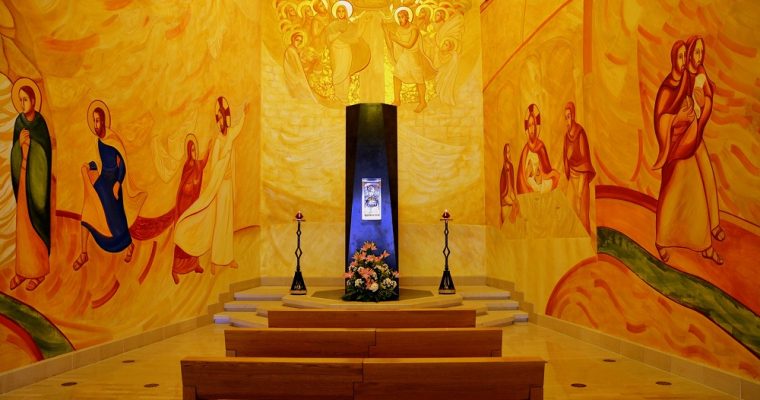
Father Marko I. Rupnik is the author of many paintings and prints. In 1999, with the Atelier of Spiritual Art of the Aletti Center, he completed the mosaic renovation of the Chapel Redemptoris Mater, assigned to him by Pope John Paul II.

On Holyart, you can find paintings and prints by Rupnik, so that you can get to know and appreciate this artist and man of church who was gifted with an extraordinary expressiveness.

The Compassion picture by Rupnik 5x5 cm
Buy Now
good shepherd
good shepherd - 150
The Good Shepherd picture by Rupnik 5x10 cm
Buy Now
Eucharist picture by Rupnik
Eucharist picture by Rupnik - 150
Eucharist picture by Rupnik 5x10 cm
Buy Now
The Last Dinner
The Last Dinner - 150
The Last Dinner print on board by Father Rupnik 20x30 cm
Buy Now
Free will: what it is, what it means

Free will: what it is, what it means

Contents1 So, what is free will?2 Fate or free will?3 Free will in the Bible4 The concept of free will according to Dante5 Free will for Saint Augustine6 Free will according to Luther7 Free will according to Erasmus of Rotterdam What is free will? What…

How to become a deacon: duties and education

How to become a deacon: duties and education

Contents1 What does a deacon do?2 How to become a permanent deacon3 The jobs of the Deacon within the parish4 The married deacon and his family5 The preparation of a deacon6 Wishes to a newly ordained deacon. What could be the best gift? Who is…
Who were the Wise Men and their names

Who were the Wise Men and their names

We all know the Three Wise Men as the three men who faced a long journey chasing a star with the sole purpose of paying homage to the “King of the Jews”. But, who are these three men? Where do they come from? What is the true meaning of their presence in the Nativity?

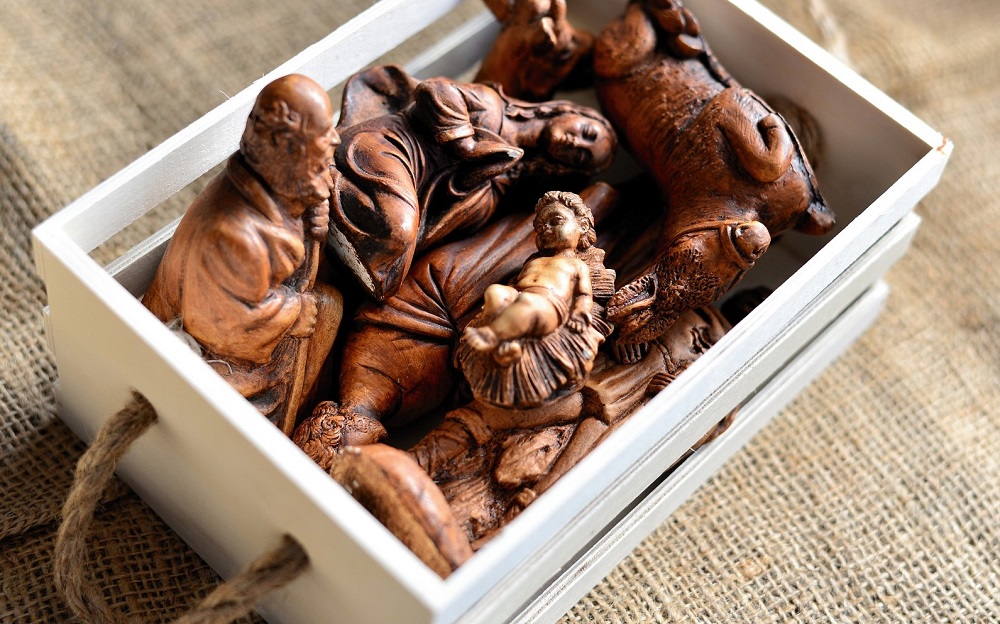
The Wise Men are traditional characters of the Nativity scene, well known and loved by everyone. They stay in the box till the last moment, that is until January 6th, the day they are placed in front of the hut where Jesus was born. They look exotic, which makes them different from any other Nativity character, and are dressed like kings; one of them has often a camel, and offer rich gifts to the Baby: gold, incense and myrrh. Their arrival marks the end of Holidays.

The Wise Men according to the Gospel

The Gospel of Saint Matthew is the only Biblical source that tells their story. The evangelist tells about three Men coming from East to Jerusalem following the lead of a star through the sky. Once they reached King Eros, they asked him where they could find the King of Jews, to worship him. Eros became suspicious, summoned all of his wise men, and found out that the prophet Michea had foreseen the birth of a special and unique baby in Bethlehem long before.

He told the three Men, asking them to go there and inform him about this baby, so that he could homage him as well. The real intention of the evil Eros was to take advantage of the three men to find baby Jesus and kill him before he could endanger his power.

The three went on until the star they followed halted to a stop right above the hut where baby Jesus was resting cradled into Mary’s arms. They entered the hut and kneeled to his feet, calling him King and offering him their precious gifts. They never went back to Eros. A prophetic dream ordered them not to, and so they went back to their homelands taking a different path.

This is the only mention of the Wise Men we can find in the Gospels, but throughout the centuries the Christian tradition enriched these figures with many details, and above all art made them essential characters in the Nativity representations.

Church is divided about that: some recognize the truthfulness of the Gospel and their existence; others consider them secondary and legendary characters. It is a recurrent element in the history of Christianity after all: starting from a Gospel text, meager and essential, a particular event acquires popular elements, legends, folklore traditions, till it gets a new, wider, dimension. Oral tradition and the spread of the story, enriched by more and more details every time throughout the centuries, lead to the consecration of events and characters that become canonical and universally accepted.

Who and what were the Wise Men? What do they symbolize?

The Wise Men are also called “Magi”, which comes from an ancient Persian word: magūsh. The ministers of Zoroaster were called like that in the ancient Persian Empire. It is then possible that the Wise Men were actually wise, maybe even experts of magic arts, or even more likely, they were scientists or educated men, like the scribes for Hebrews, philosophers for the Greeks, and sages for Latins. Wise men then, experts of nature and its secrets. We can also assume that they were astrologists or astronomers, given their particular interest for stars, and especially for the star that guided them. Actually, the star could be interpreted as a symbol taken from the Scripture.

In the book of Revelation 22:16 we can read: “I, Jesus, have sent my angel to give you this testimony for the churches. I am the root and offspring of David, the bright morning star.” A different tradition ties the word “Magi” to the Latin “magis” and the term “magistero”, willing to acknowledge the Wise Men as three masters that with their magic, or just with their wisdom, can see beyond the truth, reveal its light, and share it with all men. This meaning would bring out their merit of being able to recognize the greatest of Kings and savior of the world in a shivering baby in a manger.

Who were the Wise Men? The different theories

Wise then, maybe coming from Babylon, or probably ministers of Zoroaster coming from Persia. In any case, travelers coming from a generic and far East, as their clothes and looking show. Various traditions do not agree about their identity nor their names, even thought the most accredited are Caspar, Balthazar and Melchior. If they were kings, it is certified nowhere.

It’s possible that the addition of these three figures in the Nativity scene was needed, at the beginning, to give it a solemnity and recognition it deserved. You couldn’t let the Son of God be worshipped only by shepherds and farmers: the birth of a Prince deserved the arrival of eminent figures ready to celebrate him. But, since Jesus was unpopular to politic and religious powers during his whole mortal life, this delegation could only come from far away.

The gifts of the Wise Men

They are three foreigners then, three Persian ministers, that recognized the King of Israel in the newborn, to welcome him as only God, because of their studies and their religious knowledge, while the local power, built by Eros and his sages, and the religious power of the Hebrew ministers, not only ignore him, but once they found out about him, they try to eliminate him.

As ministers they brought three gifts: gold, only for kings, with which they acknowledge that Jesus is the King of Kings; incense, always used in religious celebrations, to acknowledge Jesus’ divine nature; myrrh, a plant from which a resin used to produce an oil is extracted, used in the cult of the dead besides medical and cosmetic use, to symbolize Jesus investiture, his consecration to the role of King and God. We remind you that the meaning of Christ is “oiled”.

The names of the Wise Men and their meaning

Concerning the names of the Wise Men, different Western and Eastern catholic churches passed on different versions.  Caspar, Melchior and Balthazar are the most accredited according to the Western tradition. Melchior is the oldest, and his name comes from Meloch, “King”; Balthazar probably owes his name to the Babylon king Balthazar; Caspar, or Galgalath, means “Saba’s lord” in Greek. Another tradition says that Balthazar was the King of Arabs, Melchior King of Persia, and Caspar King of India. Nothing is sure though. Just think that Chinese Christians claim that one of them came from China.

Artists gave them recurrent physical traits, which brought in time to a recognized and accepted iconography: Balthazar usually looks like a young African, Caspar is a middle-age Easter man, and Melchior like an old European man. Three completely different types to cover all the continents known at the time, and three different ages that could mean the three stages of a man’s life, to offer a full picture of the human kinds.

The ability to donate

Beyond the evangelic, historical, folklore traditions that stay with the Wise Men throughout centuries, what we really care to examine here is their human and religious meaning. A raison d’être that goes beyond space and time, the different representations, the countless declinations that were born and developed around these characters.

The Three Wise Men were guided by a shining star. Just from this premise we understand that they were no common men. They were people willing to challenge themselves, to look for a deeper meaning in their lives and the world they lived in. Completely absorbed by this pursuit, they had no hesitation in leaving the safety and wealth of their lands, their homes, and lit only by hope, and started a long and dangerous journey.

Their journey can be seen as a well-fitting metaphor of the interior journey every man faces to overcome their limits and become better persons. The Wise Men, following the light of the star, became light themselves, bringer of a truth hidden beyond reality, of a hope that was more precious than their golden clothes and the jewels they were said to be wearing.

This light, this immense power, is the ability to donate.

gifts

Read more:

Exchanging gifts for Christmas
It’s always nice to receive a gift, especially from someone that loves us and during Christmas, symbol of Jesus’ birth…

We are not talking only about the gifts the Wise Men carried, as precious and meaningful they were under the symbolic and spiritual point of view.

The real gift brought by the Wise Men is in their journey itself, in the dangers they encountered while crossing the desert, in the vastness of nights that were too long, too dark to not make every human heart weaver. They were moved by one dream, the dream of a better world, of a light that could finally give their existences an authentic meaning. They started their journey, pushed by hope and wish to find something better, something good. This is the revealing journey that the Wise Men give Jesus, this journey through their internal desert, their own dark abyss, from which they come out free, purified, ready to be a gift themselves, a gift of endless love. At the same time Jesus is the gift the Wise Men receive, the meeting they were waiting for, for which they had been preparing, maybe without even knowing it, their whole life. Finding Jesus, giving themselves to Him, they receive the greatest of powers, the most inconceivable gift.

Search, understand, and expand our horizons. Facing dangers, overcoming our limits without giving up nor losing hope, even when everything seems to fall apart, even when we feel like everything is useless. Never stop going and follow our star, and while doing that, help others, those we meet along the way, with no reason, no personal profit. Just because they are there, on their journey, even them, maybe more lost, scared and alone in the night than us.

This is the true wealth, the power that makes a common man a king: giving beyond himself, with no interests, expecting nothing in exchange. Giving so much that you feel enriched every time you do that, as if taking away from us to give to others, that simple gesture, would make us accumulate even bigger treasures. The only poverty doesn’t come from what we don’t have, but from what we are not able to give others. All of our anxieties, sacrifices, are nothing compared to the endless Love of God. A love that is only about giving, asking nothing in exchange, with no credit to settle. This love is what all of us should yearn for, the truth that shines bright like a star that should guide our nights. All comes down to this: love and give, make our own existence an act of love, an offer to men and God. That is the only way that will lead us to the beating light beyond reality, the truest and deepest sense of existence. It’s that we will find in a baby crying in a manger the only God, the only, true Love.

Holyart Wise Men

Holyart catalogue offers a wide variety of statues representing the Wise Men. Some of them are part of whole Nativity scenes, others are sold separately. All of the products in the Holyart catalogue concerning the Wise Men are created with great mastery and attention, with multiple styles and materials. Modeled in resin, terracotta, carved in wood, the Wise Men cover all the possible styles for Nativities; they are suitable for Neapolitan Nativities, Val Gardena Nativities, even country style Nativities! Of course there are Wise Men for children’s Nativities, represented as little chubby and happy characters.

Holyart Wise Men are precious and unique pieces, dressed as the tradition demands, ornated with crowns and carrying their gifts in their hands. Some versions also include the camel.

Pieces we are particularly proud of are these superb Wise Men for Nativity scenes that are 120 cm tall. They are made of resin and dressed with fabrics, all hand painted. Carefully detailed, they can adapt to different option of Nativities, and even though they are very big, they are resistant, easy to handle and to move.

black wise man
black wise man
Angela Tripi, creator of unique cribs made of terracotta and fabric. Each character in her nativity scene is a work of art.
Buy Now
wise men valgardena
wise men valgardena
Nativity scenes and statuettes in maple wood from Val Gardena. Original South Tyrolean nativity scenes and figurines in natural wood or hand painted.
Buy Now
wise man napoli
wise man napoli
Figurines made entirely by hand in Italy, in Naples, the capital of the Italian crib tradition.
Buy Now
wise men bethleem
wise men bethleem
Statues made with Pyrenean stone, hand made by the nuns of the Bethleem Monastery.
Buy Now
Exchanging gifts for Christmas

Exchanging gifts for Christmas

It’s always nice to receive a gift, especially from someone that loves us and during Christmas, symbol of Jesus’ birth. Have we ever wondered where the act of exchanging gifts come from? How was this habit developed? It is not clear why the habit of…

10 ideas to decorate your garden during Christmas

10 ideas to decorate your garden during Christmas

Contents1 Lights2 The entrance door3 Vases4 Windows5 Christmas balls6 Snowmen7 Wood decorations8 Garden gnomes9 Fountain10 Projectors Christmas is getting closer, and we are all buzzing about how we should decorate and embellish our homes for Christmas. But the garden also deserves to be decorated, let’s…

November 25th, Saint Catherine of Alexandria

November 25th, Saint Catherine of Alexandria

On November 25th we celebrate the martyrdom of Saint Catherine of Alexandria, a young woman born and raised in Egypt and famous both for her many qualities shown during her life and the sanctity of her death.

Catherine, born in Alexandria of Egypt from a noble and respected family, stood out since she was young not only because of her beauty and grace, but also for her acuity, her intelligence, her culture, and her excellence in philosophy and liberal arts. This brought her many admirers and suitors, which the young girl always refused, because she claimed she saw the Virgin Mary and her Baby in a dream, and that Jesus himself put a ring on her finger, celebrating a mystic marriage to her. A Medieval legend celebrates this episode, represented by many excellent artists such as Correggio and Parmigianino.

Saint Catherine and her courage

Around 305 a.C, Egypt was under the control of the Emperor Maxentius, fierce prosecutor of Christians. Saint Catherine was 18 at that time, and the fame of her many virtues reached the Emperor’s ears that summoned her at his palace.

Catherine ignored the invitation. She didn’t want to be part of pagan rituals and of cruel sacrifices for gods that were going on among those walls. In fact Catherine, after his father’s death, converted to Christianity.

While the emperor persisted in inviting her, she wasn’t afarid to face him with great determination, telling him words full of courage and fervour: “Why do you want to lose this crowd with the cult of gods? Learn to know God, creator of the world, and his son Jesus Christ, that set humanity free from hell with his cross”.

The emperor, charmed by her beauty and her extraordinary bravery, insisted on having her at his court, and to prove his eloquence, he forced her to face the most famous orators and philosophers of Egypt. The outcome of that debate was unexpected to say the least: Catherine not only faced all the clever statements of her opponents, but was also so convincing with her argumentations that she converted all of them to Christianity.

Furious, the emperor sentenced all the sages to death. The display of intellectual intelligence fueled his interest for Catherine even more. He tried to flatter her promising rich weddings, a prestigious role, as long as she denied her religion and bended to him. He even tried to seduce her to take her to himself, but every try crushed against the girl’s pureness and pride.

Saint Catherine and her martyrdom

The emperor became then very angry, and imprisoned Catherine for twelve days with no food nor water, confident that the strictness of prison, hunger and struggles would wear her strenght out and he would triumph where flatteries and promises had failed. Once again, his tries were ineffective: Catherine, while in prison, was visited by a dove, or in other versions an angel, that fed her, and by Jesus, who comforted her.

On the contrary, when the Empress herself went visit her joined by the captain of the imperial guards and two hundred soldiers, she found her healthy and cool as a cucumber, so much that both her and her whole army instantly converted to Christianity.

The emperor took out his anger and his thirst for blood on his betrayer spouse and on those who followed her, before he went back to contrive new torments for Catherine. He condemned her to death on a spiked breaking wheel, but an angel appeared and broke the torture instrument with a sword. The wheel fragments killed many of the present soldiers.

Still not resigned to his clear defeat, the emperor ordered that Catherine was beheaded. Before the sentence was executed, Catherine turned to God pleading for keeping her body whole, that they would not tear it into pieces, and be buried, and that everyone who prayed in her name would be graced.

When the sword went down on the girl’s thin neck, milk started to spill from the wound, and that umpteenth prodigy, symbol for the young girl pureness, convinced the morst skeptical ones to convert. Even after her body was carried to Mount Sinai, according to the legend by a group of angels, milk and oil kept spilling from her tomb, which had thaumaturgical powers.

Later, around the middle of the XI century, Catherine relics were collcted by the monk Symeon and taken to Rouen, in the Benedictine abbey of the Holy Trinity (La-Trinité-au-Mont), which became a place of the main places of cult dedicated to the saint, and where many miracolous healing happened.

Saint Catherine: patroness of theologians, philosophers and lawyers

Even though the news concerning her historical identity are few and unsure, some taken from a Greek Passio dated to the VI-VII century that told about her life and death, and from a Conversio dated to the VIII century and from the Golden Legend of the XIII century, Saint Catherine is one of the most respected and idolized Saints by all Christian churches.

Probably her literary figure hides the identity of a woman that actually existed, whose story ended up mixing completely with the myth and the hagiographic legend that grew around her. Especially duirng the Medieval Age, her cult became one of the most popular in all Europe, and many legends and new episodes were added to her story, making it more and more difficult to tell the myth from the truth, but contributing to the diffusion of her name and her consecration as Saint, immensely beloved by everyone.

Many abbeys and churches were dedicated to her in every country, and on November 25th there are celebrations in honor of Saint Catherine.

Sanit Catherine of Alexandira was highly considered even in intellectual milieus, in universities, and in general, in places dedicated to studies. She is in fact considered the protector of theologists, philosophists, law students, and students in general. She is also the protector of the Sorbonne University and of many other academies.

November 25th, the day of her celebration, was also considered the day of Studies, and in this occasion students and professors publicly confronted each other to show off their knowledge.

But Catherine is also the protector of young people all over the world, of unmarried women, of sailors, of wheel constructors, of ceramists (that use the wheel to create their woks) and of hatmakers, called ‘catherinettes’ from her name.

In addition, Saint Catherine is also the protector of the Military Order of Malta.

Many paintings and statues are dedicated to her all over the world, representing her with her most typical features: the torture wheel or the sword she was killed with in the end, and a book in her hands. Catherine is represented in regal robes and a crown on her head to emphasise her aristocratic origins, maybe even royal.

The book represents her intellectual skills and her being protector of knowledge and study. Sometimes we can see the writing Ego me Christo sponsam tradidi on the book, that means “I gave myself as wife to Christ”. In some paintings she holds the palm of martyrdom.

Christmas traditions from all over the world that you don’t know about

Christmas traditions from all over the world that you don’t know about

Christmas is perhaps the most famous holiday in the world. It was born in a religious setting, as celebration for Jesus’ birth, the son of God made man, and with this meaning it is celebrated in all Christian Catholic countries, and protestant and orthodox, with…

Nativity scenes that resemble children

Nativity scenes that resemble children

Modern kids are much more informed than the kids of few years ago under many points of view. They are constantly influenced by mediatic inputs, and are targets of more or less deceptive commercials; they are influenced by stereotypes that want them to act and…

Holyart natural jams: tasty, simple and genuine

Holyart natural jams: tasty, simple and genuine

Natural jams are guarantee of quality and genuineness. In a world torn between junk food and the obsession for organic food, where can we find real natural products?

In a world where genuineness has become a matter of health rather than taste, more and more people turn to natural and organic markets, hoping to guarantee themselves and those they love the simplest and not chemically treated food.

Definitions such as ‘strictly natural handcrafting’, ‘without preservatives’ and ‘grandma’s recipes’ immediately convey a feeling of health end evoke authentic flavors of the past. In every city there are more and more shops and even supermarkets where we can buy organic food, but also natural food supplements and cosmetics, all made with controlled ingredients and checked by companies that made this return to natural their trademark. We can also find organic food markets every week, which provide zero mile products in the cities, fresh eggs from the countryside, cheese, bread and biscuits, meat, fruit and vegetables produced by farms nearby, and even some services that bring a wide choice of short chain products directly to your home, at very affordable prices.

jams

In such scenery, which is spreading every day more and more, also natural jams and organic marmalades are very sought-after. These jams, marmalades and fruit compotes are produced exclusively with fruits coming from natural and organic certified farms, which guarantee only products that are not chemically treated and worked according to strict traditional methods, without preservatives.

Before we go on, we would like to remind you that the word marmalade only refers to the one made of citruses (oranges, tangerines, grapefruit and lemon), while all other types of fruit or vegetables are called jams.

The production of organic jams comes from a right balance between innovation and research on one side, and taste for tradition and artisanship on the other.

How do organic jams and marmalades need to be, in order to be good, sugarless organic jams?

First, we need to pay attention to the raw material: fruit. Fruit plantations are indeed susceptible to various factors, from the technique to the possible use of chemical fertilizers, or more or less natural fungicides. Even in this case, we need to find a good compromise between tradition and innovation. Organic agriculture imposes the respect for Nature and biodiversity, machineries must guarantee the right amount of water to plantations without wasting any of it, the exclusive use of organic fertilizers, the protection of fruit trees from insects must be done with nets rather than with chemical products. In addition, fruit must be harvested when it has reached the right degree of ripeness, maybe with different timings.

pie

Read more:

The Pie: sweetness and devotion
The pie is an ancient dessert, but still very much appreciated by everyone, especially when it is filled with quality jams and marmalades.

After the harvest, there is the working. Usually, fruit cooking requires high temperatures; if we want to obtain an organic and natural jam we should opt for a low temperature cooking instead, because it respects the nutritional values and preserves the precious elements of the fresh fruit. The right temperature is between 50° and 60°C (120°-140° F), which allows to preserve colors and taste of fresh fruit, without altering its precious properties.

Furthermore, the working of organic jams and marmalades establishes the elimination of emulsifying agents such as pectin, or any other type of emulsifying unless they are natural and derived from plants.

For what concerns the sweetening process, sugarless organic jams, such as grape or apple juice, should be preferred or any other fruit natural sugar, without sucrose.

Where can we buy organic jams online?

Besides the many possibilities of shops, organic supermarkets and zero mile markets, today we can turn to online shops. In the best online stores, we can find jams, marmalades and fruit compotes made by monks and nuns in ancient convents and monasteries. We are talking about very high quality products, which are also tasty, simple and genuine, worked following traditional methods and without additives nor chemical substances. The attention of monks and nuns focuses mainly on health rather the clients’ satisfaction, but their 100% organic jams and marmalades are also very very good!

The monks of Camaldoli are one of the most famous and eye-opening examples of how some orders were able to add a constant work to their prayers and contemplative lives; with time, it originated the production of organic food, such as candies, fruit juices, honey, oil but even health and beauty cures, organic food supplements and body products.
Since the origins of the order, the Benedictine monks in Camaldoli voted their existence to the rule “Ora et labora. Hence, the life of monks in the monastery has been equally divided between daily work and prayers throughout centuries. Their products are popular and sold all over the world even and especially thanks to the online stores.

The-Camaldolese-Congregation-of-the-Order-of-St.-Benedict

Read more:

The Camaldolese Congregation of the Order of St. Benedict
The Order of St. Benedict covers all autonomous monasteries and congregations who live according to the rule established by St. Benedict.

Another example of such ethic are the Trappist Nuns of Vitorchiano.
Trappist Nuns of Vitorchiano are a community under the Order of Cistercians of the Strict Observance. Their order as well follows the rule by Saint Benedict. They are about seventy women of all ages, who live a simple existence in community based on faith, prayers and hand working. Since the 70s, these nuns have been producing 25 different types of jams and marmalades following traditional methods. Their recipe is ancient and secret, and dictates a completely natural working with a high percentage of fruit and total absence of additives, pectin or colorants. They are then absolutely healthy and high quality jams and marmalades. Trappist Nuns of Vitorchiano’s jams and marmalades are on sale at the monastery or in the best organic jams online stores.

The marmalades of Saint Anthony of Padua are also very famous; they are made artisanally with fresh Italian and seasonal fruit, of course with artisanal methods. Saint Anthony of Padua’s jams and marmelades are produced in the Paduan lands. Many are the available flavors, from the classic ones to more exotic ones, such as pineapple; many flavors recall ancient fruits, such as mulberries, jujube, quince pears and Marzemino grapes. Many flavors, all healthy and tasty, which we can easily find in the best online jam stores.

red-ribes-jam
red-ribes-jam - 1
Red Ribes Jam of the Vitorchiano Trappist Nuns
Buy Now
apple-and-lemon-jam
apple-and-lemon-jam
Apple and Lemon jam 400 gr of the Vitorchiano Trappist nuns
Buy Now
bluberry-jam
bluberry-jam
Bluberry Jam of the Vitorchiano Trappist Nuns
Buy Now
peaches-jam
peaches-jam - 1
Peaches jam extra 400 gr - Vitorchiano Trappists
Buy Now
The meaning of the seven Deadly Sins

The meaning of the seven Deadly Sins

Contents1 History of the seven Deadly Sins2 Why are the deadly sins seven?3 What are the seven Deadly Sins? What is the meaning of the seven Deadly Sins? Where do they come from and how were they defined throughout history? Why are they seven? Let’s…

The Menorah: history and meaning of the Jewish candelabra

The Menorah: history and meaning of the Jewish candelabra

Contents1 What is it exactly?2 What did the Jewish Menorah stand for?3 What about today?4 The lighting and extinguishing of the Menorah and the Chanukkiyah The Menorah is one of the main symbols of the Jewish world. It is a seven-branched oil lamp. In ancient…

Basilica of Our Lady of Guadalupe in Mexico City

Basilica of Our Lady of Guadalupe in Mexico City

The Basilica of Our Lady of Guadalupe is dedicated to Our Lady of Guadalupe, protector of all Spanish-speaking people and patron of America. Situated on Mount Tepeyac in Mexico City, it is one of the most visited places of cult in the world. Where does this particular and important form of devotion come from?

The Basilica of Our Lady of Guadalupe is a place rich in mysticism and spirituality. We will surely be familiar with paintings and statues of Our Lady of Guadalupe. Her exotic appearance and dark hair make her a different Madonna from the traditional iconography.

What is the story of Our Lady of Guadalupe, also known as Mexican Madonna?

The cult of Our Lady of Guadalupe, or Virgin of Guadalupe, has ancient and very charming origins. It is related to the apparitions between December 9 and 12, 1531, on the hill of Tepeyac, a small upland near Mexico City, where Juan Diego Cuauhtlatoatzin, one of the first Aztec that converted into Christianism, told about meeting the Virgin Mary multiple times.

Those apparitions were never recognized by the Church with an official decree but belong to the category of the private revelations according to the Catholic doctrine; their peculiarity is that the Virgin that revealed herself to Juan Diego had the looks of a young girl of mixed race, with dark skin and black hair. The mantle the man was wearing during one of her apparitions, the so-called tilmàtli, or tilma, shows that. The image of a young girl with dark skin is miraculously impressed on two cloths of agave fibers sewn together; she is surrounded by sunbeams and an angel is sustaining the moon under her feet.

In 2002, Pope John Paul II declared Saint Juan Diego, and on December 12, Our Lady of Guadalupe is celebrated throughout Mexico.

The history of the Basilica of Our Lady of Guadalupe

The story of the Basilica is long and articulated. During her first apparition, on the morning of December 9, 1531, the Virgin asked Juan Diego to have a temple in her honor built at the feet of the hill. Regardless of the initial skepticism, the bishop believed the words of the man in front of the miraculous tilma. That is how a chapel was built in the place indicated by Juan Diego, just like the one the Virgin told him, where the tilma was enshrined. In 1557, a bigger chapel replaced this first temple, and in 1622, a consecrated sanctuary was built.

our lady guadalupe

Read more:

The apparitions of Our Lady of Guadaloupe
By the Apparitions of Guadalupe, we refer to the four appearances of Our Lady to Juan Diego Cuauhtlatoatzin, an Aztec convert to Christianity…

In 1976, the Basilica of Our Lady of Guadalupe was inaugurated and became one of the most important places of cult of the Catholic world. Actually, the New Basilica is not just a simple shrine, but also a much wider religious complex, a real sanctuary made of different places of cult. The first look at it is just spectacular. The two Basilicas dominate the large yard: the new one, the Basilica of Saint Mary of Guadalupe, and the old one, the Expiatory Temple to Christ the King. It is a majestic view, rich of mysticism.

The Sanctuary is the most important place of cult in Mexico and all Latin America, and the most visited in the world; it welcomes about 20 million peregrines each year.

guadalupe basilica

The Basilica of Saint Mary of Guadalupe

This is the main temple of the sanctuary and just a part of the Basilica of Our Lady of Guadalupe. It has a modern look and rises on the exact place where the previous chapel, which was sinking in the subsoil, was built. It was inaugurated on October 12, 1976, and was declared minor Basilica by Pope Paul VI.

Expiatory Temple to Christ the King

This is the old Basilica built in the XVII century, and in 1749 received the title of collegiate. A collegiate is a church where a chapter or a college of clerics called canonic is instituted; they are entrusted with the cult according to particularly solemn methods. It was elevated to Basilica in 1904, and since the 70s, it was involved in an impressive restoration work, in order to save it from collapsing.

Temple of the Pocito

The Temple of the Pocito is a church situated close to Mount Tepeyac. It was built in 1791 to limit the number of peregrines marching towards a well situated on the mount of the apparitions, whose waters were famous for their miraculous properties.

Unfortunately, the crowds of sick people bathing themselves in the curative waters led to the spread of terrible epidemics. That is why the small temple at first, then a baroque style church later, were raised. The revolutionary José Maria Morelos y Pavón was granted his last wish to pray in this sacred place before he was executed in 1815.

The Temple of the Pocito hosts many fine frescos dedicated to the Miracles of the Virgin made by the painter Fernando Leal between 1945 and 1950.

Capuchin Nuns’ Temple

This is a small church on the Western side of the Old Basilica. It was designed by the architect Ignacio Costera and was built in 1887. It is the former convent and church of the Capuchin nuns of Saint Mary of Guadalupe.

How to get to the Basilica of Our Lady of Guadalupe

The distance between Mexico City and the Basilica of Our Lady of Guadalupe is about 6 km. There are several ways to reach the Basilica from Mexico City: you can take line 4 of the subway, probably the cheapest way, and it takes about 35 minutes; the night bus number 11 from Avenida Paseo De La Reforma – Metro Hidalgo, which gets to Cantera La Villa in about 20 minutes; by taxi, which takes about 10 minutes. Many also choose to walk.