Author: Redazione

5 Weird Christmas trees

5 Weird Christmas trees

Contents1 1. Christmas tree 180 cm Fancy Silver silver fir with a mouldable tip 300 internal external LEDs2 2. Obsidian Gold Christmas tree 210 cm3 3. Luminous tree Cherry 300 cm cold white outside4 4. Luminous Tree Weeping Willow 150cm 360 LED Warm White Outdoor5…
How to build a DIY nativity scene: a mini guide

How to build a DIY nativity scene: a mini guide

Contents1 1 – Background for the nativity scene, landscapes and panels (starry skies, rock paper)2 2 – Moss, lichens, plants, flooring, from super cheap to the most realistic, typical nativity plants such as palm trees, the inevitable moss, stones and gravel3 3 – Control units…

How to choose an artificial Christmas tree

How to choose an artificial Christmas tree

All you need to know about artificial Christmas trees. Ready in a couple of minutes

So, you’ve decided to buy an artificial Christmas tree, and you’re asking the age old question:  how do I make my choice? And above all, why is it that if there are two apparently equivalent Christmas trees, both of the same height, one costs twice as much as the other?

Well, if you have the patience to follow me in this article, I guarantee that within 10 minutes, you’ll become an expert in artificial Christmas trees.

Artificial Christmas trees, equal in colour, height and type of tree, have different prices and quality, mainly for three reasons:

  1. The materials the trees are made from, classic PVC, or POLYETHYLENE, which is also called REAL FEEL
  2. Number of spikes
  3. Type of assembly, or opening of branches

Before talking about these 3 basic characteristics, which all determine the price of the tree, let’s focus on the “type”. There are actually trees that are GREEN, those of other colours, FROSTED trees (that is, those sprinkled with snow) or SNOW trees, which appear to be full of snow, as if they’ve just been out in a heavy snowfall. Then there are trees that simulate the various autumnal colours of conifers, so they’re not only green, but brown, or tending towards orange-yellow.

These trees can then be sub-divided into:

  • SLIM or REGULAR
  • of STANDARD HEIGHT IN SOIL, or with ROOTS UNDER SOIL.

SLIM trees have a diameter at the base that’s slightly less than the traditional triangular shapes, therefore, while maintaining an excellent effect, they are much less cumbersome for the same height. For this reason they are the most often requested, because, although less realistic, they solve the space problem in surroundings that aren’t very spacious.

As for the STANDARD HEIGHT IN SOIL trees, or as they say “Roots in soil”, it’s a matter of taste: in the former case, the base of the tree is exposed, which is often unattractive, so gets covered and decorated with a special material or coloured paper, but there is one great advantage – and that is, WE CAN PUT GIFTS UNDER THE CHRISTMAS TREE!

If instead, we choose a tree that is full height, that is with the roots in soil, we have solved the problem of an unsightly appearance. But we will have a less realistic-looking tree, and we’ll only be able to put the gifts close to the tree, but not underneath it!

Clear so far? I think so. We then come to the famous 3 basic features I mentioned at the start of this article:

MATERIALS: traditional synthetic trees are made of PVC. A machine produces the branches, which are then assembled one by one. The realistic effect is not optimal, and this is the main criticism in recent years against synthetic trees compared to traditional ones: from far away they can be cute, but close up, they don’t compare to real ones. However, for some time now, trees have appeared on the market that have their branches moulded in polyethylene. These trees are EXTREMELY REALISTIC, practically identical to real ones; and are even called REAL FEEL. Even to the touch they feel like a real fir tree, have three-dimensional twigs, as well as needles, and even sting a bit, just like real trees do. This technology, however, is much more expensive than the traditional type, so expensive that often the POLYETHYLENE trees are actually MIXED, that is, they have only the external branches made with the new technology, while the inner ones, which are more hidden, that are only there for colour and volume, are still made of PVC.

NUMBER OF POINTS: or, as reported on some packaging, the number of branches. In reality it is always the TOTAL number of points of the tree. This is a very important factor, for two reasons:

  • the thicker the number of points, the more full, thick and therefore beautiful the tree is.
  • even on websites, as in stores, trees with few tips are opened incorrectly, that is, opening all the tips of each branch as if it were the petals of a flower, to visually fill the gaps due at the low number of branches. This results in a rather ugly effect, because it is NOT REALISTIC! In nature, the branches of the firs, larches and pines appear “fan-shaped”. But if we open a tree with a few tips in this way, we will get a dishevelled effect.

TYPE OF ASSEMBLY:

  • with branches that have to be hooked to the trunk one by one. Usually the various branches have markings of a different colour for each crown of branches, so as not to be mistaken. As you can imagine the assembly is long and arduous.
  • with umbrella branches. The branches in this case are already hooked to the trunk, they are simply opened one by one and … I recommend, you always start from the bottom upwards!
  • Self-mounting: yes, you got it right! There are trees with branches that don’t open like an umbrella but have SHAPE MEMORY instead, that is, they maintain a given shape. All you need to do is take the tree out of the box, put it upright and leave it, you’re done! The system opens up to the tips and within 5 minutes, you have your beautiful tree!

Finally, we add two features that should never be underestimated.

There are trees that already have LED LIGHTS inserted on each branch. You got it right! You don’t need to purchase any lights separately. So no effort is needed, untangling a string of lights to mount around the tree, to hide it among the branches … Not to mention that nowadays,  a good set of indoor led lights (1000-1500 MULTI-COLOUR LED LIGHTS) doesn’t cost less than 60-80 euros. In these cases, the tree already has electrical contacts inside the trunk, which is often divided into several parts, so through a very precise “bayonet” coupling, you just assemble the 2/3 part, plug it in and you’re finished!

The latest novelty for anyone who, in addition to the traditional effects of  LED control units, want the lights to turn on and off in time to music, are  BLUETOOTH trees. In practice, you decorate the tree with the lights already inserted, you connect the unit to your phone and you’re done. Just load your favourite Christmas playlist and the lights will also dance to music.

And with that, I’ve told you everything! Now you’re a super expert too, you just have to choose the tree that’s best suited your needs and above all … to your budget.

October: the month of the Holy Rosary

October: the month of the Holy Rosary

What is the connection between the fall month with what is probably the most important and popular devotional form in the world? October – month of the rosary: historical memory, visions, a path of faith and fervor that comes from far away and carries the…

The Canticle of the Creatures of St. Francis

The Canticle of the Creatures of St. Francis

Contents1 His life2 The Cantico of Creature3 St. Francis and the animals St. Francis of Assisi is one of the most loved and venerated saints by the Catholic Church. Close to the poor, brother of the least, he made love for all God’s creatures his…

Holy Family picture: a symbol to keep at home

Holy Family picture: a symbol to keep at home

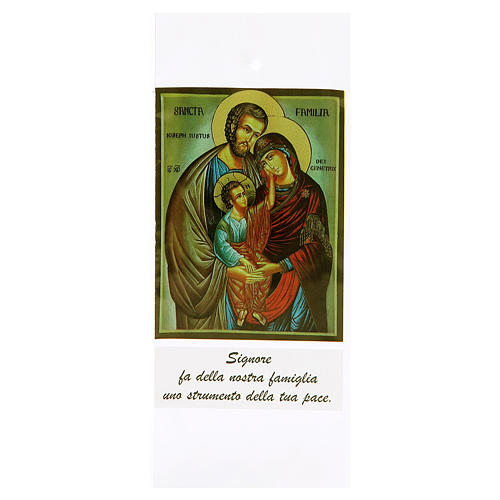
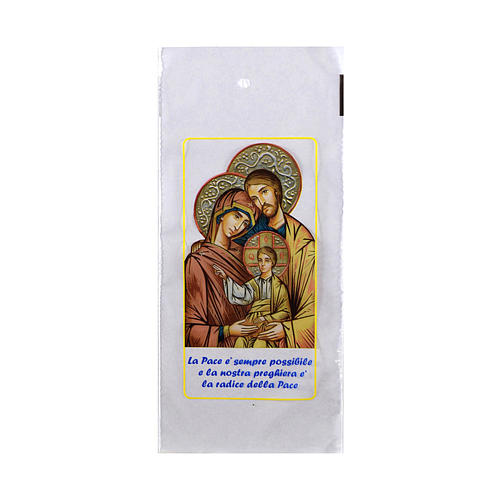
The Holy Family, the ideal model of every family nucleus, the incarnation of love, mercy, humility. Keeping a picture of the Holy Family at home is a sign of devotion, but also a way to have comfort at all times.

From the point of view of the Catholic Church, the Holy Family has always been the point of reference to which every family should look. It is not just a symbolic representation, the iconic idealisation of a family nucleus, composed of a loving and protective father, a very sweet mother and an innocent child, but a living and current example. With the Holy Family of Nazareth, made up of Our Lady, Saint Joseph and the little Jesus, the Christian family as we know and conceive it is born. Every gesture, every act consummated within this group that shares daily life, with its pains, problems and needs, but also its joys, assumes the dignity and importance of a sacrament since the Child does not he is a common infant, but God made man. The care that his parents give him, the protection that surrounds him, the love that binds Joseph and Mary themselves is an anticipation of the immense and infinite love of God.

The same definition of Holy Family defines the value of those who make it up. All the elements of this family unit are holy, albeit for various reasons. Jesus is holy as the Son of God, Our Lady because chosen by God himself to carry the Savior in her womb, St. Joseph because he accepted to take on an ‘uncomfortable’ wife and a child who was not his own. A man, a woman and a child, all saints, taken distinctly, even more holy in their unique union, unrepeatable, and yet worthy of being an example for all.

In this meaning of love and holiness, the Holy Family is the symbol par excellence of the Christmas that has just ended. We have dedicated an article to the choice between the construction of an entire Nativity or rather of the Crib alone, represented by the Holy Family together with the ox and the donkey. This is because it is precisely the presence of Jesus, Mary and Joseph in the hut that expresses most truly and authentically the sense of union and love that the Holidays should be pervaded, that warmth that unites relatives and friends near and far in these unique and special days.

crib or only trio of the Nativity

Read more:

Complete crib or only trio of the Nativity
Complete nativity scene or just the Holy Family? Christmas is approaching and it is time to decide. Let’s find out the reasons for…

Precisely for these reasons, the Holy Family should be present in our homes not only at Christmas but every day of the year. It is no coincidence that we have mentioned the icons, statuettes and bas-reliefs that represent it among the sacred objects that it is normal to find in every home. A picture of the Holy Family unequivocally manifests the concrete faith of those who live in the house and their devotion to God. Furthermore, like all other sacred objects, the presence of a representation of any kind of the Holy Family protects the house from the devil, helping those who are animated by authentic faith to fight and defeat him.

sacred objects

Read more:

5 sacred objects that cannot miss in our homes
Crucifixes, sacred pictures, icons, statues. Objects we keep in our homes to remind us we live in the grace of Baptism and…

But how to choose your own picture of the Holy Family?

It depends on where we intend to place it, in which room of the house, and consequently on the style of the house itself, furnishings, and personal taste. In the Holyart catalogue, in the “holy family picture” section, you will find them in all sizes, materials and styles. Choose the one that suits you best!

Picture frame stylized Holy Family
Picture frame stylized Holy Family silver foil 10x8 in.
Buy Now
Family Joy of Verther painting gift idea
Family Joy of Verther painting gift idea silver 16X16 cm.
Buy Now
heart shaped favor holy family 2 in
Heart shaped favor Holy Family 2 in.
Buy Now

Holy family pictures by Holyart

For example, you can choose an elegant Aurora Gold Holy Family in refractory clay. This is a stylised picture of the Holy Family made by hand in white refractory clay. The clay is first worked with hand moulding, then baked at over 1000° C. The finishing and processing are done completely by hand, to give it essential and expressive lines at the same time. It is a high-quality product, 100% Made in Italy, made at the Centro Ceramiche Ave in Loppiano (Florence).

Another proposal that combines classic taste with modern lines is the Quadretto Gioia Familiare 27 x 27 crystals, a precious watercolour print measuring 27 x 27 cm. Enclosed in a wooden frame with decorative crystals placed on the glass, the picture represents the faces of Jesus, Joseph and Mary in delicate colours. Handmade in Italy, this picture of the Holy Family is particularly suitable as a gift idea.

Of a decidedly more traditional cut, the 25 x 20 cm Painting Canvas depicts the Holy Family. This is the reproduction of a classic subject from the archives of the Bonella Brothers, a famous publishing house of sacred images founded at the beginning of the century by the brothers Egidio and Aristide Bonella. It represents Joseph and the Madonna praying on either side of a blessing Baby Jesus surrounded by lilies. The pictorial effect of the canvas enhances the mysticism of the subject, making it a real work of Sacred Art suitable to be hung immediately or framed.

More modern, but with respect for tradition, the picture with the image of the Holy Family in silver and two-tone wood can be either hung or placed, as it is equipped with a foot for support.
Two shaped wooden boards, one in white and one in dove grey, plus a silver plate coloured with the image of the Holy Family. The plate is made of metal with a silver bath.
It is a highly valuable product made in Italy, ideal as a gift for important occasions such as weddings or baptisms.

And for the little ones? It is never too early to convey the profound sense of family to children, and not just at Christmas. This colourful Arc Altarpiece with Nativity can turn out to be a perfect gift for them. The altarpiece is made of wood, on a blue background, and represents the Nativity with childish and delicate features. Ideal as an ornament for children’s bedrooms, or as a gift idea for baptisms, birthdays, and any occasion, it can be hung on the wall or placed on the table, using the removable support foot.

The Garden of Eden in Genesis

The Garden of Eden in Genesis

The Garden of Eden represents the first, immense gift that God gave to man and woman. Lost following the original Sin, it remains an emblematic place, a symbol of rediscovered innocence and inexhaustible hope. Let’s find out more about it. We have already had the…

The transfiguration of Jesus Christ

The transfiguration of Jesus Christ

Contents1 The mountain where the transfiguration took place2 The interpretation of St. Augustine3 When is it celebrated and why?4 The Transfiguration explained to children5 Representations of the transfiguration of Jesus On 6 August the Transfiguration of Jesus is celebrated, forty days before the Exaltation of…

10 liturgical lectern covers for your church

10 liturgical lectern covers for your church

The fabric lectern cover, apparently simple liturgical furniture, conceals a vast range of non-trivial meanings. Let’s explore these together!

Nothing in the liturgy is left to chance. Every gesture, every word, every object contributes to creating the celebratory context where the priest and the faithful move, pursuing the same mystery, alone, from two different points of view. It is only this common tendency to the mystery par excellence that makes possible the renewal, day after day, mass after mass, of the sense of religiosity typical of the Christian faith. But, for this common ritual to be truly effective, everything that composes it must perform its role optimally.

This is why sacred furnishings and liturgical furnishings are so precious and important. Their fixed forms, codified over time, are an integral part of religious expression, no less than the liturgical formulas, prayers or gestures that make up the ritual. And, just like words and gestures, sacred furnishings also tend to be as simple and recognisable as possible, accessible to all, because the efficacy of the Christian message lies precisely in simplicity.

Thus even an apparently banal object, such as the liturgical lectern assumes a role of primary importance, it is precious, necessary for the rite to be carried out in the best possible way. The lectern cover serves, as its name suggests, to cover and decorate the lectern on which the sacred texts are placed during mass and various celebrations. It can also be used to adorn the ambo, the elevated structure from which the Word of God is spread.

lecterns

Read more:

Plexiglas or wooden lecterns? Your commodity is priceless
Have you ever been fascinated by a wooden lectern holding a ponderous, ancient tome? …

As has always been the case with all other sacred furnishings, the refinement in the cut and decorations, the choice of fabric, the precious, precious materials used to make an embroidered lectern cover, or an ambo cover, are part of the ritual, they enhance the importance, solemnity, nobility, beyond any symbolic expression.
The very realisation of the lectern cover, which follows traditional designs, simple yet made complex by the value assigned to them over time, gives this object a precise theological meaning.

Obviously, as for all sacred furnishings, if at one time even the lectern covers were considered precious objects, which required the use of precious materials, to be packaged, today it is also easy to find cheap lectern covers, in synthetic fabric, which however retains all the spiritual value with which these objects must be invested. Think for example of the Franciscan lectern cover, simple, often devoid of decorations, or which at most has the symbols of the Franciscan Order embroidered or printed, such as the Tau or the arm of Christ that crosses that covered by the habit typical of the Order, with a beaming cross in the background.

Even the Neocatechumenal Way, always so attentive to symbols and objects, has relaunched the importance of the lectern cover not only as sacred furniture in churches but also as a precious accessory in the home of every faithful, to better guard the Holy Scriptures. We recall that the Neocatechumenal Way was born in Spain in 1964, as an instrument to rekindle faith in those who have lost it, or in those who have not been able to cultivate it adequately for various reasons. This movement was based on the primitive church, and initially addressed the marginalized, gipsies, vagabonds, prostitutes, immigrants, often illiterate, to bring them the message of hope of the risen Christ. Today the Neocatechumenal Way has been officially recognised, by John Paul II, and, subsequently, also by Benedict XVI, and it gathers more and more followers. Its purpose is to spread a new approach that allows you to experience the Gospel in-depth, but also compatibly with the needs of the contemporary world. With this purpose, the Neucatechumenal Way has become an instrument that supports and assists parishes in the work of recovering those who have strayed from the faith or have never approached it but would like to do so, like those who have been baptised, but then left the church, those who want to grow on the path of faith, those who have not followed the catechism, but also priests who want to enrich their spiritual path. In this context, the Neocatechumenal lectern becomes an instrument for enhancing the sacred texts, but also for approaching the Scriptures, for its symbolic value and its strong link with tradition, but also for the visual stimuli it can offer.

Naturally also the lectern cover, like all sacred vestments and fabric furnishings used in church, is affected by the symbolism of liturgical colours and is replaced according to the period of the liturgical calendar in which it is found. Here is a brief scheme for deciphering the colours of the lectern cover on various occasions:

  • red lectern cover:It is used on Palm Sunday, Good Friday, Pentecost, for the Feasts of the Lord’s Passion, during the Feasts dedicated to martyrs, apostles and evangelists, for the celebration of Confirmation, during the Via Crucis. Eventually, a red lectern cover can also be used on the occasion of votive Masses of the Holy Spirit.
  • white lectern cover or ivory lectern cover:white is a colour associated with particularly important solemnities, such as Christmas, Easter, Holy Thursday. The white lectern cover will also be used on the occasion of the celebration of the Sacraments, Baptisms, Communions, Weddings, Extreme Unction, the ordination of a priest and, in general, during Eucharistic Adoration.
  • purple lectern cover:the purple colour is used by the church during Lent, Advent, Holy Saturday. It can also be used for the Memorial of the dead, funerals and Requiem Masses.
  • Marian lectern cover:although the colour associated with Mary and used during the masses dedicated to her is white, it is sometimes replaced with blue, especially in some countries (Spain, South America). Often the Marian lectern covers are embroidered with symbols in gold or blue, which recall the Virgin.
  • pink lectern cover:the pink colour characterises the celebrations of the Third Sunday of Advent, the Fourth Sunday of Lent. It is often replaced by purple.

Precisely because the lectern cover is such an important and precious sacred piece of furniture, it is important to find one suitable for every occasion. Below we suggest ten, which you can find in our online store. Quality products, all made by Italian companies with selected fabrics, enriched with decorations and embroidery, which make them objects of great value and elegance.

Why is Jesus on the cross such an important symbol for Catholics?

Why is Jesus on the cross such an important symbol for Catholics?

Contents1 Why Jesus was put on the cross2 What were the last words of Jesus on the cross3 Why is it such an important symbol for Catholics?4 Representations of Jesus on the cross The figure of Jesus on the cross represents for every Christian the…

Parish registers: what they are and what they are for

Parish registers: what they are and what they are for

Contents1 What are parish registers?2 How to enter an event in the parish registers3 What are the parish registers for4 How can you consult the parish registers online? Parish registers are irreplaceable documents for reconstructing the religious life but not only that, their importance extends…

Fasting as proposed by Our Lady of Medjugorje

Fasting as proposed by Our Lady of Medjugorje

The fasting proposed by Our Lady of Medjugorje is just one of the forms of fasting encouraged by the Church since its origins. Why do we fast? What are the physical and spirituals pros of such practice? Moreover, what are the rules to undertake fasting correctly?

Fasting is a practice followed by Christians as a form of penitence and ruled by specific norms. Even better, we can state that fasting and abstinence are part of a faithful’s life such as prayers, donations and charity. They are all ways for Christians to get closer to God, showing they are worthy of His Kingdom. They are instruments meant to ask for forgiveness for our sins and plead for the help of our Father during hard times. In the Old Testament, they believed that fasting could even save them in the event of catastrophes!

Christians practice fasting on some days of the year, in particular on solemn holidays, and that gives fasting and abstinence a social and community value, because it involves the whole Christian community, not just the single faithful.

In order to examine the reasons and pros of such practice, first we need to consider the Christian reasons of such practice, how they were ruled throughout time and the difference between ecclesiastical fasting and abstinence.

Jesus did not impose fasting to his disciples, even though they all practiced it as members of the Jewish people. Jesus respected the practice and value of fasting of his people, in the most interior and religious meaning. According to him, fasting, prayers and donations are all acts of offering and love towards the Father “who is unseen and “sees what is done in secret” (Mt 6,18). Jesus himself undertakes forty day of fasting in the desert to get ready to comply with his duty and face his own destiny for the salvation of men and the triumph of the love of God.

The Church imposed fasting twice a week for a long time, on Wednesday and Friday. Friday fast was just a way to celebrate and honor the passion and death of Jesus. Wednesday fast on the contrary, showed the faithful’s love for Jesus recalling Wednesday of the Holy Week, when Judas went to the Pharisees to establish the price of his betrayal with them.

In 1966, at the end of Vatican Council II, Pope Paul VI promulgated the Apostolic Constitution Paenitemini, whose aim was to define and reform the ecclesiastical discipline with regard to penitence.

In particular, for the purpose of our article, we quote the statement by the Pope saying:

True penitence, however, cannot ever prescind from physical asceticism as well. Our whole being in fact, body and soul, must participate actively in this religious act whereby the creature recognizes divine holiness and majesty” (Paenitemini, first part of the Constitution). It is clear from the beginning how the mortification of the flash through fasting and abstinence is considered a fundamental element of penitence, aimed to elevate men above their physical limits in order to open their minds and souls to welcome Christ. “(Penitence) aims at the liberation of man, who often finds himself, because of concupiscence, almost chained by his own senses. Through corporal fasting man regains strength and the wound inflicted on the dignity of our nature by intemperance is cured by the medicine of a salutary abstinence.

The Constitution also established the rules concerning the periods of penitence: on every Friday of the year and on Ash Wednesday.

In 1994, the Italian Episcopal Conference published Il Senso Cristiano del Digiuno e dell’Astinenza (The Christian Sense of Fasting and Abstinence), a regulatory pastoral note, which allowed the faithful to replace Friday abstinence outside Lent with any other kind of penitence, prayer or charity action. The same note reiterated the need to practice fasting and abstinence on Holy Saturday until Easter Vigil, anyway leaving the freedom to refrain from fasting and abstinence for valid reasons, in particular realted to health. Here we briefly summarize the regulatory provisions concerning fasting and abstinence established by the Italian Episcopal Conference:

  1. The law of fastingallows only one full meal a day, but does not prohibit taking some food in the morning and evening, observing—as far as quantity and quality are concerned—approved local custom” (Paenitemini, III; EV 2/647).
  2. The law of abstinence forbids the use of meat, as well as those foods and drinks that are considered as particularly refined and expensive, according to a cautious judgement.
  3. Fasting and abstinence must be practiced on Ash Wednesday and on Friday of Our Lord Jesus Christ’s Passion and death; they are recommended on Holy Saturday until Easter Vigil.
  4. Abstinence must be observed on all and every single Friday of Lent, unless they coincide with a day that is considered a solemnity (such as March 19th or 25th). On all other Fridays of the year, unless they fall on a solemn day, abstinence must be practiced in its strictest sense, or we must practice some other act of penitence, prayer or charity.
  5. Everyone above twenty-one up until the beginning of their 60th year must observe the laws of fasting; to the law of abstinence are bound those who have completed their 14th year of age.
  6. A true reason can justify the obligations of fasting and abstinence, such as health. Furthermore, the priest can grant the dispensation from the penitence or commute it with other pious acts.

Today, the observation of a strict fasting is then limited to Ash Wednesday and Holy Friday, while abstinence is limited to Fridays of Lent and possibly every Friday of the year.

But why fasting?

There are many and varied reasons to why fasting is healthy and right.

First, there is a physical reason. Fasting from time to time is good for your health, and that is well known since ancient times. Fasting allows our body to recover its natural rhythms, often slowed down and twisted by wrong eating habits. Free from the burden of digestion, the body purifies and recovers its balance; that way, it defends itself from diseases, allowing some time to the immune system to ‘reorganize’ itself to protect it.

Then, there is a psychological reason. The excess we are constantly in contact with in our daily lives makes us lose sight of what really matters.

The modern Western world is ‘everything at once’, ruled by the surplus and the extreme easiness we can get anything, with no efforts, and that increases our constant need in a wrong manner, making us more and more greedy and lazy.

We cannot see what we already own, always striving for more. This constant and false need and dissatisfaction makes us forget how important it is to take care of our soul and spirit. We become weak, unable to react to the difficulties in our lives, even the smallest ones, let alone the real problems!

Our capability to endure pain, to feel empathy or even to love others is lacking, and we become victims of easy shortcuts such as drugs, alcohol, medicines, or we believe we are sick, depressed, when we are actually only weakened by our own wealth. We are not able to appreciate things anymore, because we just need to stretch out a hand to have them, and that, to some extent, makes them less precious.

Fasting for two days is a way to expand the distance between us and what we take for granted is owed. Giving up what gives us immediate satisfaction, something we believe we cannot do without, teaches us to relativize and recognize the authentic importance of things; but most of all, it makes us understand that we can easily give them up without being excessively damaged.

Giving up things gets us closer again to people, pushes us to listen and makes us empathic.

It helps us realize that some people feel better than us, but most of all that someone feels much worse, and how lucky we are if compared to them.

We can learn to live with things and appreciate them more, judging them for what they are and not according to our often distorted expectations.

Finally, but this is probably the main point for Christians, there is a spiritual motivation in fasting.

Fasting helps our minds get closer to prayers, with more commitment and attention. As our body is not ‘distracted’ by digestion, so our mind can immerse completely into the contemplation of God and His word. The spirit opens up to Him, and the Eucharistic Bread acquires a new and special meaning fueled by our hunger, which is no longer just a hunger for food, but for spirituality. The prayers during fasting days will then be more effective and will reach God more easily.

The fasting days in Medjugorje: Wednesday and Friday

Those who are devoted to Our Lady of Medjugorje claim that the Queen of Peace imposes them to fast as a fundamental practice and instrument of devotion. If the sick can give their suffering to Her, those who are healthy should practice fasting on bread and water twice a week, on Wednesday and on Friday.

Fasting and prayers for a whole day then, twice a week, without any indulgence in coffee or tea: a sacrifice specifically requested by the Virgin Mary. Other sacrifices can and must be practiced every day, but on Wednesday and Friday in Medjugorje, Mary demands an unmistakable thing of her devotees. They must not deprive themselves of food, but only have bread and water.

Fasting in Medjugorje begins in the morning and lasts until the day after, for all 24 hours. Such particular Marian fasting, according to the words of Mary herself, aims to drive wars away.

In fact, fasting purifies the evil’s body and spirit, helping people to discover their hearts and purify it.

Prayers and fasting for peace then, but also to gain the conversion of someone we love and other precious graces. The seers of Medjugorje always remind how important and precious the sacrifices of those who believe are, how suffering itself and diseases are gifts, because it is only through pain that men can get closer to God.

Therefore, the devotion towards Our Lady of Medjugorje is not just through the rosary practice, the adoration before the statues that represent her, although they are important and powerful weapons the Virgin Mary gave us. Reciting the rosary, always wearing a bracelet or a key holder of Our Lady of Medjugorje is just the starting point. If we want our prayers to be actually heard and appreciated, we must embrace the practice of Medjugorje fasting with commitment and joy. Through fasting, healing and liberation will be granted.

Ferragosto, the feast of the Madonna

Ferragosto, the feast of the Madonna

Contents1 The Assumption and the Dormition2 Ferragosto: how is the Assumption of Mary celebrated?3 The Assumption of Mary in art4 Chaplet of the Assumption In addition to representing the heart of summer, Christians consider Ferragosto to be the feast of the Madonna. In fact, on…

The night of San Lorenzo: the night of shooting stars

The night of San Lorenzo: the night of shooting stars

Contents1 But what binds this young and beloved saint to the night of the shooting stars?2 When is the night of San Lorenzo?3 Poem about the night of San Lorenzo4 Phrases for the night of San Lorenzo5 San Lorenzo night song6 The Night of St.…

Ambrosian rite and Roman rite: let’s see the differences together

Ambrosian rite and Roman rite: let’s see the differences together

Ambrosian and Roman rite. How do they differ? How is it possible that, within the Catholic Church, there are different rites? Let’s discover together the differences between two ways of living the faith that is the same yet distinct.

What do we mean by the Ambrosian rite and the Roman rite?

In the lands where the Western Roman Empire once extended, the so-called Latin Church has spread since ancient times. What is this about? Basically, a way of conceiving and living religion, above all of celebrating it, according to a series of liturgical rites that refer precisely to the Latin tradition, and which derive their origin from the Latin mass. The Latin Church is distinguished from the Eastern Church, which in turn has differentiated itself over time into different ritual traditions: Byzantine, Alexandrian or Coptic, Syrian, Armenian, Maronite, Chaldean.

The Latin Church has also developed over time in different directions. It has conformed to the territories where it took hold, adapting to the culturetraditionsdifferences between peoples. Particular ways of celebrating Christ have thus come to be created in different areas.

Many of these different rites have over time been absorbed by other more preponderant ones, and are no longer practised. Let’s think, for example, of the Gallican rite widespread in France, or the patriarchy one once practised by the patriarchates of Aquileia, Grado and Venice.

Today the Latin Church or Latin Rite fundamentally differs in three different official rites: the Roman rite, the most widespread and practised; the Ambrosian rite, typical of the Church of Milan and its surroundings; the Hispano-Mozarabic rite, widespread in some regions of Spain.

Then there are minor rites, linked to particular cities or the practises of specific religious orders, such as the Carthusian rite.

In our country, therefore, the most practised and followed rites by the Catholic faithful are the Ambrosian rite and the Roman rite.

The Roman rite is certainly the most widespread, as it is a direct descendant of that practised by the Church of Rome.

On the other hand, the Ambrosian rite managed to resist when all the other minor rites were eliminated. Indeed, the Council of Trent (1545-1563) recognised its full legitimacy, above all thanks to the intercession of San Carlo Borromeo, one of the main supporters of the Council, as well as the Bishop of Milan.

This particular rite probably dates back to the mandate of Sant’Ambrogio, who was bishop of Milan from 374 AD until his death, and who later became the patron saint of the Lombard city. When Ambrose died, the inheritance he left in the archdiocese of Milan was of such magnitude that his successor was defined by the then Pope Gregory the Great as “vicar” of St. Ambrose, a definition previously reserved only to the bishop of Rome. Even today, the Ambrosian rite recognises the Archbishop of Milan as its head.

The Ambrosian rite, therefore, spread to the Archdiocese of Milan and to the urban and rural areas that belonged to it in ancient times.

At the end of the sixth century Pope Gregory I tried to suppress all the minor rites, to standardise the church of that time in a single, legitimate, Roman rite. But he did not succeed in eliminating the Ambrosian rite.

The Ambrosian rite is strongly linked to the figure of Christ and has common features with the Eastern liturgies.

Let’s discover together the differences between the Roman rite and the Ambrosian rite.

Difference Roman and Ambrosian rite

The differences between the Roman rite and the Ambrosian rite are found in particular in the Ambrosian calendar, with particular reference to the period of Lent, in the Ambrosian missal, in the Ambrosian readings. There are also differences related to the sacred vestments and cassocks, which differ in the two rites for colours and accessories. We have tried to summarise all the differences in this list.

  • Eucharist: given the strong Christocentrist component of the Ambrosian rite, the Ambrosian Eucharist is particularly solemn. It also shows the influence of oriental prayers, much appreciated by St. Ambrose.
  • Liturgical prayers: the prayers and orations recited during the Ambrosian liturgy are different from those of the Roman rite.
  • Advent Calendar: The Ambrosian calendar includes six weeks of Advent instead of the four established by the Roman missal. Advent ends with the feriae de Exceptato ( Holidays of the Accepted), which replace the Christmas novena.
  • Holy Week: the followers of the Ambrosian rite define the Holy Week Hebdomada Authentica (Authentic Week), for its historical and religious importance.
  • Liturgical readings: the priest blesses the readers before each reading of the passages of the Bible.
  • A gesture of peace: the exchange of the gesture of peace is made before the Offertory, rather than before Communion, as in the Roman missal.
  • Incensation: at the moment of the homily, the archbishop sitting in the chair with mitre and crosier is incensed.
  • Agnus Dei-Kyrie eleison: in the Ambrosian rite, the Agnus Dei is missing, while the Kyrie Eleison invocation is repeated three times, but without the Christe Eleison formula.
  • Festive Saturday: according to the Ambrosian rite, Saturday is not a weekday, but a holiday, as for the Jews.
  • Cassocks: the colour for the celebrations of the Blessed Sacrament is red, not white as in the Roman rite. The rosaceo is not used, as well as the violet, replaced by the morello. Black can be used during the Lenten holidays. Above the gown, decorated with fabric applications, the same colour as the vestments, the amice is worn. Around the neck of the dalmatic, the chasuble or the planet some priests wear the cap, a strip of fabric in the various liturgical colours, typical of oriental costumes. The cassock, which in the Roman rite is buttoned all the way, in the Ambrosian rite is closed only by 5 buttons at the top and stopped by a black band.
  • Processional cross: while in the Roman rite the processional cross is carried with the crucifix facing forward, towards the faithful, in the Ambrosian rite it is carried with the crucifix facing backwards, towards the priest.

The Ambrosian Lent

To understand the difference between the Ambrosian rite and the Roman rite, the celebration of Lent in the Ambrosian rite deserves a separate discussion. In the Ambrosian rite, Lent draws heavily on the ancient Christian tradition, for which Baptism was celebrated above all in this period, so much so that those who wanted to convert to the Catholic Church prepared themselves precisely in Lent, to then receive the sacraments at the end of the same.

Ambrosian Lent does not include Ash Wednesday and ends on Holy Thursday.

The four central Sundays of Ambrosian Lent take their name from the readings of the Gospel of John: Samaritan Sunday, dedicated to the theme of living water and rebirth; Sunday of Abraham, dedicated to the theme of the Christian true son of God and Abraham; Sunday of the man born blind, dedicated to the theme of Baptism; Sunday of Lazarus, dedicated to the theme of victory over death for those who receive Baptism.

On weekdays, a “ternary structure” is followed in the liturgy of the Word: each reading of the Gospel is preceded by two readings taken from the Old Testament.
The readings of the first four weeks are dedicated to the theme of Baptism, while the fifth week is dedicated to the Passion, and from this moment the celebrations are characterised by great austerity.

The Sunday before Easter inaugurates Holy Week, during which the readings are dedicated to Job and Tobias, the just suffering people of the Old Testament, and the betrayal of Judas.

The meaning of “aliturgical” Fridays

During Lent, Mass is not celebrated on Friday and the Eucharist is not given, as a sign of respect for the Passion of Christ and penance. The lack of Eucharistic communion makes one feel the sense of emptiness and loss caused by Jesus’ death on the cross. These Fridays are called ‘aliturgical’. In churches where the Ambrosian rite is followed, a large wooden cross is placed on the high altar, a symbol of mourning and loss.

Saturdays and the preparation of catechumens

In the liturgy of the Saturdays of Lent, considered holidays, in the Middle Ages the “scrutinii” were held, celebrations in which those who were preparing for Baptism underwent checks regarding their journey of faith. Today, Lenten Saturdays are characterized by readings dedicated to Baptism. The last Saturday of Lent is still called in traditione symboli because in ancient times it was the day on which the Creed was delivered to the catechumens.

Ambrosian and Roman rite wedding

Marriage does not differ between the Ambrosian rite and the Roman rite as regards the organisation. The ceremony, on the other hand, shows some differences.

Meanwhile, the booklet for the wedding mass in the Ambrosian rite does not include two readings, but only one.

After the blessing of the spouses, the parents or witnesses are invited to perform the veil or to cover the groom and the bride with a veil.

Music and singing are very important for the Ambrosian community. During the Ambrosian wedding, music underlines the most salient moments, from the entrance of the spouses to their march to the altar, from the Offertory to the Eucharistic communion, to the signing of the register.

The story of Adam and Eve

The story of Adam and Eve

Contents1 The creation of Adam and Eve2 The story of Adam and Eve for children3 Adam and Eve: the story of the apple and original sin4 Adam and Eve expelled from paradise5 Who were the children of Adam and Eve Who does not know the…

Famous Russian icons: the 5 most important icons

Famous Russian icons: the 5 most important icons

The famous Russian icons are dazzling examples of ancient art, of a millenary tradition that draws its origins from the Byzantine splendours and embraces centuries of history and political and social upheavals, always remaining true to itself. Let’s get to know them better. The charm…

May is the month of Our Lady: how to celebrate the Marian month

May is the month of Our Lady: how to celebrate the Marian month

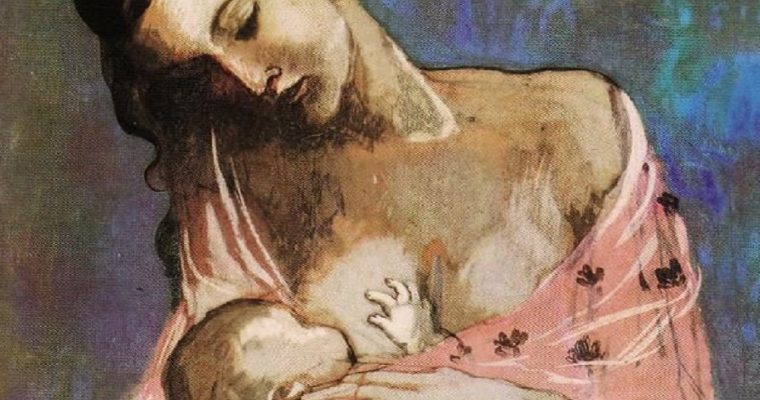
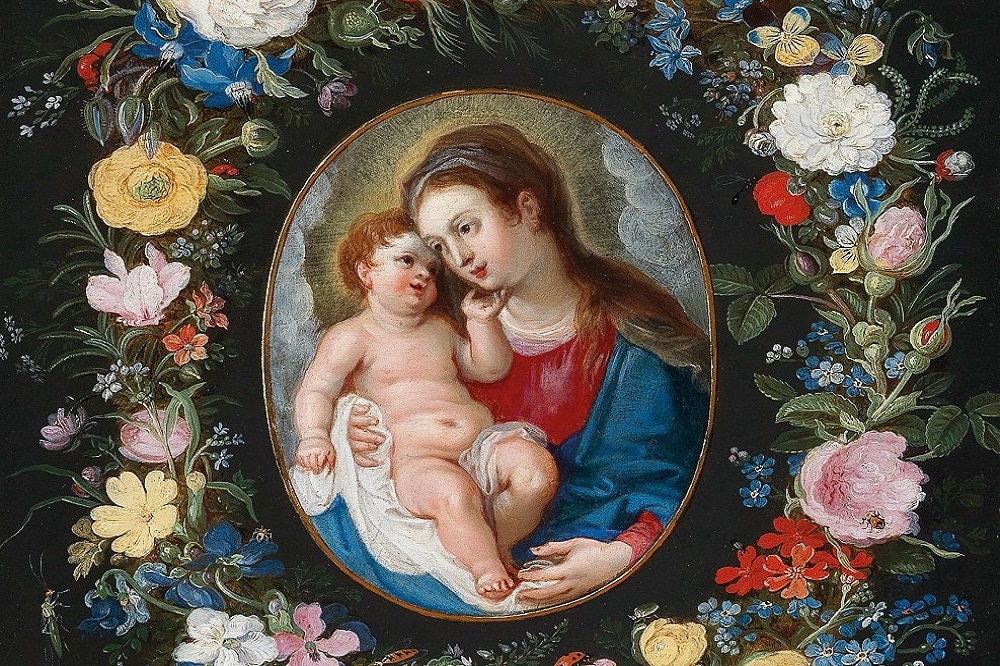
May is the month consecrated to the Virgin Mary. Special prayers, devotions and Mother’s Day, which is on the second Sunday of May not by chance. Lets’ find out more about May, the Marian month.

In a recent article about Mother’s Day, we talked about the historical background that led to the consecration of May to Jesus’s Mother since ancient times.

The reasons behind it are rooted in pre-Christian traditions, such as the pagan cult for ancient Greek and Roman gods of fertility, fecundity and the return to life. Let’s think about Persephone, only child of Zeus and Demeter, also known as Proserpina by the Romans. Hades, god of the underworld, who wanted to marry her, abducted her; she was deceived and forced to live in his gloomy reign for a time that corresponded to autumn and winter, when the earth was cold and barren. She was allowed to go back in the other periods of the year, and with her spring was back, bringing back warmth, colors and blooming flowers.

Romans also adored Maia, mother of Hermes and one of the Pleiades; she was the goddess of fertility and nature rebirth in spring. ‘May’ comes from her name.

The feasts dedicated to women deities of such kind turned into celebrations for Mary throughout time, forms of popular devotions that have been accepted and recognized by the church.

mother s day

Read more:

Mother’s Day, heart of the Marian month
On May, we celebrate all mothers of Italy. A sweet, warm day that revolves around children, but not only. May is the month dedicated to mothers…

May as month of Mary. Why is that?

So, May is the month related to the symbolism of rebirth and the circle of life. There is no reference in the Sacred Texts that tie it to Mary in any way. Yet, anyone recognized the association between the month of May and the month of Mary. Let’s find out why.

May has always been associated with Love as well. In ancient times, hanging a blooming branch (called ‘maggio’ in Italian, that is, May) to the door of the girl they loved, meant saying “You are as beautiful as a flower” and also: “My heart is blooming for you”.

Around the XIII century, a new form of devotion began spreading across Europe: the sense of honor towards women, the respect men had to show because women deserved it. With this new vision of women, the Virgin Mary was the model and example of perfection that everyone, both men and women, should follow. Alfonso X king of Castile and Leon dedicated the Cantigas de Santa Maria to Mary, the most important collection of monodic songs of his time. The songs praised Mary and her miracles. In the Cantiga number 10 we can read:

Rosa das rosas e Fror das frores,

Dona das donas, Sennor das sennores.

Rose among roses and flower among flowers,

Lady among all ladies, Lord of Lords

This is how Alfonso defines Mary, he thinks of her as even more powerful of the kings of his time!

At the beginning of the fourteenth century, the Dominican Henry Suso in his Little Book of Eternal Wisdom wrote about Mary: “Be blessed, rising dawn, over all the creatures, and be blessed the flowery meadow with beautiful red roses of your face, adorned with the red flower of the Eternal Wisdom”.

During the Medieval age, the custom of hanging blooming branches was not limited to the door of the beloved girl, but also to statues of Mary. In particular, people chose roses garlands, typical flower of May. That is how the tradition of the Rosary is born, pursued by Saint Philip Neri in the XVI century as well, who used to invite the children he took care of to decorate the image of Mary with roses.

The official consecration of May to the Virgin Mary came only on April 29 1965, with the encyclical Mense Maio by Pope Paul VI, where we can read, among many other things: “For this is the month during which Christians, in their churches and their homes, offer the Virgin Mother more fervent and loving acts of homage and veneration. And it is the month in which a greater abundance of God’s merciful gifts comes down to us from our Mother’s throne”.

padre-pio

Read more:

Padre Pio and his favorite prayer
Padre Pio is a figure that was controversial and debated in the Catholic Church sphere for a long time. Even after his canonization…

In May 1912, Padre Pio of Pietrelcina, in love with Mary, wrote to his confessor about the month of May: “My Father, this month praises Mary’s sweetness and beauty so well! My mind thinks about the multiple benefits this dear mother did to me, and I’m deeply ashamed of myself, as I never watched her heart and hand with enough love, while she handed them to me with such goodness. Poor mother, how much she loves me. I could see that again when this month began. She accompanied me to the altar this morning with such care. It seemed like she could only think of me by filling my heart with holy affections“.

Prayers to Mary during the month of May

There are many prayers in the Marian month because the devotion towards Jesus’ Mother in this particular month developed throughout the centuries. Just think about May Crowning, to be recited each day to ask Mary to give us love, strength of faith and absolution for our sins.

Another popular devotional practice in May are the pledges offered to the Virgin Mary. They are small sacrifices, resolutions offered to Our Lady Mary as if we were offering her a flower. A sign of our love for her and her son Jesus.

Of course, the Rosary is the best expression of devotion we can practice during May.

If we recite it every day, it helps creating a special relationship with the Virgin Mary and makes us feel closer to her and Jesus. Furthermore, reciting the Rosary each day of the month guarantees blessings and benefits for our beloved ones and us. According to traditions, Saint Dominic de Guzmàn, founder of the Dominican Order, received the first Rosary from Mary herself in 1214, as an instrument for converting non-believers and sinners. The Virgin Mary showed herself to him with a bouquet of 150 roses, and told him she wanted to be honored with a prayer that would include 150 Hail Mary alternated with Our Father. In exchange, Mary committed herself in granting 15 promises, one for each decade, declaring her intention in protecting the souls and the families of her devotees.

Alternatively, we can recite a liturgy. It is a short prayer recited by heart, aloud or silently. It is typical of popular devotion, often rhymed, and its content is simple and clear. By reciting it, we can alleviate the pains suffered by the souls in the Purgatory. Saint Philip Neri loved liturgies very much, and used to invite his children to recite one every day to find relief and comfort from the evil of the world. There are many collections of liturgies to take the cue from.

Marian month explained to children

How can we tell about May as the month dedicated to the Virgin Mary to the youngest ones? Does imposing them to recite the Rosary or other May prayers make any sense? Of course it does, even if we must explain things in a way that makes them easily understandable. Children are always happy and friendly when it comes to learn new things, especially if those things are close to their sensitivity.

First, we’ll need to explain that the month of May is dedicated to Mary, mother of Jesus, because it is the month of flowers, when nature awakens to a new life after the rigidity of winter. And Mary, Virgin and Mother, daughter to her own Son, is the most beautiful among flowers, the first one to bloom after Christ’s rebirth thanks to His promise of salvation for all humankind. More, the Virgin Mary, freed from the original sin and any other guilt, is a symbol of that promise of forgiveness and love herself, a wonderful flower given by God to the world as a sign of His endless generosity.

We can explain to children how the prayer of the Rosary, symbol of the Marian devotion par excellence, was born. The most characteristic flower of May is the rose, and in ancient times, children used to decorate Mary statues with crowns of roses. Each rose symbolized a prayer, a beautiful and scented prayer, worthy of the Virgin Mary. The beads that compose the Rosary come from those roses.

For the youngest ones, we must remind them that Mary is not only Jesus’ mother, but also everyone’s mother: the most beautiful, the sweetest and loving of all mothers, always reaching out to all of her children to protect them, comfort them and take care of them even during difficult times.

Items dedicated to Mary in Holyart catalog

Holyart catalog is full of items of any kind that can be useful to celebrate May as the month of the Virgin Mary at best.

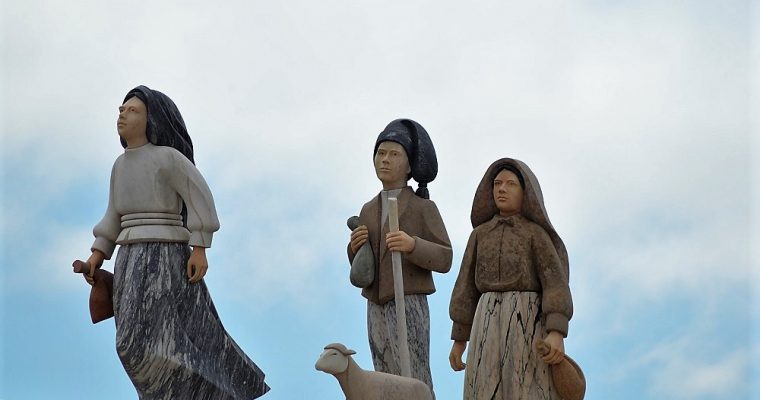
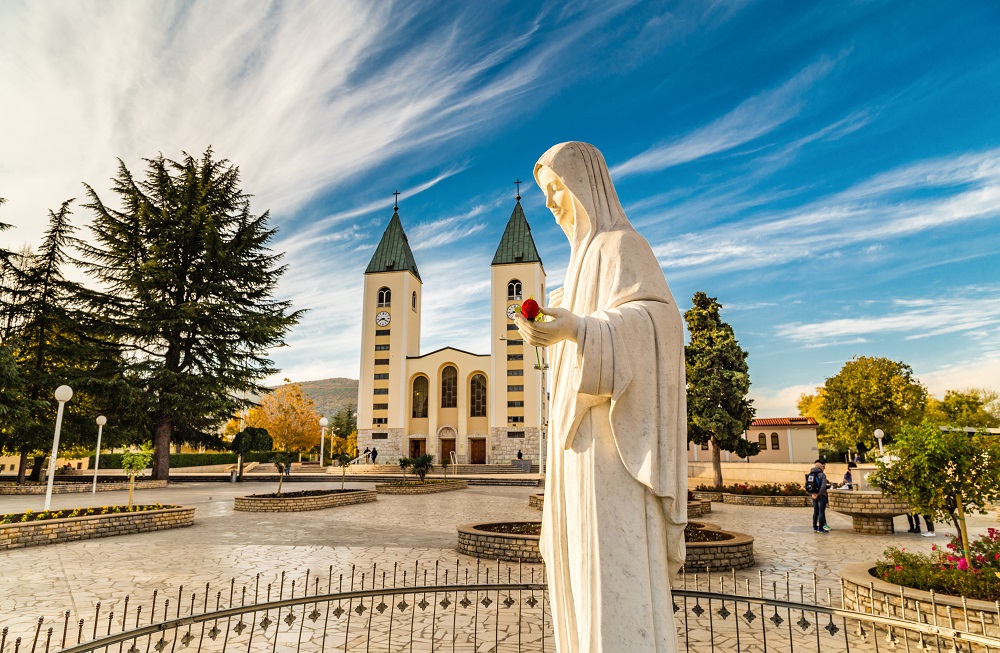
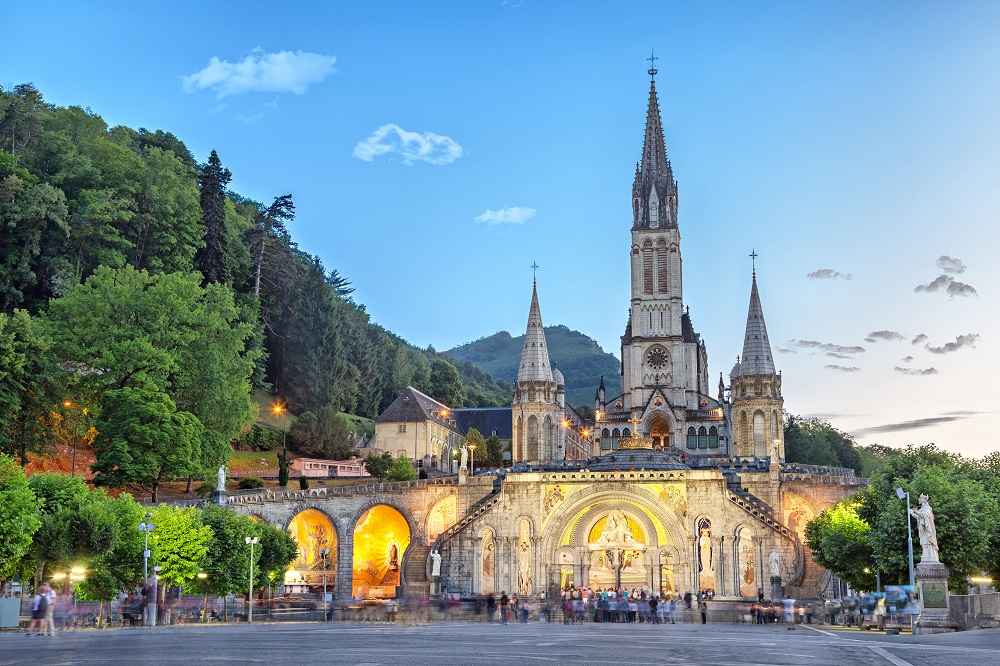
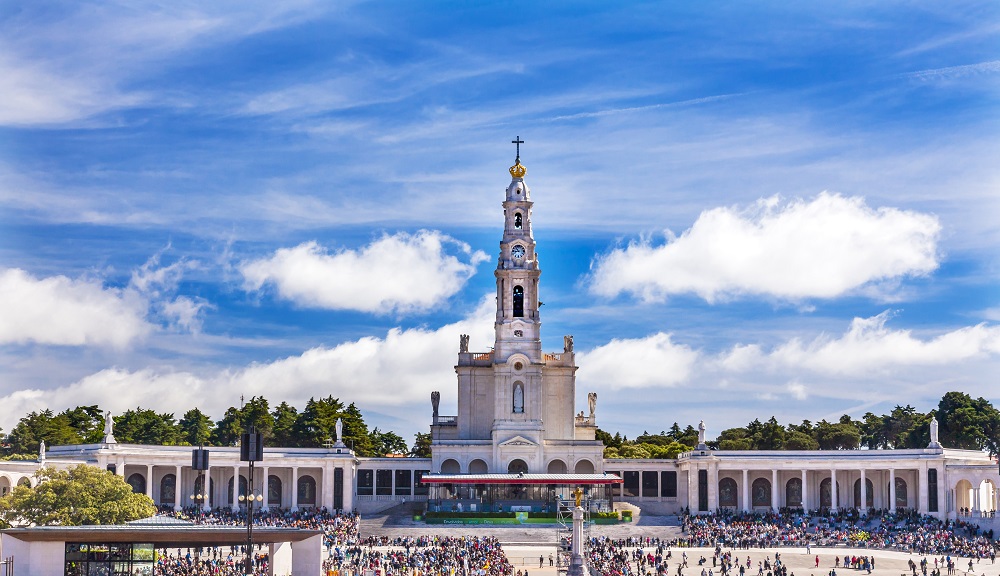
In particular, you will find statues of any size and material, for outdoors or indoors, made of wood, resin, stone, marble powder, and the many interpretations of Her: Our Lady of Medjugorje, Lourdes and Fatima, Our Lady of Peace, of Grace, Immaculate, and so on.

Of course, our store offers a wide variety of rosaries of any kind and material: silver with Swarovski crystals, filigree, with coral beads, water pearls and hard stones. Many of our jewels, especially bracelets and rings but also necklaces and cufflinks, are dedicated to the cult of Mary. In this case as well, you will find a wide choice, with items that are suitable for any occasion and budget.

And then, sacred icons, pictures and prints, many different ways to celebrate the presence of the Virgin Mary in our lives and homes, not only during the month dedicated to Her, but every single day.