The symbols of Confirmation express the fundamental importance of this Sacrament. From the chrism, which symbolises the presence of the Holy Spirit, to the gesture of the laying on of hands, which transmits the strength and mission of the believer, to the signs of Confirmation (the Holy Spirit, Fire, the Seal, and the Dove)—each of these reflects a crucial aspect of the Christian faith.
The gestures and symbols of Confirmation tell an ancient story and an eternal truth, acting as an invitation to the believer to live a life of faith, hope, and love, while simultaneously representing the power of the Holy Spirit, whose presence is confirmed and strengthened during this very ceremony. For this reason, Confirmation is a fundamental Sacrament for the Catholic Church and a crucial moment in the life of a believer, during which the bond with the faith and the ecclesial community is strengthened. Together with Baptismand First Holy Communion, it constitutes a sacred triptych of Christian initiation, marking the completion of the faithful’s journey and formation.
Confirmation confirms and reinforces the commitment to faith made at the time of Baptism, requiring full and active awareness, given the young age at which the first sacrament is often received. The term “Confirmation” itself, which derives from the Latin confirmare, meaning to make stable or strengthen, underlines the importance of this step in the spiritual maturation of the believer and in their full awakening of conscience. While Baptism liberates one from Original Sin and welcomes the baptised person as a member of the body of the Church, it is only through Confirmation that this initiation finds its completion. Without it, the experience would remain incomplete; indeed, as Pope Francis has pointed out, those who have received only Baptism are “half-Christians“.
Furthermore, during Confirmation, the believer receives the confirmation and strengthening of the gifts of the Holy Spirit, which were received through the laying on of hands during Baptism. These are: Fear of the Lord, Wisdom, Knowledge, Understanding, Fortitude, Counsel, and Piety. To fully welcome these gifts and cultivate them every day, it is necessary to invoke them incessantly through prayer and to live the Gospel daily. It is by actively cultivating the gifts of the Holy Spirit that they descend upon us and continue to nourish our spiritual life.
If two people wish to marry in Church, both must have received the sacrament of Confirmation. This further emphasises the importance and meaning of Confirmation in the lives of Christians, as it marks not only a fundamental step in their spiritual growth but also a prerequisite for other Sacraments and crucial moments in religious life.
At the heart of this Sacrament are several symbols, each of which carries a profound meaning and a rich spiritual history. Understanding the symbols of Confirmation allows one to fully grasp the ultimate sense of this Sacrament and can help us to experience it properly—and to help those who are yet to receive it experience it too.
What is the symbol of Confirmation?
When speaking of Confirmation symbols, we must distinguish between the gestures and elements actually employed during the ceremony—such as the chrism used for anointing the candidates or the laying on of hands—and the signs of Confirmation, those symbolic elements that embody the deepest meaning of the rite: the Holy Spirit, Fire, the Seal, and the Dove. These latter signs, in particular, represent the living presence of God in the lives of believers and His work of transformation and redemption. Each symbol carries a profound meaning that invites believers to live a life of faith, love, and commitment within the Christian community.
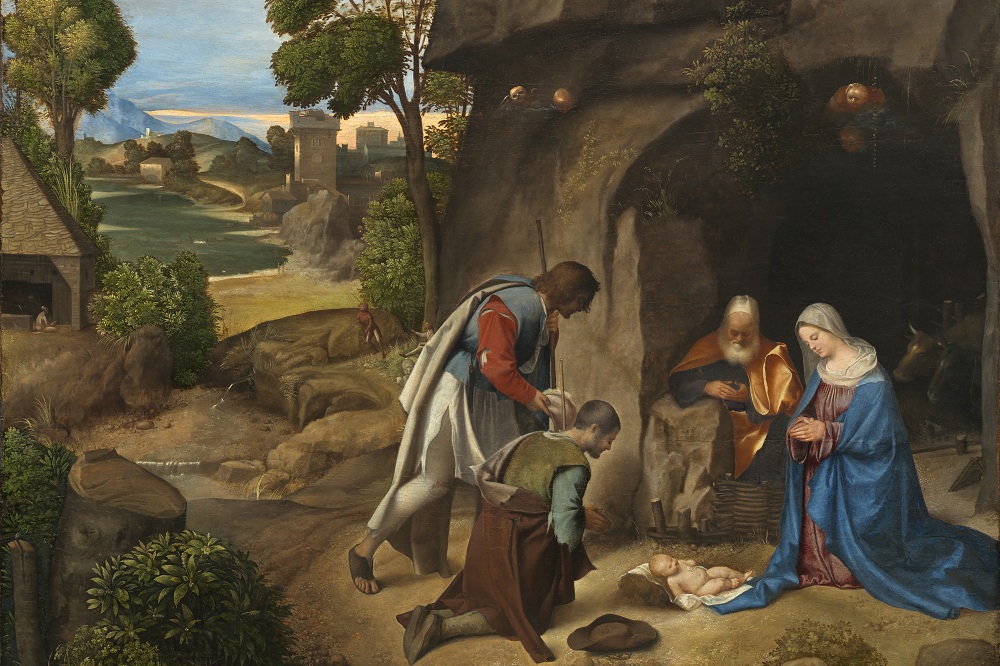
Woodcut illustrating the Holy Spirit bringing gifts.
The Signs of Confirmation
The Holy Spirit is the primary gift of Confirmation. It is represented as the third person of the Trinity and is invoked to descend upon believers during the sacrament. The Holy Spirit symbolises the divine presence that guides, illuminates, and comforts the faithful on their journey of faith.
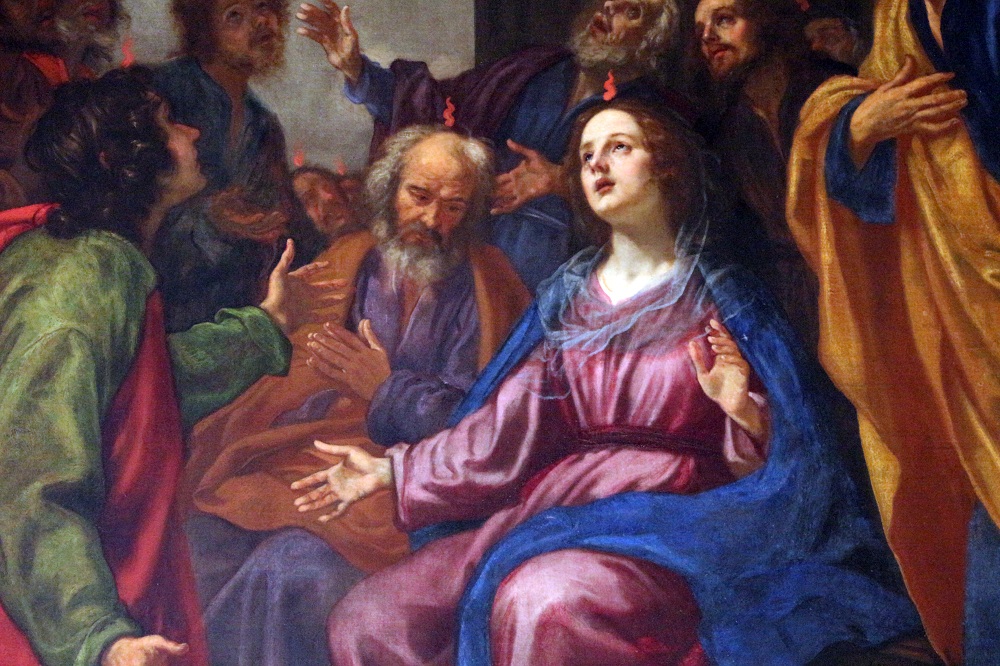
Fire is a symbol of purification and transformation. In the Bible, fire is associated with the presence of God and His purifying action. In Confirmation, fire represents the burning presence of the Holy Spirit who ignites the hearts of believers, purifying them from sins and infusing them with a passion for spiritual life.
During Confirmation, the bishop traces the sign of the cross on the candidate’s forehead with chrism, pronouncing the words “Receive the seal of the Holy Spirit“. This gesture symbolises the indelible spiritual mark that gives the believer the responsibility to live according to the teachings of Christ and to be a witness to their faith in the world. The Seal also represents the believer’s belonging to Christ and the Church.
Finally, the Dove is a traditional symbol of the Holy Spirit. It derives from the Gospel account of the Baptism of Jesus. In the Gospel according to Matthew, the Holy Spirit descends upon Jesus in the form of a dove after His Baptism in the River Jordan. In Confirmation, the dove represents the presence of the Holy Spirithovering over believers, bringing peace, hope, and consolation into their lives.
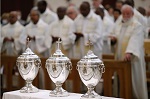
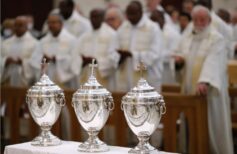
Among the elements used for Confirmation, the principal one is chrism, a mixture of oil and balsam consecrated by the bishop during Holy Week. It consists of olive oil scented with balsam and blessed, and it is already used during Baptism to consecrate the person being baptised and mark their entry into the vast family of the Church. On that occasion, it is used to anoint the head of the person being baptised. In Confirmation, however, the priest takes a small amount of chrism with his finger and traces a cross on the candidate’s forehead. This gesture impresses the Seal of the Holy Spirit, which descends upon the recipient to grant them the strength to be a “soldier” of Christ, ready to witness to the faith in the world. Anointing with chrism during Confirmation represents the enrichment of the Holy Spirit within the believer and symbolises total acceptance into the Christian community and their strengthening in the faith. Holy oil has a deep meaning in the Christian tradition, as it symbolises healing, consecration, and the presence of the Holy Spirit.
Chrism is also used during Priestly Ordination to anoint the palms of the hands of priests and the foreheads of bishops, symbolising the investiture of spiritual authority and consecration to divine service.
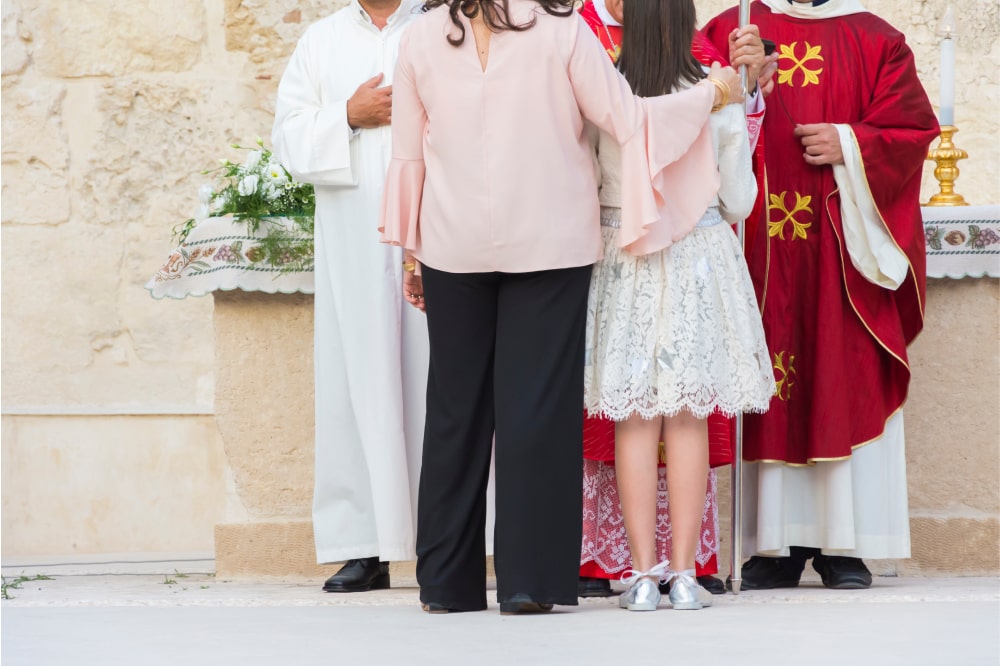
During the celebration of the Sacrament of Confirmation, the Bishop performs the laying on of hands twice: once over all those present, to invoke upon them the outpouring of the Holy Spirit, and once over each candidate at the moment of anointing with chrism. The gesture of the laying on of hands during Confirmation represents the confirmation of the Holy Spirit, the divine presence, and the sending forth on the Christian mission.
The Bishop, by laying his hands on the candidates, symbolises the transmission of the Holy Spirit. This gesture recalls the event described in the Acts of the Apostles (Acts 8:14-19), when the apostles laid their hands on new believers to make the Holy Spirit descend upon them.
But the laying on of hands is above all a gesture that underlines the presence and action of God in the candidate’s life. It is a tangible sign of divine grace pouring over the person, strengthening them in faith and Christian commitment.
Finally, the laying on of hands is also an act of sending forth. The candidates are consecrated and tasked with witnessing to the faith in the world, being agents of change and hope in society. It is a moment that highlights the believer’s responsibility to be an active disciple of Christ, committed to the spread of the Gospel and love for their neighbour.
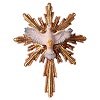
The Holy Spirit dove is craved out of maple wood and hand painted with oil colors.
The Colour of Confirmation
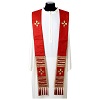
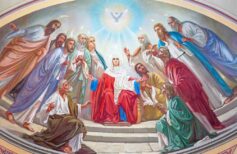
According to Christian tradition, the colourassociated with Confirmation is red. This colour has a deep symbolic meaning. It represents the tongues of fire through which the Holy Spirit manifested Himself to the disciples on the day of Pentecost, as narrated in the Acts of the Apostles. Red symbolises the vibrant and burning presenceof the Holy Spirit, who grants strength, passion, and courage to believers on their journey of faith. Therefore, the colour red is often used in liturgical vestments, in the ribbons of favours, and in the details of Confirmation ceremonies, to recall the special bond with the Holy Spirit and to celebrate the fullness of Christian life in the world.
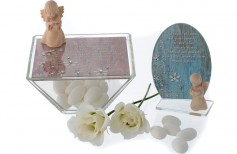
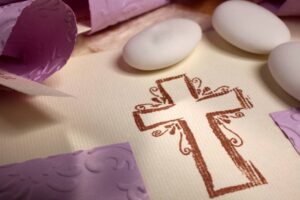
Icons, pictures and crosses depicting the symbols of Confirmation.
At what age is Confirmation held?
For young people, Confirmation marks their effective entry into the Christian community. It represents the completion of the path of preparation for the sacraments and the catechetical journey begun with the rite of First Holy Communion. In Italy, Confirmation is generally celebrated between the ages of 11 and 13, sometimes together with First Holy Communion.
Confirmation Explained to Young People
Explaining Confirmation to young people is important to help them understand the meaning and significance of this Sacrament in their spiritual lives. As this is such a fundamental moment, and considering the young age of the candidates, it is right to do so in the simplest and most correct way possible.
Confirmation is the Sacrament of the Catholic Church that marks an important step in our spiritual growth. It is the moment when we confirm and strengthen the faith we received at Baptism. Confirmation is important because it helps us to become adults in our faith. It is an opportunity for us to take our Christian commitment seriously and tobecome active members of the Church.
During Confirmation, the Bishop will lay his hands on us and anoint us with the holy oil called chrism. This gesture represents the Holy Spirit entering our lives in a special way, giving us strength and courage to live as followers of Jesus. The Holy Spirit is God’s gift that helps us better understand our faith and gives us the strength to live according to Jesus’ teachings. It also gives us special gifts like wisdom, strength, and the courage to do the right thing.
After Confirmation, we are called to be witnesses of Jesus in the world. This means living according to His teachings and showing love and compassion towards others. We are called to be “soldiers of Christ“, ready to defend our faith and to spread the Gospel wherever we go.
The fragrances of Padre Pio represent just one of the most evocative aspects of the veneration surrounding this unique Saint....
26 August 2026
What’s the Future of Religion?
What’s the Future of Religion?
A Beginner’s Guide to Christianity
A Beginner’s Guide to Christianity
Mind-Blowing Statistics About Christianity You Need to Know
Mind-Blowing Statistics About Christianity You Need to Know
9372
Enter the Holyart world: $20 discount voucher valid on over 60,000 items
Come and discover Holyart, the largest e-commerce of religious articles in Europe and immediately receive a $20 voucher to use with your first purchase.
Check your mailbox: you will receive your discount within 5 minutes