Author: Redazione

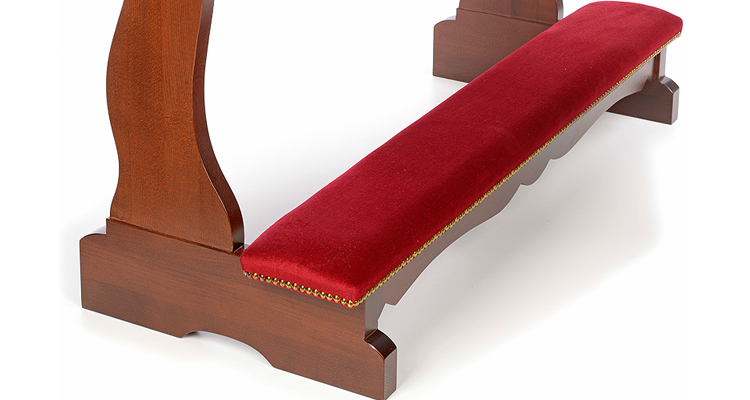
Prayer Kneelers

Prayer Kneelers

The prayer kneeler belongs to typical furnishings of churches and chapels since the fifteenth century. It is a piece of furniture, usually made of wood, used to kneel and pray. The kneeler can be placed before the tabernacle, an altar, a statue of a saint…
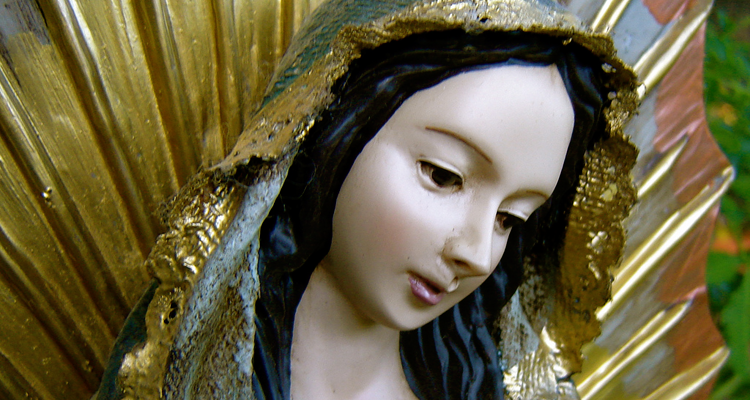
Our Lady Of Guadalupe

Our Lady Of Guadalupe

Our Lady of Guadalupe is considered the patron saint of all Spanish-speaking Catholics in the world, especially those living in South and North America. Her cult was born in Mexico in the sixteenth century, when the Virgin Mary appeared repeatedly to Juan Diego Cuauhtlatoatzin, an…

Metal Paten

Metal Paten

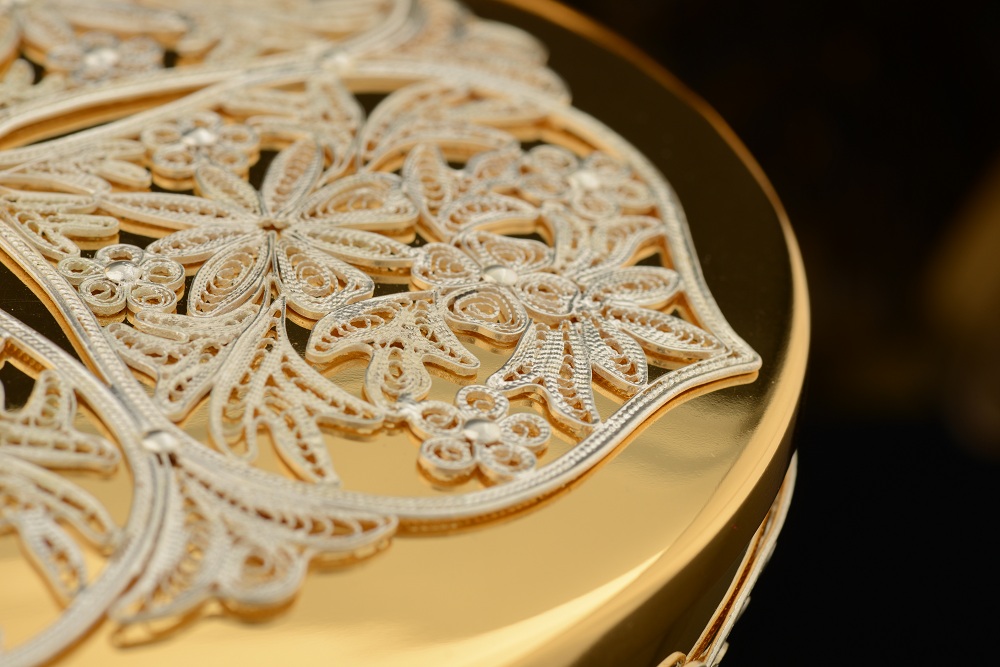
The metal paten is a small round plate on which the host is placed before and after being consecrated during Mass celebration. The metal paten is also used by the priest to catch any crumbs of the host and to cover the chalice.

The paten is usually made of gold or silver, or other precious metals, but in ancient times was also made of glass, ivory, onyx, alabaster, rock crystal. Originally, it was a simple dish of household, as was associated with the dish used by Jesus at the Last Supper to break bread. The Latin etymology of the word paten comes from ‘patina’ and means “plate, bowl”. In the early Church, there were metal patens in different sizes, shapes and materials. The priests used them both for the consecration and to distribute communion hosts to the faithful. Sometimes they were very large metal patens, with handles that allowed to handle them more easily.

Some metal patens were used to collect the bread offered in sacrifice, others for the giving of communion. Over time the ciborium replaced the paten as a container to distribute the hosts and metal patens assumed its precise characteristics, becoming a plate with a diameter not exceeding 20 cm, concave in the central part in order to be placed more easily on the chalice.

Even metal patens decorations are evolving: if at first they tend to be rich in carvings and works of chisel, enamel inlay and precious stones, progressing over time they tend to simplification, not least to prevent host crumbs to end up stuck in the incisions. Today we prefer simple decoration, but with a strong symbolic value. During the Eucharistic celebration, church supplies and linens are prepared according to a precise ritual order: purificator, paten with the host, pall, corporal.

St. Anthony of Padua

St. Anthony of Padua

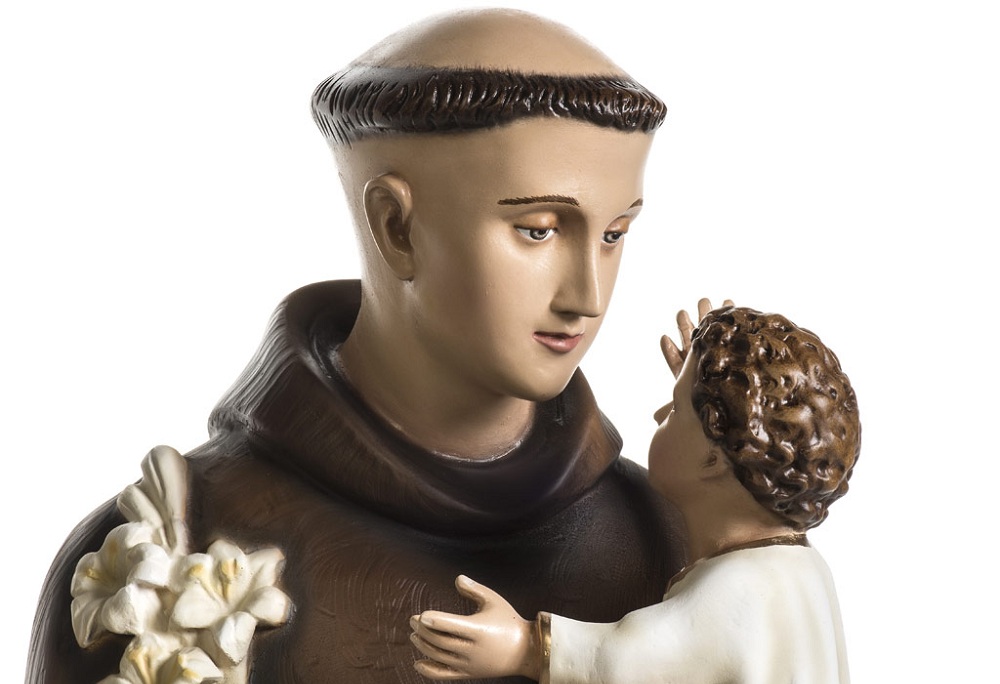
The life and Christian experience of St. Anthony of Padua arises in an era of great historical, social and spiritual changes. It would be impossible to understand the depth and the meaning of this great figure of Catholicism without taking into account the historical environment…

Votive Candles

Votive Candles

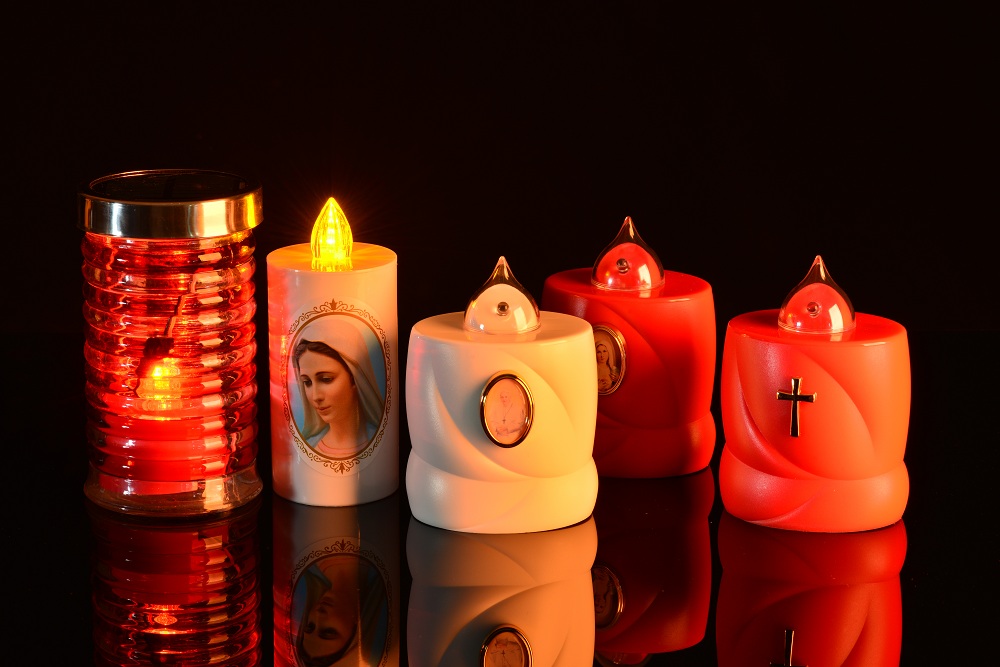
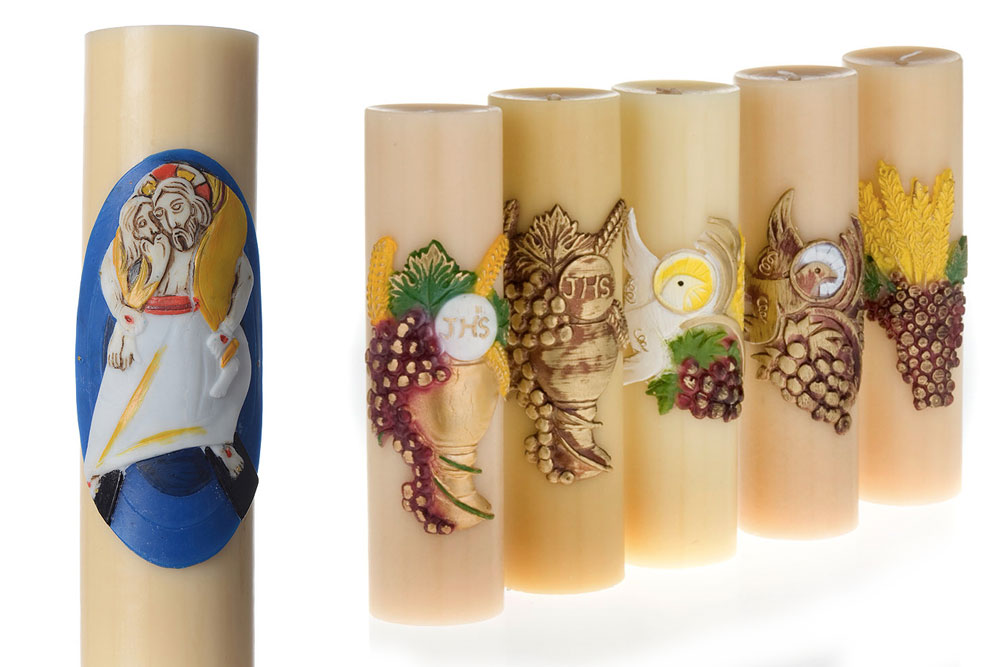
Votive candles are of great importance in all religions of the world, but in the Christian one, they take such a strong symbolic meaning that they have become over the centuries an indispensable element both in celebrations and in the decoration of churches and places…

Church supplies

Church supplies

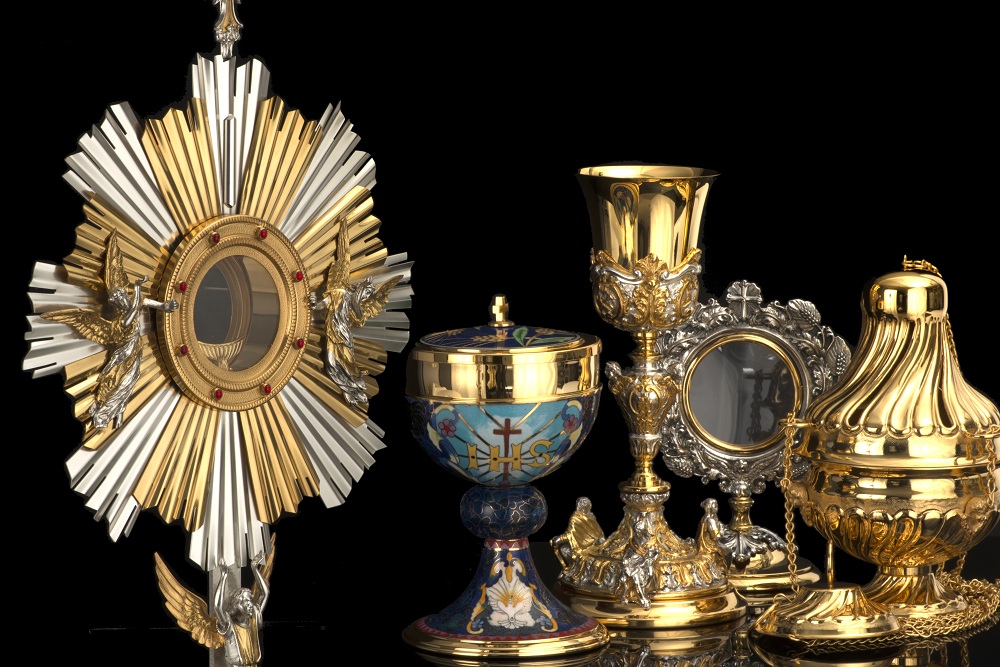
With Church Supplies we mean the set of objects that are used to worship, especially for the celebration of the Eucharist, but also to adorn the altar, the church and the person of the priest (in this case we speak more properly of liturgical vestments), and for the conservation of the Blessed Sacrament (sacred vessels).

Church supplies are made in most cases of precious materials. Especially church goods that have to come into direct contact with the Holy Eucharist must take into account the value of what they are going to hold or touch.

In the early Church, church supplies were not that important: the sacraments were celebrated in common rooms, with clothes and objects of everyday life, in imitation of Christ. Later, when the liturgy took on a more and more definite way ritual form, church supplies became an indispensable and symbolic component of the celebration.

The shape and materials of other church goods, vessels, for example, are defined over the centuries according to particular dictates. Embroideries, works of chasing and inlaying performed by excellent artists and skillful craftsmen, inextricably tied the history of church supplies with that art, enriching the churches and places of worship with authentic masterpieces, and creating an increasingly obvious gap between everyday objects and those dedicated and reserved to the liturgy. Nevertheless, the Church calls also respect of the principles of noble simplicity for church supplies: form and matter are more important than the wealth of the ornament itself.

Most of church goods are consecrated before use and kept in a specific place dedicated to them in sacristy.

Saint Rita of Cascia

Saint Rita of Cascia

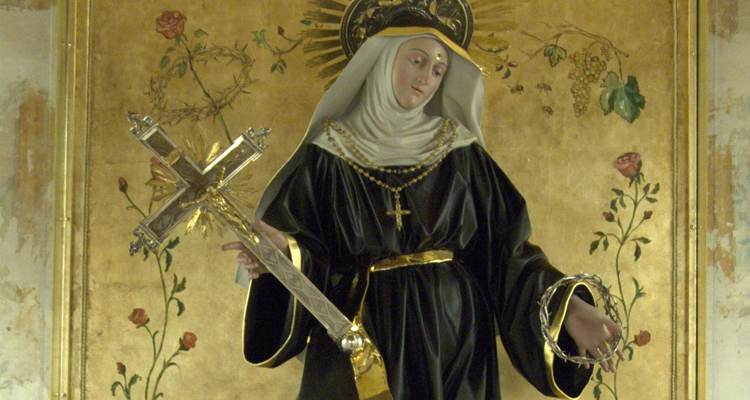
Saint Rita of Cascia was an Augustinian nun who lived in 1400. Born in Cascia (PG), was beatified 180 years after her death and proclaimed Saint after 453 years. Saint Rita is the subject of an extraordinary popular devotion, and is certainly one of the…

Metal ciborium

Metal ciborium

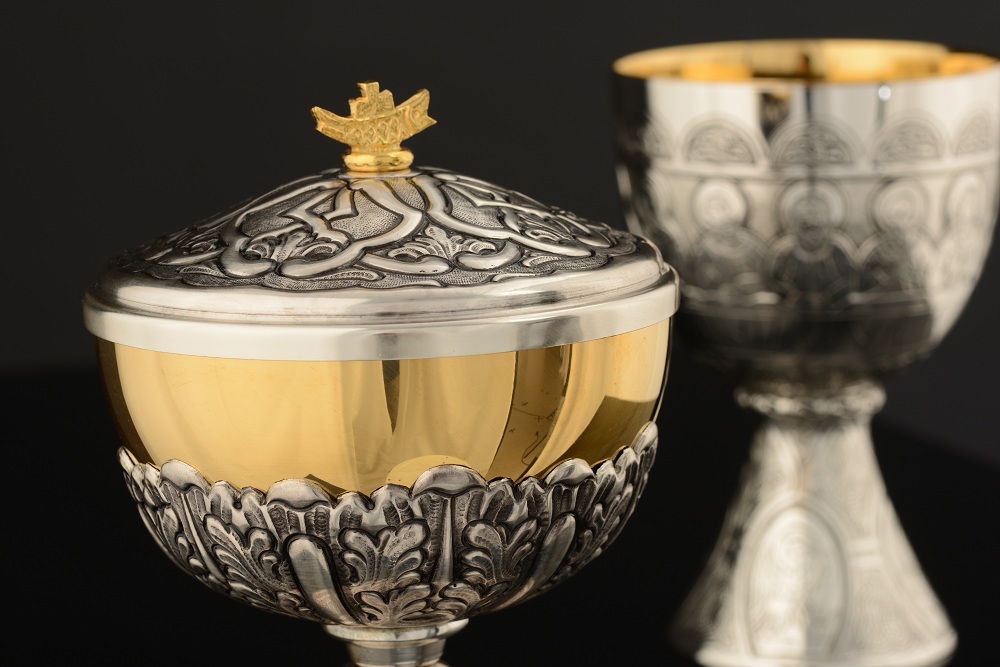
The word ‘ciborium‘ probably comes from the Greek πυξίς, generic name for any vessel intended to contain small objects. It was mostly hardwood boxes but soon came used to define containers of metal or clay, ivory or bone. In the Middle Ages people began to…

Saint Francis of Assisi

Saint Francis of Assisi

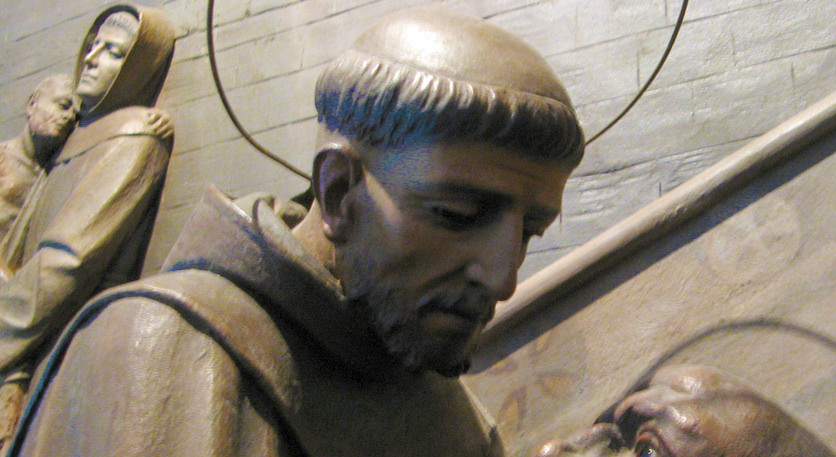
Hard to write something new about Saint Francis of Assisi, one of the most beloved saints and revered by the Catholic Church, proclaimed along with Saint Catherine of Siena the main patron saint of Italy by Pope Pius XII. Moreover, it is no coincidence. St. Francis could, more than any other saint, master the inheritance of Jesus Christ in an intense and total way; a man, poor among poor ones, the last between the last ones, until becoming through his extreme lifestyle choice, the sacrifice, the preaching, the stigmata in his flesh, like a new incarnation. For that time this revolutionary approach and moving in its intensity, made Saint Francis of Assisi disliked and misunderstood by his contemporaries, but he created immediately sympathy and spirit of emulation in whomever was looking for an authentic faith.

Imitator and follower of the poor and crucified Christ, St. Francis was able to remind a great Christian truth to all those who had forgotten it, life associated with that of Christ on the cross as an irreplaceable means of salvation. He reminded those who had lost their way that nothing comes without going through great sacrifice, that one must carry his cross with pride, holding on to it every day to improve, to aspire to a reborn worthy and full. To be born again, just like Saint Francis of Assisi, to a really new life.

Furthermore, St. Francis could first instill a sense of belonging to a community of devout believers in the body and spirit in a common Faith. Even today friars, nuns, seminarians aspirants, Secular Franciscan Order, young devotees and admirers and friends of Saint Francis, are like members of a real family, together by a concrete sign of Christian devotion, but especially by a commitment to life in the sign of Christ, poor and crucified. Despite the passage of more than seven centuries Saint Francis of Assisi is still a symbol of hope and renewal of the Church, for peace in the world, respect for men and for creation.

On Holyart.com you will find 40 St. Francis of Assisi statues, of different sizes and price ranges.

Metal chalice

Metal chalice

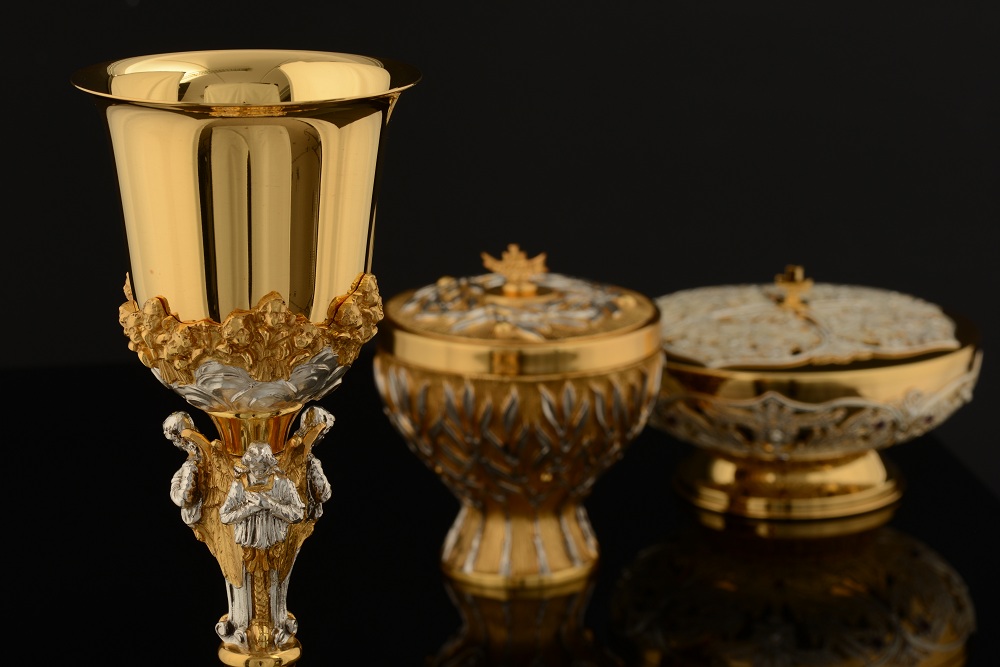
Metal chalice is indispensable and important furnishings for the celebration. In fact, it is in the consecrated chalice that transubstantiation happens, and the wine becomes the blood of Christ. The uniqueness and greatness of this revelation has led over the centuries to the need for…

Travel mass kits

Travel mass kits

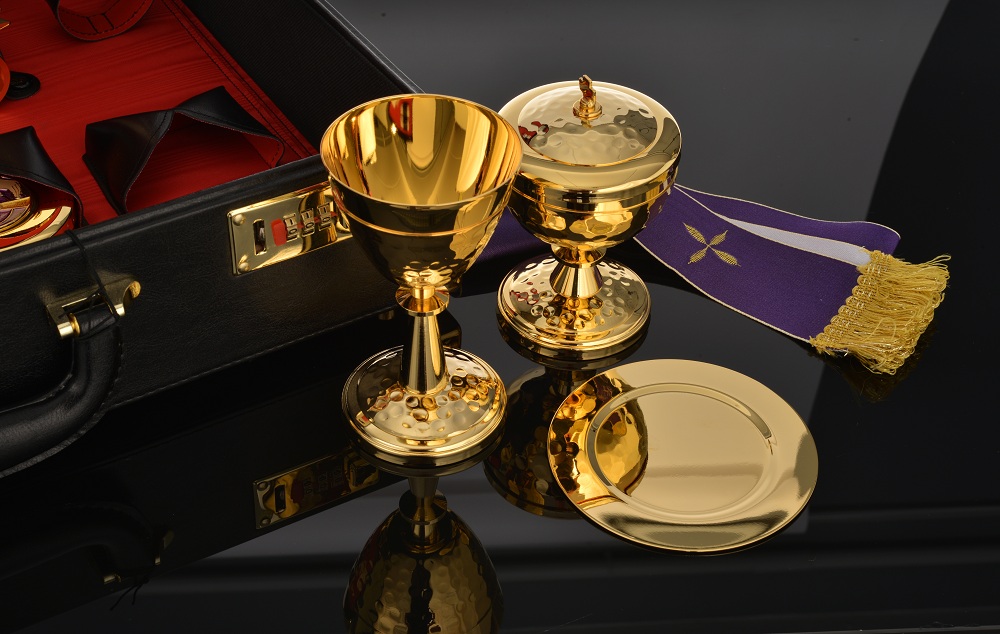
Travel mass kits are indispensable objects for modern priests, called much more than their colleagues of the past, to be ready to celebrate Mass everywhere, in different environments, often not equipped for this purpose. This makes inevitable the endowment of travel mass kits, real kits…

The Ambo

The Ambo

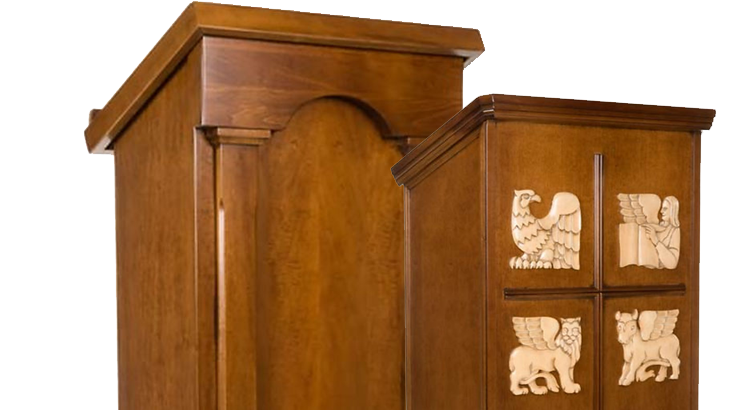
The ambo is a typical piece of furniture of the Christian Church since its origins. It is an elevated platform of various dimensions and materials, always decorated with engravings of solemn symbolic value. In its simpler forms, it is comparable to a normal lectern but it is often made in a more complex structure that can be accessed through some steps. The ambo can be supported by columns, in a number that always has symbolic meaning, but can also be solid. Furthermore, the ambo is a furniture intended for lectures, never for sermons, where instead the pulpit is appropriate. On the ambo during liturgy go up:

– The lecturer, that reads an extract from the Old Testament and an Epistle;
– The psalmist, that starts singing some;
– The deacon, that raves the Gospel.

The ambo is destined for the Liturgy of the Word, so it must be solemn and unique. It has to capture the eyes of the devoted with its majesty, has to be properly illuminated and, when possible, elevated. Candles and votive candles are lit around the ambo and often around it some ornamental plants and flowers are put, to underline the importance. The ambo is an extremely significant element in the Church, almost a monument kept within. For this reason during centuries, many artists have been called to create ambos of great meaning and splendor.

Altar candles

Altar candles

Already when we were kids, we used to light a candle in the church, a gesture that almost seems like a game, but full of meaning. And this gesture means light. The light was first created by God and illuminates our lives since the beginning,…

Our Lady of Medjugorje

Our Lady of Medjugorje

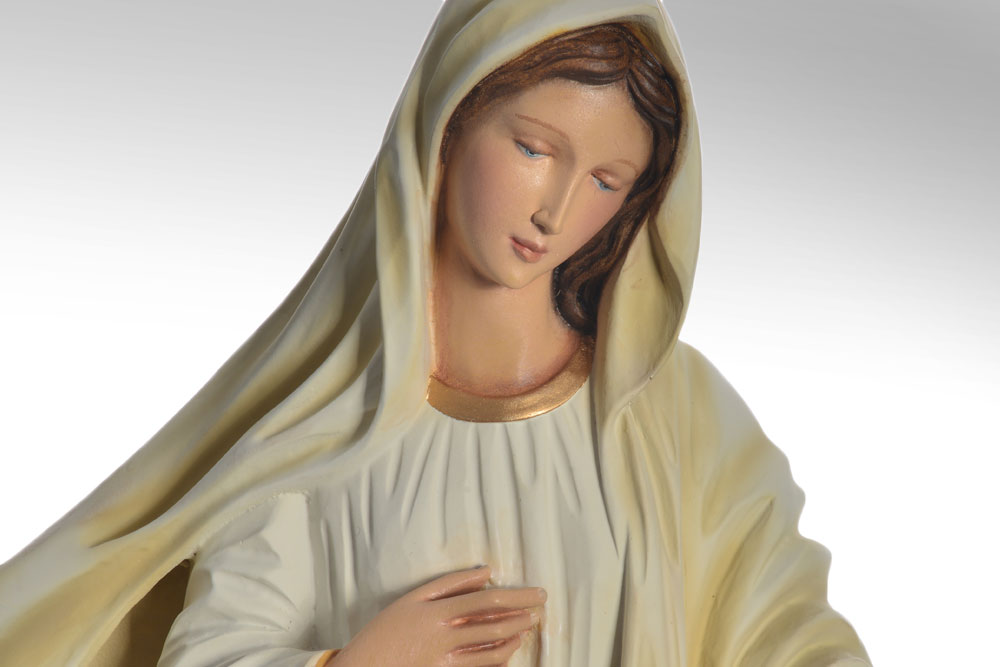
Our Lady of Medjugorje is the always benevolent and sweet mother that welcomes, protects and accompanies Christians along their path. Our Lady of Medjugorje is, in particular, the one who guides believers toward Peace, showing them a faithful road, made of daily devotional and loving…

Liturgical vestments

Liturgical vestments

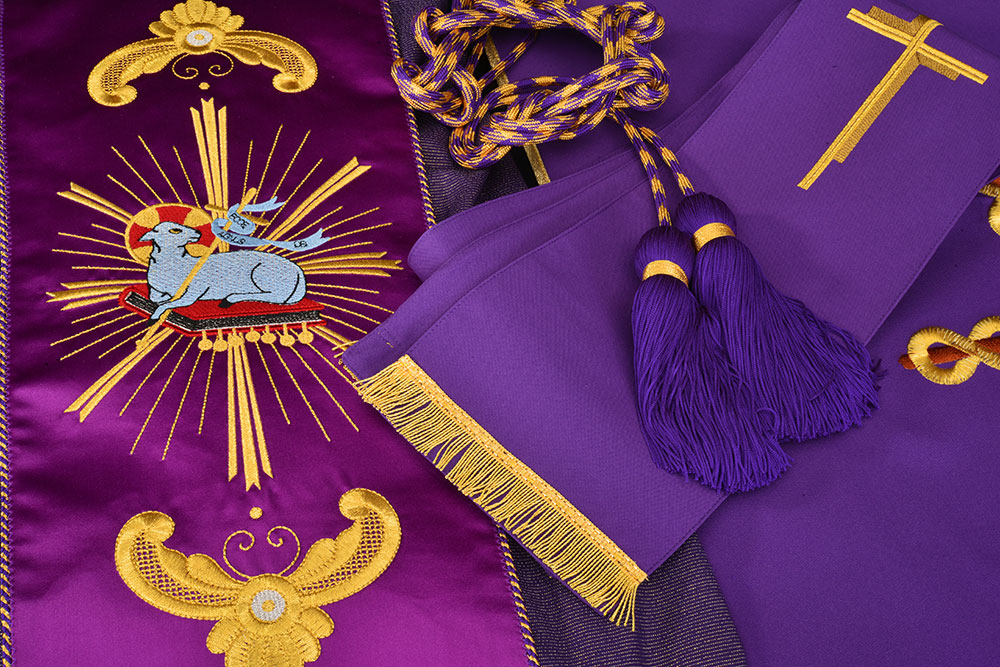
With Liturgical Vestments, or Sacred Vestments we intend all clothes and linens, vestments and altar cloths used during mass celebrations from clergy.

“Liturgical Vestment” has taken over in time of the previous definition “Sacred Vestment”, especially after the Liturgical Reform.

Apparel has an important role in the Liturgy, which is a true moment of celebration of the meeting with our God. Together with other symbols and gestures of the liturgy, these priest vestments are a significant part of the ceremony. And as for any other ceremony, you need the right clothes for it.

Already in the past there were clothes reserved for celebrations. The priests did not wear normal clothes, instead something thought for the liturgy, liturgical vestments that symbolize unworldliness.

Chasubles, stoles, copes, dalmatics, altar cloths, albs, lectern covers are all liturgical vestments, available in different colours, according to the liturgical period during the year.

The priest vestments are normally hand-made, often hand-embroided and full of decorations. Subsequently to rank, the liturgical vestments are different.

Special prayers go along with clothing and disposition of liturgical vestments, helping the bishop to find concentration and arrangement before mass celebration.

The Communion chalice

The Communion chalice

The practice of passing round a chalice during a meal from which all those present drink as a sign of communion, is as ancient as humanity itself. For a Christian, there is no greater moment of the communion of the Eucharist, when the bread of…

Virgin Mary statues

Virgin Mary statues

Amongst the various duties of a good Christian, the veneration of the Virgin Mary is the one which above all, gives voice to a need. The intrinsic need in the heart of every man, in any time and place, to be able to turn to a…

Metal monstrance: the liturgical function

Metal monstrance: the liturgical function

The word in Italian for monstrance ‘ostensorio’ derives from the Latin ostendĕre, which means to show.

This has always been the function of this particular sacred object. Since the beginning, the intention behind its creation was to show the Body of Christ in the most solemn and sacred way possible, the consecrated Host during Eucharistic liturgy.

The metal monstrance is by definition, a small alter on which the object of sublime devotion is placed, a profoundly moving artifact, which in the highest moment of celebration must capture the attention and spirituality of all the faithful that have gathered.

In the past, instead of using metal monstrances, it was commonplace to use sacred images and liturgical objects of all kinds, such as crosses, reliquaries and ciboriums to carry out the same function. However, over the centuries current the format symbolizing a small temple and tower was favored, in which the Host was placed on top of a support made of gold and silver. This later developed into its current form which is characterized by its structure in the form of a radiant sun. This form, more than any other demonstrates the true nature and essence of this object.

The radiant sun of the metal monstrance recalls the haloes of the saints and symbolizes Christ our Lord, who’s light so powerful and healing shines upon and warms the hearts of all the faithful, lighting up their path. Moreover, the sun recalls imaginative folk tradition of the past to manifest joy and exultation for the triumph of life, by burning crowns of intertwined dry branches to light up the night, and therefore challenge its domain.

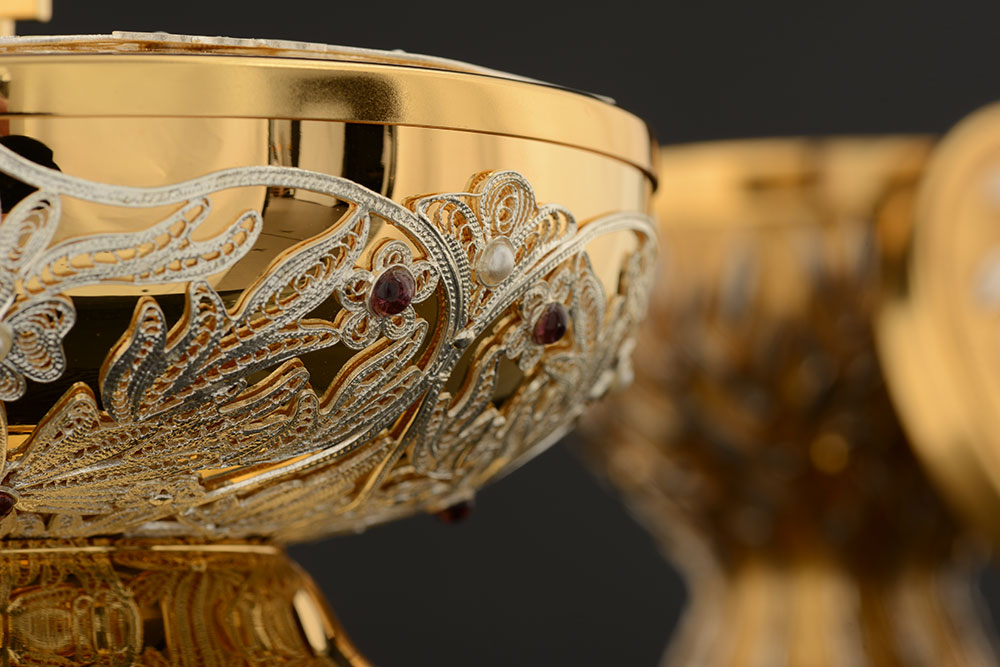
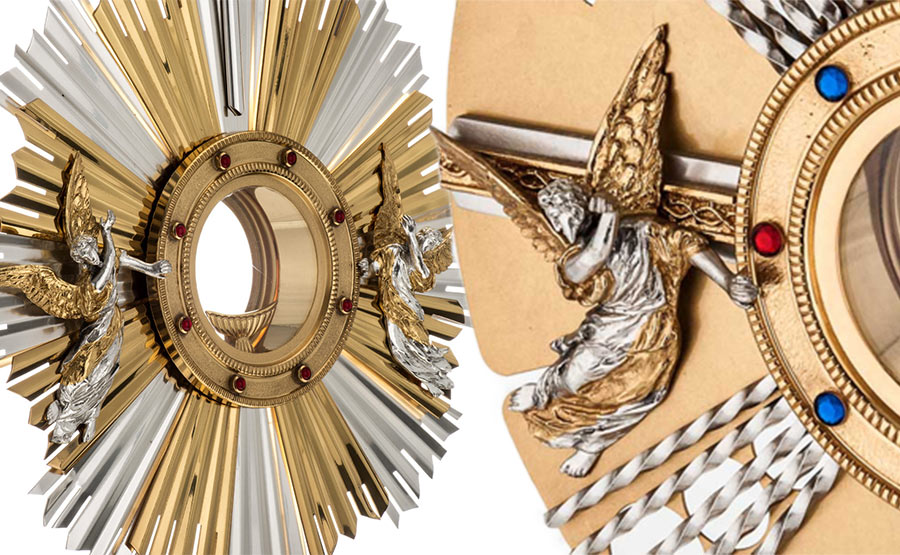
The metal monstrance is a highly suggestive object, which artisans have always placed a lot of attention to detail when making. Above all, the choice of materials used must be thought through carefully. The metal monstrance must reflect externally the veneration and reverence of what is encased within its splendid heart. The purity of the silver, the authority of the bronze, the vibrancy and elegance of the brass, in addition to of course the radiant magnificence of the gold. As well as friezes, ornaments, and enamel ornaments, coral, and precious stones, which represent angels and evangelists, or life, symbol of the connection with Christ the origin of existence.

There is no other object like the metal monstrance, where the importance of the primary materials exceed the limits imposed by its form, to symbolize something more, becoming one with the mystery which it keeps and exults, which it offers and preserves.

Here following you can see a selection of our best metal monstrances, that you can find within Holyart.com catalogue.

Monstrance for celebration host decorated with angels
Monstrance with grapes and ears of wheat
Baroque Monstrance in gonden bronze