Author: Redazione

Saint Maria Goretti

Saint Maria Goretti

Contents1 History of Saint Maria Goretti2 Casa Santa Maria Goretti, pilgrimage destination3 The sanctuary of Maria Goretti in Nettuno On July 6, Saint Maria Goretti, the holy child who died to preserve her innocence, is remembered. Here is how her cult was born. Devotion to…

Saint Peter and Paul, why are they celebrated together?

Saint Peter and Paul, why are they celebrated together?

Contents1 The Story of Saint Peter, the men’s fisherman2 History of Saint Paul, apostle of the Gentiles3 Why are Peter and Paul celebrated together?4 The depiction of the embrace of Saints Peter and Paul On June 29, Saint Peter and Paul are celebrated. Two apostles,…

24 June Saint John the Baptist

24 June Saint John the Baptist

On 24 June we celebrate the birth of Saint John the Baptist, one of the most venerated Saints in the world, the last prophet of the Old Testament and the first Apostle of Jesus. This is what makes it so important and makes it an object of great devotion even today.

No person of the Sacred Scriptures can boast the primacy of Saint John the Baptist: that of having exulted at the news of the coming birth of Jesus even before being born in turn. Yet that is exactly what happened! Her mother Elizabeth, always considered barren and now elderly, became miraculously pregnant and received the visit of her cousin Mary of Nazareth, who carried the Savior in her womb. On that occasion, Mary sang the Magnificat, a song of thanksgiving and joy addressed to God, and Elizabeth blessed her. At that moment the son that she was carrying jumped with joy. We can therefore say that the closeness of Mary and Jesus has made the little John a priest even before he came into the world.

But this was certainly not the only miraculous event linked to the conception and birth of John the Baptist. It is no coincidence that the Church commemorates him not only on the day of his death (29 August) but also on the day of his birth (24 June), as is the case only for the Virgin Mary with him.

In addition to being a prophet of Christ even before he was born, his conception took place in extraordinary circumstances. Both his parents, Zechariah and Elizabeth, belonging to the priestly caste, were elderly and had no children. A descendant of Aaron, Elizabeth was as we have already said a relative of Mary, probably a cousin. They presumably lived in Ain Karem, not far from Jerusalem. One day the Archangel Gabriel appeared before Zechariah, who offered incense to the temple, and told him that his wife Elizabeth would give birth to a son whom he should call John. He also told him that he would be “filled with the Holy Spirit,” that he would be “great before the Lord,” and his forerunner.

And so it happened. Elizabeth became pregnant, and when six months later the Archangel Gabriel also presented himself to Mary to announce the birth of Jesus, he said to her, among other things: “See also Elizabeth, your relative, in old age has conceived a son, and this is the sixth month for her, whom everyone said was barren; nothing is impossible with God” (Luke 1:36-37).

Moreover, at his birth, his father Zechariah regained his voice, after he had become mute at Gabriel’s announcement. Jesus himself will say of Saint John: “I tell you, among those born of women there is none greater than John, and the least in the kingdom of God is greater than he.” (Luke 7:28)

The canonical Gospels contain all the information that has come down to us about Saint John the Baptist. The Gospel of Luke in particular. Thanks to him we know that John baptized Jesus in the waters of the Jordan (Luke 3:21-22) and that he died at the behest of King Herod Antipas (Luke 3:19-20; 9:7-9), who had him beheaded to give his severed head to his stepdaughter Solomon, as a reward for having danced for him at a banquet. Hence also the nickname “San Giovanni Decollato”.

As with Saint Joseph, tradition has it that John the Baptist was raised in body and soul and ascended with Jesus into Heaven at the time of the Ascension.

Tito Flavio Giuseppe, a Roman writer and historian of Jewish origin, also wrote about him. In the Gospel according to John, however, it is denied that John the Baptist and Jesus knew each other, while in the Gospel of Luke they are relatives.

We said at the beginning that John the Baptist was the last prophet of the Old Testament and the first Apostle of Jesus.

When John the Baptist had grown up, John went to live in the desert, where he led a life of penance and prayer, dressed in camel hair and wearing a leather belt around his hips. His food was locusts and wild honey (Mark 1:6).

Then he began his mission, preaching the coming of the Messiah. He was related by the evangelists to the ancient prophecies, which promised the advent of a messenger who would prepare the way for the Messiah. Let us think of Isaiah 40:3-4 (“A voice cries out, ‘In the wilderness prepare the way for the Lord, make straight in the wilderness the way for our God. Let every valley be filled, and every mountain and hill be brought low; let the rough ground be turned into a plain, and the steep ground into a plain”) and Malachi 3:1 (“Behold, I send unto you my messenger, who shall prepare the way before me, and immediately the Lord, whom ye seek, even the angel of the covenant, whom ye desire, shall enter into his temple. Behold, he cometh, saith the LORD of hosts.)

For the evangelists, John thus became “the voice of one crying in the wilderness”: “As it is written in the book of the oracles of the prophet Isaiah: The voice of one crying in the wilderness, Prepare the way of the Lord, make his paths straight.” (Luke 3:4)

John, therefore, preached to the Hebrews about the coming of the Messiah-Christ. He was an eschatological prophet, sent to prepare the people for that imminent change. Because of that coming, he spoke of the profound social and historical changes that would follow. John the Baptist burns with expectation, which for him becomes an opportunity to prepare the world for the action of God.

Waiting and preparation, but also an invitation to conversion given the coming of Jesus. To those who asked him if he was the Messiah, John offered forgiveness of all sins through Baptism and said: “I baptise you with water; but he comes who is stronger than I, to whom I am not worthy to untie the ties of my sandals. He will baptise you with the Holy Spirit and fire.” (Luke 3:16).

The Precursor: Why John the Baptist Is Called That

We have already told how Saint John the Baptist was still sanctified in his mother’s womb thanks to the visit of Mary pregnant with the little Jesus.

Moreover, his birth announced by the Archangel Gabriel makes him even closer to Jesus himself, of whom he has always been considered the Precursor.

The story of St. John the Baptist

Read more:

The story of St. John the Baptist
St. John the Baptist is one of the most important figures, not only for the Catholic Christian religion, but in general, for all Christian Churches…

Precursor therefore for having known Jesus even before he was born, but also for having announced His coming and his mission of life.

After living for years in the desert, Saint John began his preaching alongside the Jordan, exhorting everyone to conversion, because of the imminent arrival of the Messiah. To those who came to hear him as a prophet, John offered the possibility of cleansing themselves from all sins through Baptism. For this reason too, many exchanged him for the Messiah himself.

To the great Priests, who sent an official delegation to him to understand what he was talking about, John replied that he was not the Messiah, as many believed, but only one who cried out in the desert, the bearer of the fulfilment of Isaiah’s prophecy.

The baptism of Jesus

After all the people had been baptized and Jesus also had been baptized and was praying, heaven was opened and the Holy Spirit descended upon him in bodily form like a dove. And a voice came from heaven, “You are my beloved Son; with you, I am well pleased.” (Luke 3:21-22)

We can consider the time of Jesus’ Baptism as the beginning of His preaching and mission on earth. And it was John the Baptist who baptised him when Jesus appeared to him at the Jordan River. When John saw him, he exclaimed, “Behold the Lamb of God! Behold he who takes away sin from the world!” (John 1:29). In practice, Jesus’ mission begins at the moment when Saint John concludes his mission. Shortly thereafter he will be arrested by order of King Herod and will die.

It is interesting to note that in the synoptic Gospels (Matthew, Mark and Luke) the Baptism of Jesus is told, while in the Gospel of John the episode of the descent of the Holy Spirit on Jesus is told from the point of view of John the Baptist, but it is not spoken of Baptism.

We must interpret the Baptism of Jesus in its deepest meaning. Jesus, by his nature, was sinless, he would not have any need to be baptised, since the Baptism offered by John the Baptist was aimed at the remission of sins. But it was Jesus himself who urged the Baptist to proceed to baptize him, citing as his motivation: “Let us do it this time, for it is fitting that in this way we fulfil all that is right” (Matthew 3:15).

The Catholic Church celebrates the Baptism of the Lord on the Sunday after the Epiphany, therefore on the Sunday between 7 January and 13 January.

The Madonna del Cardellino: explanation of the work

The iconography of Saint John the Baptist is essential, as he is the most depicted saint in the art of all time. He was usually depicted wearing animal skin and holding a stick with a cross on the top. Alternatively, we see him in the works of Raphael or Leonardo, as a child, while playing with Jesus, who is also small. In this version, it is called San Giovannino. The depiction of the Baptism of Jesus is also recurrent, as is his martyrdom, or his head placed on the tray with which Herod gave it to Solomon.

The Madonna del Cardellino is a painting by Raffaello Sanzio from 1506, kept in the Uffizi Gallery in Florence. It represents the Madonna, Jesus as a child seated on her legs and St John the Baptist embracing her. The two children are busy playing with a small bird, a goldfinch. This element, apparently insignificant, is the very heart of the work, as this cardinal would represent in the artist’s intention the Passion of Christ.

In Christian iconography, three types of birds are associated with the Passion and death of Jesus: the goldfinch, robin, and finch. This is because it is said that during the Crucifixion they tried to give help to Christ, detaching the thorns from the crown with their beaks. In doing so, however, they were wounded, and for this reason, on the chest of the cardinal, there are blood-red spots, a legacy of that gesture of mercy on the part of the little creature.

Our Lady, Jesus and John the Baptist

We have seen how in the history of art recurs the fact of depicting together the Madonna, Child Jesus and Saint John, or Saint Giovannino. The importance of this figure is such as to make it closer to Jesus and Mary than any other Saint or saint.

Only for him and for the Virgin Mary are celebrated both the day of death and that of the earthly birth, while the other saints are remembered only for the day of their death, called ‘dies natalis’ or day of rebirth to new heavenly life.

The feast of Saint John on 24 June has always had great popular importance. In addition to devotion to the saint, it is linked to traditions that refer to ancient pagan cults, linked to agriculture and the solar cycle. In ancient Rome on June 24, the summer solstice was celebrated, when the sun is at its peak in the heyday, and with it the beginning of the harvest. Thus, gradually passing from pagan customs to popular worship of the saint, on Saint John’s night the country people danced around the fires lit in the fields, bathed in the blessed dew and collected herbs considered magical before dawn. Even today these traditions remain in every culture, like echoes of a past with undeniable charm, where sacred and profane tended to mix often.

What the name John means

John is one of the most popular names in the world, in its infinite variations and also in the female versions. More than five hundred saints brought him, starting with Saint John the Evangelist, who was the beloved of Jesus and practically contemporary of the Baptist. The name John comes from the HebrewIehóhanan, which meant: “God is propitious”, or even “gift or grace of God”.

There are also many countries named after Saint John, one hundred in Italy alone.

Saint John is also considered the patron saint of: Baptistries, Singers, Prisoners, Wool Carders, Cutlers, Leather Tanners, Condemned to Death Sentences, Scissors Makers, Sword Makers, Leather Workers, Monks, Musicians, Fur Sellers, Tailors, Water Sources, Orphans and Strays, Fowlers.

Corpus Christi, meaning and celebrations

Corpus Christi, meaning and celebrations

Contents1 But when was this party instituted?2 The meaning of Corpus Christi3 How Corpus Christi is celebrated in the various areas of Italy4 The mysteries of Campobasso5 The Corpus Domini of Orvieto6 The flowers of Spello The Solemnity of Corpus Christi is one of the…
Saint Anthony of Padua, the Saint of miracles

Saint Anthony of Padua, the Saint of miracles

Contents1 The miracles of Saint Anthony2 The sermons of Saint Anthony3 Prayer to Saint Anthony of Padua Saint Anthony of Padua was already one of his contemporaries master of Christian wisdom and an author of immortal works. Charged with the teaching of theology by Saint…

From Eve to Mary: the figure of the Mother in the Bible

From Eve to Mary: the figure of the Mother in the Bible

The mother, pillar of every family, beating heart and source of life for those who gravitate around her. Yet sometimes we take it for granted.

We should remember every day what it means to be a mother. But we just can’t. Only a mother can know the extent of the love that can be addressed only to those who have been carried in their womb for nine months and then generated uncontrollable joy with infinite pain.

“Individual” means “that one cannot divide”. Mothers, on the other hand, “divide”, starting when they host a child to give it to the world and make it grow.” These are the words of Pope Francis, and they define very clearly what a mother is: a person who renounces their own individuality, who assumes upon himself the commitment not only to generate a new life but also to take care of it, forever, with tenderness and dedication, making the joys and pains of another person his own. It requires so much, so much love, so much spirit of sacrifice, and that is why it breaks the heart to see abandoned mothers, taken for granted, forgotten by children who, too taken by their daily lives, forget to those who owe everything they have, everything they are.

Pope Francis recognises the value of mothers, of all mothers, starting with Mary, Mother of Jesus, the mother of all mothers, the centre of the life of the Church. The Supreme Pontiff affirms, among other things, that “a society without mothers would be an inhuman society, because mothers always know how to witness, even in the worst moments, tenderness, dedication, moral strength.”

Mother’s Day, heart of the Marian month

Read more:

Mother’s Day, heart of the Marian month
On May, we celebrate all mothers of Italy. A sweet, warm day that revolves around children, but not only. May is the month dedicated…

Motherhood in the Sacred Texts

But, besides Mary, there are other figures of mother present in the sacred texts. We want to dwell on them, to understand how the concept of motherhood has developed over time, in the Christian sphere and beyond. Social changes, transformations linked to historical facts, have led to progressive emancipation of women, compared to the past, and a radical change in the perception of roles also within the family. However, there are aspects of being a woman and a mother that have never changed, others that have evolved, as it is inevitable that it will be.

In Jewish culture, motherhood represented the highest aspiration and full realisation for a woman. Being sterile was considered the most inconceivable misfortune. Mothers were respected and held in high regard. They took great care of their children, nursing them even for two, three or more years, and for their sake they knew how to impose themselves on their husbands, even opposing his will. Think of Sarah, Abraham’s wife and Isaac’s mother, who forced her husband to cast out the slave Hagar, from whom he had had a son when the latter had begun to treat his half-brother badly (Gen 21:8,9). The Bible tells us that God Himself took up the woman’s defence and commanded Abraham to do as she had asked.

In general, commands recommending respect and love due to the mother recur in all Sacred Scripture: “Honor thy father and thy mother” (Ex 20:12; cf. Dt 5:16); “He who strikes his father or mother must be put to death.” (Ex 21:15); “Do not despise your mother when she is old” (Pr 23:22); and so on.

But let us take a step back and examine some of the figures of a mother in the Holy Scriptures, beginning with Eve, the mother of all men.

Eve: mother of all living

Eve was the first woman created by God in Earthly Paradise. Born with him from the earth, or his rib, according to the two versions of Genesis, it was created to help him, support him and love him. Initially, it is called only ‘woman’ (iššhāh, female form of‘išh, ‘man’). After the original sin and the expulsion from the Garden of Eden, Adam will call her Eve, from hawwah, “living” or “raising life.” When she and Adam were cast out of Earthly Paradise, Eve was cursed by God: “I will multiply thy sorrows and thy pregnancies; with sorrow shalt thou bear children.” (Genesis 3: 16).

The curse of God concerns precisely pregnancy and being a mother. Even today, Jewish women try to repair Eve’s guilt with ritual gestures, such as lighting the lights before Shabbat.

The Garden of Eden in Genesis

Read more:

The Garden of Eden in Genesis
The Garden of Eden represents the first, immense gift that God gave to man and woman. Lost following the original Sin, it remains an…

Bathsheba: wife and mother of kings

Bathsheba was the wife of King David, to whom she gave three sons, including the great Solomon. The first son died as soon as he was born. The Bible says that David fell in love with Bathsheba when he saw her bathing naked. Although she was married to one of her officers, Uriah, the King seduced her. When the woman became pregnant, David first tried to make Uriah believe that the child to be born was his son; then, for fear of being discovered, he ordered the superior officer to send Uriah to fight in the front line, where he died.

God punished David’s evil deed by killing the son born of his relationship with Bathsheba, but then gave them two other sons, Solomon, one of the greatest kings of Israel, and Nathan. Solomon always took great account of his mother Bathsheba, so much so that he listened to her advice also for political matters. As when Adonijah, Solomon’s half-brother, who was also a pretender to the throne against him, asked Bathsheba to plead with her son at the hand of Abishag the Shunammite. Bathsheba went to her son to speak on his behalf. This is what happened: “Bathsheba came to King Solomon to speak to him on behalf of Adonijah. The king rose to greet her, bowed himself before her, sat on the throne and set up a throne for the king’s mother. And she sat him on the right hand, and said, I have a little favour to ask of thee; deny me not. And the king said, Say on, my mother, for I will not say, No, to you. (1Kings 2:19,20)

Iochebed: the brave mother of Moses

We said how important and precious motherhood was for Jewish women. So important that they were willing to risk everything to save their children from danger. Jochebed Amram’s wife was the mother of Moses, Aaron, and Miriam. When Pharaoh gave the order to drown all the male Jewish babies, Jochebed locked the little Moses of just three months in a basket sprinkled with bitumen and entrusted him to the Nile to save him. The child was then found by Princess Bithia who raised him as her son. But here we want to emphasise the desperate love of a mother who, to save her child, renounces him. The concern of Iochebed, who prepares the basket for the child so that he remains dry and sheltered, and makes sure that he is found by having it followed along the course of the river, is shattering. A symbol of all brave mothers, Iochebed is also an example of absolute sacrifice, as can only be the example of a mother.

Elizabeth: mother in adulthood

Elizabeth was one of Aaron’s daughters and was the wife of Saint Zechariah and the cousin of Mary. She was a devout woman, educated and belonged to the priestly caste, but unfortunately, she was infertile, and this condition was for her even more humiliating and intolerable precisely because she was the daughter and wife of priests. God granted her the miracle of a son, despite her infertility and advanced age.

And an angel came to Zechariah his husband and told him that his wife would bear a son and that his name would be John. Thus John the Baptist would have been born,

When Elizabeth was already six months pregnant, Mary, her cousin and still a virgin, also became pregnant. And when Mary went to visit her cousin, she and the child in her lap rejoiced, because they recognised Mary as the mother of the promised Messiah.

Mary: the chosen mother

And so we come to Mary, mother par excellence, the centre of the church according to the Pope. In her we find all the characteristics that we have indicated for a mother: tenderness, sacrifice, the ability to cancel out of love, to endure every pain to remain close to the Son until the end. Mary lived on her skin, in her own heart, the Passion of Jesus, every wound inflicted on him struck her, multiplied a thousand times by the love she felt for him, and yet it had not been enough to save him, to protect him from evil. Mary, who did not merely submit to God’s will, but chose to do His will, made herself available to be His instrument. More than anyone else Mary sacrificed her life to her mission, and her mission was her Son, in whose name she renounced everything else. This figure of a mother torn by the suffering inflicted on the flesh of her flesh, an extraordinary woman, symbol and incarnation of the hope of the Church, still today maintains her task as a merciful and infinitely loving Mother, who intercedes between men and God and watches over all her children in the most difficult moments.

“None of us is an orphan: we are children of the Church, of Our Lady, of our mothers.” With this phrase of Pope Francis, we close our roundup on the figure of the Mother in the Bible.

How to make a sacrifice to the Madonna

How to make a sacrifice to the Madonna

Contents1 What’s a religious sacrifice?2 How to make a sacrifice to the Madonna3 Children’s sacrifice4 San Francis’ sacrifices A sacrifice to Our Lady, a small sign of devotion to show great love. But how to make one enjoyable? Let us start from the assumption that,…

How to pray for grace in the Marian Month

How to pray for grace in the Marian Month

May, the month of love has always been dedicated to the Virgin Mary. Let’s find out how to pray for grace in this special month. May has always been a month closely linked to the symbolism of rebirth and the cycle of life. This year…

Our Lady of Fatima: Penance and prayer are salvation

Our Lady of Fatima: Penance and prayer are salvation

On 13 May we celebrate the Madonna of Fatima. Her invitation to penance and prayer as instruments of salvation today is more timely than ever.

The feast dedicated to Our Lady of Fatima was made universal in 2000 by Pope John Paul II. During the same visit to Fatima, the Pontiff beatified Jacinta and Francisco, two of the three visionaries who witnessed the apparitions, who died in their youth. To them and little Lucia Dos Santos, tradition has it that Our Lady has appeared six times, communicating important and precious messages for the whole world. At a time when humanity was threatened by war and other terrible calamities, Our Lady of Fatima offered three innocent children a message of hope.

Our Lady of Fatima

Read more:

Our Lady of Fatima
Our Lady of Fátima, or Our Lady of the Holy Rosary of Fátima (Nossa Senhora de Fátima), is one of the names by which Mary…

Penance, recitation of the Rosary and consecration to his Immaculate Heart would have saved the world and all the souls of sinners.

The Fatima apparitions are not the only Marian ones officially recognised by the Catholic Church, but they are among the most famous. Others equally recognised are, just to name a few, those of Our Lady of Guadalupe, which took place in Mexico in 1531, and those of Our Lady of La Salette and Our Lady of Lourdes, which took place in France in 1846 and 1858 respectively. For other Marian apparitions, the cult has been authorised, although there has not yet been official recognition.

But what do we mean by the apparition of Mary? It takes place when Mary, the mother of Jesus, presents herself to one or more people, addressing them with words or gestures. In some cases, the visionaries claim to have only heard the voice of Our Lady, and in this case, we speak of locutions.

That’s not what happened to Fatima.

History of Our Lady of Fatima

On 13 May 1917, on a bright spring Sunday, three shepherds from Aljustrel, a small village one and a half kilometres from Fatima, looked after the herds of their families, as they do every day. Since the weather was so beautiful, they had gone as far as Cova da Iria, a green basin at the foot of a hill. They were Lúcia dos Santos (10 years old), her cousin Jacinta Marto (7 years old) and her little brother Francisco (9 years old).

Lulled by the sweetness of the day, the children played serenely in the green, when suddenly dazzling lights flashed in the sky, like flashes of a summer storm. Yet the sky was clear, clear of clouds. The three hurried to gather the sheep, but as they descended along the slope, a stronger light than the others illuminated a large oak not far away. And it was then that, enveloped by the light, they saw the Lady. So they defined her in their story because only three children were growing up in the countryside, and that beautiful woman dressed in white who floated over the branches of the holm-oak, shining like a star, with beautiful roses to adorn her feet, had to be a Lady. A good Lady, because with the sweetest voice in the world she said to them: “Do not be afraid, I will not harm you.” Her very garment seemed to be made of light, so white, immaculate as fresh snow. A golden cord was her girdle, and on her shoulders and her head was a veil embroidered with gold, princely, wrapping it up to her feet. He held his hands on his chest as if praying, and in his fingers, he had a sparkling Rosary.

After the initial surprise the three children, who were educated, but also curious to meet that beautiful Lady, turned to her. It was Lucia, the eldest girl who spoke, asking where she came from.

“I come from Heaven” was the response, which filled the little ones with amazement and reverence.

Excited, they asked her what she had come to do in the Cova da Iria, and she gently explained that she had come precisely to meet them and that she wanted them to return the same day and at the same time in that place for the next six months.

The children more and more amazed, happy that such a beautiful and noble Lady paid so much attention to them, asked if they too would go to heaven.

She said yes if they recited the Rosary.

She also told them that they would suffer a lot because enduring with patience and courage the sufferings that God decided to send to each one was the only way to make amends for the sins of men who were so offensive to Him. But if they had agreed to bear their burden and if they had recited the Rosary, God would have been so pleased to send His Grace not only to them but also to all sinners. That said, she began to ascend into the sky and disappeared.

The children returned home, swearing that they would not tell anyone about that prodigious encounter, but Jacinta let the truth slip. The families and the whole village accepted that story with discordant attitudes, but the fact is that at the next appointment, on 13 June, a small crowd went with the children to Cova da Iria, who was driven by curiosity, the desire to deny them and authentic faith. The Rosary was recited and then the Lady appeared. Little Lucia was recommended to learn how to read and write. She told her that she would live for a long time, to make her Immaculate Heart known and loved. She also said that Jacinta and Francis would go to heaven soon.

But it was not limited to this. He lamented the infinite sorrows he had to endure in his Immaculate Heart because of the sins of men and again I recommend to all present to repeat the practice of the Rosary every day.

Mary’s immaculate Heart

Read more:

Mary’s immaculate Heart
Pope Francis, like all of his predecessors, is a great supporter of the love for Virgin Mary…

On 13 July the third apparition took place.

More than 2,000 people went with the children this time, despite the mockery and false accusations made against them in the previous month.

After the usual Rosary, the Lady appeared as promised. Lucia then asked her to manifest herself in some way, to convince those present of her identity. She promised that if the children continued to visit her every month in October she would perform a miracle that would remove any doubt even from the most sceptical. Then out of her open hands came a ray of light, and the three children had a fleeting vision of the torments to which sinners were destined.

She then asked that Russia accept devotion to his Immaculate Heart and practice the restorative communion on the first Saturdays of five months. This would bring peace to the world. He remembered to recite the Rosary by inserting at the end of each decade the invocation: “O my Jesus, forgive us our sins; preserve us from the fire of hell; bring all souls to heaven and especially help those most in need of Your mercy.” 

But on that occasion, the Lady also revealed three confidential messages, forcing the three seers not to reveal them. The three Secrets of Fatima

On 13 August 1917, the Lady did not appear.

Lucia, Jacinta and Francisco had been imprisoned by the deception of the mayor of Aljustrel, because they had not wanted to abjure about the apparitions.

However Our Lady appeared to them on 19 August in Valinhos, and on that occasion, she asked them to have a chapel built in the place of the apparitions. To do this they would use the many offers of the faithful. Thus the first germ of the future Shrine of Our Lady of Fatima will be born.

On 13 September there was a crowd of 30,000 people with the children. The Lady reminded everyone of the miracle that would take place on 13 October, then ascended to heaven in a sphere of light.

70,000 people came from all over Portugal to witness the miracles that Our Lady had promised to accomplish on 13 October and with them were journalists and photographers from every country

It was a dark and rainy day. The Lady appeared and presented herself as the Lady of the Rosary. He reiterated his desire to have a chapel erected in his name and ordered that everyone recite the Rosary every day, to ensure the end of the war. Then he opened his hands and a ray of light came out of them, illuminating the sky. The three children saw Jesus the Child, St. Joseph and Mary, then a man who blessed the world, Our Lady of Sorrows, and finally Our Lady of Carmel with the scapular in her hand.

Here was the miracle that everyone was waiting for: the sun appeared in the sky, and it was a disc of opaque silver, which did not heat, did not cast a shadow, as when there was the eclipse. It seemed to tremble, dance in the sky, become bigger, smaller, projecting multicoloured rays, to the astonished looks of all present. Everyone saw him and shouted at the miracle.

The three shepherds of Fatima

It was Lucia who spoke to the Lady during all the apparitions.

Jacinta could see and hear her, Francisco could only see her.

As predicted by Mrs Francisco and Jacinta died a few years later, due to the Spanish flu epidemic. Jacinta in particular suffered a long agony, which she accepted as joy and courage, as Our Lady had recommended her to do.

Instead, Lúcia took her vows in the Discalced Carmelites, and as promised to Our Lady, she wrote in her Memoirs everything that had happened in Fatima in those years.

The cult of Our Lady of Fatima was recognised and legitimised by the Church in 1930.

The three Secrets of Fatima

Revealed by Our Lady to the three shepherds on the occasion of the apparition of 13 July 1917, the so-called three secrets of Fatima remained a mystery for a long time. Lucia will reveal the first two only in 1941, while the third will be announced only in 2000.

Here they are:

  • The salvation of souls (through the vision of hell);
  • Devotion to the Immaculate Heart of Mary (to save the souls of sinners)
  • Penance and the sacrifice of the martyrs of the Church.

Although we can consider the message of Our Lady of Fatima as a general invitation to penance and prayer, these secrets gather revelation and deepen it, in a certain sense. Lucia herself explained that in the reality of a single secret revealed in three different moments.

In 1941, Lucia revealed to the Bishop of Leiria Monsignor Josè Alves Correira da Silva the first two parts of the secret. They were then made public in 1942, on the occasion of the consecration of the world to the Immaculate Heart of Mary.

On 3 January 1944, Lucia wrote the third part and entrusted it to the bishop, so that he could deliver it to Pope Pius XI, with the recommendation that it be read and disseminated only in 1960. So the Lady had ordered.

Pope John XXIII read the third secret of Fatima in August 1959, but he did not reveal it. It was necessary to await the ascent to the papal throne of John Paul II, who, on the occasion of the beatification of Jacinta and Francisco on 13 May 2000, made the third secret public.

Here are the three secrets as Lucia wrote them.

First and Second Secrets of Fatima

“[…] a great sea of fire, which seemed to be underground. Immersed in that fire, the demons and the souls, as if they were transparent embers and black or bronze, with human form that floated in the fire […]. The demons could be distinguished by their terrifying and repulsive likeness to frightful and unknown animals, all black and transparent. This vision lasted but an instant. It’s thanks to our kind heavenly Mother, who had already prepared us by promising, in the first Apparition, to take us to heaven. Otherwise, I think we would have died of fear and terror.»

[…]

«You have seen hell where the souls of poor sinners go. To save them, God wishes to establish in the world devotion to my Immaculate Heart. If what I say to you is done, many souls will be saved and there will be peace. The war is going to end: but if people do not cease offending God, a worse one will break out during the Pontificate of Pius XI. When you see a night illuminated by an unknown light, know that this is the great sign given you by God that He is about to punish the world for its crimes, through war, famine and persecutions of the Church and of the Holy Father. To prevent this, I shall come to ask for the consecration of Russia to My Immaculate Heart, and the Communion of Reparation on the First Saturdays. If my requests are heeded, Russia will be converted, and there will be peace; if not, she will spread her errors throughout the world, causing wars and persecutions of the Church. The good shall be martyred; the Holy Father will have much to suffer; various nations will be annihilated. In the end, my Immaculate Heart will triumph. The Holy Father will consecrate Russia to me, and she shall be converted, and a period of peace will be granted to the world

Sister Lucy identified the conflict announced with the Second World War:

«”An atheistic war, against the faith, against God, against the people of God. A war that wanted to exterminate the Judaism from where Jesus Christ, Our Lady and the Apostles who transmitted to us the word of God and the gift of faith, hope and charity, the chosen people of God, chosen from the beginning: “salvation comes from the Jews”»

Third Secret of Fatima

After the two parts which I have already explained, at the left of Our Lady and a little above, we saw an Angel with a flaming sword in his left hand; flashing, it gave out flames that looked as though they would set the world on fire; but they died out in contact with the splendour that Our Lady radiated towards him from her right hand: pointing to the earth with his right hand, the Angel cried out in a loud voice: ‘Penance, Penance, Penance!‘. And we saw in an immense light, which is God, (“something similar to how people see themselves in a mirror when they pass in front of it”) a bishop dressed in white, (“we had the feeling that he was the Holy Father”) together with bishops, priests, men and women religious climbing a steep mountain, on top of which there was a large Cross of rough trunks as if it were of cork with bark; the Holy Father, before arriving there, crossed a large city half in ruin and half trembling, with a faltering step, afflicted with pain and sorrow, prayed for the souls of the corpses he met on his way; when he reached the top of the mountain, prostrated on his knees at the foot of the great Cross, he was killed by a group of soldiers who shot him several shots of firearms and arrows, and in the same way died one after the other the bishops, priests, men and women religious and various secular people, men and women of various classes and positions. Beneath the two arms of the Cross, there were two Angels each with a crystal aspersorium in his hand, where they gathered up the blood of the Martyrs and with it sprinkled the souls that were making their way to God.»

Sanctuary of Fatima

The sanctuary of Fatima is one of the most important Marian shrines in the world. It was erected at Cova da Iria, right where the Lady appeared to Lucia, Jacinta and Francisco. This is what Our Lady herself had asked.

Pope Paul VI visited him for the first time on 13 May 1967, but it was above all Pope John Paul II, who often went on pilgrimage to that place to which he was particularly attached. He went there three times: in 1982, 1991 and finally in 2000. In 1982 he donated the bullet he had escaped the year before. This bullet was then embedded in the crown of the Virgin of Fatima. Pope Benedict XVI went to Portugal in 2010.

The building is neo-baroque-style, surrounded by a large colonnade and preceded by a large square. Its bell tower is 65 metres high. Inside are kept the remains of the three seers: Jacinta and Francesco Marto, who died respectively in 1920 and 1919, beatified by John Paul II and canonised by Pope Francis, was also joined in 2005 by Lucia.

A wooden statue depicting the Madonna is placed in the chapel of the apparitions, the heart of the Sanctuary.

Pope Francis on 13 May 2017 celebrated the centenary of the apparitions in the Shrine. Here is what he wrote about Our Lady of Fatima in a 2019 tweet: “Mary, Virgin of Fatima, we are sure that each of us is precious in your eyes and that nothing is foreign to you of everything that dwells in our hearts. Keep our life in your arms, guide all of us on the path of holiness”.

13 May 2017 – Fatima’s centenary

Read more:

13 May 2017 – Fatima’s centenary
This year, however, it was a very special celebration: it was the centenary of Mary’s first appearance to the three shepherds Francesco, Jacinta and Lucia…

5 places of pilgrimage to go to at least once in a lifetime

5 places of pilgrimage to go to at least once in a lifetime

Contents1 Pilgrimages of Faith2 Pilgrimage to Medjugorje3 Pilgrimage to Lourdes4 Pilgrimage to Fatima5 Macerata – Loreto pilgrimage6 The pilgrimage to the Holy Land God’s action on this Earth leaves a strong mark that attracts us: here are five pilgrimages of faith to be made at…

The most popular prayer for expectant mothers and 5 gift ideas for them

The most popular prayer for expectant mothers and 5 gift ideas for them

Contents1 Prayer of the expectant mother2 Prayer of the expectant mother to Santa Rita3 Who is the protector of pregnant women?4 Gifts for expecting moms Pregnancy is a special period, made up of joys, hardships and daily surprises: here are some good ideas for expectant…

La Pietà by Michelangelo Buonarroti: history and description of one of the most beautiful works in the world

La Pietà by Michelangelo Buonarroti: history and description of one of the most beautiful works in the world

Michelangelo Buonarroti’s Pietà is one of the most famous works of art of all time and one of the masterpieces of the Italian Renaissance. Let’s discover the secrets of this wonderful sculpture.

It is difficult to think of a work of art that is as well known as Michelangelo Buonarroti’s Pietà. It belongs to those masterpieces that over the centuries have written the evolution of the history of art and, in some ways, also of human feeling. Regardless of one’s religious beliefs, it is practically impossible to contemplate this sculpture live without feeling deeply touched by it, feeling the awakening of emotions and feelings deeply inherent like any human being. Michelangelo, an absolute genius of our Renaissance, one of the most celebrated artists of all time, has created other wonderful works, from David to the Sistine Chapel, but for some truth, the Pietà is unique, both for the themes it deals with and for its own realisation.

sacred images and pictures

Read more:

5 must-have sacred images and pictures
Since the origins of Christianity, people felt the need to reproduce the object of their devotion, or something that recalled it…

The Carrara marble statue was commissioned in 1497 to Michelangelo, in his early twenties, by a group of cardinals, with the intercession of the banker Jacopo Galli, who acted as an intermediary for the young artist. The sculpture was meant to adorn the chapel of Santa Petronilla, in the Vatican, to honour Cardinal Jean de Bilhères, ambassador of the king of France, who would later be buried in the chapel. Michelangelo personally visited the Carrara marble quarries to choose the block of marble from which he would free his statue. The sculpture, completed in 1499, is the only work that Michelangelo signed, engraving on the band that wraps the Virgin’s breast to support her mantle the inscription: MICHAEL.A [N] GELVS BONAROTVS FLORENT [INVS] FACIEBAT, “He did it the Florentine Michelangelo Buonarroti “. This is because it seems that some visitors who came to admire the statue did not believe it was his work.

On 21 May 1972, during the Pentecost celebrations, László Tóth, an Australian geologist, pounced on the Pieta statue with a hammer and managed to inflict fifteen blows on it before being dragged away. It seems that the mentally unstable man had acted prey to a sort of religious fanaticism because he accompanied the attack with the cry: “I am Jesus Christ, risen from the dead!” The damage he inflicted on the Pietà immediately appeared incalculable: the left arm of the Madonna was shattered in several places, her fingers broken, her nose and eyelids destroyed. The act of violence was so shocking that that evening the Canons of San Pietro moved in procession towards the Chapel of Santa Petronilla, singing the Miserere, as a sign of mourning. After a reflection on how it was better to act, whether to leave the scarred work, as a denunciation of the modern world, or rather to restore it, and how, it was decided to reconstruct the face and arm of the Virgin in its entirety, trying to return to the perfection of the work original. To do this, more than fifty fragments of marble detached by the fury of László Tóth and a mixture of glue and marble dust were used. Once the restoration, which lasted 9 months, was completed, the Pietà was repositioned in the Petronilla Chapel and since then it has been protected by a bulletproof crystal wall.

In the Holyart catalogue, you will find many reproductions of this exceptional work, in all materials, from Valgardena wood to fibreglass, to synthetic marble or marble dust, and with dimensions suitable for any type of environment.

Choose the most suitable for your home.

vierge de pitie marbre blanc
Pietà statue made of reconstituted marble 53 cm.
The items are completely hand-crafted by an italian company with many years of experience in the production of sacred furnitures.
Buy Now
Pietà with base resin statue
Pieta scene statue in resin natural base 17 cm
This statue represents the scene of the Pietà, with Mary of Sorrows clutching the body of Christ now lifeless and marked by the stigmata and the wound on the side.
Buy Now
Statue of Piety in bronze 45 cm
Bronze Statue of Pieta 45 cm for OUTDOORS
Work of fine manufacture made by an Italian art foundry specialized in the casting of bronze and in the creation of funerary products.
Buy Now
Pietà Bethléem, statue in painted wood
Pietà Bethléem, statue in painted wood, 30 cm
This wooden statue is hand-crafted and hand-painted by the artists of the Bethléem monastery in France in the Art Atelier of Saint Joseph
Buy Now

Michelangelo’s Pietà: description and style

The iconography of the Pietà was already widespread in the 15th century. Especially in Northern Europe the so-called Vesperbilder, “images of the Vespers”, wooden sculptures depicting the Virgin Mary with the dead body of Jesus in her arms, were widespread. They were objects of devotion especially in the liturgy of Good Friday, when the faithful recalled the pains of the Passion, identifying themselves with the sufferings of Mary and Jesus to find comfort in their own troubles.

Michelangelo was certainly inspired by the Vesperbilder, however revolutionising their structure, style and sentiment. Compared to the German works, which are very rigid and based on a sharp contrast between the reclining body of Christ and the erect body of the Virgin, in the Vatican Pietà the composition appears much softer, with a pyramidal structure that expresses stability on the one hand, and on the other suggests an upward movement of the figures, almost reaching towards the sky. Furthermore, the severe, gaunt forms of the Vesperbilder are replaced by the ideal beauty of the faces typical of the Renaissance, by the soft draperies, by the naturalness with which the bodies rest on each other, in an enveloping, moving way.
The body of Jesus is a little smaller than that of the Virgin, perhaps to commemorate the Savior’s childhood. On the other hand, Maria’s face is that of a teenager, a characteristic that made Michelangelo move some criticism. In reality, the artist’s choice was precisely to express the uncorrupted and incorruptible beauty of Mary, her imperishable youth, which makes her both mother and daughter of her own Holy Son. One of the most striking features of the Vatican Pieta is the smoothness of the marble, to which the artist seems to have devoted a very long time. Contemplating the face of Mary or the body of Christ it is difficult to believe that they are made of marble, so smooth and shiny they appear. In the past, this polishing meant that the statue was clearly visible even in the penumbra of the chapel.

How many Pietàs by Michelangelo are there?

The Vatican Pietà is not the only one sculpted by Michelangelo. Subsequently, he created two other sculptures (a third is of uncertain attribution) which take up this theme: the Pietà Bandini and the Pietà Rondinini.
The first was one of the last sculptures by Michelangelo, now seventy, perhaps destined for his own tomb.
The artist himself, in a moment of frustration, hit it by breaking it in several places and abandoning it. The second was his last job, to which he devoted himself with his last strength until shortly before his death. Although the artist was now in his eighties, this newly begun composition seemed destined to be highly innovative, with its revolutionary vertical development. Compared to the Vatican Pietà, in the Bandini Pietà, the marble is barely polished, while in the Rondanini Pietà it is sketched, almost rough.

The Pietà Rondanini
The Piedad Bandini
The Pietà Bandini
The pietà Vaticano
The Pietà Vaticano
The symbolism of the Easter Lamb

The symbolism of the Easter Lamb

Easter is getting closer, carrying its solemn suggestions and symbols full of spirituality. The Easter Cross, candles, lamb. Not just simple traditions, but objects of devotion and spiritual renovation. Let’s check them out. If we should explain what we celebrate for Easter to a child,…

Easter in art: the most beautiful artworks representing the passion of Christ

Easter in art: the most beautiful artworks representing the passion of Christ

Contents1 The Last Supper by Leonardo da Vinci and The Last Supper by Giotto2 The Crucifixion by Giotto3 The Entombment of Christ by Caravaggio4 The Lamentation over the dead Christ by Mantegna5 The Pietà by Michelangelo and the Lamentation of Christ by Giotto6 The Resurrection…

The Easter Nativity scene, an ancient tradition to be rediscovered

The Easter Nativity scene, an ancient tradition to be rediscovered

Easter Nativity? Of course! In our country, it is an ancient and much-loved tradition. But when should it be set up? What are the characteristic figurines? Let’s find out together.

We have all known the classic nativity scene since we were children, for what is done at Christmas. It represents the Nativity of Jesus, often placed within an urban or rural context, according to tradition, enriched by the presence of shepherds, peasants, food vendors, musicians, animals. And in the centre, the hut or cave, with the Madonna, St. Joseph and the little Jesus in a manger, warmed by the breath of the ox and the donkey.

In certain representations of the Christmas crib in ancient times, other episodes related to the birth of Jesus were also mentioned, but temporarily distant from it, such as the Annunciation.

However, the nativity scene is traditionally only the representation of the Nativity, as its very name suggests. We remember that Nativity comes from the Latin praesaepe, that is crepe, manger. The manger in which Baby Jesus was placed after birth.

So what gave rise to the idea of creating an Easter crib, which, at this point, should not even have this name? The two scenes, Christmas and Easter, share the same origin, that is, the need to make visible and understandable to the majority of people, people and peasants, unable to read and fully understand the Sacred Scriptures, the sacred events and the events related to the life and death of Jesus. A type of popular devotion, therefore, that takes us back to the sacred performances and before that to the dramatic lauds, already widespread in our country in the fourteenth century, real theatrical performances of the religious theme set up to tell the ordinary people, who did not know Latin, episodes of the life of Jesus or Our Lady, and other edifying stories. This type of representation also had the advantage of involving all those who attended it, relying on spirituality and popular pietas. Let us remember that the Christmas crib itself was born as a living crib, with this didactic purpose and dissemination of truths otherwise destined to remain the prerogative of the few scholars. And, as after the introduction of the living crib, artisans and artists began to model statues that represented the Nativity, until giving life to the Italian crib tradition that we all know, it is presumable that in the same way, they began to recreate scenes of the Passion and death of Jesus, from the last supper to meditation in the garden of Gethsemane, to the judgment of Pilate, up to the crucifixion, burial and resurrection.
We can also link the birth of this tradition of Easter scene with that of the Way of the Cross, born to make it impossible for many of the faithful to go on pilgrimage to the real places of the passion and death of Christ. Thus, by reconstructing within the churches and places of worship the various stations of this painful Way, in the form of paintings, sculptures, and other representations, it was given the opportunity to anyone to be part of those terrible moments of great spiritual impact.

The fundamental difference between the Christmas crib and the Easter scene is that the first prepares us for the birth of Jesus, and for this reason, the atmosphere it arouses is yes of mystery and solemnity, in front of the Incarnation, but also and above all of the joy. The Easter scene prepares us instead for His death, and in this way makes us aware of how ephemeral our existence is, without God, how short our experience in life, compared to what awaits us in Heaven.

Why make an Easter scene at home

This is why many families still choose to make an Easter scene at home. It is a form of devotion, a way to prepare for Easter, and this is why the Easter scene is set up during Lent, the period before Easter, characterised by penance, prayer and reflection. Therefore, to prepare it in time, it is essential to know how the date of Easter is established.

How is Easter calculated

Read more:

How is Easter calculated?
Each year changes date but remains the most important holiday: in this article, you will find out how Easter is calculated in the Jewish and…

We have often focused on how the setting up of the Christmas crib is a moment of communion and harmony for the family. In the same way, the Easter scene can become a way of sharing Lent, building together something beautiful that keeps everyone engaged and, at the same time, offers moments of meditation and common prayer.
This dimension of common devotion is emphasised by the fact that the Easter scene should be realised as a progressive setting. That is, it is not necessary to arrange all the scenes immediately, but it is much better to add them as you approach Easter, week after week. The Resurrection of Jesus will be the last scene that we will realise, the most important, the most precious, the most solemn.

Easter Nativity statues

We can start with scenes from the life of Jesus, such as his baptism by John the Baptist, the washing of the feet, or even the healing of the blind, and then arrive at the entrance of Jesus in Jerusalem, and so on.
From here the history linked to the Easter period unfolds, from the Last Supper to prayer in the garden of Gethsemane, from the Arrest of Christ to the Flagellation, to the Crowning with thorns, and then the culmination, the Crucifixion, death and the Deposition from the Cross, and of course the highest and special moment for Christians: the Resurrection.

Last supper
last supper easter nativity scene
The Last Supper scene in resin 9 cm.
Buy Now
Statuette of Jesus removed from the cross
Jeasus removed from the cross easter nativity scene
Jesus taken from the cross in the arms of Mary, 9 cm.
Buy Now
flagellation of Christ
flagellation of Christ easter nativity scene
Flagellation of Jesus statue, Passion of Christ 9 cm.
Buy Now

Meaning of Easter

This is not the place to dwell on such a complex and broad topic as the meaning of Easter for Christians. In fact, we are talking about the most important solemnity of Christianity, the feast of all feasts, which recalls the Resurrection of Jesus.
And there is more. The death and resurrection of Christ represented the beginning of a new world, of a New Covenant between God and men, which will culminate at the end of time, when the Kingdom of God will be opened for those who have deserved it.
Easter contains all the solemnity and mystery of the Christian religion, of how Jesus sacrificing himself for men freed them from original sin, and overcoming death with the resurrection gave hope of eternal life to all, waiting for the new coming.

DIY Easter Scene

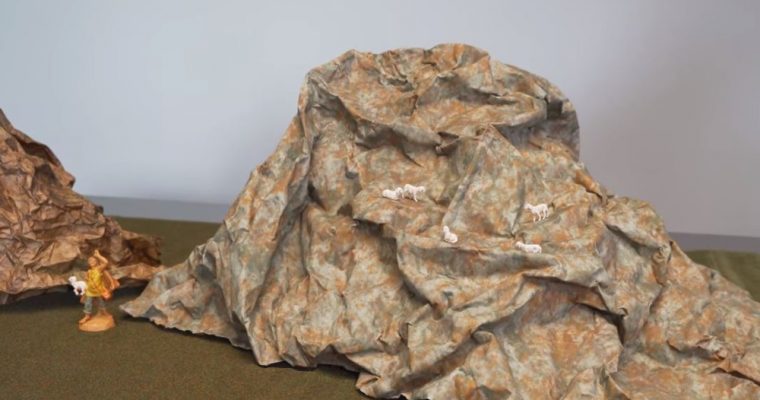
Apart from the statuettes, which can be found in our online store, to set up your Easter scene you will have to think about how to create settings and sets. Indeed, you can easily reuse the rural and urban scenery that you already use for the Christmas crib. And as for the Christmas crib, we have always provided good advice for DIY solutions, also, in this case, we suggest you use recycled materials and a bit of inventiveness, to make your set-up experience even more interesting and uplifting. Cardboard, plywood, a little hot glue, and your imagination will allow you to recreate the ideal setting to give life to your very special Easter scene.

How to build a DIY nativity scene

Read more:

How to build a DIY nativity scene: a mini guide
We talk about Christmas again. Lights, decorated trees, all the symbols we love so much, which comfort our hearts with the hope…

The Florets of St. Francis explained briefly

The Florets of St. Francis explained briefly

Lent, a time of penance and little sacrifices. Today we are talking about the Florets of San Francesco, a collection of episodes from the life of the Poverello of Assisi and a fairy tale reconstruction of his preaching. We talked about the importance of little…

How is Easter calculated?

How is Easter calculated?

Contents1 How is Jewish passover calculated?2 Christian Easter3 High or low Easter: what is meant? Each year changes date but remains the most important holiday: in this article, you will find out how Easter is calculated in the Jewish and Christian world. The most important…

Lenten Fioretti: 5 ideas on small sacrifices or things to do

Lenten Fioretti: 5 ideas on small sacrifices or things to do

Lent, a time of penance, prayer and devotion. What are the most suitable Lenten florets to prepare for Easter in the best way?

Of all the times of the liturgical year, Lent, the period of about forty days that goes from Ash Wednesday to Holy Easter, is perhaps the one that requires the greatest commitment of Christians as regards work on themselves. It is in those days that one prepares for Easter, purifying the body with fasting and abstinence from the flesh on particular days, and elevating the spirit with prayer. In this context of penance and renunciation, Lenten sacrifices are a practice within everyone’s reach. It is a question of sacrificing something very important to us for the period of Lent. It may be the practice of a particularly dear interest, the renouncing of a food one is greedy for, even the use of television or perhaps of Social Networks. The spirit should be to sacrifice something you hold dear, to face a loss that is painful for us in the name of God.

wood cross on ashes

Read more:

Ash Wednesday: what it is about
Carnival is about to end. After Shrove Tuesday there is Ash Wednesday, which marks the beginning of Lent. But where does this particular festival originate?

To understand the meaning of a foil it is enough to analyse its very name for a moment. Fioretto derives from a flower, and it is precisely with the same lightness with which a flower is given that we should face this sacrifice. Drawing strength from the depths of ourselves, accepting the commitment we have decided to undertake with courage and spontaneity. Above all, the foil is not a form of bartering with God or the Madonna: no requests, no claims, no double ends.

As for how to convey one’s Lenten foil, it is through prayer that we can ensure that it reaches God the Father, or the Virgin, or the Saint to whom we have chosen to dedicate it. The foil of prayer must have the sentiment, the attitude of the spirit, the availability to dialogue with our most intimate and true self, which becomes a dialogue with God. Just as prayer, even if it may involve a request, is, first of all, a conversation with God, so the foil is not a magic formula, nor a sacrifice made for a gain of some kind.

Therefore, to pronounce our Lenten sacrifices, we must always remember to associate a good deed, a small renunciation of prayer, so that they can reach Jesus more easily.

How to make a foil to the Madonna

We have observed how the term Fioretto (foil) derives from a flower. This juxtaposition appears even more evident if we examine the Florets to the Madonna. In May, the Marian month par excellence, it was customary to offer flowers to the Virgin as a gift and a sign of goodwill. Over time these flowers have taken on a broader and deeper meaning, transforming from real flowers to spiritual flowers, to be offered to the Virgin, and more.

What do we have to give up?

There is no universal answer. For some, it may be a sacrifice to give up a particularly pleasant food, such as sweets, meat, or wine. It is not about a real fast, only to give up for some time what satisfies our palate the most. Or we can do without watching a TV show that particularly excites us, or playing an addicting video game. Given the preponderance of social networks in our daily lives, avoiding compulsively controlling them throughout the day could be a seemingly small sacrifice, but in reality not so easy to bear.
An appreciable commitment could be to moderate our bad temper, to be more patient, tolerant, towards our loved ones, co-workers, or whoever we meet. Cultivating kindness and courtesy should be something natural and constant, but these days it takes more willpower. Still, we can decide to sacrifice some of our time and energy to help others. Greater commitment in the family and at home, some more help to parents and elderly people, perhaps even to non-self-sufficient neighbours, small forms of voluntary work. Even this kind of commitment should be an ever-present component in the life of a good Christian, but perhaps starting to exercise them as a Lenten foil could inspire us for the future.

Religious foil not maintained

Anyone can make a foil. The hard part is keeping it. It takes a spirit of sacrifice, willpower, perseverance, and the commitment is even greater precisely because everything we are doing we are doing without expecting anything in return.
Of course, if you don’t keep a foil, nothing happens. Nobody punishes us, nobody scolds us. But on a personal level, we will have to consider it a great defeat, because if we are not able to carry out an altogether acceptable sacrifice, in its commitment, what kind of human beings and Christians could we be in more burdensome and demanding circumstances? Also for this reason, on the occasion of Lent, it is better to focus on a foil within our reach, something that represents for us an authentic renunciation, a real sacrifice, but also something that we know we can carry on. As Pope Francis observed, if Jesus remained for forty days in the desert to fight against the temptations of the Devil, we can strive to bear a little renunciation with a light heart.