Author: Redazione

Mary Magdalene wife of Jesus: let’s clarify

Mary Magdalene wife of Jesus: let’s clarify

Contents1 Did Jesus ever get married?2 Marriage and Celibacy of Jesus3 Mary Magdalene married to Jesus What is the truth about Mary Magdalene? Wife of Jesus or simple disciple? Let’s find out in this article. Did Jesus ever get married? In the Jewish society in…

Who was Mary Magdalene” History and life of the “Apostle of the Apostles”

Who was Mary Magdalene” History and life of the “Apostle of the Apostles”

Contents1 History of Mary Magdalene2 Was Mary Magdalene a prostitute?3 Gospel of Mary Magdalene4 Maddalena: meaning of the name and name day Among the disciples, there were also several women. We know better Mary Magdalene, the apostle who left everything to follow Jesus. Santa Maria…

Who were the 12 apostles and discover the difference between apostles and disciples

Who were the 12 apostles and discover the difference between apostles and disciples

Who were the 12 apostles, companions of Jesus in the short span of his mission and who received from him the task of bringing the Word into the world?

When we speak of the life of Jesus we tend very often to imagine him alone, intent on preaching, bringing consolation and hope among the most unfortunate, to perform miracles. Even thinking back to His Passion and death on the cross, few figures are mentioned in the Gospels at his side.
The truth is that from the beginning of his mission, Christ was almost never alone, because from the beginning he began to gather around himself disciples who followed him everywhere and shared with him every aspect of life. The tradition speaks of 70 disciples, among whom Jesus then chose 12 men particularly close, with whom he shared the Last Supper and to whom he entrusted the task of spreading His message, the Word of Salvation of which He was ambassador and herald in the world.

the last supper

Read more:

The Last Supper by Leonardo da Vinci
The Last Supper by Leonardo da Vinci, in Santa Maria delle Grazie, is one of the most famous works in the world.

To one of them in particular, Peter, asked to found the Church. In the Gospels of Mark and Luke there is a clear difference between apostles and disciples, while in Matthew the 12 end up conforming to all those who followed Jesus. All the apostles, except Judas Iscariot, are numbered among the saints and blessed. But who were the 12 apostles?

The names of the 12 apostles

According to tradition Jesus chose 12 apostles as 12 were the tribes of Israel. We have already stressed in previous articles how important the numbers were in Jewish culture and religion. The Sacred Scriptures are imbued with a strong numerical symbolism, according to which numbers are rarely used only to indicate a quantity, but rather as symbols of human or God-related realities. In particular, the number 12 and its multiples recur in many passages of the Bible. 12 They were the tribes of Israel, and each of them was descended from one of the 12 sons of Jacob; 24 The Ancients were appearing in the Revelation of John, seated on as many seats; 12 stars make up the crown of the woman clothed in the sun, who embodies the Church, always in the Apocalypse.

The-differences-between-Judaism-and-Christianity

Read more:

The differences between Judaism and Christianity
What are the differences between Judaism and Christianity? Is the God of the Jews the same as the Christians?

The importance of the number 12 regarding the apostles is confirmed by the fact that, after the betrayal of Judas, since they remained in 11, it was necessary to immediately find a substitute, in order to return to the completeness desired by Jesus: so Matthias was chosen.

So who were the 12 apostles? Here are their names: Peter and his brother Andrew, James and Judas Thaddeus, also their brothers and cousins of Jesus, James and his brother John, Matthew, Philip, Thomas, Judas Iscariot, Bartholomew, Simon said the Zealot or the Canaanite. They were joined by Matthias, who replaced the traitor Judas Iscariot.

Paul of Tarsus never knew Jesus, but is called the “apostle of the Gentiles”, because he brought the Word between the Greeks and the Romans, obtaining countless conversions.

Saint-Paul-of-Tarso

Read more:

Saint Paul of Tarso: story of a missionary
Saint Paul of Tarso can be considered the first great missionary of the Christian Church.

The jobs of the twelve apostles

But what did the apostles do before following Jesus’ call?

Peter and his brother Andrew were fishermen, as were James, John and Philip. From fishers they became fishers of men.

Matthew worked instead as a tax collector, while Judas Iscariot was the treasurer of the apostles, the depository of alms that were offered to them.

Judas Thaddeus, the apostle with a big heart, was presumably a peasant and was married. Indeed, perhaps he was the spouse of the famous Cana Wedding.12-apostoles

What are the Acts of the Apostles

It is a part of the New Testament, the fifth book immediately after the Gospels, and tells what happened to the disciples and the Church of Jerusalem after the ascension of Jesus, dwelling on the first missions of the apostles, on the life of the Church of Antioch, on the Council of Jerusalem and on the journeys of Saint Paul to Rome. For this reason the work was attributed to Luke, a doctor and companion of Paul himself, who wrote it between 70 and 90 AD.

It is divided into 28 chapters and is a valuable document because it allows to realize the speed with which the Gospel message spread in the Mediterranean basin immediately after the death of Jesus.

The letters of the apostles

Often in ancient times letters were used as a vehicle of knowledge and teaching. The Letters of the Apostles also had great value in spreading the Gospel message and in the desire to unite in spirit all the new Christian communities in the countries facing the Mediterranean.

Together with the Acts of the Apostles and the canonical Gospels these Letters are part of the canon of the New Testament and collect letters written between 50 and 100 AD, 13 attributed to Saint Paul and 7 letters “Catholic”, or “canonical” 1 of James, 2 of Peter, 3 of John, 1 of Judah. The epistle to the Hebrews has been attributed to Paul for centuries, but the attribution is uncertain. Certainly, it was Paul, the apostle who did not know Jesus, one of the most fervent and tireless among the apostles, and his letters are the testimony of this.

Saint-Peter-and-Paul

Read more:

Saint Peter and Paul, why are they celebrated together?
On June 29, Saint Peter and Paul are celebrated. Two apostles, two very different men, both fundamental to the history of the Church.

Difference between Apostles and Disciples

We have already mentioned the difference between the 70 disciples and the 12 apostles.

In fact, once we have established who the 12 canonical apostles were, we can consider as an apostle any follower of Jesus who, after following him in life and witnessing His death and resurrection, chooses to bring His Word into the world.

But the apostles themselves are only those who, after Jesus’ ascension into heaven, were invested by Him with the mission of bringing His message of salvation into the world. This is why Jesus sent down on these chosen the Holy Spirit on the day of Pentecost and ordered the head among them, Peter, to found his Church and take it everywhere.

What did the apostles do after the death of Jesus

After the death of the Messiah, his apostles separated and began to preach the Good News and bring it into the world. Unfortunately, they found themselves having to deal with those who did not accept the new religion brought by Jesus and promoted by them. All the apostles suffered martyrdom and were tortured and slaughtered in the name of their faith, and for this very reason, the example they left is still so precious and important today. The very fact that the apostles accepted their destiny is a demonstration that they really witnessed the miracle of Jesus’ resurrection and that is why they knew that every word of His was true, while they took care to bring it into the world.

The apocryphal gospels: what differentiates them from the canonical ones

The apocryphal gospels: what differentiates them from the canonical ones

Contents1 The Apocrypha2 Differences between canonical gospels and apocrypha3 Apocryphal and Gnostic Gospels The apocryphal gospels are not part of the New Testament: what differentiates them from the Gospels of Mark, Matthew, Luke and John, considered canonical? We all know, thanks to the accounts of…

The true story of Judas Iscariot: known for betraying the Messiah

The true story of Judas Iscariot: known for betraying the Messiah

Contents1 The Origins of Judas Iscariot2 Judas’ role among the Apostles3 Judas’ betrayal in exchange for 30 dinars4 “One of you will betray me”: Last Supper5 The kiss of Judas Judas’ name is linked to the sad story of the apostle who betrayed Jesus: read…

The sanctuary of Our Lady of the Crown: a charming pilgrimage destination

The sanctuary of Our Lady of the Crown: a charming pilgrimage destination

The Sanctuary of Our Lady of the Crown is one of the most famous pilgrimage destinations in Italy. Let’s find out why

There are places that seem to be made to arouse devotion. These are contexts in which it is possible to clearly perceive the sign of the presence of God, direct or indirect because when a place is frequented in time by many devotees, when for centuries the prayers and supplications of the faithful resound in it, it is as if it were permeated with Faith. The Sanctuary of Our Lady of the Crown is one of these places, and in it the evocative suggestion given by the long history of worship and veneration is combined with the enchantment of the scenery in which one finds oneself. In fact, the Sanctuary is located 774 meters above sea level in a hollow excavated in Monte Baldo, on the border between Caprino Veronese and Ferrara di Monte Baldo, in the province of Verona. It seems to be placed there by the hand of God, enclosed in the thousand-year-old rock of the mountain, which protects it and, at the same time, extends it towards heaven. Below it opens a dizzying cliff, and the view embraces the entire Adige valley.

The Sanctuary of Our Lady of the Crown has been a destination for pilgrimages of faith for centuries. At one time it could only be reached on foot through a path through the woods. The difference in altitude of 600 meters and the 1,500 steps did not discourage pilgrims, who faced the evocative journey in prayer, according to a tradition that over the centuries has become a real ritual.

Today a paved road makes the Sanctuary more easily accessible by all, offering also an inimitable panorama to those who approach it by car. The particular context makes the Sanctuary of Our Lady of the Crown not only a place of prayer but also of meditation and inner recollection immersed in nature.

5 places of pilgrimage

Read more:

5 places of pilgrimage to go to at least once in a lifetime
God’s action on this Earth leaves a strong mark that attracts us: here are five pilgrimages of faith to be made at least once in a lifetime.

Holy places of pilgrimage

There are countless places of pilgrimage in the world. This is because the pilgrimage of Faith has always been of great importance. The pilgrimage is a journey travelled on a dual track: on the one hand a physical journey, which leads to visiting places strongly permeated by the presence of God and by the faith of those who visited them before us, through the centuries. On the other hand, it is an interior journey, along the path of the spirit, an experience of growth and awareness that makes our life as Christians and men more complete. Today it is easier to travel to go on pilgrimage to the places of the Faith, but let us think of the perilous journey that many devotees had to face in the past, to go to the Holy Land or other places of worship many kilometres away from their home. For this reason, too, devotional forms such as the Way of the Cross have developed over time, to give the possibility to those who could not move to retrace particular events of the life of Jesus or the Saints, without physically going to the places where they took place.

Another shrine destination of intense pilgrimages to which we dedicated a previous article is dedicated to San Michele Arcangelo, Monte Sant’Angelo, in the province of Foggia, erected in the place where according to tradition, the Holy Warrior among the Archangels appeared 5 times.

Madonna of the Crown history

The Sanctuary of the Madonna della Corona was founded as a hermitage in the fifteenth century. The first church was built in 1530 to celebrate the appearance of the statue of Our Lady of Sorrows. It is a small painted stone effigy that depicts the Madonna holding the dead Christ in her lap. According to the legend during the siege of Rhodes by the Turks in 1522 this effigy, which was located in the city drawn by the enemy, miraculously appeared right here.

In 1625 the church rose to the dignity of Sanctuary, thanks to the interest of the Knights of Malta who financed the construction of a new building. Over time the Sanctuary has undergone various changes, has been enlarged, and enriched with the Gothic facade and the beautiful marble statues, until you reach the current appearance. Now the church is 30 m long and 20 m wide, topped by an 18 m high dome. and a towering bell tower.

A staircase made in imitation of the Holy Staircase of the Basilica of San Giovanni in Laterano in Rome evokes the journey taken by Jesus during the terrible moments of the Passion. To climb it, pilgrims must follow a tradition that involves kneeling on each of the twenty-eight steps and holding a moment of recollection and prayer for each of the stages of the Passion.

Lady of Pompeii

Read more:

How to recite the supplication to Our Lady of Pompeii
The Virgin of the Rosary is celebrated on 8 May. Today, we shall dwell upon the foundation of the Shrine of Pompeii.

Sanctuary Madonna della Corona how to get there

The Sanctuary is 1.5 km from the town of Spiazzi. To reach it you can exit at the Affi tollbooth, along the Brenner motorway. As we said, today there is a paved road that allows you to reach it with comfort, but many pilgrims prefer to follow in the footsteps of their predecessors and go on foot, along the ancient paths and stairs.

You can choose to start from Spiazzi and follow the path of the Way of the Cross marked by wooden crosses and bronze statues made by Raffaele Bonente, until the reconstruction of the Sepulchre of Jesus, or Brentino Belluno, along the so-called Path of Hope, that allows you to admire a truly amazing landscape.

For those who choose to leave from Spiazzi, there is a convenient shuttle that stops along the way.

Pilgrimage Our Lady of the Crown

In addition to the already mentioned Pietà della Madonna Addolorata, the Sanctuary of the Madonna della Corona boasts a rich collection of votive offerings offered by men and women to whom Our Lady has granted grace over the centuries.

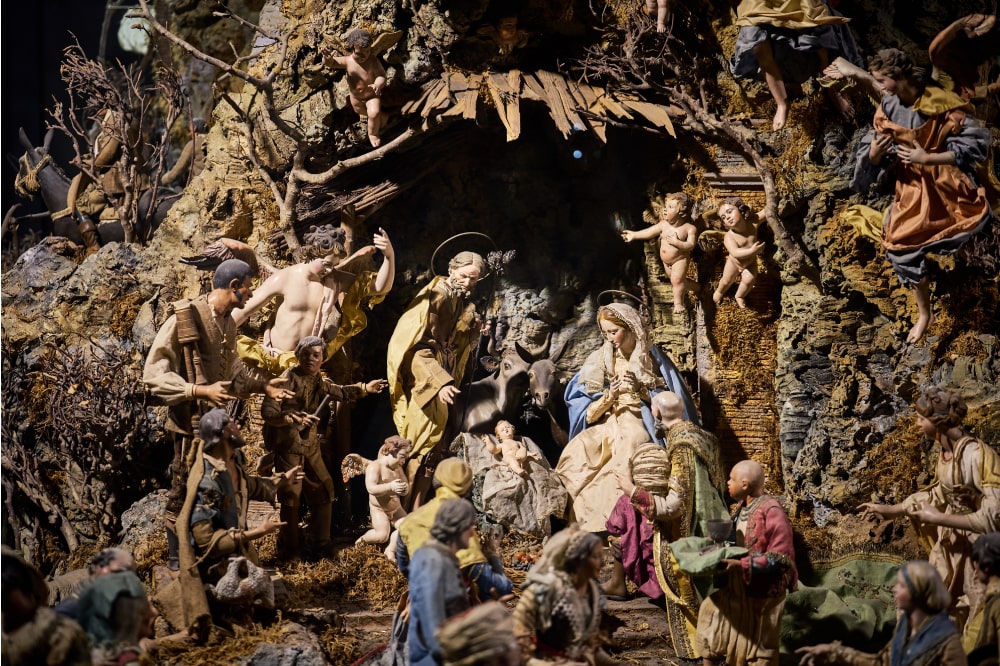
There is also a remarkable wooden crib and the Tomb of the hermits, with the bodies of the ancient inhabitants of the hermitage exposed in glass cases.

Saint Clare, who embraced poverty in the footsteps of Saint Francis

Saint Clare, who embraced poverty in the footsteps of Saint Francis

Contents1 Saint Clare and her encounter with Saint Francis2 A bond that united Saint Francis and Saint Clare3 The order of the Poor Clares4 Basilica of Santa Chiara Saint Clare followed the example of Saint Francis, renouncing all her possessions and sacrificing her young life…

Marian Titles: what are they and how many are all the names dedicated to Mary

Marian Titles: what are they and how many are all the names dedicated to Mary

Marian Titles: all the appellations with which Mary, mother of Jesus, is venerated. How many are Marian titles? And where do they come from? Since the origins of the veneration dedicated to her, the Virgin Mary has been attributed to many different names. These are…

Saint Peter in the Vatican: Church symbol of the whole Christian world

Saint Peter in the Vatican: Church symbol of the whole Christian world

Saint Peter in the Vatican is a basilica full of meanings, mysteries and sacred works of art famous all over the world. Here are some curiosities and points of interest of the largest basilica in the world.

St Peter’s Basilica in the Vatican is a symbol of the Catholic Church all over the world. It has a central role in the life of the Church and is rich in history, meanings and works of art that make it a unique place on the face of the Earth. It is part of the UNESCO World Heritage Site, is the largest church in the world (the total area is 23,000 square meters) and in every corner there is something special to admire.

What we see today is actually the third structure of the church, whose story begins with the foundation on the place where the apostle Saint Peter was buried. Initially, the church was built in a small necropolis next to the place of his death. Later, after the edict of Constantine, the Constantinian basilica was built: work began on 18 April 1506 under Pope Julius II and ended in 1626, with Pope Urban VIII. Among the 14 architects who participated in the work on the basilica include Bramante, Raffaello Sanzio and especially Michelangelo, for the dome, and Bernini, the maker of the famous canopy.the dome of bernini

The tomb of Saint Peter

Under the altar of the basilica is the tomb of Saint Peter. To ascertain the location of the burial place of the saint and recognize the relics, extensive excavations and analyses were made. In 1968, Pope Paul VI officially announced that the saint’s bones had been identified.

Saint Peter is also remembered with a bronze statue, located inside the basilica, on the left side, near Bernini’s canopy. Pilgrims and faithful have always had the custom of passing in front of the statue kissing or touching the foot of the Saint, to invoke his protection. This has consumed bronze over the years and no longer retains the details of the shape of the foot.

tomb of saint peter

Read more:

The tomb of Saint Peter and his incredible discovery
The tomb of St. Peter in Rome has always been considered one of the sacred places par excellence of Christianity.

Tombs of the popes in the church of Saint Peter

In addition to the tomb of Saint Peter, inside the basilica and in the caves beneath it there are numerous tombs of popes. Some of them are real works of art. The tomb of Alexander VII, one of Bernini’s last works, presents four statues representing justice, truth, prudence and chastity. The artistic sensitivity in the decorations of the tombs often touches that of the Baroque horror; the tomb of Alexander VII, for example, shows a skeleton writing destiny on parchment and counting time with an hourglass. The meaning behind this type of representation is the fragility of life.

The tombs of the popes and all there is to know

Read more:

The tombs of the popes and all there is to know
Where are the tombs of the popes? Let’s find out where the popes have been buried for centuries and how their burial takes place

The dome of Saint Peter

The dome of St Peter’s Basilica in the Vatican is one of the most recognizable symbols associated with the city of Rome. It is one of the largest masonry works and combines Renaissance and Baroque styles. It follows in large part the drawing of Michelangelo Buonarroti, who worked there until the year of his death. The dome was completed by Giacomo Della Porta and Domenico Fontana several years after Michelangelo’s death.

The four central pillars of the basilica, completed under the direction of Bernini, support the dome delimiting its 42 meters in diameter. Each pillar includes a small loggia and a niche in which there is a statue of a saint: Saint Veronica, Saint Andrew, Saint Helena and Saint Longinus. It is said that in the column of Saint Veronica is kept the veil that the saint used to dry the face of Jesus, on which it remained imprinted. In the pillar of Saint Andrew was kept the skull of the apostle, now held in the basilica of Saint Andrew Apostle in Patras. In the column of Saint Longinus is said to be the spear with which the centurion Caius Crassus Longinus pierced Jesus on the cross. Finally, the pillar of Saint Helena houses a fragment of the cross of Christ, found by the saint in Jerusalem.saint pedro basilique

The Pietà by Michelangelo

Inside Saint Peter, there is another great work by Michelangelo: the Pietà. It was sculpted by Michelangelo on the commission of a French cardinal in 1497. when the sculptor was 25 years old. Today it is located in the first niche to the right of the main nave of the basilica. The Pietà and the frescoes of the Sistine Chapel are the works of Michelangelo in Vatican City.

Pieta by Michelangelo Buonarroti

Read more:

La Pietà by Michelangelo Buonarroti: history and description of one of the most beautiful works in the world
Michelangelo Buonarroti’s Pietà is one of the most famous works of art…

The Pietà is admired by pilgrims and tourists from all over the world: it is considered one of the most beautiful works of art and one of the most representative of the Renaissance. Mary supports the body of the dead Jesus and the artist’s ability is seen in the naturalness and expressiveness of figures and clothes. The Virgin is portrayed as young and beautiful as a symbol of her immaculate conception, while Christ has an extra tooth, associated with sin: with his death on the cross, Christ took upon himself the sin of all humanity. Read the article dedicated to the Pietà to find out all about this work.

The canopy of Saint Peter

The canopy of Saint Peter, designed and built by Bernini with the help of Borromini, is one of the most spectacular monuments of the basilica. Bernini’s mastery united two characteristic elements of the liturgy: the ciborium and the canopy. We talked about it in depth in an article on our blog. It is located at the most important point of the church: it overlooks the high altar and the tomb of Saint Peter, and above it, the dome opens. The spiral bronze columns rise on marble bases.

sain peter's baldachin

Read more:

History of Saint Peter’s Baldachin
Saint Peter’s Baldachin is one of the most spectacular monuments we can admire inside Saint Peter’s Basilica. What is it? Who made it?

Stuffed wafers: the recipe for a surprising dessert

Stuffed wafers: the recipe for a surprising dessert

Contents1 How to make the wafers2 The ingredients of a wafer3 Stuffed wafers Stuffed wafers, a dessert with an ancient and irresistible flavour that evokes an age-old tradition. Let’s discover the most delicious recipes to make at home. Hearing about stuffed wafers can at first…

Sacred art on fabric, the most beautiful tapestries to express your faith

Sacred art on fabric, the most beautiful tapestries to express your faith

Contents1 How a tapestry is made2 The Jacquard frame3 Our religious tapestries Sacred tapestries have always been the protagonists of religious art. Preserved in churches all over the world, they are considered precious treasures to be exhibited only on great occasions. But some display them…

The liturgical year: let us clarify

The liturgical year: let us clarify

The liturgical times of the Catholic Church are the seasons in which the liturgical year is divided. Let’s explore these together!

We often hear about the liturgical year and the liturgical times of the Catholic Church. But are we sure we really know what they are? In particular, what and how many are the liturgical times?  How are they distinguished? At Holyart we wanted to summarise the division of the liturgical year into liturgical times in this article to help those who still have doubts to understand concisely how the liturgical times of the Catholic Church are organised.

Why do we think it is important to have clear ideas about this? Because every liturgical season provides not only different theological contents in the context of the ceremonies and the liturgy, in the colours to be used in the celebrations, in the passages of the Sacred Scriptures that are read during the Mass. Every liturgical season requires a different attitude of the soul on the part of the believer, a predisposition of faith and heart that changes according to the festivals planned for that period, the moment of the life of Jesus or the Saints who are celebrated there. There is a time for waiting and a time for fulfilment, and this affirmation is more true than ever in the cycles and recycles of the liturgical year, which has been repeated for centuries involving all Christians.

Meanwhile, we can say that the liturgical year celebrates and renews the life of Jesus distributed over an entire year. The heart of the liturgical year is the Easter Triduum, as it recalls the passion, death and resurrection of Jesus.
The liturgical year begins with Advent and ends with the Solemnity of Christ the King, celebrated on the thirty-fourth Sunday of Ordinary Time, at the end of
November. The liturgical year is measured in weeks and is composed of the Temporal, which includes the Christmas cycle of Advent and Christmas, the Easter cycle with Lent and Easter, and the 34 Sundays of Ordinary Time, and the Santorale which includes, instead, the days dedicated to the memory of the Saints.

The liturgical year represents for every Christian a journey of salvation, during which every faithful is invited to make their own the earthly and spiritual experience of Jesus, to transform their lives and make them more worthy and holy according to His model.liturgical times

Liturgical times of the Catholic Church

First of all, let us define the liturgical times of the Catholic Church. At the same time, we will try to summarise what celebrations and biblical readings they foresee. For clarity, we will talk about the Roman Rite, handed down by the Church of Rome and the most widespread of Christianity. In the Ambrosian Rite, all the liturgical times are anticipated and the celebrations end the last week after Pentecost.

This is how the liturgical year is divided:

Advent

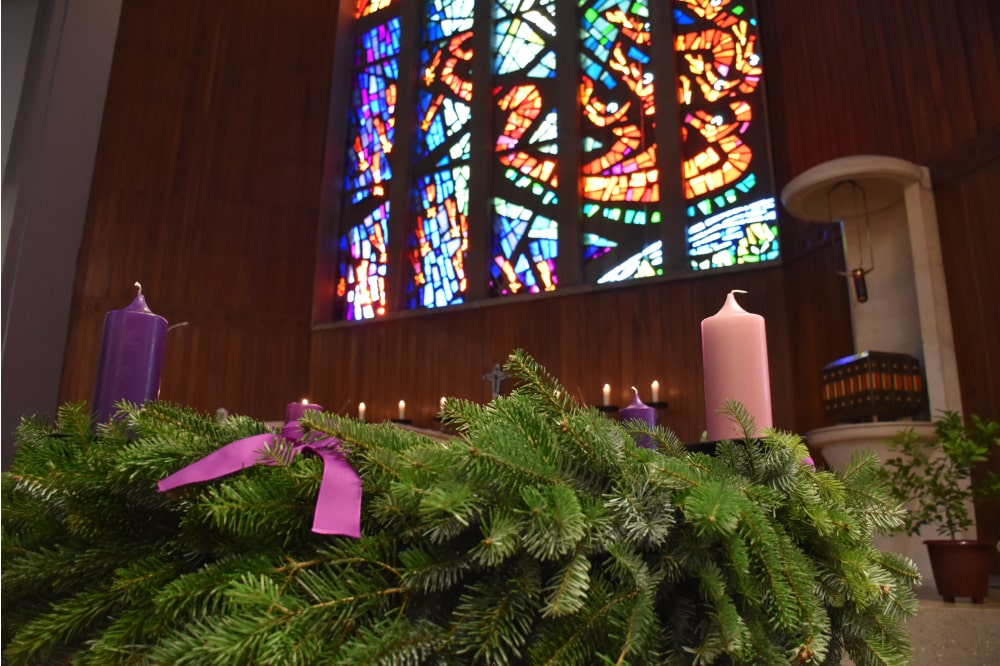
Advent is the time of waiting: on the one hand we celebrate the coming of Jesus, because of Christmas; on the other, more broadly, we celebrate the hope of His return with the end of time (the so-called Parousia, the coming of the glorified Lord Jesus, with power and glory).

This liturgical time lasts four weeks. The Advent begins four weeks before Christmas, approximately between 27 November and 3 December. There are six weeks in the Ambrosian Rite.
Advent begins with the vespers of the first Sunday and ends with the vespers of Christmas, on 24 December, and with the beginning of the liturgical season of Christmas.
Advent is a time of joy and hope, for the expectation of the Saviour.

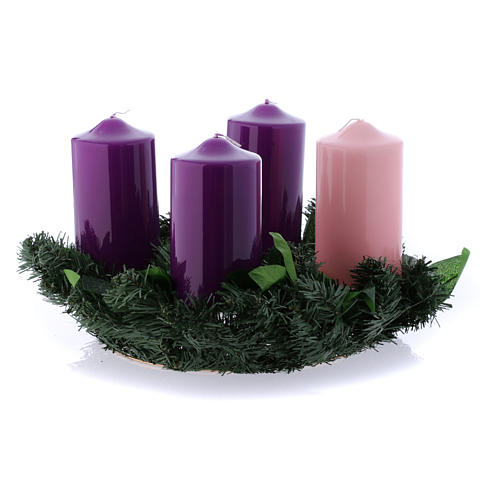
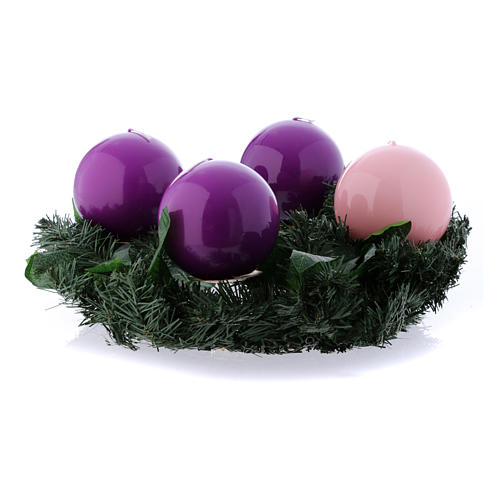
In the Roman Rite, purple is used as a liturgical colour, in the Ambrosian one morello, a nuance of purple.

Advent

Read more:

Advent time
Advent has always been one of the most important moments of the year for Catholics all over the world…

Christmas

The liturgical season of Christmas begins on the evening of 24 December, with Vespers, and ends on Sunday after the Epiphany. It, therefore, lasts from fourteen to twenty days.
Like and more than Advent, Christmas is a time of great joy, because it celebrates the first coming of Jesus, who became man for the love of all of us.

Ordinary Time 1

The time following the Epiphany is part of the so-called Ordinary Time, that is, all those periods of the liturgical year during which no feasts of particular importance are celebrated. In the Roman Rite, it lasts thirty-three weeks, divided into two distinct periods of Ordinary Time:

  • from the Monday after the Sunday of the Baptism of Jesus, or the Sunday after the Epiphany, at the beginning of Lent (Ash Wednesday);
  • after Pentecost and until the next Advent.

The liturgical colour of Ordinary Time is green, for both the Roman and Ambrosian Rites. During Ordinary Time the Church and the faithful focus on reading and understanding the Gospels, according to the cycle of readings over three years established by the Lectionary. The reading cycle is identified by readings A – B – C :

  • Year A: Most of the Gospel texts from the Gospel of MATTHEW.
  • Year B: most of the Gospel texts from the Gospel of MARK.
  • Year C: most of the Gospel texts are from the Gospel of LUKE.

The Gospel according to JOHN is always read at Easter and is used for other liturgical times, such as Advent, Christmas and Lent.

Lent

Lent lasts forty days and precedes the celebration of Easter.
It begins on Ash Wednesday and ends on Holy Thursday.

The Ambrosian Rite, on the other hand, starts on the Sunday following Mardi Gras and ends on Holy Thursday.
There are therefore five Sundays of Lent: the sixth begins Holy Week and takes the name of Palm Sunday and the Passion of the Lord.
This liturgical time recalls forty days spent by Jesus in the desert.

It is therefore a time of penance, prayer and preparation for Easter, during which sin is fought to be worthy of Jesus and his sacrifice.
Holy Week is the week before Easter and is the most important week of the year. In it, we follow Jesus from his entry into Jerusalem (Palm Sunday) to his arrest, to the Passion, to death and burial.
Holy Thursday commemorates the Last Supper and opens the solemn Easter Triduum, the central time of the liturgical year because in those three days Jesus instituted the Eucharist, the ministerial priesthood and he pronounced the commandment of fraternal love.

In addition, Good Friday commemorates His death on the Cross.
On Holy Saturday every liturgical celebration is suspended, to remember the descent of Jesus to Hell, while we prepare for the Easter Vigil (the night between Saturday and Sunday).
The liturgical colour of Lent is purple, morello like the Ambrosian Rite.
The Ambrosian Rite begins Lent with the first vespers of Sunday after the Wednesday of the Ashes in Rome and ends on the evening of Holy Thursday, for a total of forty days.

To recap:

  • Palm Sunday: remembers the solemn entrance of Jesus in Jerusalem
  • Triduo Pasquale: the following are part of it:
    • Holy Thursday (Last Supper). After the Mass, the Eucharist is enclosed in the tabernacle adorned with flowers and lights, to be adored by the faithful who remember the night Jesus spent in the olive grove. Remember the Last Supper. The Bishops and all priests invoke the Holy Spirit to bless the oils that will serve the sacraments and renew the promises of their ordination;
    • Good Friday (Passion of the Lord). One reads Gospel passages of the Passion of Jesus, then prays together for all the needs of the world invoking the mercy of God. This is followed by the procession of adoration of the Cross that saved the world and communion with the bread consecrated at Holy Thursday Mass;
    • Holy Saturday-Easter Vigil: prelude to the Easter Vigil. It begins with the Liturgy of Light, which takes place outside the church where the paschal candle is lit and the entrance of the faithful into the dark church. It follows the Liturgy of the Word with readings on the Jewish Passover (escape of the Jews from Egypt). The bells that have been silent since Holy Thursday are rung. Then comes the Baptismal Liturgy, with which the water is blessed for Baptism and the Eucharistic Liturgy that evokes the death and resurrection of Jesus.

Easter Season

The Easter Vigil marks the end of Lent and the beginning of Easter itself when the triumph of Jesus Christ over death is celebrated.
Easter is fifty days and lasts until Pentecost.
Throughout this time the joy of the Resurrection is celebrated, with a succession of ceremonies and liturgical feasts during all the Sundays of the Easter Season.
Forty days after Easter, the Ascension of Jesus is celebrated, which with Easter and Pentecost is one of the most important feasts of the Ecclesiastical Calendar. It is the moment when Jesus, after dying and being buried, ascended to Heaven.
Fifty days after Easter, Pentecost is celebrated, the descent of the Holy Spirit on the Apostles that began their evangelical mission and the birth of the Church.
The liturgical colour is white and red for Pentecost.

Ordinary Time 2

As already specified, after Pentecost, the second period of Ordinary Time begins. These are periods of listening to and contemplating the Word of the Lord. The themes change as we approach Advent.
The liturgical colour is still green.

The Ambrosian Rite divides Ordinary Time after Pentecost into three distinct moments:

Colours of Catholic liturgical vestments

Speaking of the various liturgical times, we have already listed the colours used for the vestments on the occasion of the various feasts. Each of these colours has a precise meaning,  and they were codified by the will of Paul VI in the Roman Rite in 1969. The most important are four:

  • white (Easter)
  • green (Ordinary Time)
  • red (Palm Sunday, Good Friday, Pentecost)
  • purple (Advent, Lent, Masses for the dead)

    liturgical colours

    Read more:

    The colours of the Catholic liturgy and their meaning
    The liturgical vestments of Catholic priests during religious celebrations and the many sacred vestments…

But there are also other colours used in liturgical vestments only on some special occasions or as an alternative to canonical colours:

  • rose (3rd Sunday of Advent and the 4th Sunday of Lent);
  • azure (celebrations in honour of the Blessed Virgin Mary);
  • gold (Solemnity of particular importance);
  • black (Masses for the dead)

The liturgical year explained to children

Teaching children and young people how the liturgical year is organised can be a valuable way to help them become familiar with the major liturgical festivals, periods and colours. Precisely the colours could help especially the little ones to understand what the various liturgical times are.

Purple is the colour used to celebrate the expectation for the birth of Jesus (Advent) and the preparation for Easter (Lent). In both periods we must intensify prayer and be better.

White is the colour of Christmas when Jesus came into the world as a Child and became man for our salvation. It is also the colour of Easter when Jesus died and then rose for all of us.

Red is the colour of the Holy Spirit, used to celebrate Pentecost, but it is also the colour of the blood of the Passion, and that is why priests use it for the feasts of holy martyrs, Palm Sunday and Good Friday.

holy martyrs

Read more:

Holy Martyrs: sacrificing one’s life in the name of God
The Holy Martyrs are men and women, often very young, who sacrificed their lives for the love of God…

Finally, Green indicates Ordinary Time, during which it is necessary to meditate, pray and live the teachings of Jesus. It is divided into two parts: from the end of the Christmas holidays to the beginning of Lent; from the end of Easter to the end of the liturgical year.

How to clean old icons and store them in the best way

How to clean old icons and store them in the best way

Contents1 How to clean old icons2 Who to contact for the care of ancient icons3 How to store old icons Sacred icons and artistic creations are imbued with an ancient sacredness that transcends the centuries. Let’s find out how to clean the old icons and…

From the chalice cover to the corporal, all the tissues of the liturgy

From the chalice cover to the corporal, all the tissues of the liturgy

Contents1 The fabrics of mass services2 Decorations and type of embroidery for mass services3 The pall Mass services are always present in religious celebrations. Let’s get to know them better and discover how beautiful they can be. Sometimes we take for granted certain objects that…

How to clean silver jewelry

How to clean silver jewelry

Since ancient times, silver jewels have exercised a deep fascination. Let’s find out how to clean the silver jewelry to keep them bright and beautiful.

Why it is important to know how to clean silver jewelry? The answer to this question lies in the very nature of this noble and precious metal. The main feature of silver is its sheen, reminiscent of the splendor of the moon. In fact, this white metal has been associated since ancient times with the very night star, and it was thought that it drew some form of magic from it. It is not by chance that at the ancient civilizations it was chosen as a material to make jewels and sacred furnishings, intended for priests and ceremonies addressed to the gods.

The very name of silver encapsulates its nature. It derives from the Greek word argòs, prominence’, brightness’.

Indeed, the moon seems enclosed in the purity of silver. Unfortunately, over time this beautiful metal tends to oxidize, due to the chemical agents present in the air that depositing on its surface form a layer of sulfide. In aesthetic terms this defect manifests itself with a progressive blackening.
This is why a thorough cleaning is necessary, which respects the preciousness of the material and brings it back to its ancient splendor.

From a chemical point of view, silver is a metal belonging to the first group of the periodic system. It is found in nature within hydrothermal deposits, where it occurs in the form of arborescent aggregates reminiscent of branched branches. Great conductor of electricity and heat, it is also characterized by an exceptional malleability and ductility, comparable only to those of gold. For its use in jewellery, indeed, in silverware, since its importance has earned it a dedicated processing sector, it is often used in alloy with copper and gold. It lends itself to the realization of ornamental objects such as vases, boxes, various ornaments, and of course in the production of bracelets, ringsearrings, necklacesrosaries.

Anyone who owns any of these jewels will surely have at least one in silver. That’s why we thought it useful to explain here how to clean silver jewelry. At Holyart we offer a wide range of silver jewellery, not only religious jewerly, like the beautiful rosaries in silver, or the rosary rings and religious bracelets, or even the precious jewels of the line Amen.

Amen collection

Read more:

Amen Collection: when faith meets fashion
It is not easy to combine faith and fashion. The two concepts could look out of place if put one next to the other…
Here are some ‘grandmother’s remedies’ that might come in handy.

How to clean silver jewelry

Giving new life to your silver jewerly in a natural way and without resorting to expensive and often harmful chemicals? You can. On the contrary, you will be surprised to discover that almost certainly what you need for this delicate operation you already have in the house, in the pantry or in the bathroom cabinet.

You don’t believe that?

Give it a try: take your toothpaste, what you usually use to brush your teeth, squeeze a little on a soft bristle toothbrush and then begin to gently rub your oxidized silver jewel. Before you know it, all the original splendor will emerge again.

If we move into the kitchen, we find other powerful allies: vinegar, baking soda and aluminum.

Fill a container with boiling water and two tablespoons of vinegar. Immerse the jewel, for example your silver rosary,that you want to polish and let it soak for at least half an hour. The antioxidant and degreasing power of the vinegar will completely clean the surface, making it return to its old shine.

Alternatively, line the container with aluminum foil, fill it with water and skim a few tablespoons of baking soda. Soak the jewel and let it act for an hour, then re-draw it and gently dry it with a soft cloth. In this case the chemical reaction that cleans the silver is caused by the salts produced by the aluminum that reacts with the bicarbonate, which act on the blackened silver.

Always with baking soda and little water you can also create a paste to be applied directly on blackened surfaces with a brush or a piece of cloth, to remove stains from particularly large furnishings. By mixing baking soda and lemon juice you will get an even more effective cream.Polishing silver jewellery with a cloth

Always starting from an aluminum container, or lined with aluminum, you can use two teaspoons of salt dissolved in warm water in which you will immerse your jewelry. For an even brighter effect you can then rub them with simple aluminum sheets, the ones used to store food.

And for those in the kitchen who like not to throw anything away, here is an unusual and very effective use of the cooking water of potatoes. When boiled potatoes release a substance that fights rust and oxidation. Dip your silver jewelry in the water you used to cook them, eventually adding a little vinegar, and any trace of blackening will disappear.

The rosary holders

And once we clean the silver jewelry? To prevent oxidation and blackening, the ideal is to store them when we do not wear them in a small box or a suitable container, where they are not too exposed to atmospheric agents. This will also prevent necklaces, chains and bracelets from tangling or scratching each other.

An excellent solution could be our rosary holders. You can find them in our online store, and there are really all kinds and styles, from simple cheap boxes to leather pouches rosary holders, from silver boxes precious and refined, to the elegant and evocative olive wood boxes coming from the Holy Land.

In addition to being very practical if inserted inside a larger jewelry box, the boxes and the rosary holder pouches are also so beautiful to make a beautiful figure on the bedside table or any piece of furniture in your home.

Abraham’s lineage until Jesus

Abraham’s lineage until Jesus

Contents1 Jesus starts from the history of the Jewish people2 Judaism and Christianity differences3 The value of numbers4 Jesus, Adam and the tree of life5 The Women in Jesus geneaology The lineage of Abraham, or the genealogy of Jesus, has a fundamental importance in the…
Our Lady of Medjugorje and the most significant places

Our Lady of Medjugorje and the most significant places

Contents1 Krizevac: The Mount of the Cross2 The Podbrdo3 The Church of St. James in Medjugorje4 The Paths of Medjugorje Our Lady of Medjugorje has rendered an otherwise anonymous village in Bosnia and Herzegovina unique and special. Let’s discover together the places of devotion that…

Doctors of the Church: who are they and what are the requirements for having this title

Doctors of the Church: who are they and what are the requirements for having this title

On 1 October we celebrate Saint Therese of Lisieux, one of the four women proclaimed Doctors of the Church. But who are the Doctors of the Church? What are the requirements to become one?

We hear from time to time talk of Doctors of the Church, in relation to great names in the history of Christianity, such as Sant’Ambrogio and Sant’Agostino da Ippona. Men (and women) who by virtue of their holiness and wisdom have been able to make the Church great and leave a testimony of an immortal theological knowledge and spiritual strength.

But who are really the Doctors of the Church?

First of all we must not confuse the Doctors of the Church with the Fathers of the Church, although many eminent figures of Christianity, such as Saint Ambrose of Milan, Saint Augustine of Ippona and Saint Jerome, just to name a few, have been awarded both denominations. By Fathers of the Church, we mean the principal Christian writers, whose writings form the basis of the doctrine of the Church itself.

As regards the title of Doctor of the Church, it can be granted only by the Pope or by a Council, or an ecclesiastical meeting under hierarchical authority. It can only be conferred posthumously and upon completion of a canonization process. A rare honour, therefore, which in just over two thousand years of the Church’s history has been attributed to only 36 men and women. Well yes, there are also four women who have become Doctors of the church, and we’ll see who they are.

At present, there are 26 other saints, 8 women and 18 men, candidates for the title of Doctor of the Church. Their elevation processes are being examined by the Episcopal Conferences and the Holy See.

The appointment as Doctors of the Church also has a function of communion between the Orthodox and the Catholic Church, as to be awarded this honour over the centuries have been both saints of the Western Church and the Eastern Church, and both Catholic and Orthodox churches recognize and they worship some of these personalities.

But what are the requirements to be elected doctors of the Church?

According to Benedict XIV, who was pope between 1740 and 1758, the necessary requirements for the proclamation of a Doctor of the Church are 3:

  • eminent doctrine;
  • the holiness of life;
  • election by the Supreme Pontiff or by the General Council.

Therefore, we can affirm that beyond rectitude in conduct and virtuous life, essential prerogatives of all men and women declared saints over the centuries, and considering the election by the Pope or the Council as acts of formalization and legitimation, what distinguishes a Doctor of the Church from a holy man is his knowledge, his erudition, his religious culture, and his ability to express his thoughts in order to spread new knowledge. Erudition and culture which in the case of the Doctors of the Church has resulted in the production of writings, which have at times been treatises on theology, letters, literary works against heresy or autobiographies, as in the most famous case, that of the Confessions of Saint Augustine.

Saint Therese of Lisieux

We wrote at the beginning of this article that on 1 October the Church remembers Saint Therese of Lisieux, patroness of France and of missionaries. She was a French Carmelite nun who lived in the late 1800s, devoted her entire life to the pursuit of holiness and sacrifice, and who died at the age of just twenty-four. “My God, I love you” were her last words. Her full religious name was Teresa of the Child Jesus and of the Holy Face. His parents were also recently declared blessed.

She was beatified in 1923 and in October 1997, during the pontificate of John Paul II, she was the third woman to be proclaimed a Doctor of the Church, after Catherine of Siena and Teresa of Avila. She is also the youngest of the Doctors of the Church

Saint Teresa is famous for her theology of the “little way”, or “spiritual childhood”, expressed in her posthumous publications, including Story of a soul. Among his recognized works, three autobiographical writings, 54 poems, 8 plays, 21 prayers and 266 letters have been collected. Her spiritual vision made her one of the best-known and most loved saints.

Teresa tended with all of herself to the love of God, with an unshakable youthful enthusiasm and ardour. Although the disease that would have brought her to death manifested itself very soon, forcing her to a life of pain, she found comfort in the search for the small way, abandoning herself completely and joyfully to the will of God, capable of transforming every day into a wonderful game.

A few sentences she wrote are enough to understand the splendour of her soul, the ardour and spontaneity that dominated every action and that became the true expression of her spirituality.

A pin collected on the ground with love is enough to save a soul.

Fear makes me flinch; with love I not only go forward, but I fly.

I understand it well, we do not find joy in the objects around us, but in the depths of the soul, we can have it in a prison as well as in a building.

To belong to Jesus, one must be small, as small as a drop of dew. Oh how few are the souls who aspire to be so small!

The most famous Doctors of the church

We have therefore already mentioned that today there are 36 Doctors of the Church, all saints, some also venerated by the Orthodox Church, which however does not recognize the title of Doctor of the Church. The first to be proclaimed a Doctor of the Church was Pope Gregory the Great, in 1298, the last in chronological order Gregory of Narek, an Armenian poet, monk, theologian and mystical philosopher who lived around the year 1000 and was proclaimed a Doctor in 2015.

Paul VI proclaimed the first two women Doctors of the Church in 1970. They were Saint Catherine of Siena, patroness of Italy, the first holy woman to be proclaimed Doctor of the Church, and Saint Teresa of Avila, a Spanish nun and mystic. In 1997, by the will of John Paul II, the aforementioned Saint Therese of Lisieux, a French mystic and patroness of France, joined them. In 2012, St. Hildegard of Bingen, a Benedictine nun of German origins who lived at the end of the 12th century, was also declared a Doctor of the Church by Pope Benedict XVI.

Let’s see together the most famous Doctors of the Church.

Saint Teresa of Avila

Read more:

Saint Teresa of Avila: Spanish nun and mystic
Saint Teresa of Avila was a Spanish nun and mystic. One of the few women declared a Doctor of the Church…

Pope Gregory I, the Great

The first Doctor proclaimed by the Catholic Church (in 1298), but also revered by the Orthodox Churches, lived in the second half of 500 AD. He was the 64th bishop of Rome and Pope of the Church in one of the darkest periods in history, and nevertheless, he knew how to carry on his apostolate with trust and fervent convictions. Physically weak, sickly, he was one of the brightest souls of the European Middle Ages. Belonging to a rich Sicilian family, he did not study the great classics as did St. Augustine, for example, but above all the Latin literature of the late ancient age, as well as Cicero. However, he was very familiar with the sacred Texts.

In addition to his letters, homilies to the people and exegetical writings, we owe him a profound renewal of the Roman liturgy. He was also promulgator of the Gregorian Chant, the ritual chant in Latin, which takes its name from him.

Saint Ambrose of Milan, Sweet as honey

Proclaimed Doctor in 1298, Aurelio Ambrogio lived in the 4th century AD. and of that century he was one of the greatest religious personalities. He is considered one of the four greatest doctors of the Western Church, together with San Girolamo, Sant’Agostino and San Gregorio I pope.

He was the bishop of Milan, and still today he is one of the three patrons of the city. Defined as sweet as honey for his measured and elegant style, San Ambrogio left his homilies and reflections on the homilies themselves as a literary production.

St. Augustine, Doctor Gratiae

Considered perhaps one of the greatest Christian thinkers of all time, Saint Augustine of Ippona lived between the 4th and 5th centuries AD. and was proclaimed Doctor of the Church in 1298. Of North African origin, he was a great philosopher and theologian, as well as a bishop. His immense doctrine and his excellent virtues earned him the nickname of Doctor Gratiae (“Doctor of Grace”). Even today he is considered one of the Fathers of Western spirituality, a teacher of faith and life, a shepherd of souls and an inspirer of intellects hungry for knowledge and beauty. That superior Beauty which in his mind and in his works coincided with God. His major work was Confessions, which contains all the evolution of his troubled religious maturation.

Saint Augustine of Ippona

Read more:

Sant’Agostino d’Ippona: philosopher, bishop and theologian
Very few men of faith can be compared to Sant’Agostino d’Ippona. He was not only a great theologian and bishop, philosopher and doctor…

The fundamental concept expressed by St. Augustine in his works is that man is unable to arrive at anything by himself, and that only God’s illumination can give direction and meaning to his life.

St. Jerome

Born in 347 and died in 419, Saint Jerome is one of the greatest biblical scholars and theologians in the history of Christianity. He was a monk and a translator, and we owe to him the Latin translation of parts of the Greek Old Testament and of the entire Hebrew Bible (the Vulgate).

Proclaimed Doctor of the Church in 1298, he is also one of the Fathers of the Church. A great scholar of Latin and Greek, he also studied Hebrew to be able to devote himself to his work as a translator. He also left the work De Viris Illustribus, a series of biographies of eminent Christian authors, but also Jews and pagans, in imitation of the “Lives” of Suetonius, to claim the merits of the new Christian literature compared to classical Latin literature.