Author: Redazione

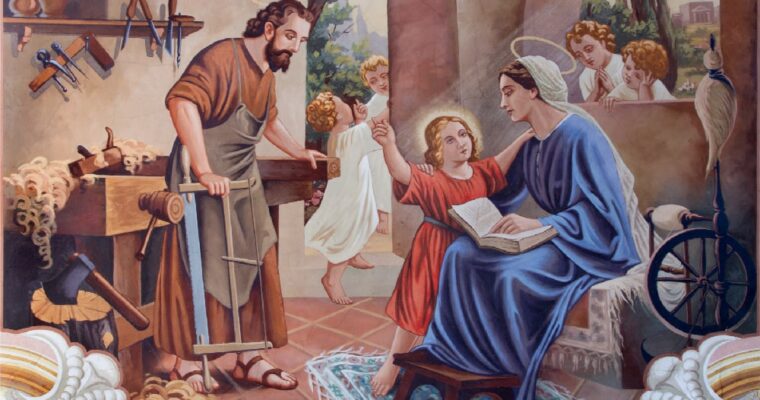
Fleeing to Egypt: the journey of the Holy Family to escape King Herod

Fleeing to Egypt: the journey of the Holy Family to escape King Herod

The fleeing to Egypt is an episode from Jesus’ childhood. Between history and faith here is the Savior’s first journey Not all the canonical Gospels recount the early days of Jesus’ life in a precise and timely manner. For example, we saw how only Luke…

How to find faith: here is a good resolution for the New Year

How to find faith: here is a good resolution for the New Year

A new year has begun. May it also be an occasion for spiritual renewal? In this article, we see how to rediscover faith with prayer, meditation and the constant improvement of oneself The end of the old year and the beginning of the new year…

Traditions and legends related to Saint Sylvester night

Traditions and legends related to Saint Sylvester night

New Year’s Eve celebrates the memory of Saint Sylvester, one of the most eminent figures of early Christianity. But there are also many popular traditions related to this very special date. Let’s find out together.

Rarely hearing about New Year’s Eve, our first thought goes to Sylvester I, the thirty-third Pope of the Catholic Church, who died on December 31, 335. And not because this Saint is without merit, anything! He is credited with the conversion of Emperor Constantine the Great, who recognized Christianity as a religion and contributed greatly to its spread.

Not only. During the pontificate of Saint Sylvester, which lasted twenty-one years, the first Ecumenical Council was convened in Nicaea, presided over by Constantine himself, with the aim of healing the differences that divided Christians, linked to doctrines such as Arianism, to reach peace and religious unity.

And yet, although New Year’s Eve on December 31 is celebrated around the world, not everyone knows the correlation between the last night of the year and Saint Sylvester.

Who was Saint Sylvester

Pope Sylvester was therefore one of the first pontiffs not to face the persecutions that condemned the existence of the first Christians. Even Emperor Constantine gave him the Lateran Palace as a private residence, and by his will founded the first basilica of Saint Peter on Vatican Hill, to receive the remains of the Apostle Peter.
But although Christianity was now accepted and recognized as a religion, it was threatened by internal disputes, which threatened to tear it apart in so many different professions of faith, just when he was getting his recognition.

St Peter and Paul statues

Read more:

Saint Peter and Paul, why are they celebrated together?
On June 29, Saint Peter and Paul are celebrated. Two apostles, two very different men, both fundamental to the history of the Church. Let’s get to know better these two examples of faith and their feast.

In addition, Sylvester as Pope had to deal with Emperor Constantine himself, who, on the one hand, freed Christians from persecution, on the other demanded to intervene directly in questions of faith and in debates relating to dogmas. For this reason both in the Council of Arles (314 AD), on the occasion of which he fought against the heresy of the Donatists, and in the first Ecumenical Council in Nicaea (325 AD), convened to counter the Arian heresy, Sylvester could not take part in the debates, but only suffer the decisions taken by the Emperor and the Bishops submitted to him. This did not prevent him from making a great effort to improve the life of Christians in Rome, where he erected eight basilicas and dedicated himself to assisting the poorest and neediest.  His contemporaries did not fail to appreciate him as pontiff so much as to nickname him Confessor of the faith, an honorary title used from the fourth century onwards to celebrate men of faith who made themselves bearers of the word of Christ by virtue of their courage and wisdom, with writings, actions and preaching. Sylvester was one of the first to deserve it.

For his virtues and his extraordinary abilities, was dedicated to Sylvester the feast of December 31st just a year after his death.

The origins of the celebration

Apart from the date, there seems to be nothing linking the commemoration of Saint Sylvester with the New Year’s Eve celebration. It is true that on New Year’s Eve there has always been the tradition of reciting the Te Deum to thank God for the past year. But in reality, it is very clear that the traditions related to New Year’s Eve have origins far from the life and death of the Saint. Many of them sink into a pagan past, linked to ancient peoples and civilizations that inhabited the European continent long before the advent of Christianity.

In this regard, we must bear in mind that the end of the year did not always coincide with December 31st. For the Celts, the year ended with the winter solstice, when the days began to be imperceptibly longer than the dark nights. The ancient Romans instead celebrated the beginning of the new year on March 1st. Even after the emergence of the Gregorian calendar, in some areas, the people preferred to continue to celebrate the end of the old year and the beginning of the new one on variable dates and according to ancient rites, linked to the triumph of light over darkness, of life over death, which, over time, coincided with the Resurrection of Christ, with His victory over death and evil.

It remains fascinating to see how some of the traditions of New Year’s Eve still spread throughout the world, albeit with many variations, echo the ancient folk and pagan customs.

The traditions of Saint Sylvester night

New Year’s Eve traditions go far beyond the culinary traditions of the Christmas holidays, but just as Christmas traditions also change from country to country.

Let’s start with lentils, a great classic of New Year’s Eve, a symbol of luck and prosperity for the new year. Already the ancient Romans had noticed the similarity of these round legumes with small coins and gave them inside a leather purse, the scarsella, with the good hope that they would turn into real coins. Their shape, and the fact that when cooked they double in size, have carried on their fame linked to money and wealth. If you eat lentils on New Year’s Eve, perhaps accompanied by cotechino and zampone, you can hope for a rich and lucky new year.

Christmas traditions

Read more:

Christmas traditions from all over the world that you don’t know about
Christmas is perhaps the most famous holiday in the world. It was born in a religious setting, as celebration for Jesus’ birth…

Who eats grapes for New Year’s Eve counts the money all year” says an old proverb. Even grapes were considered by the Romans to be synonymous with wealth and abundance. Eating grapes, or just holding them, at the stroke of midnight, guarantees a rich and prosperous new year. In Spain and in South American countries, where New Year’s Eve is called nochevieja, when midnight rings there is the custom of eating twelve grapes, to the rhythm of the bells ringing. Each grain corresponds to one month of the year.

Elsewhere instead of grapes, you can eat twelve rounded fruits, or pomegranate beans, another plant considered sacred since ancient times, symbol of fertility and wealth.

In the USA, but also in Germany and in Ireland, all green vegetables, and in particular cabbage, broccoli and chard, can not miss the New Year’s Eve dinner to ensure luck and wealth for the new year.

Sempre restando in ambito alimentare molte culture sconsigliano di mangiare gamberi o aragoste per Capodanno, perché si tratta di animali che camminano all’indietro, e potrebbero essere di pessimo auspicio per l’anno nuovo. Lo stesso vale per il pollo e i volatili in genere, che potrebbero far volare via la fortuna. Invece il maiale, che col suo simpatico grugno va sempre avanti alla ricerca di cibo, è considerato simbolo di prosperità e fortuna.

L’usanza di far scoppiare botti, petardi e fuochi d’artificio si può ricondurre alla volontà di scacciare gli spiriti maligni e i demoni col rumore, e di rischiarare la notte con la luce purificatrice del fuoco. Anche il semplice ‘botto’ del tappo dello spumante vale come rimedio contro il malocchio.

Così gettare oggetti vecchi e cocci dalla finestra è un modo per lasciarsi alle spalle l’anno trascorso, magari liberandosi di qualcosa che ci tiene legati al passato in modo anche dannoso. In Germania e Giappone si rompono dei piatti e roba vecchia per liberarsi della rabbia.

Still in the field of food, many cultures do not recommend eating shrimp or lobster for New Year’s Eve, because they are animals that walk backwards, and may be a bad omen for the new year. The same goes for chickens and birds in general, which could make luck fly away. Instead, the pig, which with its cute snout always goes on in search of food, is considered a symbol of prosperity and luck.

The custom of popping barrels, firecrackers and fireworks can be traced back to the desire to drive out evil spirits and demons with noise and to brighten the night with the purifying light of the fire. Even the simple ‘bang’ of the sparkling wine cap is a remedy against the evil eye.

So throwing old objects and shards out the window is a way to leave behind the past year, maybe getting rid of something that keeps us tied to the past in a harmful way. In Germany and Japan, they break plates and old stuff to get rid of anger.

As for the red linen of good omen, already the ancient Romans wore red clothing, on the last night of the year, because that colour recalled blood and exorcised the fear of war. Today it is a much less bloody custom. The important thing is that the linen is not bought, but given by someone and that it is used only once.

And what do you have in store for New Year’s Eve 2021? 2020 has not been an easy year, but we can only hope that you can close it peacefully and that the new year will bring you peace and prosperity.

The Advent Crown in the church: 10 curiosities

The Advent Crown in the church: 10 curiosities

Contents1 What does Advent symbolise?2 What is the colour of Advent?3 What are the four Sundays of Advent called?4 When does the first Sunday of Advent begin?5 When do you light Advent candles?6 How do you light the Advent wreath?7 What are the names of…

The DIY Nativity scene illustrated in 10 simple steps

The DIY Nativity scene illustrated in 10 simple steps

Contents1 Where to start a DIY Nativity scene2 What materials to use to make a DIY Nativity scene3 How to make a Nativity scene on multiple levels4 How to build homes5 How to colour the Nativity scene6 How to put rock paper in the Nativity…

Christmas Novena: The Nine Prayers Awaiting Christmas

Christmas Novena: The Nine Prayers Awaiting Christmas

From 16 to 24 December, during those nine days that precede Christmas, believers wait for the birth of Jesus. Let’s find out how to prepare with the Christmas Novena nine prayers.

The last days before Christmas are days of preparations: you buy the last gifts and get ahead with Christmas lunches and dinners. We have already given you some advice on how to set up your nativity scene and decorate the tree; in this article, we talk about how to prepare spiritually for the coming of the Child Jesus with the Christmas Novena.

Christmas tree

Read more:

Decorating the Christmas tree: rules and advice
December 8th is the day when traditionally people gather to kick off the Christmas holidays with the assembly and preparation of the tree. This year we have decided not to let you arrive unprepared.

Novena Christmas: what it is

Like many Novenas, it is an unofficial prayer, a “pious exercise” that has entered the tradition of the faithful. Also known as the Novena to the Baby Jesus, the Christmas Novena consists of the recitation of some prayers (the forms and texts may vary, as there is no real canonical form) recited from 16 to 24 December, the nine days preceding Christmas.

The birth of baby Jesus

Read more:

The birth of Baby Jesus: the deepest meaning of Christmas
The Nativity of Jesus surely symbolizes the highest and most meaningful moment of the Christian calendar. Every year this miracle repeats itself, along with its promise of salvation.

History

The origin of the Christmas Novena is traditionally attributed to the Vincentian missionaries of Turin. It is thought that for the first time, it was recited in 1720, in the church of the Immaculate next to the boarding school that the missionaries used for the formation of the clergy. The texts were originally in Latin and were sung with a Gregorian melody; subsequently, after the Second Vatican Council, translations into several languages were disseminated. The author to whom the texts are attributed is Father Carlo Antonio Vacchetta, “master of sacred ceremonies and prefect of the church and of singing” in the Vincentian community.

The spread of the Novena is also due to Gabriella Marolles delle Lanze, Marquise of Caluso. The woman moved to Turin, near the house of the Vincentians, after her second marriage to the Marquis of Salluzzo. He became so attached to this good practice that in his will he asked to keep the recitation of the Novena every year.

What it means

The Novena prayers help the faithful prepare for the coming of Jesus. Reference is made to the texts of the Old Testament that herald the arrival of the Saviour and the characteristics of baby Jesus are underlined: the light, peace and justice he brings to the world. Thanks to this Novena, children and adults can, in the last days before Christmas, prepare their hearts and spirits for the birth of Christ.


The story of Saint Lucia: the martyr bearing gifts

The story of Saint Lucia: the martyr bearing gifts

On 13 December, Saint Lucia’s Day, the light of Christmas is anticipated by a few days. Who is this Saint, part of the tradition of many areas of Italy? At this time of year, the signs of Christmas are getting stronger and stronger. The days…

Our Lady of Loreto: the history and myth of the House that arrived in Loreto from Palestine

Our Lady of Loreto: the history and myth of the House that arrived in Loreto from Palestine

Contents1 History of Our Lady of Loreto2 Miracles of Our Lady of Loreto3 Why is Our Lady of Loreto black?4 Sanctuary of Loreto: the miraculous “flying” translation Since the Middle Ages, the Basilica of the Holy House has been the heart of devotion to Our Lady…

Saint Ambrose, the patron Saint of Milan

Saint Ambrose, the patron Saint of Milan

Saint Ambrose is one of the patrons of Milan and is venerated by all Christian Churches. Let’s get to know him better and find out how he became a Bishop (despite himself) and why he is still so loved in Milan.

Saint Ambrose is celebrated on 7 December, the day before the Immaculate Conception. However, this is not the day of his death, which occurred on 4 April, 397 AD, but the day he was elected Bishop of the city of Milan. The most surprising thing, as we will see, is that at the time Ambrose had not even been christened! And yet his profound humanity and the oratorical art in which he excelled had made him so dear to the inhabitants of the city that they loudly demanded his election.

Saint Ambrose is remembered by the Church as one of its four most important Doctors, along with Saint Jerome, Saint Augustine, and Saint Gregory the Great. He is also one of the Fathers of the Church, one of the saints who helped to enrich and build it, thanks to faith and teachings.

The Doctors of the Church

Read more:

Doctors of the Church: who are they and what are the requirements for having this title
On October 1st we celebrate Saint Therese of Lisieux, one of the four women proclaimed Doctors of the Church.

Even today, the day of Saint Ambrose is very moving in Milan. Take advantage of the holiday day to go to the Oh Bej Fair! Oh Bej!, the most famous Christmas market in the city, where you can find countless handicrafts, Christmas decorations and nativity scenes. They eat roasted chestnuts and drink mulled wine. In the Basilica of Saint Ambrose, built by himself between 379 and 386, a solemn mass is celebrated according to the Ambrosian rite established by him.

There are many proverbs related to Saint Ambrose: “Without snow in Saint Ambrose, winter will be mogio”, “In Saint Ambrose the cold cooks”, “In Saint Ambrose aburratta (flour) and cooks”.

Saint Ambrose: History

Among the patronages of Saint Ambrose, there is a very particular one: that of bees and beekeepers. There’s an interesting legend about it. When the Saint was just a child in swaddling clothes and sleeping in a crib in the backyard, a swarm of bees flew over him and before anyone could intervene landed on his face and the bees entered his mouth. Legend has it that this was the origin of his wonderful eloquence since the industrious insects carried a sweetness of honey between their lips when he could not yet speak.

Saint Ambrose, or rather Aurelius Ambrosius, was born in 334-339 in Trier, Gaul, the son of two members of the most important Roman senatorial families. In fact, her mother belonged to the Aureliana family, and his father to the Simmaco family. Both were converts to Christianity. Aurelius’ father was in Trier as prefect of the praetorium and he too had been destined for a political and administrative career since he was a child. When his father died, Aurelius and the family returned to Rome, where the boy continued his studies and subsequently began to participate in public life in the city.

It was while pursuing his political career that Aurelius arrived in Milan. The appointment he had been given was as governor of Italy Annonaria for the Roman province Aemilia et Liguria, whose seat was in Milan, at the court of Emperor Valentinian I. As a lawyer, Aurelius was particularly skilled in maintaining balance and peace between Aryans and Catholics, despite the tense relations between the two factions. Thanks to his great eloquence, his sense of justice, and his rigour that did not prevent him from showing love to everyone.

The broad consensus he aroused in the city meant that, although he had not yet received Baptism, he was loudly invoked as Bishop of Milan on the death of the Aryan bishop Aussenzio in 374.

Ambrose at first refused, tried to ruin even his reputation in the eyes of his supporters, and finally tried to flee the city. But the Milanese had made their choice, and in the end, Aurelius resigned himself to the fact that it must also be God’s will. He accepted the assignment, was baptised and on 7 December 374, he became Bishop of Milan.

From that moment on, Ambrose did his best to fill the gaps in the study of the Holy Scriptures. He introduced the practice of lectio divina to the West, the practice of study and prayer that hopes for spiritual union with God through the reading of the Scriptures. This method also became the basis of his preaching. It was thanks to his preaching that Saint Augustine, among others, converted to Christianity.

As bishop Ambrose led an ascetic life, donating all his goods to the poor, and working tirelessly to help the most needy citizens.

During his tenure, several basilicas were built, including the one that would become the Basilica of Saint Ambrose.

Festival Saint Ambrose in Milan

The Mass that is celebrated with the Ambrosian rite on 7 December in the Basilica of Saint Ambrose in Milan is not just any Mass. In it, the religious component is mixed with the popular one, in an event very much felt by all Milanese, practitioners and non-practitioners. The Archbishop of Milan celebrates Mass according to an ancient ritual, which has remained unchanged over the centuries.

The festival of Saint Ambrose in Milan precedes the Immaculate Conception and marks the beginning of the Christmas period. It’s not just a Christmas market, albeit the traditional Oh bej Fair! Oh bej! This attracts thousands of people for four days along the streets of the centre, around the gardens of the Castello Sforzesco from 7 December to 10 December. The curious name of the fair derives from a legend. In 1510 Pope Pius IV sent gifts to the citizens of Milan, through Giannetto Castiglione, the first Grand Master of the Order of Saints Maurice and Lazarus. The children in particular welcomed all those gifts shouting Oh beautiful! Oh beautiful! 

The fair also has great gastronomic relevance, with typical desserts, mulled wine to fight the cold, and smoking roast chestnuts.

Since the 1950s, the Festival of Saint Ambrose in Milan has coincided with the opening of the opera season of the Teatro della Scala in Milan.

Basilica of Saint Ambrose

We have already mentioned the many basilicas built by order of Ambrose. The Basilica dedicated to him is located to the southwest of the city and was originally called Basilica Martyrum. In fact, when Ambrose had it erected between 379 and 386, he destined it to house the relics of many holy martyrs (Satyr, Victor, Nabore, Vitale, Felix, Valeria, Gervasius and Protasius).Saint Ambrose's cathedral in Milan

When Ambrose died, the Basilica changed its name and was enlarged. It is preceded by a large quadriporticus and is equipped with two bell towers, that of the Monks and that of the Canons. Among its particularities, the Golden Altar, or Altar of Vuolvino named after the sculptor who made it between 824 and 859. It is a splendid example of goldsmithing from the Carolingian era, consisting of gold and gilded silver plates, mounted on a wooden structure, and then studded with precious stones and enamels. Since the apse is on two levels, the altar serves as a cover for the crypt that houses the relics of Saints Gervasius, Protasius and Ambrose. The upper level houses the wooden choir.

Another curiosity of the Basilica of Saint Ambrose is the Devil’s Column.  According to legend, the devil, in an attempt to tempt Saint Ambrose, tried to stick him with his horns, but he got stuck in the column. As evidence of this fact, two holes remained side by side, from which it is said that you can smell the smell of sulfur coming from the Styx, the infernal river.

Setting the table at Christmas: plus many DIY ideas

Setting the table at Christmas: plus many DIY ideas

Contents1 Christmas centrepieces2 Christmas do-it-yourself placeholders3 Christmas coasters The table of the Festival is a symbol of welcome and family intimacy. Here’s how to set the table at Christmas Summer has just ended, and yet it is already a fond distant memory. The days get…

Base cover for the Christmas tree: an extra touch of originality

Base cover for the Christmas tree: an extra touch of originality

The base cover for the Christmas Tree is an extra stylish detail to make your holiday home even more beautiful and original Base covers for Christmas trees Well, yes, this is also part of the endless solutions to decorate our Tree on the occasion of…

The Nativity Scene of Greccio: the Nativity Scene of San Francesco

The Nativity Scene of Greccio: the Nativity Scene of San Francesco

What is the nativity scene’s history? Where does this tradition that we experience every year come from? Here is the story of the first nativity scene, the Nativity Scene of Greccio requested by St. Francis.

This year, as every year, a Christian symbol linked to Christmas enters our homes and our churches: the nativity scene. Both in private and public places, the birth of Jesus is celebrated with statues and settings thanks to the creativity of nativity scene craftsmen or DIY lovers.

How many possibilities are there to set up a nativity scene? Neapolitan nativity scenes in terracotta, Arabic or Nordic style nativity scenes, resin or wood: there is a vast world around this sign, which combines Art with Faith.

In his Apostolic Letter Admirabile Signum, Pope Francis also recalled the beauty and preciousness of the nativity scene:

“As we contemplate the Christmas scene, we are invited to set out spiritually, drawn by the humility of the One who became man to meet every man. And we discover that He loves us so much that He joins us so that we too can join Him. […] It is really an exercise in creative imagination, which uses the most disparate materials to create small masterpieces of beauty. One learns as a child: when father and mother, together with grandparents, transmit this joyful habit, which contains in itself a rich popular spirituality.”

So, where does this tradition come from?

The story of the Nativity Scene of Greccio

The story of the nativity scene has as its protagonist a great Italian saint: Saint Francis of Assisi. The year is 1223 and the place is Greccio, a small village near Rieti. Saint Francis, probably arriving from Rome where the Pope had confirmed the Franciscan rule, stopped in the village, where Giovanni Velita, now a friend and follower of the saint, lived. When he saw the caves near Greccio, he remembered an image: Bethlehem, which he had seen on his journey to the Holy Land. In particular, the caves where Jesus was born.

The Canticle of the Creatures of St. Francis

Read more:

The Canticle of the Creatures of St. Francis
St. Francis of Assisi is one of the most loved and venerated saints by the Catholic Church. Close to the poor, brother of the least…

Perhaps struck by the scenes of the mosaics depicting the Nativity in the Basilica of Santa Maria Maggiore in Rome, Saint Francis felt a strong desire to “represent the Child born in Bethlehem, and somehow see with the eyes of the body the discomforts in which he found himself due to the lack of the things necessary for a newborn, how he was laid in a crepe and how he lay on the hay between the ox and the donkey” (Tommaso da Celano, Vita Prima, 84: Fonti Francescane (FF), no. 468). Fifteen days before Christmas, he expressed this desire and asked Messer Giovanni Velita for help in setting up the first nativity scene in history.

The setting and construction were simple: a cave, a manger, an ox and a donkey were brought to the site. On 25 December, friars, men and women from the area gathered around this scene, carrying flowers and torches. The story of the nativity scene therefore began with a living one, consisting of faithful in flesh and bones who together celebrated the poverty of God made Man. On this praesepium, which means manger, the Eucharist was celebrated by a priest present – Saint Francis had chosen to remain a deacon.

The Miracle

In addition to the idea of the nativity scene, which we still make in homes, and churches but also in the workplace, schools and squares, tradition gives us a miracle. It is said that baby Jesus really appeared in the manger of the Nativity Scene of Greccio, and this moment experienced by the people gathered together became a source of great joy.

People came home from that place deeply moved. Saint Francis was seen that night as he tenderly embraced the Child who appeared in the manger.

This year, as every year, the nativity scene will be a sign of joy that comes from the intuition of a great saint.

The shepherds of the Neapolitan nativity scene of the 1700s: discovering this nativity art

The shepherds of the Neapolitan nativity scene of the 1700s: discovering this nativity art

Contents1 How to make a Neapolitan nativity shepherd2 Casting3 Trimming4 Drying and firing5 Painting6 Glass eyes7 Assembly8 Dressing9 Objects and gifts Neapolitan Nativity shepherds are artistic products that come from a long tradition. Here is the handcrafted process by which they are made! Why is…

Advent Calendars: History and Tradition

Advent Calendars: History and Tradition

The Advent Calendar is one of the most representative traditions of Christmas. This is how it was born and how it is carried forward today The Advent Calendar was born alongside the Nativity scene, as a tool to make everyone understand the spirit of waiting…

Miniature Christmas villages: let the magic of Christmas into your house

Miniature Christmas villages: let the magic of Christmas into your house

Miniature Christmas Villages are an original and novel way of bringing the atmosphere of the Festival into our homes. Let’s find out how they are built and what their characteristics should be

Why not build a miniature Christmas village in place of the Nativity scene? Until some time ago such a statement might perhaps have given rise to some perplexity. Yet miniature Christmas villages have now become a custom in many houses, even in our country where the tradition of the Nativity scene is so deeply rooted. Moreover, many types of traditional Nativity scenes can also be compared to villages reconstructed in detail, with houses, streets, mills, fountains, and inns, in an imitation of historical settings linked to our past. Think of the Neapolitan Nativity scene, which recreates the atmosphere and characters of 17th-century Naples, and the many Nativity scenes with a historical setting that refer to the Italian Renaissance, or to the Palestine of the time of Jesus.

animated statue in the Neapolitan nativity scene

Read more:

Animated statues in the Neapolitan Nativity scene
The Nativity scene is one of the most famous and spread traditions connected to Christmas

The miniature Christmas villages are in some ways profane Nativity scenes, as they differ from the traditional ones in that they do not represent the Nativity of Jesus. But in recent years they have also conquered adults and children in Italy, with the magical and joyful atmosphere they know how to create.

Their tradition is linked above all to the United States and the Nordic countries, which also inspire their atmosphere and architecture, although as we will see there are different types, all characterised by well-defined elements. In general, they are composed of houses, shops, and churches, arranged along narrow streets illuminated by streetlights, and often enriched by fountains, ice rinks, Christmas trees, and even rides. All are immersed in a winter landscape, with snow, costumed characters, and often the kind and colourful presence of Santa Claus.

How were miniature Christmas villages born?

The history of miniature Christmas villages

Handmade houses and miniature buildings were used as Christmas decorations as early as the 18th century in some countries of Germany and Central and Eastern Europe. The inhabitants of those areas rebuilt with recycled materials, wood and cardboard, the places where they lived, small rural villages and suburbs. This tradition moved to the United States with immigrants and even there began to appear small colourful and picturesque scenarios built at the foot of the Christmas Trees. Traders understood the potential of such a tradition, and so the first cardboard houses appeared on the market, which anyone could buy to decorate the house and create their own personal Christmas village. They were called putz houses and had a Germanic style that Americans liked very much.
After the First World War, the production of putz houses passed to some Japanese companies, which enriched them with coloured cellophane windows and mica powder sprayed on the roofs to recreate the effect of snow. They also began to illuminate the interior with small lights, so that the glow could be seen from the windows.
After a setback around the 1950s and 1960s, in 1976 a Minneapolis retail florist, Bachman’s, created a line of miniature Christmas houses that were enriched every year with accessories and new buildings, sparking a real passion among collectors.
Today, among the main producers of Christmas decorations of this kind we can count the Lemax Villages, of the eponymous company founded in 1990 and which for thirty years has been one of the main points of reference for collectors around the world. Searching online you can find villages of all kinds, from those with a Victorian setting to those inspired by the atmospheres of Charles Dickens, but also modern villages, the 1950s, and small fantastic worlds with houses made of sugar and inhabited by men of gingerbread.

Building a miniature Christmas village

If someone wants to try to build their first miniature Christmas village, what should they do? It can be an alternative idea to classic Christmas decorations, and it’s easier than you might think. In our online shop, you will find a wide range of very special buildings and scenarios to build a truly complete and magical Christmas village. You can start with the delightful church, which will be the heart of your miniature village, flanked by a large Christmas Tree decorated and decorated with sparkling glitter that captures the reflections of the many multicoloured LED lights. The small scenery is also enriched by a system that transmits Christmas songs and is populated by many cute characters. The beautiful Ferris wheel and the carousel with the child seats will create a festive moment in the party, with their colours and joyful atmosphere, festive children, bright lights and cheerful sounds. As an alternative to the church, you can put a beautiful Christmas Tree in the centre of your miniature village, set in the centre of the town square, decorated with festoons and Santa lights on a crane and children climbing the stairs. And then of course many houses, such as the beautiful one with the waterfall illuminated by coloured LED lights.

christmas big wheel of santa claus
Christmas big wheel of Santa Claus
Buy on Holyart
christmas swing carousel village lights
Christmas swing carousel
Buy on Holyart
christmas village set with church
Christmas village set with church
Buy on Holyart
christmas village set with firecamp
Christmas village set with firecamp
Buy on Holyart
christmas village set with waterfall
Christmas village set with waterfall
Buy on Holyart

Type of village

If you want to try your hand at the business of building a miniature Christmas village, first of all, you will have to decide on the type of village you want to build. Will you choose to build a classic Victorian village, or rather a mountain village, complete with a skating rink and small skiers? Would you like to recreate the atmosphere of Charles Dickens’ novels with a Dickensian village, or perhaps you will try to rebuild Santa Claus’ village, with a little train that crosses it bringing gifts? Your imagination is the only limit. There are even Christmas villages by the sea, with fishermen! You can also decide to put together elements from different settings, although the beautiful thing about miniature Christmas villages is often the consistency and continuity between the elements that compose them. But with a little inventiveness, everything can be arranged to create a surprising effect.

The heart of the village

Once you have chosen the type of village you want to build, you will have to determine which will be the centre of the entire village, its centre and heart. We have already mentioned the church, or the Christmas Tree in the town square. It must be something that gathers the interest of the characters around it, and that will hit the attention of those who admire the village first. Once the heart of the village is established, there will be no need for many more houses and elements to enrich it. Instead, it will be important to create the path of streets and avenues illuminated by street lamps that will lead to that point, realistically and dynamically. And of course, you will need to populate your journey with little characters that will make your village alive and real more than ever.

Miniature Christmas village
Traditional miniature Christmas village with a train station.

The base and background

Two other fundamental characteristics to choose from, when you decide to build a village, are the support base and the background.

The base is of great importance because all the buildings and elements of the village will need to be connected to the power supply, and therefore it will be advisable to choose a support that allows you to easily hide the wires, switches and connections. In addition, the sockets and switches must be easily accessible when you have to turn them on or off. The best solution is probably a wooden board or a series of boards placed side by side and supported by trestles, where you can drill holes through which the wires pass and which you will cover with sheets to hide the entire system. As for the village itself, some rock paper, moss and other small tricks will help you hide the remaining electrical wires.

The background will be useful to give your miniature village more realism and depth. You can make it yourself, painting it, or making it with boxes or books covered with rock paper, also to give a sense of perspective, or buy one of the many beautiful backdrops available online and made specifically for these villages, with a beautiful starry sky, mountains covered with snow, or maybe the lights of the city.

The legend of Saint Martin and the miracle of the cloak

The legend of Saint Martin and the miracle of the cloak

The legend of Saint Martin reminds us of the importance of altruism and mercy. This is how the tradition of the summer of Saint Martin was born The first decade of November has always been characterised by a bizarre climatic phenomenon, the so-called summer of…

The lanterns of Saint Martin: stories and curiosities about this festival

The lanterns of Saint Martin: stories and curiosities about this festival

The lanterns of Saint Martin are a symbol of good luck and bring some of the warmth and light of summer in the cold winter. Let’s find out how this fascinating tradition was born. We have already spoken in many articles of how the feasts…
Prayer for the sick: praying for a loved one or for yourself

Prayer for the sick: praying for a loved one or for yourself

Here is a prayer for the sick to turn to Jesus or Our Lady to obtain relief for us and our loved ones

Illness is a state of suffering that involves all human beings to varying degrees and at different times in their lives. The cognition of our state as frail and helpless creatures inevitably passes through the suffering of the body, through that pain that from childhood we discover to be ours alone, against which nothing can be done by mother’s affection, the care brought by those who love us. As we grow up this awareness becomes stronger and more ingrained, as throughout our lives we fall prey to the suffering of those around us, from the illness of our loved ones. But in this painful state, at the very moment when we realize our vulnerability, prayer comes to our aid. Here then, prayer for the sick, to be prayed for ourselves or for a suffering loved one, becomes not only an instrument of faith, but a relief for the spirit exacerbated by anxiety, by pain.

Prayer for the sick is not a prayer for physical healing, for that it is appropriate to turn to the doctor and those who have the tools to care for us. But praying can prove to be an unparalleled help in dealing with illness and suffering, a balm for body and soul. After all, man has always invoked God, or the Virgin or certain saints for help and comfort in cases of serious illness, so much so that one can identify several patron saints who are also called healer saints to invoke in cases of particularized diseases. We also think of the requests for graces to be addressed to Our Lady, our Heavenly Mother with humility and faith in the Marian month, reciting the rosary or the novena to Our Lady who loosens knots.

It is precisely in recognizing our inability to cope with illness and physical pain on our own that we accept our fate as fragile and imperfect creatures, and we defer to God’s will, to His immense love, which we can invoke in the hope of finding relief from suffering and being healed. Even the practice of the anointing of the sick, which comes from Jesus, His deep love for the sick and suffering, makes us realize how much the Church and those who are part of it rely on divine mercy for help in sickness. Christ laid His hands on the sick and invalid, invoking miraculous healing from God the Father, and in the same way the priest anoints the sick, calling down blessing and Grace on them in their hour of greatest suffering.

Anointing of the Sick

Read more:

Anointing of the Sick: what it is and how it takes place
The anointing of the sick is a practice that comes from Jesus himself. Here is how it has evolved over time.

But there is more. In recent years many scholars, scientists and theologians, have shown that praying is indeed a medicine that can heal the body through the soul. When we pray, we gather ourselves into ourselves, in a meditative form that causes physical effects as well: reduction of heart rate and blood pressure, just to name two, but also a significant reduction of cortisol, the so-called “stress hormone,” and a loosening of muscle tension. All of these physical effects would strengthen our immune response against any disease, helping the body maintain a general state of health and counteract diseases such as arteriosclerosis, increased cholesterol, and diabetes. In addition, prayer would increase serotonin levels in the blood, helping to better manage emotionality and countering anxiety, depression, insomnia, impulsivity, and stress. Prayer as a medicine, then, making us sick less and heal sooner.

“Pray without tiring and never forget to give thanks to God” (Colossians 4:2), but also “He proposed this parable to them again to show that they should pray always and not grow weary.” (Luke 18:1) In the Scriptures, Jesus often exhorts those around him to pray without ever growing weary, because prayer, when cultivated with perseverance, helps to nurture one’s inner strength and make us stronger against evil and disease. Through prayer God knows our needs and can help us meet them.

Here is the text of a prayer for the sick, just one of the most famous:

Lord Jesus,

who in your life you have always shown care,

understanding and affection

for sick people, hear my voice

as a sick and suffering person.


My being rebels against illness,

to the hospital stay,

to the precariousness of the current situation


At this moment it is difficult for me to repeat.

“Thy will be done.”

but I want to at least try

to accept this situation.

To believe that my suffering

associated with your passion,

will gain meaning and value for others as well.


Bless the people who care for me,

those who care for me, those who remember me

And those who suffer with me.


Give me the courage to suffer

And the hope to heal,

That I may yet praise and thank You,

giver of life and Father of mercy.  Amen.