Homepage | Religion | The Fragrances of Padre Pio: Between Faith and Suggestion
The Fragrances of Padre Pio: Between Faith and Suggestion
26 August 2026
Reading Time: 5minutes
The fragrances of Padre Pio represent just one of the most evocative aspects of the veneration surrounding this unique Saint. Let us discover what they are and how science has attempted to explain them.
Much has always been said about the fragrances of Padre Pio, the mysterious scents that surrounded him, followed him like a trail, and lingered for a long time in the places he had passed through. Not to mention the inexplicable olfactory phenomena which, even long after his death, have continued and still continue to occur, involving not only devotees of the Saint of Pietrelcina, but also those who do not pray to him, and even his detractors. Perceived during prayer and emanating from statues, holy cards and icons, the fragrances of Padre Pio have become part of his cult, an indispensable characteristic for those who love him and invoke him. Over the years, however, they have also been the subject of scientific studies and debates. Doctors, chemists and physicists were sent to try to explain the origin of Padre Pio’s fragrances, from the distinctive scent of roses that has always signalled his presence, to other characteristic aromas that have gradually been identified, each with its own precise meaning.
Many theories have emerged over the years, some intended to discredit Padre Pio during his lifetime and after his death, others inspired by genuine devotion and a sincere love of the truth. Particularly valuable is the testimony of Dr Giorgio Festa, who was sent by the Holy See to meet Padre Pio and discover the origin of his fragrances. He concluded that they originated from his stigmata. After visiting the Saint and soaking a cloth with blood taken from his side, the doctor was accompanied for days by a persistent fragrance that aroused the curiosity of everyone who came near him. Among those who believed there was deception behind Padre Pio’s fragrances were some who suggested that he made use of scented face powder and perfumed ointments, a theory firmly rejected by those who knew him well and lived alongside him. The fragrances also served as evidence against those who claimed that the wounds on Padre Pio’s body were not the work of divine intervention, but the result of applications of carbolic acid, and that the acid itself was responsible for the strange scents. In reality, acid destroys fragrances, so this hypothesis must certainly be dismissed.
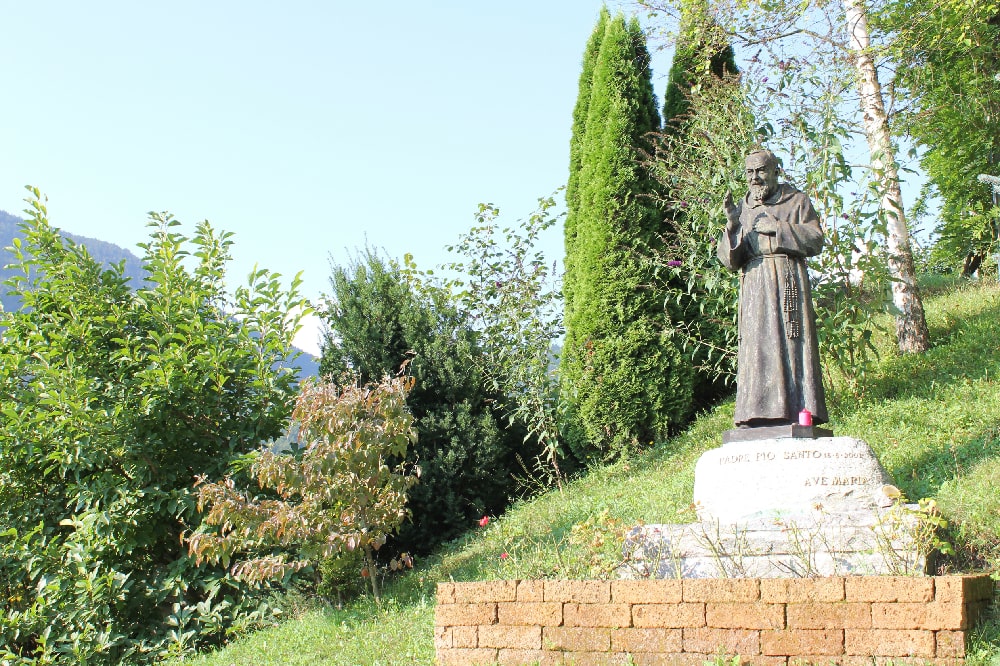
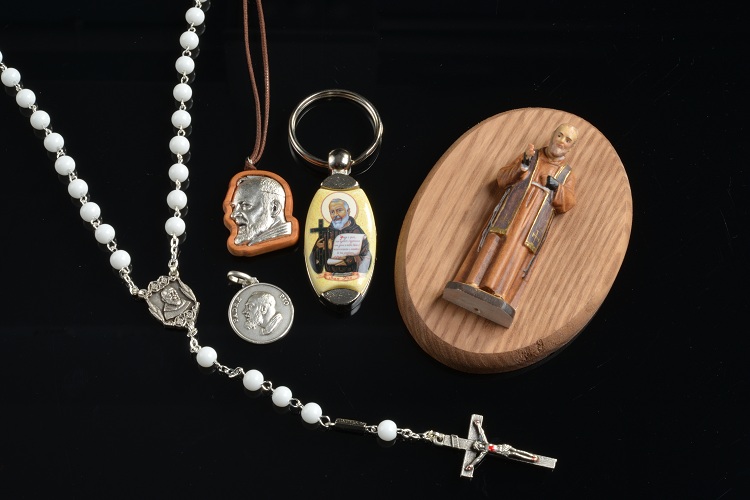
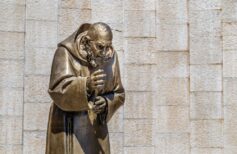
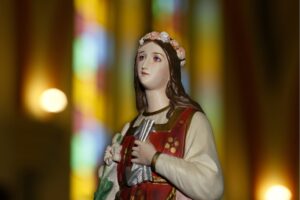
The saint statue is 100% made in Italy, finely worked and detailed with careful attention. The Padre Pio statue is not heavy…
Father Jean Derobert devoted years to studying the fragrances of Padre Pio. The findings of his research are collected in the book Padre Pio, Transparent to God. To this day, science has been unable to explain the mystery of Padre Pio’s fragrance.
Moreover, the phenomenon of osmogenesis, the perception of fragrances or odours of a mysterious, almost supernatural nature, has also been associated with many other saints since the earliest days of Christianity. The so called odour of sanctity, a sweet and intense fragrance attributed to the real or invoked presence of Saints, is also believed to derive from this phenomenon. During their lifetime, these fragrances enabled Saints to make their presence known from afar or to those beside them, and they have endured through the centuries as a reminder of the uniqueness of their blessed souls. It is no coincidence that, in Jewish culture, the sense of smell was already regarded as the only sense through which the soul derives pleasure, since it was the only one not directly involved in the sin committed by Adam and Eve when they ate the fruit from the Tree of Knowledge. In some ancient sacred texts it is also called the sense of the Messiah, and in Isaiah we read: “And he shall have the fragrance of the fear of God; he shall not judge by what his eyes see, nor make decisions by hearsay…” (Isaiah 11:3) (in more recent versions, the opening phrase is translated as: He shall delight in the fear of the Lord).
In general, fragrance has always held strong symbolic significance, including in ancient religions, and has always been a means by which human beings communicated with the gods by burning incense and aromatic essences or, conversely, by which the gods manifested themselves to mankind.
Read more:
The story of Adam and Eve
Who does not know the story of Adam and Eve, the first man and the first woman?…
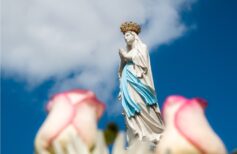
The fragrance of roses that Saint Pio of Pietrelcina gave off, and which still signals his presence to his devotees, is said to derive from the particular love he had for Our Lady of Pompeii, Our Lady of the Rose. The story is well known: shortly before his death, Padre Pio received a basket of red roses as a gift from one of his faithful followers and asked him to take one of them to the Shrine of the Blessed Virgin Mary of the Most Holy Rosary of Pompei. The devotee was delighted to fulfil the Saint’s request and ensured that the rose chosen by Padre Pio was placed directly in front of the image of the Virgin. That rose remained fresh and full of life even after the Saint’s death, and to this day the bud is preserved in a reliquary.
But besides the fragrance of roses, Padre Pio of Pietrelcina is also famous for other distinctive fragrances and odours. Over time, a list of the most frequently reported has been compiled, and attempts have been made to identify the meaning of Padre Pio’s fragrances on the basis of the experiences of those who have perceived them over the years.
The Fragrances of Padre Pio: List
vinegar: victory over sin and temptation;
carbolic acid: prediction of physical and moral suffering;
garlic: continue along the chosen path without regret;
bitter scent: news of death;
aniseed: hope;
basil: do not lose your spiritual connection with God;
hawthorn: Padre Pio’s approval of one’s behaviour;
coffee: do not be anxious;
camphor: the beginning of healing;
tar: spiritual and material renewal;
wax: the fragrance of Faith;
chocolate: one must find strength;
flour: the arrival of Divine Providence;
mixed flowers: submission;
strawberries: receiving the benefits of intercession;
The remains of Saint Philomena the virgin and martyr were discovered in the catacombs of Rome, but they are kept...
12 August 2026
What’s the Future of Religion?
What’s the Future of Religion?
A Beginner’s Guide to Christianity
A Beginner’s Guide to Christianity
Mind-Blowing Statistics About Christianity You Need to Know
Mind-Blowing Statistics About Christianity You Need to Know
9439
Enter the Holyart world: $20 discount voucher valid on over 60,000 items
Come and discover Holyart, the largest e-commerce of religious articles in Europe and immediately receive a $20 voucher to use with your first purchase.
Check your mailbox: you will receive your discount within 5 minutes