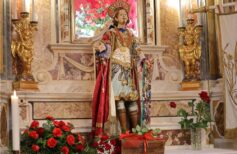
The first Bishop of Lecce, Saint Oronzo was a preacher and miracle worker. He saved the city from the plague in the 17th century and from the earthquake of 1743, and for this reason the people of Lecce hold him in special devotion and affection.
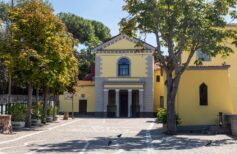
Having lived during the 1st century AD, Saint Oronzo was the first Bishop of Lecce, a city of which he is still the patron saint today. Deeply loved throughout Salento for the many miracles attributed to him, legend has it that it was Saint Paul himself who appointed him bishop. Born to pagan parents, he led a peaceful life, working as treasurer to the Emperor. One day, while out hunting with his nephew, he came across a shipwreck survivor on the stretch of coastline that would later become the beach of San Cataldo, near Lecce. The man was Justus, who, travelling from Corinth on behalf of Saint Paul, the Apostle to the Gentiles, to deliver a Letter to Rome, had been caught in a storm that caused his ship to be wrecked on that shore. Oronzo, who at that time was still called Publius, was deeply moved by the words of this man, who spoke to him of Jesus, of His human and divine life, and of the one merciful God. He wished to embrace the faith, was baptised, and took the name Oronzo, meaning “risen”. He then joined Justus and began preaching the Word, but they were both arrested after being denounced to the praetor by the pagan priests. As they had refused to offer sacrifices to Jupiter, they were imprisoned and flogged. Later, Justus wanted Oronzo and his nephew Fortunatus to accompany him to Corinth to meet Paul. It was on that occasion that Saint Paul, impressed by the man’s fervour, consecrated him as the first Bishop of Lecce and Salento, appointing Fortunatus as his successor. Justus remained by their side, even when they returned to Apulia and began preaching and converting many people. Emperor Nero launched a new and terrible persecution against the Christians, forcing the Bishop and his companions to leave Lecce. They reached Ostuni and Turi, then Siponto, Potenza and Taranto, where Oronzo distinguished himself not only as a preacher but also for his gift of working miracles. Eventually they were arrested once again, taken back to Lecce, and sentenced to death. The execution took place after eleven days of imprisonment and torment, three kilometres from Lecce, on 26 August in the year AD 68. A Christian matron, Petronilla, had their bodies collected and concealed them in her country house. It was here that the Sanctuary of Saint OronzoOutside the Walls would one day be built, known by the people of Lecce as La Capu de Santu Ronzu.
The patron saints of Lecce, Oronzo, Justus and Fortunatus, are celebrated every year from 24 to 26 August. According to legend, shortly before his death Saint Oronzo uttered these words: “Semper protexi et protegam”, “I have always protected you and I always will.” For the people of Lecce, then and now, this was a clear promise that they could always rely on the special protection of Saint Oronzo and his fellow martyrs. It was Bishop Luigi Pappacoda who dedicated the patronage of Lecce to the three saints. Devotion to the Saint grew even stronger after 1656, when it is said that he appeared flying above the city and defeated the plague that was devastating the population. The revival of the cult of Saint Oronzo during the 17th century is known as the Oronzian Revival.
Many other miracles were also attributed to Saint Oronzo, the patron saint of Lecce, particularly healings granted to those who knelt before Saint Oronzo’s lamp, the votive lamp that burns on the altar dedicated to him.
He was also credited with saving Lecce during the terrible earthquake of 1743, and it was on that very occasion that the feast dedicated to him was established.
The Miracle of the Bust of Saint Oronzo
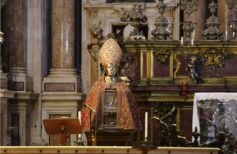
To commemorate the miraculous appearance of the patron saint of Lecce, who came to save the city from the plague, a silver half-bust was created. Normally kept in the Diocesan Museum of Lecce, it is displayed on the High Altar of the Cathedral on special occasions. According to legend, the bust of Saint Oronzo, commissioned in Naples from the Lecce-born silversmith Domenico Gigante, had to be recast several times because it always showed a flaw near the eyebrow. Then, one night, the Saint appeared to the artist in a dream and revealed a small scar beside the very eyebrow in question, the result of an accident in his youth. The half-bust of Saint Oronzo remains the destination of constant pilgrimage, and countless ex-votos have been gathered around it from the time of the plague to the present day.
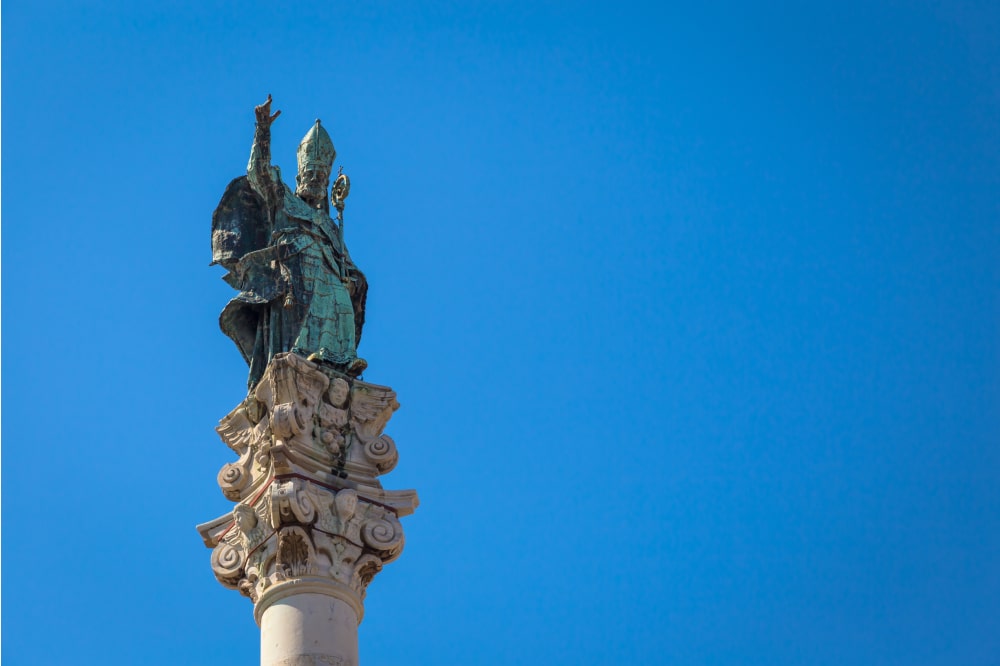
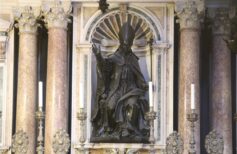
The great bronze statue depicting the Saint with his hand raised in blessing, placed atop a column almost 30 metres high, is likewise an object of profound devotion among the people of Lecce.
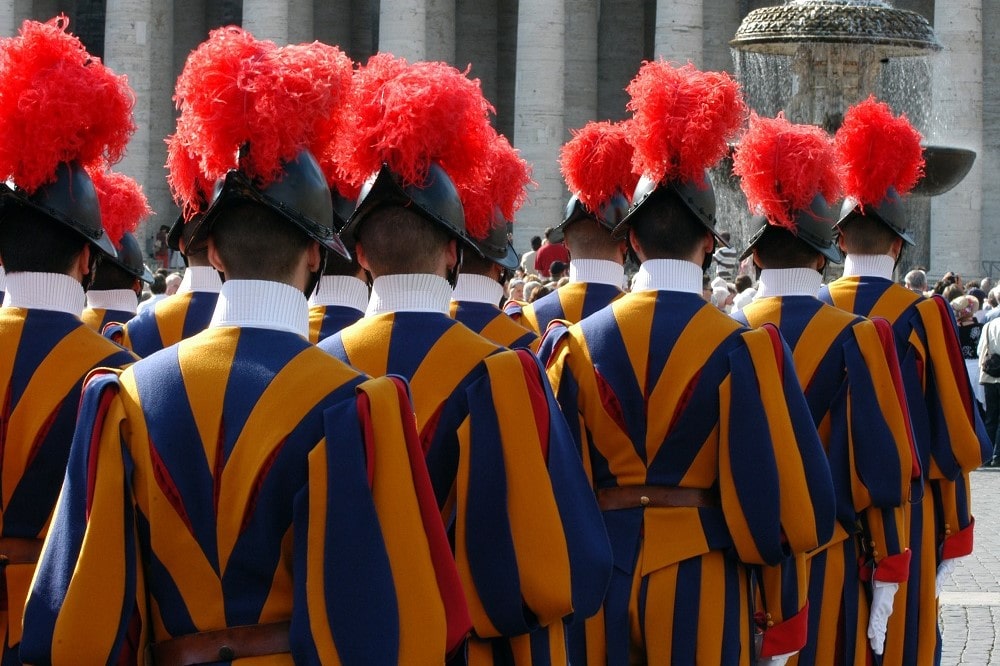
For five hundred years, the Swiss Guards have protected the Pope's security and watched over the Vatican. Here is who...
What’s the Future of Religion?
What’s the Future of Religion?
A Beginner’s Guide to Christianity
A Beginner’s Guide to Christianity
Mind-Blowing Statistics About Christianity You Need to Know
Mind-Blowing Statistics About Christianity You Need to Know
8530
Enter the Holyart world: $20 discount voucher valid on over 60,000 items
Come and discover Holyart, the largest e-commerce of religious articles in Europe and immediately receive a $20 voucher to use with your first purchase.
Check your mailbox: you will receive your discount within 5 minutes




 7 October 2026