Author: Redazione

The meaning behind the parable of the Good Samaritan

The meaning behind the parable of the Good Samaritan

Contents1 What the parable of the Good Samaritan teaches us2 Who represents the Good Samaritan?3 Who’s next in the parable of the Good Samaritan?4 The Parable of the Good Samaritan for Children The parable of the Good Samaritan teaches us that love and compassion know…

Healing the person with paralysis: the meaning of the miracle

Healing the person with paralysis: the meaning of the miracle

The healing of the paralytic in Capernaum is one of the many miracles of Jesus, but it contains a series of profound meanings worth exploring. The healing of the paralytic of Capernaum is an episode described in the synoptic Gospels (Mk 2:1-12; Mt 9:1-8; Lk 5:17-26). According to…

The Public Life of Jesus: From Baptism to the Last Supper

The Public Life of Jesus: From Baptism to the Last Supper

From the Baptism in the Jordan to the triumphal entry into Jerusalem. The three years of Jesus’ public life that changed the fate of the world

We all know the life of Jesus Christ as told in the Gospels. A human parable inevitably intertwined with the historical events of the time in which He lived, and equally influenced by the immense and revolutionary scope of His spiritual message. In particular, the public life of Jesus, the years in which He carried out His ministry, taught, performed miracles and prepared His disciples for His final sacrifice, are essential to understand the very meaning of the religion of which He was and is the symbol, promoter and hope. Regarding the so-called lost years of Jesus, His childhood, and in general those before He entered into public life, the narratives present in the canonical Gospels of the New Testament have left many narrative and questioning gaps. To fill these gaps, the so-called apocryphal Gospels have emerged over the centuries, texts that seek to illuminate little-known aspects of Jesus’s life. Many scholars, in their commitment to better understand the message and history of Jesus, have drawn on a variety of sources, particularly medieval ones, thereby creating a rich field of research and debate.

The story of Jesus

Read more:
The story of Jesus: the most important events of His life
The story of Jesus, between the Gospel story, historical reality and devotional legend. In view of Easter…

Returning instead to the public life of Jesus, from His Baptism to the Last Supper, it is a period full of teachings, miracles and moments that have profoundly influenced Western history and culture. His words and deeds in life laid the foundation for Christianity. Let’s look at the highlights of Jesus’ public life.

The first episode of Jesus’ public life

The narrative of Jesus’ public life begins with His Baptism by John the Baptist. According to the Gospel, Jesus went to the Jordan River to be baptised by John, who, on the river’s banks, was preparing for the coming of the promised Messiah by purifying the people. Although John initially hesitated to baptise Jesus, recognising His spiritual superiority, Jesus insisted that the baptism take place. This act of humility by Jesus shows His identification with humanity and His dedication to the divine mission that awaited Him. According to the gospel account, while immersed in the water, the Holy Spirit descended upon him like a dove. A voice from heaven declared, “This is my beloved Son, in whom I am well pleased” (Matthew 3:17). A moment of transformation and identification, therefore, on the occasion of which, for the first time, Jesus is recognised as the Son of God. The meeting between Jesus and John the Baptist is a moment of mutual recognition and symbolises the divine approval of Jesus’ ministry.
The Baptism of Jesus is not only a symbolically important event but also marks the formal beginning of His public life and ministry, emphasising the continuity between the Jewish tradition and the new message of love, redemption, and hope that Christ brings to all humanity.

Jesus in the Desert

After Baptism and before beginning his mission in Galilee, Jesus withdrew for 40 days into the desert, where he faced the temptations of the devil. It is in many ways a kind of initiation, an intimate and profound search for His divine mission. This period, narrated in the Gospels of the New Testament, offers an illuminating glimpse into the human and sacred nature of Jesus. Temptations represent a fundamental challenge that each individual can face: the choice between following the divine path and resisting the temptations of the material world.
In the individual synoptic gospels – Matthew, Mark and Luke – the temptations of Jesus in the desert are told in detail, while the Gospel according to John offers a different approach, giving relevance to other aspects of Jesus’ ministry so as not to mention the episode in the desert. John states that the day after the Baptism, Jesus went to Cana in Galilee, where the miracle of the transformation of water into wine took place, the first of the miracles of His public ministry.

The Wedding of Cana

Read more:
The Wedding of Cana: explanation, miracle and message
The Wedding of Cana tells the story of the first miracle performed by Jesus. Let us see what…

As for the three temptations reported in the Gospels of Matthew, Mark and Luke, they represent the inner conflicts and choices that Jesus had to face as a human and divine being.
The Temptation of the Bread, with which the Devil tries to convince him to turn stones into bread to appease hunger, tests His human vulnerability and weakness. But Jesus responded by quoting Deuteronomy (Deuteronomy 8:3) and affirming that man does not live by bread alone, but also by the Word of God.

The Temptation to Put Himself to the Test of God sees the Devil propose to Jesus to throw himself down from the roof of the temple to demonstrate His divinity and force God to intervene. Jesus also rejects this temptation, stressing that the Lord should not be put to the test.

With the Temptation of World Power, the Devil finally takes Jesus to the top of a mountain and shows him all the kingdoms of the world, promising to give him power and glory if he would worship him. In response, Jesus rejects the offer, stating that only God should be worshipped.

The time in the wilderness is critical as preparation for His earthly mission of teaching, healing, and sacrifice. It helped him strengthen his faith, define his relationship with Heavenly Father, and develop his resolve to meet the challenges ahead.

The ministry of Jesus in Galilee

Jesus’ public ministry is a crucial period that developed after His Baptism in the Jordan by John the Baptist and His confrontation with the Devil in the desert. It represents the most articulated and extraordinary phase in His earthly life, from the beginning of His preaching, until the tragic death on the Cross. However, it covers only three years.

Jesus emerged from the wilderness as a preacher and healer, ready to share His message of love and salvation, animated by an even more profound awareness of His role and mission. He spends His First ministry in Galilee preaching, delivering critical discourses proclaiming His mission, such as the Sermon on the Mount, recruiting the first disciples (Matthew 4:18-20), who will later become the Twelve Apostles, performing miracles, healings, and exorcisms that contribute to His fame. He moved through cities and villages, especially after the arrest of John the Baptist by order of Herod (Mt 14:1-12). He was no longer well-liked in Nazareth, his hometown.

The Wedding at Cana (Jn 2:1-11) is considered the first miracle of Jesus. Another fundamental miracle in Jesus’ Ministry was the first miraculous catch of fish, which led to the recruitment of Peter, James, and John.

At the end of Jesus’ ministry in Galilee are the Miracle of the Multiplication of the Loaves and Fishes (Matthew 14:13-21) and the Walk on Water (Matthew 14:22-36), but also the Parable of the Lost Sheep (Mt 18:12-14) and the Resurrection of Lazarus (Jn 11: 1-46). All these miracles confirm Jesus’s identity as the Messiah and the Son of God.

Wedding at Cana

Read more:

Wedding at Cana, Jesus first miracle, 9 cm
Statues represent the moment when the first miracle of Jesus occurred during the wedding at Cana.

The Final Ministry in Jerusalem

Jesus continues His journey to Jerusalem, where He will meet His terrible and glorious destiny. In Him, the awareness of the coming end grows, so much so that often in His speeches, He prophesies His own death to prepare the disciples.
They take place in this last phase of Jesus’ public life, before the arrest and the Passion, the Confessio Petri (Confession of Faith of Peter) and the Transfiguration, both of which are important above all because they define the awareness on the part of Peter and the other Apostles of the true identity of the Master.

With the triumphal entry into Jerusalem begins the final Ministry of Jesus’ public life in Jerusalem, which coincides with the Passion Week. In fact, Jesus’ public ministry culminates in a dramatic and profound event: His death on the Cross. This sacrificial act is the focal point of His earthly mission, in which He offers His life for the redemption of humankind and the forgiveness of sins. The Cross becomes the very symbol of His unconditional love and commitment to humanity.

As part of this final phase of Jesus’ public life, we remember episodes such as the Expulsion of the merchants from the Temple (Mark 11:15-19), the Olivet Discourse, and the miniature Apocalypse, an eschatological sermon that Jesus delivers on the Mount of Olives concerning the ultimate destiny of humanity.

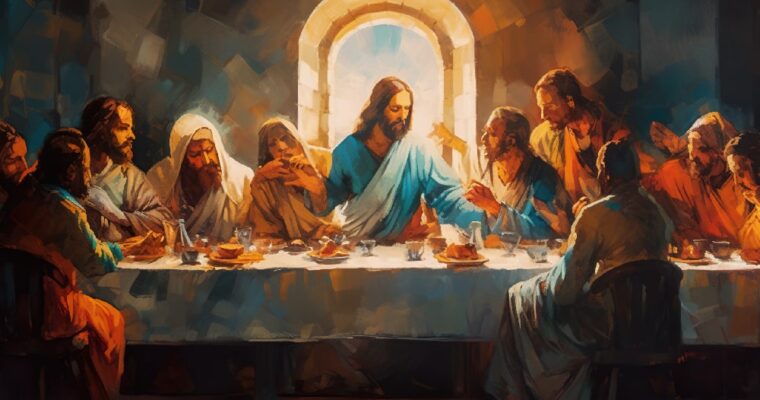
The public life of Jesus ends with the Last Supper and the Farewell Address to the disciples. What will happen next will change the fate of the world and of humanity forever.

Jesus the Good Shepherd: Why the Comparison?

Jesus the Good Shepherd: Why the Comparison?

Contents1 Why Does Jesus Compare Himself to the Good Shepherd?2 Prayer to Jesus the Good Shepherd3 When Is Jesus the Good Shepherd Celebrated? On the fourth Sunday of Easter, the liturgy celebrates Jesus the Good Shepherd. Where does this image of Christ originate? We are…

Laetare and Gaudete Sunday: The Sundays of Joy

Laetare and Gaudete Sunday: The Sundays of Joy

Contents1 What Does Laetare Sunday Mean?2 What Is Gaudete Sunday?3 The Rose Chasuble: Its Meaning Situated within two penitential and anticipatory periods of the liturgical year, Gaudete Sunday and Laetare Sunday celebrate the joy of faith and the hopeful anticipation of believers. Anyone who claims…

Egg tempera: this is how sacred icons are painted

Egg tempera: this is how sacred icons are painted

Sacred icons: genuine expressions of religiosity, symbolic works that transcend art. How are they painted? Discovering egg tempera

Much of the deep symbolism that permeates sacred icons comes from the colours with which they are painted. Each colour in Christian iconography has a precise meaning, codified over the centuries and handed down for generations by the artists of ancient sacred icons. It remains valid today for the authors of hand-painted icons. Thus, white is the expression of Divine Light; overseas blue symbolises God; dark red symbolises humanity; bright red symbolises beauty; black symbolises death and evil. How were these colours spread? And how are they still used today, for sacred handmade icons? The secret of religious icons is in the egg tempera.

What is egg tempera

It is in the Byzantine world, the cradle of the cult of icons, that the egg tempera technique was born. This system of colour mixing then spread throughout the Mediterranean and reached its peak in the Renaissance, where all the great masters used it until the emergence of oil painting. Some 19th-century painters will then take it up.

There were several methods for producing colour in tempera painting: the most classic, still in use today, involves mixing egg red with colours, usually pigment powders of mineral, vegetable, or animal origin, in equal parts of powder and water, with one part of egg. But there were more imaginative systems, such as beating the yolk with cut fig branches, from which the characteristic “milk” emerged, which reacted chemically with the egg, delaying the drying of the colours during the laying phase and favouring coagulation. Egg-red tempera is denser and more malleable than other temperas, making it suitable for very accurate work.

The pictorial technique of egg tempera in sacred icons

Among the pictorial techniques, the egg tempera is very ancient, and already contains symbolic and spiritual elements. Moreover, the Russian and Greek sacred icons convey symbolic meaning in every aspect, from the support to the colour to the techniques used, right down to the final result. In the case of painting with egg tempera, we see the egg yolk, which symbolises the hidden life ready to be born. Still, also Christ who rises from the dead, mixed with white wine, which in the Eucharistic celebration becomes a manifestation of Christ and the Covenant. This emulsion is then used to dissolve the powder pigments, which make up the colours, each with its own symbolism, as we have mentioned, sometimes with the addition of a fragrant essence, to hide the unpleasant smell of the mixture. Even in the fragrance, there is a symbolic value, which refers to the anointing of Jesus.

The Egg Easter

Read more:
The Egg as a symbol of Easter
Whenever we think of Easter, apart from the religious significance of this festival for Christians…

symbolism that transcends matter, therefore, every detail is aimed at expressing a superior concept, a meaning. It is no coincidence that we have defined the creator of icons as a writer rather than a painter, capable of intertwining all his work with hidden spiritual messages, and a sacred icon as a theological mission, rather than an artistic one. Thanks to painting with egg tempera, life enters colour, and with it the Word of God.

The iconography of the saints, each represented with their attributes, symbols, clothes and colours, is also indebted to this pictorial technique.

In the painting of the icons, the colours obtained from natural pigments, mixed with egg red, were then combined with white or soot to create shades. The volume of the shapes was defined using darker shades first and gradually lighter. The painting was finally passed with a transparent paint that protected it and emphasised the colours.

The rules that define the creation of the icons are reported in special manuals, the hermeneutics, to which the iconographer must adhere precisely.

Sacred Icons

Read more:
Sacred Icons: the ultimate guide
Only mentioning them evokes exotic and charming suggestions, a way to live religion that is far from the modern concept only at first glance.

Egg tempera: recipe

Do you want to try preparing egg tempera at home? Get yourself an egg, wine vinegar and some water.
First, separate the yolk from the egg white, making sure not a bit of it remains. You can help yourself with paper towels for this. Drop the yolk into a container, gently removing the skin that encloses it. Add the same volume of water and a few drops of wine vinegar. Stir until a uniform emulsion is obtained. The vinegar will keep the mixture flowing for longer.
At this point, take the dulling pigments and let your creativity run wild!

The Holy Trinity of Rublev
Buy on Holyart
Our Lady of perpetual help icon with polychrome decorations
Buy on Holyart
Ancient Russian icon Coronation of the Virgin 19th century 40x34 cm
Buy on Holyart
The Episode of the Expulsion of the Merchants from the Temple of Jerusalem

The Episode of the Expulsion of the Merchants from the Temple of Jerusalem

The expulsion of the merchants from the Temple of Jerusalem represents an act of rebellion by Jesus against a now outdated and corrupted religious tradition, in favour of the new purity of spirit and the hope that He came to bring. Among the many episodes…

What is meant by freedom of religion? 

What is meant by freedom of religion? 

Contents1 Why is freedom of religion a right?2 When was freedom of religion born?3 Why is Article 19 crucial?4 What is the only limit to religious freedom? Freedom of religion is a fundamental human right, defined by many national constitutions. That’s why it’s so important.…

Dedication of the Church: Here Is How a New Sacred Building Comes into Being

Dedication of the Church: Here Is How a New Sacred Building Comes into Being

For the Christian religion, the dedication of the church is a moment of fundamental importance. It is the solemn consecration of a new place of worship.

At the heart of every religious community, the birth of a new place of worship represents an event of profound spiritual and symbolic meaning. The construction of a sacred place is not merely the building of walls and architectural forms, but a process imbued with history, tradition, and faith. This process has deep roots in the history of the world’s major monotheistic religions, such as Christianity, Judaism, and Islam, and symbolises the offering of a physical place to the divinity and its consecration for spiritual use.
In the Christian tradition, the culmination of this long journey is represented by the ceremony of the dedication of the church, an ancient rite that confers a special blessing upon the architectural structure, consecrating it to divine service and to the community. The act of dedication is based on the words and teachings of Jesus Christ, who speaks of the church as the spiritual body of believers.

The Major Divisions in the Christian Religion

Read more:
The Major Divisions in the Christian Religion
The Christian religion is actually made up of many religious denominations, similar in some aspects…

“The church is a building in which God and man wish to meet; a house that gathers us together, in which we are drawn towards God, and where being with God unites us with one another,” wrote Pope Emeritus Benedict XVI on the occasion of the dedication of the Roman parish of Santa Maria, Stella dell’Evangelizzazione.
The birth of a new sacred building is not merely an architectural or artistic matter. It embodies the collective faith of the entire community. It is not the materiality of stones and marble that constitutes the temple, but the living Church that gathers within it, made up of the faithful.
The term church has always referred not only to the physical building, but also to the place where the Christian community gathers to listen to the Word of God, share prayer, and celebrate the sacraments.

What Does the Dedication of a Church Mean?

Dedication is the consecration of a church, the solemn liturgical act through which the building is permanently assigned to sacred use, thus taking on profound spiritual and symbolic significance.
At the end of construction, every church is solemnly blessed. This first rite serves to invoke divine protection and presence upon it. However, the blessing alone is not sufficient for that place to be specifically dedicated to sacred worship. In fact, it is possible to bless places not exclusively used for worship, such as gyms, warehouses, and halls, which may subsequently return to hosting other activities but which, thanks to the blessing, temporarily acquire a sacred character that renders them suitable for celebrations.

It is the dedication of a church that represents its definitive consecration as a sacred place, a place in which the meeting between humankind and God is solemnly celebrated. In the ecclesiastical context, every church—whether a cathedral or a parish church—requires consecration.
For the dedication to take place, the church must have a fixed altar. According to canon law, the altar—that is, the table on which the Eucharistic Sacrifice is celebrated, the symbol of the Body of Christ—is considered fixed when it is built in such a way as to be joined to the floor and cannot be removed, whereas it is called mobile if it can be transported. A consecrated and dedicated church must have a fixed altar, while in all other places designated for sacred celebrations, the altar may be fixed or mobile.

The tangible sign that attests to the consecration is represented by the twelve Greek-style crosses, which are affixed, painted, or embedded in various points of the church. These crosses are not only emblems of Christ but also represent His triumph; they are consecrated with an anointing to signify that the place is subjected to His dominion. Their number, twelve, recalls the Apostles, fundamental witnesses of Christ and the original pillars of the Christian temple.
In the past, it was required that at least some elements of the church be constructed of stone. This choice was motivated by the durability of stone over time, symbolising the perpetual dedication to the sacred. As a result, many churches not made of stone were not consecrated. Famous examples include the Basilica of Notre-Dame in Paris, consecrated only in the 19th century, and that of San Petronio in Bologna, whose consecration took place in the second half of the 20th century.
The consecration of a church goes beyond mere formality; it is an act filled with symbolic and spiritual meaning, which confers upon the building a sacred and eternal dimension, linking the past, present, and future of the faith in a single solemn ritual.

the 12 apostles

Read more:
Who were the 12 apostles and discover the difference between apostles and disciples
Who were the 12 apostles, companions of Jesus in the short span of his mission and who received…

The Rite of the Dedication of a Church

According to the Code of Canon Law, it is the responsibility of the diocesan Bishop to provide for the dedication of a church. The rite of dedication has ancient origins, dating back to the time of Emperor Constantine and his edict on religious freedom in AD 313. From the moment Christians were permitted to leave the catacombs and erect sacred buildings dedicated to their worship, bishops began travelling to consecrate new churches in every city, fostering a new, joyful sense of unity and fellowship among peoples, all united in the body of Christ in a single harmony of participation, gratitude, and joy.
From the beginning, the heart of the celebration was the Eucharist, but over time, the dedication ceremony has become enriched with various rites. The current ritual, the Ordo dedicationis ecclesiae et altaris of 1977, has been simplified compared to the past and returns to the heart of the Eucharist, introducing significant symbolic rites. These include the sprinkling of blessed water, symbolising purification and baptism, the possible placement of the relics of saints beneath the altar, the anointing of the altar and the walls of the church with chrism, the incensation and illumination of the building, signs of celebration and of the light of Christ. The entire ceremony converges towards the ambo, the specific place for the proclamation of the Word of God, and the altar.

The Parts of the Rite

The rite of dedication opens with a solemn procession and entrance into the new church. This first phase highlights two distinct moments: the presentation of the church and its symbolic keys to the Bishop, and the sprinkling of the building. The Bishop blesses the water, symbol of purification, and with it sprinkles the people, who are the spiritual temple, along with the walls of the church and the altar.
This is followed by the Liturgy of the Word, during which three readings from the lectionary are proclaimed. The first recounts the passage from Nehemiah, which narrates the people of Jerusalem gathered around Ezra to hear the proclamation of the law of God. Before the Readings, the Bishop solemnly consecrates the church by showing the lectionary and declaring: May the Word of God always resound in this place.

The central moment of the celebration is the dedication and anointing of the church and the altar. After the invocation of the saints, the Bishop pronounces the great prayer of dedication, expressing the intention to consecrate the new church to God in a perpetual manner and asking for His blessing. This is followed by the rites of anointing of the altar and the church walls, the incensation of the altar and the entire liturgical space, as well as the covering and illumination of the altar and the entire assembly. After the chant of the Litany of the Saints, the relics of martyrs or saints are placed beneath the altar, symbolising the sacredness and holiness that flow from the sacrifice of Christ.
Once the altar has been prepared, the Bishop presides over the Eucharist, the oldest and most significant part of the entire rite. Through the celebration of the Eucharistic sacrifice, the principal purpose for which the church was built and the altar erected is clearly achieved and manifested through the signs.

Marriage annulment: when permitted by the Catholic Church

Marriage annulment: when permitted by the Catholic Church

Contents1 The annulment of the marriage at the Sacra Rota2 The causes of the annulment of the marriage3 The encyclical Amoris Laetitia of Pope Francis4 Can divorced people get married in church? Marriage annulment: when love is not enough. The Catholic Church allows it, but…

How to Make DIY Favours: Our Tips

How to Make DIY Favours: Our Tips

Embroidered pouches, glass jars, simple little boxes – there’s no limit to imagination and creativity when it comes to DIY favours. But where can you find the right materials? Making DIY favours for a Baptism, First Communion, Confirmation, or even a Wedding? It can be…

Famous Religious Conversions: 10 Celebrities Become Believers

Famous Religious Conversions: 10 Celebrities Become Believers

Actors and singers, soubrettes and directors. 10 famous religious conversions that show us how, before God and faith, we are only men and women in search of a higher sense of existence

We are used to conceiving the personalities of the world of entertainment, cinema and music as men and women different from us, far from the existential problems that involve us and are part of our daily lives. Of course, this is not the case. While these people live situations that are undoubtedly different from those of those who lead a “normal” life, they are still subject to the emotional and spiritual experiences typical of humanity from its origins. In particular, the perception of the divine and the relationship with God. That is why it is not uncommon to talk about famous religious conversions: celebrities known to all for their successes in various fields who have become believers.

Speaking of famous conversions, the first thought inevitably goes to Saul’s epiphany on the road to Damascus, that is, Saint Paul the Apostle, a former tent-maker, a Hellenised Jew who became the prominent missionary of the Gospel of Jesus among Greeks and Romans. He was not a celebrity, but his transformation from a terrible persecutor of Christians to an apostle of the people makes us understand how deeply the discovery of faith can change an individual’s existence. We also think of Saint Augustine of Hippo, an inveterate sinner, who found in God not only a new life, but a new perception of himself, as we read in his surprising Confessions, a valid declaration of intent, the admission by an exceptional man, who became Father and Doctor of the Church, of how one can, at any time, revolutionise one’s life.

Doctors of the Church

Read more:
Doctors of the Church: who are they and what are the requirements for having this title
On 1 October we celebrate Saint Therese of Lisieux, one of the four women proclaimed Doctors…

But what leads a famous actor or singer to embrace the Catholic faith? As we have mentioned, these are men and women no different from us, like all of us, subject to doubts, fears, and more or less traumatic experiences. Sometimes it is enough to scroll through their biography to understand what led them to become fervent, faithful. Often, you can learn it directly from them, who, just like Saint Augustine, choose to share with the world the story of spiritual evolution that led them to change.

Here is a list of famous religious conversions, some of which are really amazing.

Nek

Filippo Neviani, aka Nek, a singer originally from Sassuolo, told on several occasions about his spiritual and human journey, from the experiences in Medjugorje, which transformed him from a lukewarm Christian to a fervent believer, to the discovery of the mediatorial work of the Virgin, to how he revolutionized his life, as a man, as a husband, as a father, and also as an artist, after embracing the faith. A proud supporter of the right to life, of respect for life in all its forms, Nek found in Chiara Amirante, founder and president of the New Horizons Community, a guide and a help in the search for the new self, in the healing of his own heart, so much so that he became a Knight of Light, men and women committed to the projects of the association,  from evangelisation to solidarity and support interventions.

Walter Nudo

The conversion of Walter Nudo, former boxer and actor, was not linked to a single episode, to a sudden epiphany. He himself stated that: “The journey of faith is a journey where you stumble and get up, together with God.”  A path of growth and self-improvement, therefore, led by the artist for years, also following the model and inspiration of religious figures such as Saint Teresa of Calcutta and Saint John Paul II. He has always felt a deep spiritual bond with Natuzza Evolo, the mystic close to Padre Pio, from whom he says he received a spiritual embrace after her death.

Claudia Koll

With a past as an adult actress behind her (she was one of the muses of Tinto Brass),  Claudia Koll approached the Catholic faith during the Jubilee of 2000, after passing through the Holy Door and meeting Pope Wojtyla. From then on, a total transformation began, which led her first to approach the Catholic family from which she had left, then to a real mystical crisis, and finally to the choice to dedicate herself entirely to the church. Today, she is the artistic director of the Star Rose Academy, a training school founded by the Ursuline Sisters of the Holy Family, offering young people a three-year course in high-level artistic training in the field of entertainment and beyond. Talking about herself, Claudia confessed that she felt very close to the Prodigal Son, welcomed by the Father at a time in her life when no one else could help her anymore.

Sylvester Stallone

Despite being born into a Catholic family, American actor Sylvester Stallone has lost his faith. Only after turning 70 did the protagonist of great successes such as Rocky and Rambo return to embrace the Gospel. Not only that, it helps pastors and preachers in their work of evangelisation and considers the church the gymnasium of the soul. It is no coincidence that his character, the boxer Rocky Balboa, also discovers Jesus in the sixth film dedicated to his story.

Antonio Banderas

For many years, the Spanish actor and producer Antonio Banderas has been travelling to Malaga, Spain, to participate in Holy Week, an important religious, social and cultural event characterised by processional rites that take place from Palm Sunday to Good Friday, in which the confraternities lead through the city the Mysteries related to the Passion of Jesus. Banderas himself takes part in the processions, leading the throne of the Most Holy Virgin Mary of the Tears and Favours of the Royal Brotherhoods through the streets of the city. A Catholic by birth, Banderas moved away from the faith as a teenager, but later returned to embrace it, driven by a new need for spirituality and a desire to make Christ’s commandment of Love his own.

Passion of Jesus

Read more:
The events of the Passion of Jesus: from the Last Supper to His Crucifixion
The Passion of Jesus is the highest and most terrible moment of his parable among men. From…

Andrea Bocelli

Agnostic for years, singer Andrea Bocelli has embraced religion to give meaning to life. “Without faith, our earthly transit is a tragedy foretold that, at best, ends with old age, sickness and death,” he admitted in an interview. After years of trying to give meaning to life by relying only on logic and reason, he returned to questioning everything and seeking a higher meaning in every event, good and bad, also thanks to reading Leo Tolstoy.

Al Pacino

Among the famous religious conversions is that of the actor Al Pacino, a practising Catholic who, having distanced himself from religion in his youth, returned to embrace it during the filming of The Godfather. Perhaps it was precisely the film’s theme of sin and redemption, Francis Ford Coppola, and the rich Catholic imagery present in the Corleone family’s events that aroused Al Pacino’s spiritual awakening.

Justin Bieber

For those who believe that only when they reach a certain age do famous people have a kind of withdrawal that leads them to embrace religion, the case of Justin Bieber is indicative of the opposite. The young Canadian singer has always professed to be a fervent Catholic, has declared on several occasions that he prays before each concert, and has pointed to Jesus as his role model. He and his wife, Hailey Baldwin, arrived at the wedding without having sex, but his observance of good Christian rules doesn’t stop there. After a youth plagued by arrests for drunk driving, acts of vandalism and other pranks, today Justin, who is not yet thirty years old,  is engaged in charitable works (he brings food to the homeless) and evangelises through his social channels, empowered by the ascendancy he has over the younger boys and girls who love and follow him.

Saint Matthew, apostle, evangelist and martyr

Read more:

Saint Matthew, apostle, evangelist and martyr
On 21 September, Saint Matthew is celebrated evangelist, apostle and martyr. Who…

Jonathan Roumie

A few actors who have portrayed Jesus in various films have had no personal consequences for their approach to the character. This is inevitable. Think of Robert Powell, who was the protagonist of the screenplay Jesus of Nazareth (1977) by Franco Zeffirelli, and think of Jonathan Roumie, the protagonist of the most extensive media project ever made in crowdfunding: The Chosen, the first TV series about the life of Jesus of Nazareth, based on the stories told in the Gospels. To sustain this role, the actor, who was already a practising Catholic, learned Aramaic, the spoken language of Christ himself and his disciples. On the occasion of the series’ presentation, he met Pope Francis, crowning his lifelong dream. The actor admitted that this role allowed him to deepen his experience as a man and as a Christian. Roumie has also always had a special bond with Padre Pio.
Mel Gibson

In addition to the actors who played Jesus, some directors wanted to tell his story. If Martin Scorsese wanted to become a priest and studied to become one, bringing his tormented human and religious experience to the screen with immense films such as The Last Temptation of Christ, Mel Gibson, the Australian actor and director of The Passion of the Christ (2004), is a practising and very devout Catholic, but it has not always been so. After the years of youthful success, accompanied by absolute disinterest in religion, he wanted to get closer to the faith by making this very controversial film, with which he told the story of Jesus realistically to the point of crudeness, also deserving criticism from the Jewish world. So we are defended: “This is not a story of Jews against Christians: Jesus himself was a Jew, his mother was a Jew, and so were the twelve apostles. But it is the truth that, as the Bible says, “He came among his own and his own did not receive him”; I cannot hide it. But this does not mean that the sins of the past were worse than the sins of the present. Christ paid the price for all our sins. This film is about hope, not offence.”
Today, Gibson proudly brings his faith into Hollywood circles and is engaged in social work.

10 curiosities about the symbols of the Passion of Christ

Read more:

Easter: 10 curiosities about the symbols of the Passion of Christ
The symbols of the Passion of Christ are an integral part of the Solemnity of Christian Easter…

Five saints who suffered for love

Contents1 Saint Valentine of Terni2 Saint Augustine of Hippo3 Saint Rita of Cascia4 Pier Giorgio Frassati5 Saint Elizabeth of Hungary Since the origins of Christianity, there have been stories of saints in love that constitute examples of love, humanity, and fragility. Here are just a…

Wedding Favours: 10 Ideas from Our Catalogue

Wedding Favours: 10 Ideas from Our Catalogue

Useful and decorative, sacred or secular, wedding favours are an important choice and should not be underestimated. Here are some original ideas from our store. When planning a Catholic wedding, no detail can be left to chance. Whether you prefer a simple ceremony with a…

The Sacred Belt: One of the Most Precious Relics of the Virgin Mary in Italy

The Sacred Belt: One of the Most Precious Relics of the Virgin Mary in Italy

The Sacred Belt kept in Prato is a Marian relic of great importance, the centre of a devotion that has lasted for eight hundred years.

Among the many Christian relics that have always characterised the Catholic religion, arousing popular devotion and gathering crowds of faithful and pilgrims around the places of worship that guard them, one is particularly important for the cult of the Virgin Mary. This is the Sacred Belt, also known as the Holy Girdle, a religious and civic symbol of Prato, the city where it has been preserved since the Middle Ages in the chapel that bears its name inside the Cathedral Basilica of Saint Stephen. What is it? The Sacred Belt is said to be the Virgin Mary’s girdle, given by her to the incredulous Saint Thomas at the moment of her Assumption into heaven.

relics of the saints

Read more:

Relics of the Saints: The List of the 10 Most Fascinating Ones
The relics of the saints traverse the history of Christianity as testimonies of love…

From a purely practical point of view, it is a strip of goat’s wool, about 87 centimetres long and very thin, light green in colour, woven with gold thread, closed on one side with a tassel, and on the other with a fold and an emerald green ribbon. Having arrived in Prato in medieval times, the Sacred Belt was declared the property of the entire city in 1348, with a decree establishing that the relic should belong two-thirds to the Municipality and one-third to the Diocese. Three keys were forged to open the reliquary in which the Christian relic was kept under the altar of the Chapel of the Holy Girdle, and two of them were entrusted to the Municipality, one to the Diocese.

That of Prato is certainly not the only girdle attributed to the Virgin Mary. The existence of Virgin’s belts in various churches, from Jerusalem to Constantinople, runs through the history of Christianity, just like many other traditions linked to holy relics. But the civic as well as religious role assumed by the Sacred Belt of Prato since its arrival in the city has always made it a particularly precious treasure, as well as the focal point of great devotion. This devotion finds its highest expression on 8 September, the day on which the Nativity of Mary is celebrated, when the Sacred Belt is displayed during the Historical Pageant, or Feast of Our Lady of the Fair, an ancient celebration halfway between sacred and profane which culminates precisely in the solemn exposition of the Sacred Belt from the pulpit of Prato Cathedral.

Nativity of Mary

Read more:

The Nativity of Mary, when and why is it celebrated?
8 September is the birthday of Mary, the mother par excellence, the woman who changed the history…

Our Lady of the Belt

How is it possible that such a common object, of everyday use, has over time come to assume such value as to be considered the very symbol of a city? Perhaps it is precisely its common nature, its belonging to a domestic and human dimension, that makes the Sacred Belt so special. For eight hundred years the inhabitants of Prato have sought, along the threads of that thin strip of fabric, their personal contact with the Virgin Mary, their special bond with her, a sort of bridge between earth and heaven. But not only that. The people of Prato have made the Holy Girdle the standard of their claims for civic and political autonomy against the neighbouring cities of Florence and Pistoia. As had already happened on the occasion of great battles and historical events, men chose to fight for their ideals in the name of the Virgin Mary. Let us recall above all the Battle of Lepanto, on 7 October 1571, fought by the Holy League under the sign of the Holy Rosary, to the point of establishing the beginning of the devotion to Our Lady of the Rosary.

Feast of Our Lady of the Rosary

Read more:

7th October: Feast of Our Lady of the Rosary
Our Lady of the Rosary is celebrated on the 7th of October. Born from the memory of a Christian military victory…

The Sacred Belt, then, is said to have been handed over by Mary to Saint Thomas when she ascended into heaven. According to ancient traditions of the 5th–6th centuries, after announcing to the Virgin the approach of death, an angel of God gathered around her all the apostles, from every part of the world, so that they could assist her. The only one who did not arrive was Thomas. After Mary died, her body was placed in a tomb closed by a great stone in the Valley of Josaphat, and only then was Thomas brought by the power of the Angel from India to the Mount of Olives, where the Virgin appeared to him in a shining cloud as she ascended into heaven. It was then that Mary threw down the girdle to him, to bear witness to the miraculous event he was witnessing.

Saint Thomas himself is said to have given it to a priest, and from then on the religious relic passed from hand to hand until it reached Michele, a merchant of Prato who around 1141 had gone on pilgrimage to Jerusalem. There he met Maria, a young woman who was a descendant of the priest who had brought it as her dowry. Returning to his native city, Michele brought the Sacred Belt with him and kept it in a basket of rushes, and only upon his death did he hand it over to the provost of the parish church of Saint Stephen.

Soon many stories spread about the Belt and the miracles attributed to it, to the point of arousing a great popular devotion that went beyond the walls of Prato. It was then that the relic was stolen by Giovanni di ser Laudetto, called Musciattino, who in 1312 took it to deliver it to the people of Pistoia. As soon as he left the city, however, he was enveloped in impenetrable fog, to the point that, without realising it, instead of arriving in Pistoia he turned back on himself and returned to Prato, where he was captured and severely punished for his blasphemous crime. After having his right hand cut off, he was taken to the banks of the Bisenzio River tied to the tail of a donkey, burned alive, and his ashes scattered in the river.

miracles

Read more:

Miracles: what they are and how they are classified
Healings and exorcisms, apparitions, mastery over nature, even the resurrection of the dead. Jesus and his miracles…

Sacred art has handed down many beautiful representations of Our Lady of the Belt. Usually the scene depicted is that of Mary handing the girdle to Saint Thomas, leaning out from heaven and extending it with her hand, while the angels around glorify her.

Towards the end of the 14th century, the cult of Our Lady of the Belt became linked to that of Our Lady of Childbirth, because the relic had girded the womb that had carried the Saviour for nine months.

The Chapel of the Holy Girdle in Prato

The Chapel of the Holy Girdle is located near the entrance to the Cathedral Basilica of Saint Stephen. After the attempted theft by Musciattino, it became necessary to guard the relic in a safer place. In 1346 the Holy Girdle was moved by order of the Municipality to an altar at the back of the church, managed by the Opera della Cintola. Once the necessary funds were collected, construction of the new chapel began, and it was built between 1386 and 1390. The task was then entrusted to Master Agnolo Gaddi to fresco the entire Chapel with scenes recounting the Story of the Virgin and the Girdle. The beautiful statue adorning the altar and depicting the Madonna and Child, however, is by Giovanni Pisano. Later, work was completed on the new façade, the external pulpit by Donatello from which the Belt is still displayed to the faithful today, as well as the internal gallery with the splendid and precious bronze railings by Maso di Bartolomeo, Donatello’s collaborator.

After the basket of rushes with which Michele brought it to Prato, the Belt was preserved in an ivory casket, then in the splendid Chapel of the Sacred Belt commissioned from Maso di Bartolomeo, then in a silver casket, until the magnificent crystal reliquary made in the 17th century. Today the Sacred Belt is kept in a silver, white gold and crystal case made by the master goldsmith Paolo Babetto and inaugurated in 2008.

Thomas Aquinas and the Hierarchy of Angels

Thomas Aquinas and the Hierarchy of Angels

On 28 January, the liturgical memory of St. Thomas Aquinas, ‘angelic doctor’ and author of the most famous treatise on medieval theology, is celebrated. Thomas Aquinas lived in the 12th century. He was a Dominican friar, but he is remembered above all for his merits…

Who Are the 14 Holy Helpers

Who Are the 14 Holy Helpers

The Holy Helpers are invoked in situations of illness and serious danger. Between medieval beliefs and faith, here is who they are and how their cult developed. Invoking God, the Virgin Mary, Angels, or Saints to obtain help and comfort in times of danger, serious…

What is the World Day of Consecrated Life

What is the World Day of Consecrated Life

Consecrated Life Day recognises the valuable contribution of men and women who have chosen to consecrate their lives to God.

On 2 February 2024, at 5:30 p.m., the solemn Eucharistic Celebration presided over by the Holy Father Francis for the World Day of Consecrated Life will be held in the evocative setting of Saint Peter’s Basilica. A particularly significant event, since this year the Mass will be enriched by the participation of the members of the International Meeting of consecrated men and women, in preparation for the 2025 Jubilee that will have as its theme Pilgrims of hope on the path to peace. This meeting will offer a unique opportunity for dialogue, prayer and spiritual deepening for those who have dedicated their lives to the consecrated vocation.

St. Peter's Basilica

Read more:

Saint Peter in the Vatican: Church symbol of the whole Christian world
Saint Peter in the Vatican is a basilica full of meanings, mysteries…

The Day of Consecrated Life is a celebration established by the Catholic Church to honour and recognise the valuable contribution of men and women religious who have consecrated their lives to God through the vows of poverty, chastity and obedience. This day, which occurs annually on 2 February, coincides with the Feast of the Presentation of Jesus in the Temple, the evangelical episode in which Jesus was presented to the Temple according to Jewish tradition. This celebration, established in the fourth century AD, is crucial because it represents a significant point of connection between the story of Jesus, Christianity, and the cultural roots of Judaism. In the Old Testament, strict rules and precise ceremonies were prescribed upon the birth of a child into a family, especially if it was a male child. The Feast of the Presentation of Jesus in the Temple, therefore, not only celebrates a specific event in the life of Jesus but also recalls the deep roots in Jewish traditions, emphasising the importance of the purification rites and symbols of gratitude present in the Old Testament.

Presentation of Jesus

Read more:

Presentation of Jesus at the temple until the feast of Candlemas
The presentation of Jesus to the temple is celebrated on February 2. Also known as the Feast of the Purification of Mary…

But when was the Day of Consecrated Life established? It was commissioned by Pope John Paul II in 1997 to recognise the fundamental role of men and women religious in the life of the Church and express gratitude for their dedicated service. On this day, many religious participate in liturgical events and spiritual retreats, while ecclesial communities often organise initiatives to show appreciation and support for religious. The World Day of Consecrated Life is not only a time of solemn prayer, but an opportunity to reflect on the call to consecrated life and to promote greater awareness in the Catholic community and beyond. Those who embrace the consecrated life are not only witnesses of divine joy and grace but also of communion.

The distinctive element of consecrated life is fraternal life in community: this is not only a tool for fulfilling the call but also an authentic response to the call of the vocation, not imposed but freely embraced. The fraternal life thus becomes the vehicle through which the vocation develops and is realised in the shared witness of the joy and love of God.

The meaning of consecrated life

Consecrated life is a unique form of dedication to God manifested by men and women who choose to publicly embrace the three fundamental counsels: chastity, poverty, and obedience. These principles of life are called “evangelical” because they reflect the way of life of Jesus Christ, as described in the Gospels. Men and women who embrace this way of life can be clergy or laity, as long as they choose to dedicate themselves in a special way to God through the public profession of the evangelical counsels. The state of consecrated life is based precisely on this public profession of the evangelical counsels, not on apostolic action or everyday life, but on the imitation of Christ, on the response to His call. Evangelical counsels become binding only when they materialise through the juridical institution of the vow. Consecrated persons should not be confused with members of the clergy, that is, those who have received the Sacrament of Holy Orders, regardless of the state of life they have chosen.

Priestly ordination

Read more:

Priestly Ordination: Here’s How One Becomes a Priest
With Priestly Ordination, a man becomes a priest in every sense. Here’s how the rite unfolds…

Those who embrace the profession of the evangelical counsels often live within institutes of consecrated life, societies erected or approved by ecclesiastical authority, composed of individuals of the same sex or mixed. Institutes of consecrated life distinguish between religious and secular ones and, in turn, can be of clerical or lay nature.
Religious Institutes represent “a society whose members, according to their own law, make public vows, perpetual or temporary, to be renewed upon expiration, and lead a fraternal life in community”.  Consecrated persons embrace a state of life that implies a radical choice in Christ, at the service of the Lord and humanity, following the prophetic intuition of their Holy founders. Their mission is often guided by prayer and service to others, through the reception of the most fragile and needy.
Secular Institutes are distinguished from religious ones because their members remain in the world, without the obligation to lead an everyday life. In turn, they can be institutes of pontifical law or diocesan law, depending on whether they were erected by the Holy See or by the local bishop. The members of these institutes are committed to living the evangelical counsels, but in a more flexible context of everyday life, staying in their own homes. While remaining in the fabric of the world, they seek to embody deep spiritual principles through their daily lives.

How and when the World Day of Consecrated Life takes place

On 2 February of each year, in conjunction with the Feast of the Presentation of Jesus in the Temple.

The bond with the Candlemas

On 2 February, Candlemas is also celebrated, a festival that commemorates the triumph of light over darkness and symbolically marks the end of the Christmas holidays and the beginning of the Easter journey. Initially conceived as a Marian celebration, recalling the Purification of Our Lady, the feast subsequently acquired a Christological meaning, focusing on Jesus and his mission as Saviour of the world.
Equally significant is the popular dimension of this festival, witnessed by proverbs and customs rooted in the transition from winter to spring, which 2 February symbolises. Among these proverbs: “Dark candle of winter, you are not afraid” and “for Saint Candlemas, if it snows or rains, in winter we are out”. The festival of Candlemas is intertwined with the symbolic triumph of light over darkness, highlighted by the tradition of blessing and lighting candles. This rite not only illuminates physically, but marks a crucial passage, marking the end of the Christmas holidays and inaugurating the spiritual path to Easter.

candlemas

Read more:

La Candlemas: history and curiosities
La Candlemas, the story of a party with great suggestions that has its roots in pre-Christian rites linked…

Perhaps it is precisely in this desire to celebrate the light that Candlemas is linked to the Day of Consecrated Life. The choice of men and women to consecrate themselves to God is dictated by their awareness of being loved by Him, leading them to choose to embark on a life within a religious community. Religious consecration leads them to become for others a tangible sign of the presence of the Kingdom of God, an anticipation of the eternal joys of heaven, joys linked to the awareness of consolation and mercy. Consecrated persons experience this joy through the work of the Holy Spirit and the certainty of divine love for each individual.