Saint Cajetan of Thiene is venerated in Naples as the Saint of Divine Providence, the protector of workers and the unemployed. Despite his origins in Vicenza, he became one of the most loved and venerated saints in Naples, to the extent that he is included among the co-patron saints of the city. This love and devotion stem from the fact that Saint Cajetan devoted his entire life to God and to the service of others, becoming a living example of poverty, prayer and care for those in need. Born into a noble family, after a distinguished career as secretary to Pope Julius II, in 1523 he founded, together with Bonifacio Colli, Paolo Consiglieri and Gian Pietro Carafa, the Congregation of Clerics Regular, commonly known as the Theatines. The Theatines were distinguished by their communal way of life based on poverty, prayer and dedication to others, as well as by their decision to own nothing, relying solely on Divine Providence. Their unconditional faith was reflected in the way Saint Cajetan faced life’s challenges and hardships, always certain that Divine Providence would provide for his needs.
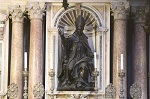
This highly-detailed statue was made and finely worked in Italy.
Saint Cajetan demonstrated his commitment to serving others through countless works of charity and assistance, founding hospitals, orphanages and homes for those most in need. He also devoted much of his time to the education of the faithful and to evangelisation.
The life of Saint Cajetan is an example of faith, humility and love for God and for one’s neighbour. His dedication to Divine Providence and to caring for those in need has made him a point of reference for those seeking strength and hope in life’s difficulties. His legacy continues to live on in the hearts of those who turn to him for comfort and consolation.
Saint Cajetan felt a profound desire to train and dedicate to the Church priests who would embrace poverty and entrust themselves completely to Divine Providence. These priests owned nothing and were not permitted to beg for alms, but were content with what the faithful freely offeredthem and with what Providence provided, following the original apostolic rule. Saint Cajetan’s desire was rooted in his deep faith in Divine Providence. He firmly believed that God would provide for all the needs of His children and that true wealth lay in trusting God and loving one’s neighbour. For this reason, he wished the Theatines to embrace this life of poverty and trust in Providence.
Read more:
Giving alms: is it charity?
Almsgiving to the poor is a manifestation of mercy strictly connected to the duties of a good Christian …
The Theatines followed the example of the Apostles, who relied on the generosity of the faithful and on God’s Providence for their material needs. Saint Cajetan wanted his priests to imitate this simplicity and absolute trust in God, freeing themselves from material concerns so that they could devote themselves entirely to the service of God and others. This way of life required great faith and humility.
Saint Cajetan’s teaching continues to inspire those who seek to follow his path of poverty and trust in Providence, of simplicity and humility, in the certainty that God will provide for every need.
Saint Cajetan and the Tradition of the Neapolitan Nativity Scene
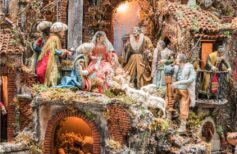
Saint Cajetan of Thiene has an important connection with the tradition of the Nativity scene, which still holds fundamental importance in Naples today. Although the origin of the Nativity scene is attributed to Saint Francis of Assisi, who created the first Nativity scene at Greccio in 1223, Saint Cajetan is regarded as the one who introduced the practice of setting up Nativity scenes in churches and private homes during the Christmas season.
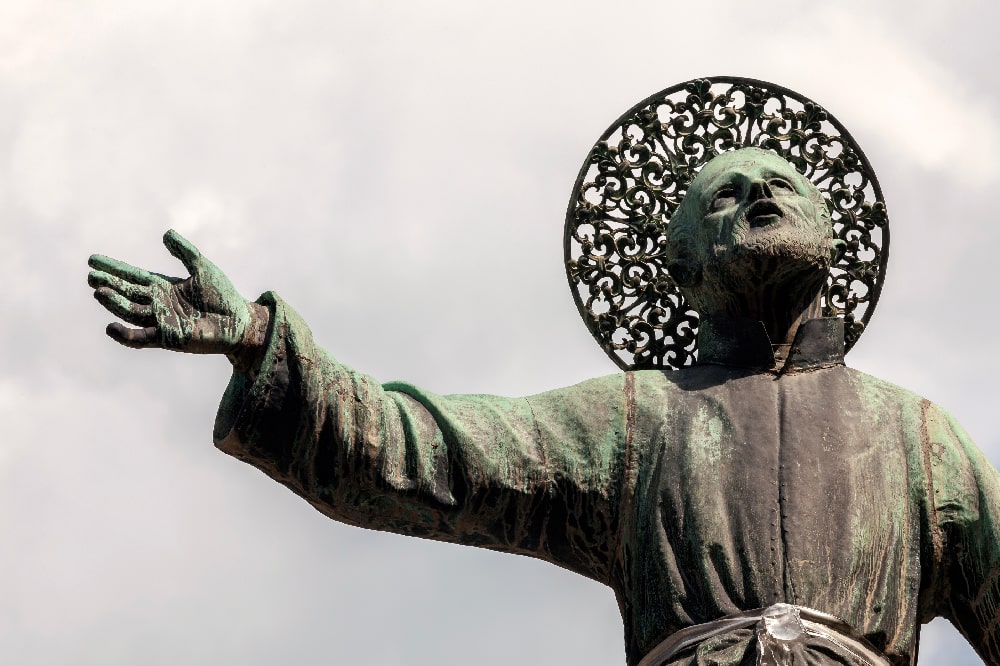
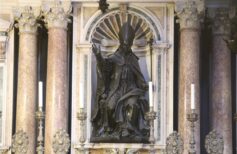
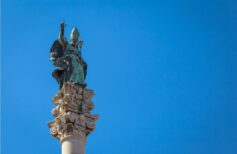
According to tradition, on Christmas night Saint Cajetan was praying before the manger of Bethlehem, kept in the Basilica of Saint Mary Major. While absorbed in prayer, he experienced a vision in which the Virgin Mary handed him the Infant Jesus, inviting him to hold the Child in his arms. This episode, depicted in numerous works of figurative art, such as the painting by Agostino Beltrano in the Church of the Holy Apostles, is said to have inspired the Saint to create a Nativity scene that everyone could see, from which they could draw inspiration to uplift their spirits and rejoice in the memory of the Saviour’s birth. It is no coincidence that the statue of Saint Cajetan, situated between the Basilica of San Paolo Maggiore and the Church of San Lorenzo Maggiore, faces Via San Gregorio Armeno, which still today is home to the workshops of the master craftsmen who create Neapolitan Nativity scenes.
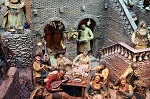
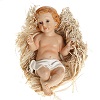
This department is entirely dedicated to statues of Baby Jesus in different shapes, sizes, colours and materials such as wood, wood paste, resin and plaster.
The Co-Patron Saint of Naples
Saint Cajetan of Thiene died in Naples in 1547 and, until the very end, devoted himself wholeheartedly to helping the people of Naples through evangelisation and social assistance. He expanded and improved the services of the Hospital of the Incurables and supported the establishment of the Monte di Pietà, which would later become the Banco di Napoli, the largest banking institution in Southern Italy.
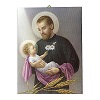
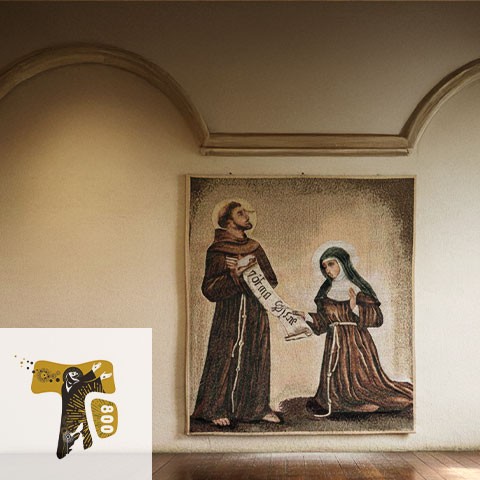
This traditional image from Fratelli Bonella’s archives is given a sense of spirituality by the artistic effect of canvas.
He also stood alongside the Neapolitan people during their most difficult times, working to defend the principles of freedom and protect people’s rights during periods of famine, unrest and violent repression.
Even when the Tribunal of the Inquisition was established in Naples, Saint Cajetan intervened to protect the people, who had risen up, going so far as to offer his own life to God in exchange for peace. He died worn out by hardship, deprivation and anxiety, but the people of Naples have never forgotten him.
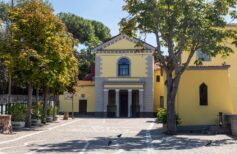
Today, Piazza San Gaetano in Naples, located in the heart of the historic centre, is a symbolic place of devotion to Saint Cajetan. The square is home to the Church of San Paolo Maggiore, a place of worship founded by the Theatines and dedicated to the Apostle Paul. Here, the faithful can still pray before the Saint’s remains, laid to rest in the crypt, and ask for his intercession.
Saint Cajetan is regarded as one of the co-patron saints of Naples, together with Saint Januarius. Every year, on 7 August, Naples celebrates the feast of Saint Cajetanwith processions, solemn Masses and expressions of popular devotion. He is also considered the protector of workers and the unemployed.
The statue is made of resin, a material that is better than PVC in terms of definition of lines and details, although it requires more care in being handled.
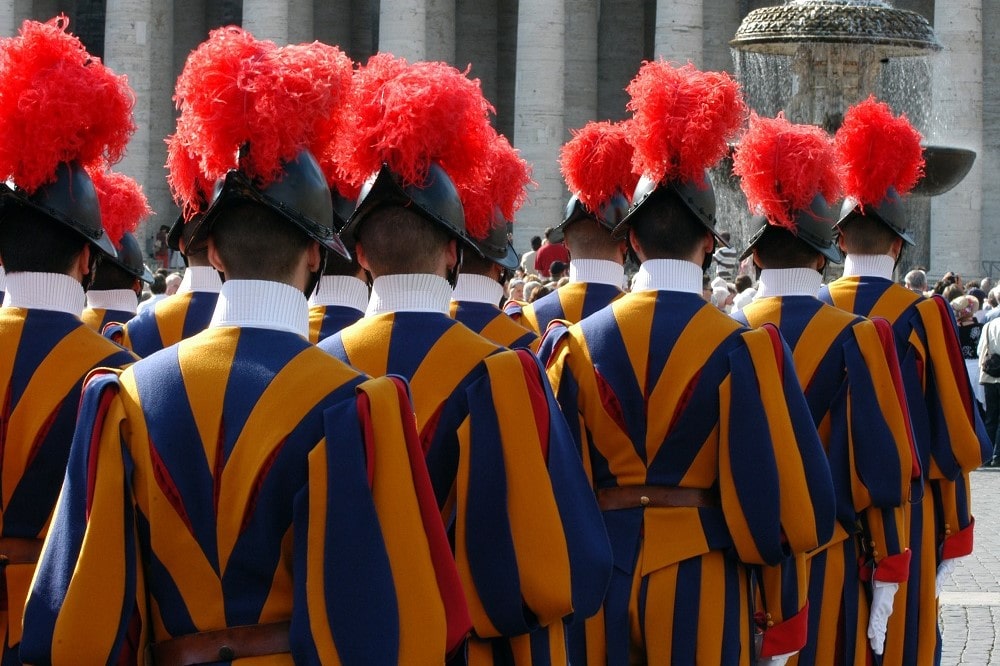
For five hundred years, the Swiss Guards have protected the Pope's security and watched over the Vatican. Here is who...
What’s the Future of Religion?
What’s the Future of Religion?
A Beginner’s Guide to Christianity
A Beginner’s Guide to Christianity
Mind-Blowing Statistics About Christianity You Need to Know
Mind-Blowing Statistics About Christianity You Need to Know
8520
Enter the Holyart world: $20 discount voucher valid on over 60,000 items
Come and discover Holyart, the largest e-commerce of religious articles in Europe and immediately receive a $20 voucher to use with your first purchase.
Check your mailbox: you will receive your discount within 5 minutes





 7 October 2026