The names of God are not only ways of addressing Him and venerating Him, but expressions of His essence and an attempt by humans to grasp His immeasurability.
The names of God are not merely terms, ways to define and make comprehensible something that would otherwise be too immense to be encompassed by human experience. Throughout history and across multiple spiritual traditions, humanity has assigned a vast array of names and attributes to its deities, evolving over the centuries in parallel with the development of civilisation. These attempts at definition reflect the relationship each person has with the Absolute, which human communities have always sought to rationalise.
Considering only the major monotheistic religions, in the Islamic world the term Allah is widely used as the primary name to indicate God. It represents the unity and completeness of God in Islam, emphasising His absolute divinity and His role as creator and custodian of the universe.
Jews maintain a respectful practice regarding the divine name, avoiding its direct pronunciation. Instead of naming Him, they address God with terms such as Hashem, meaning “The Name,” or during prayers use Adonai, which translates as “The Lord.” Only in sacred texts is the term YHWH, known as the Tetragrammaton, used to refer to God in a sacred and revered manner.
We must always consider the profound connections within the great monotheistic religions. It is enough to note that Allahshares historical and geographical roots with Eloah, the singular form of Elohim, one of the names used to define the God of the Jews in the Old Testament.
The names attributed to the God of Catholics also embody the various aspects of divine essence, offering different approaches and keys through which to observe and understand Him, always within the limits of human perception. These names carry deeper significance. Each reveals an aspect of God and can influence an individual’s personal relationship with Him. In Christian tradition, God is known through a variety of names emphasising different aspects of divinity. Father, Son, and Holy Spirit represent the Holy Trinity, while other names such as The Merciful, The Saviour, The Shepherd, and many others reveal specific facets of God’s nature and His relationship with humanity.
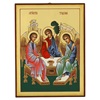
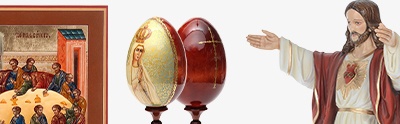
The hand painted icon on wood measures 38×32 cm. This icon is made in Romania, in a Romanian style, following the traditional iconographic technique.
The diversity of God’s names reflects the richness of human diversity and spiritual experiences. Each tradition offers a unique perspective on divinity, thereby enriching the global spiritual landscape. This diversity not only allows for broader exploration of spirituality but also provides opportunities to find points of contact and connection between different cultures and beliefs. Through mutual respect for the various names of God, a deeper interfaith dialogue can be promoted, along with a sense of unity among peoples. The names of God go beyond mere words, embodying profound meanings and intimate relationships with the divine. Exploring this diversity enriches both our individual spiritual experiences and fosters understanding and harmony in a world full of variety and plurality.
In the Old Testament and Jewish Tradition
In the Holy Scriptures, God is called by various names and titles. In many cases, the names of God in the Bible derive from Jewish tradition and culture, to which Catholicism owes much, foremost among them the already mentioned Tetragrammaton—the four letters of the Hebrew alphabet that, in sequence, form God’s proper name: YHWH, then Yahweh, in Italian Jahvè. The Tetragrammaton is used to define God in the Hebrew Bible and also in the Old Testament, where it appears more than six thousand eight hundred times. This is said to be the name God Himself used to define Himself when He appeared to Moses, and Moses asked how he should refer to Him before his companions. The Tetragrammaton derives from Ehyeh, “I Am,” first person of the verb haya, “to be,” and is a paraphrase of: “I am who I am” (Exodus 3:13–15). Over time, this became the official name of God for Jews and Christians, meaning “He who was, who is, and who will be.”
For many scholars, the meaning of this name is also associated with God’s creative activity, linking it to the definition of God the Father, widely used by Catholics in relation to the first person of the Holy Trinity.
Remaining within the Jewish sphere, we have already mentioned Adonai, “My Lord,” an attempt to encapsulate God’s immensity in a single, simple name. Less commonly used in sacred texts, yet highly evocative and significant, is Abba, “Papa,” present in Sirach and Psalm 103, evoking a concept of affectionate and tender fatherhood, portraying the God whose name cannot be pronounced, at least for Jews, as a loving father attentive to the welfare of His children.
In Christian Theology
For Christians, the name of God transcends, as we have seen, the simple concept of a name, term, or title. Within the name of God is contained His deepest manifestation, His very revelation. God’s name should not be taken in vain, and at the same time, it is sanctified every time we recite the Lord’s Prayer: “Hallowed be Thy Name.”
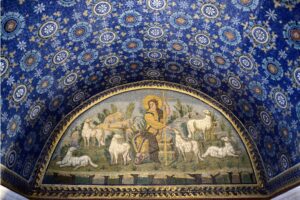
Jesus, defined as the Lamb of God, carries within Himself an emanation of the glorification of God’s name, just as in every action and word of Christ, during His brief sojourn on earth, we can observe ways to glorify the Father’s name.
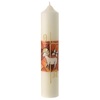
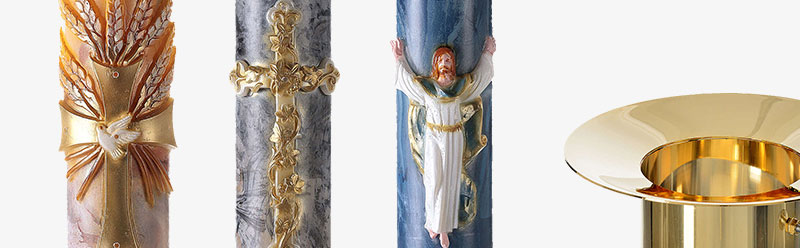
Hand decorated Paschal candle, depicting the Lamb of God with flag on a red background.
Attributes of God
In addition to the proper names used to define or address God in the Holy Scriptures, there are also numerous epithets, attributes, and titles. Besides the already mentioned Father, we have, for example: Mighty, Almighty, Eternal, Sovereign, Lord, Divine, Exalted. It is always in the Holy Scriptures that we find multiple references to the names of God. In particular, in the New Testament, the most important are: Theos (God), Kurios (Lord), and Pateras (Father).
Many of the attributes referring to God also derive from Jewish culture. In addition to the already cited:
The Lord and Master – Adonai
God the Father – Abba
The Name – YHVH
We also recall:
God – Elohim (the Creator, an attribute through which God is first revealed in the Bible)
Almighty God – El-Shaddai (the God of unlimited power and strength)
The Most High – El-Elyon (God Most High, Lord of heaven and earth)
The God Who Sees – El-Roï (God sees all and participates in our sufferings and struggles)
The God of Israel – El-Elohé-Israël (The Eternal of Hosts, the God of Israel)
The Jealous God – El-Kanna (“For I am God, and there is none else; I am God, and there is none like Me.” Isaiah 46:9)
The Living God – El-Haï (God, creator of life, is also the Living God)
The Eternal God – El-Olam (God has always existed, He was not created. “I am God. Before the beginning of time, I am always the same…” Isaiah 43:12–13)
The Eternal is One – YHVH Ehad (God is eternal and unique)
My Refuge – YHVH Misgav (“For You have been a refuge for the poor, a refuge for the needy in their adversity, a shelter against the storm, a shadow against the heat, for the breath of the tyrants is like a storm against the wall.” Isaiah 25:4)
Amen – Amen (expresses the truth and steadfastness of God. “These things says the Amen, the faithful and true Witness.” Revelation 3:14)
Many of these attributes of God contain the root EL, which means strong, almighty.
Sacred icons: genuine expressions of religiosity, symbolic works that transcend art. How are they painted? Discovering egg tempera Much of...
2 March 2026
What’s the Future of Religion?
What’s the Future of Religion?
A Beginner’s Guide to Christianity
A Beginner’s Guide to Christianity
Mind-Blowing Statistics About Christianity You Need to Know
Mind-Blowing Statistics About Christianity You Need to Know
8431
Enter the Holyart world: $20 discount voucher valid on over 60,000 items
Come and discover Holyart, the largest e-commerce of religious articles in Europe and immediately receive a $20 voucher to use with your first purchase.
Check your mailbox: you will receive your discount within 5 minutes