Homepage | Religion | Healing the person with paralysis: the meaning of the miracle
Healing the person with paralysis: the meaning of the miracle
16 March 2026
Reading Time: 5minutes
The healing of the paralytic in Capernaum is one of the many miracles of Jesus, but it contains a series of profound meanings worth exploring.
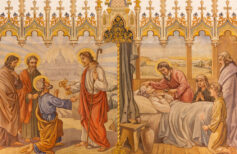
The healing of the paralytic of Capernaum is an episode described in the synoptic Gospels (Mk 2:1-12; Mt 9:1-8; Lk 5:17-26). According to the narrative, at the beginning of Jesus’ public life, the miraculous healing of a paralytic brought to him by some men occurred. Since they could not approach due to the crowd, they had lowered the sickbed from the uncovered roof of the house. Jesus didn’t just heal him; he said his sins were forgiven. This scandalised the Pharisees, who accused Jesus of blaspheming, for no one had the power to forgive sins except God. But Jesus rebuked them, claiming His power, as the Son of man, to forgive sins. Then he ordered the paralytic to take his bed and go home, and so it happened. But what meaning does this gospel story hide?
The healing of the paralytic of Capernaum and its meaning
The healing of the paralytic might seem like just one of manymiracles in Jesus’ story, then, but it’s fascinating because this episode can be interpreted in different ways. If, on the one hand, the healing of the paralytic demonstrates the power of Jesus to heal physical illnesses and perform miracles, strengthening His spiritual authority in the eyes of His followers, the focus of the episode can be shifted to the demonstration of faith by the men who brought the paralytic to Jesus, confident that He could heal him. Jesus’ response to the faith of the paralysed reflects His compassion and willingness to heal those who suffer, but also the importance He places on men who demonstrate compassion and solidarity with the sick or needy. In this sense, the carriers of the paralytic become the symbol of all those men who commit and invest time and energy to help those who are most in need, and, precisely because of their state of suffering, they are often left on the margins, unable to take part as they would like in community life. In this episode, the faith and commitment of those who help their neighbour are such that they open the roof to allow the sick person to be seen and healed by Jesus. It will be their determination and faith that will move Jesus. The Good News of the Gospel is a message of freedom and happiness offered to all men. This revolutionary news penetrates every corner, even if some try to obstruct it. Nothing can stop its healing and liberating power. Faith opens the roofs of houses and the doors of prisons, bringing hope and freedom to anyone who accepts it.
Another fundamental reading key in this story is the power of forgiveness of sins compared to healing from illness and pain. Jesus does not limit himself to healing man, but declares that his sins are forgiven, recognising in a certain way sin as the fundamental cause of human pain and suffering.
The relationship between sin and disease as a causal link is a complex and controversial issue within religious traditions. Some ancient theological views suggest that sin may be the direct cause of disease and suffering, while others interpret this connection more metaphorically or symbolically. In the Hebrew and Christian scriptures, there are instances in which sin is associated with disease or other forms of suffering. For example, in the Book of Job in the Old Testament, Job is afflicted with severe physical and mental suffering, and his three friends, Eliphaz, Bildad, and Sofar, express a firm belief in divine justice and in the idea that Job’s suffering is the direct result of his sins. They argue that Almighty God is always just and that Job’s suffering is a punishment for some hidden sin or transgression that he must have committed. According to their theological understanding, suffering is seen as a direct consequence of sinful actions and, therefore, they regard Job’s condition as an evident sign of his sin.
In the New Testament, Jesus directly addresses the question of the connection between sin and sickness. In some episodes, such as this one of the healing of the paralytic of Capernaum, Jesus associates physical healing with the forgiveness of sins. However, it is essential to note that Jesus does not always identify illness as a direct consequence of specific sins committed by the individual or his parents, as in the case of the man born blind (Jn 9:1-3). Also on that occasion, the disciples asked Jesus: “Rabbi, who has sinned, he or his parents, so that he was born blind?” and Jesus answered, “Neither he nor his parents sinned, but it is so that the works of God might be manifested in him.”
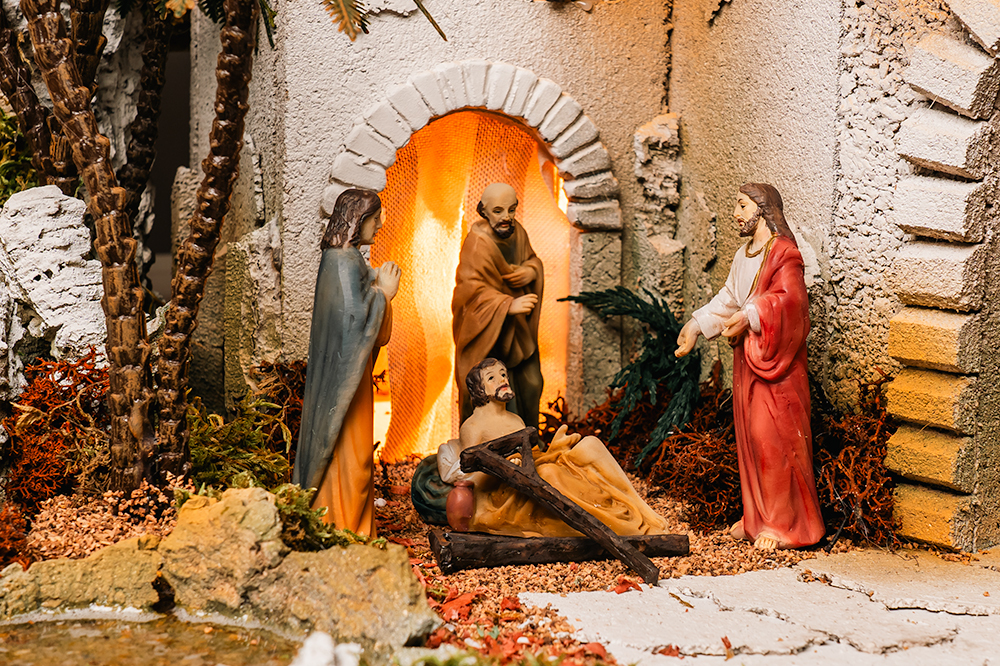
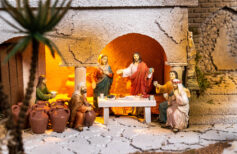
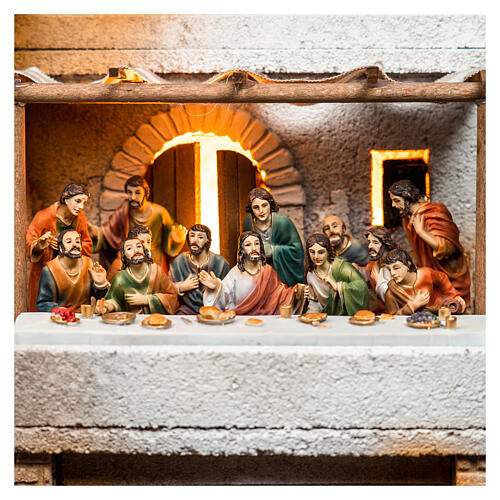
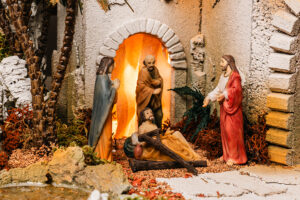
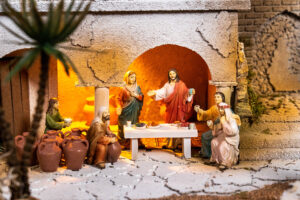
Statues representing a scene from the life of Christ.
Faced with the accusations of blasphemy by the Pharisees, Jesus replies that the forgiveness of sins is a test of great spiritual power, much more difficult than physical healing. Speaking the words “your sins are forgiven” may seem simple, but it requires an act of divine compassion and mercythat goes beyond physical healing. The gift of Christ is deeper than a miracle of healing. Forgiveness of sins heals the body through the soul; physical healing joins with spiritual forgiveness, emphasising the interconnectedness of body and soul and the depth of his ministry of redemption.
Considering the concept of paralysis, we can also read a further meaning, which goes beyond the physical limitation of the body. Soul paralysis can imprison individuals in various forms. Some are trapped in the prison of unjust reputation, while the mockery and condemnation of others block them. There is also the paralysis caused by evil, when you let yourself be guided by selfish desires or turn away from God. Jesus invites us to free ourselves from these chains, to move against what paralyses us and prevents us from living life to the full. God always responds to those who cry out to be freed from the paralysis of sin, offering them a hand to get up and start over.
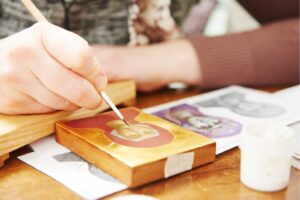
Sacred icons: genuine expressions of religiosity, symbolic works that transcend art. How are they painted? Discovering egg tempera Much of...
2 March 2026
What’s the Future of Religion?
What’s the Future of Religion?
A Beginner’s Guide to Christianity
A Beginner’s Guide to Christianity
Mind-Blowing Statistics About Christianity You Need to Know
Mind-Blowing Statistics About Christianity You Need to Know
8860
Enter the Holyart world: $20 discount voucher valid on over 60,000 items
Come and discover Holyart, the largest e-commerce of religious articles in Europe and immediately receive a $20 voucher to use with your first purchase.
Check your mailbox: you will receive your discount within 5 minutes