For many people, Saint Stephen’s Day is simply another holiday — less hectic than Christmas Eve, less demanding than Christmas Day. It’s a time to meet up with friends and relatives and to enjoy the leftovers from the festivities, perhaps taking the opportunity to relax a little. However, for Christians, it is not just an ordinary holiday. It is the day dedicated to the liturgical commemoration of Saint Stephen the Protomartyr, the first Christian who sacrificed his life to bear witness to his faith in Jesus and the Gospel.
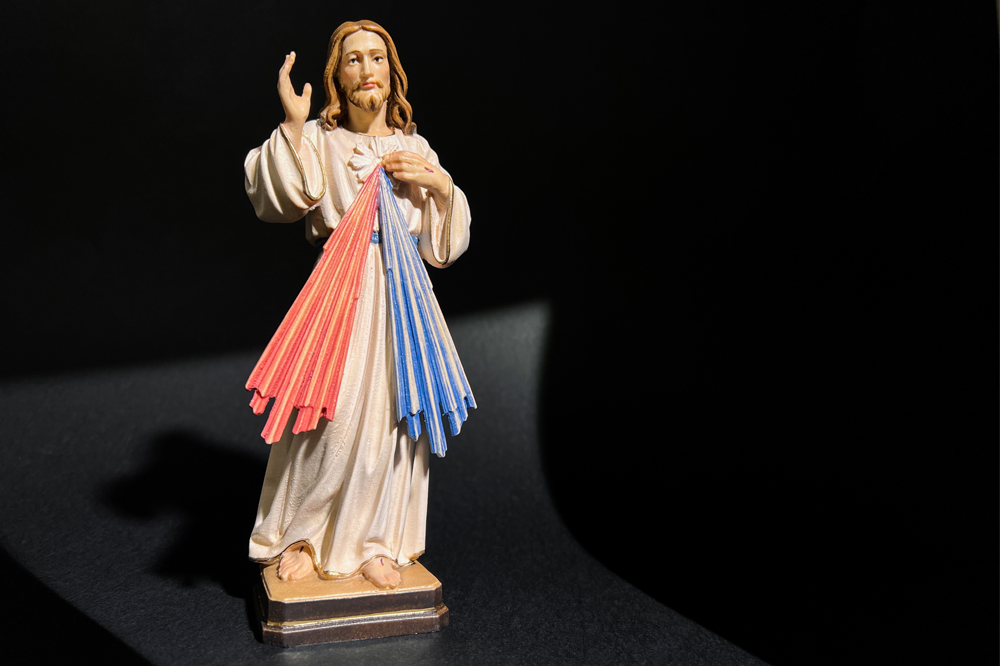
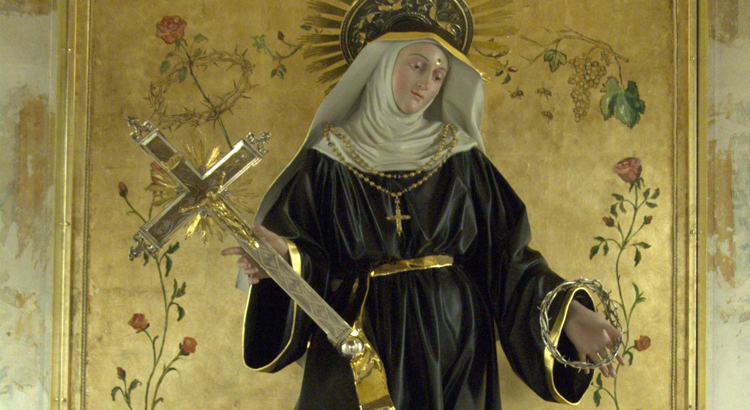
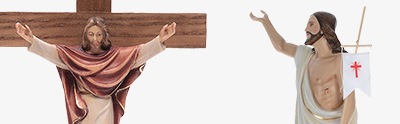
Statue in maple wood, hand painted by the artisans of Val Gardena.
Because he was the first to endure the accusations and anger of those who, hearing the words of the Gospel, were not ready to accept them. Before him, the Word spread by Jesus’ disciples had not yet claimed victims, nor had it been the cause of death for those who proclaimed it. Stephen was a young man full of faith and enthusiasm, to such an extent that the apostles asked him to help them organise the Christian community in Jerusalem. He accepted with joy and became the first of the seven deacons elected so that the apostles could focus solely on preaching the Gospel.
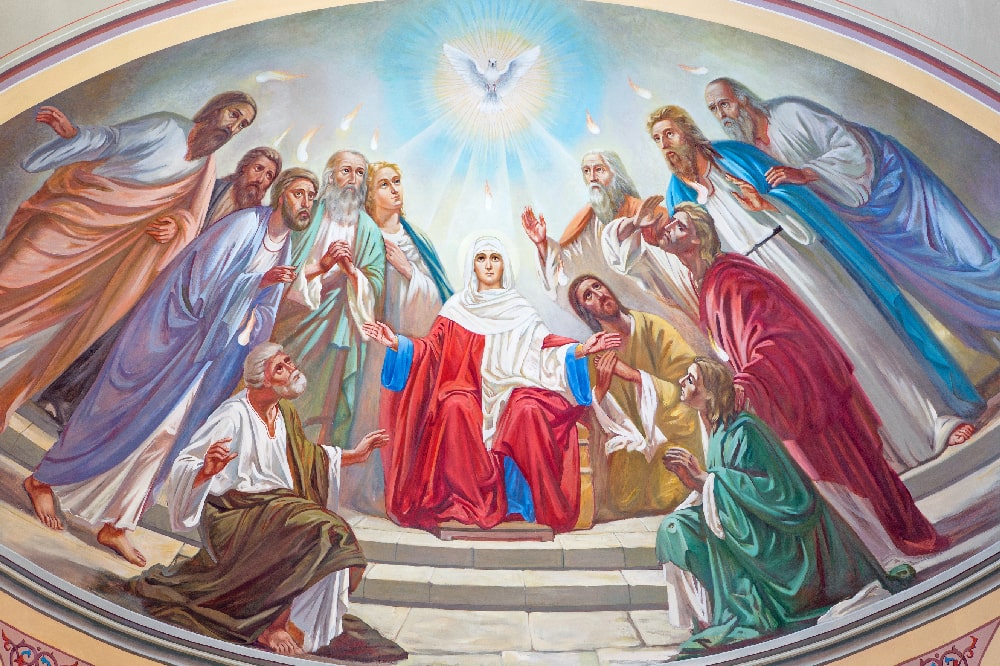
In the Acts of the Apostles, we read that although they were chosen by men and not by the Holy Spirit — as was the case with Jesus’ disciples present on the day of Pentecost — nevertheless, these seven deacons were no less “full of the Spirit and of wisdom” (Acts 6:3). Along with Stephen, Philip, Prochorus, Nicanor, Timon, Parmenas and Nicolaus of Antioch were also chosen. The Apostles laid their hands upon them all and blessed them.
Stephen paid dearly for his choice of faith. We know little about him: he was probably Greek (his name in Greek means “crowned”), or perhaps a Jew educated within Hellenistic culture. A man of learning, then, and of wisdom, who after being appointed deacon not only relieved the apostles of administrative duties, but also dedicated himself to evangelising and converting those who arrived in the city. Many miracles are also attributed to him.
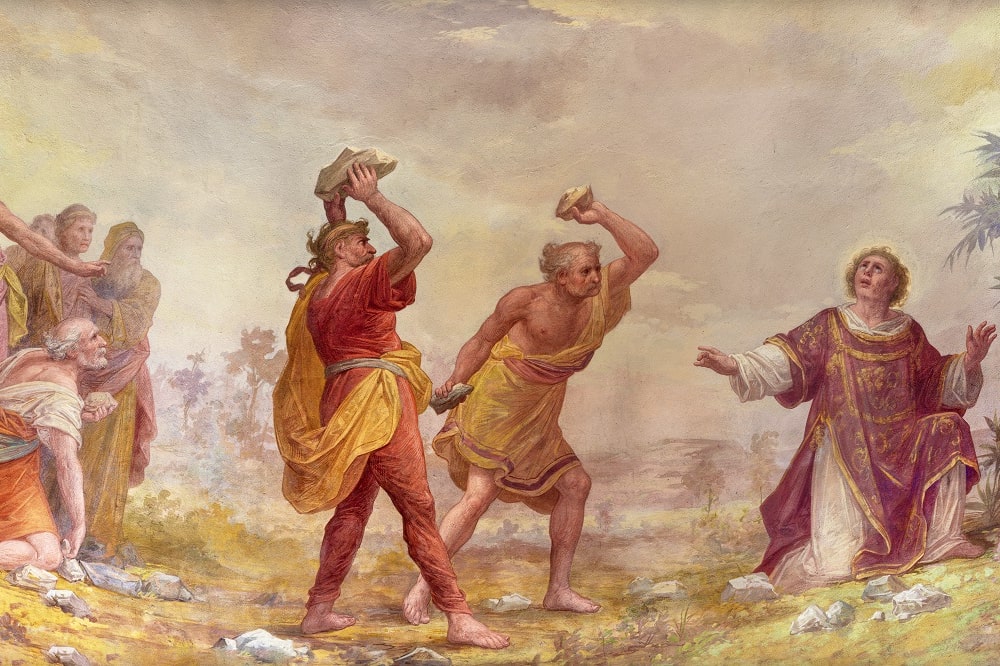
It was the Jews, angered by these conversions, who accused Stephen of blasphemy and stirred up the people against him. Dragged before the Sanhedrin, the young deacon replied to the false accusations made against him with a long speech in which he condemned those Jews who had been unable to recognise Jesus for who He was, despite the patriarchs and prophets having foretold and prepared His coming. This further inflamed their tempers, and Stephen was seized by the furious crowd and stoned to death.
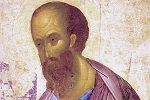
Among those who witnessed the lynching was Saul, who would later become one of the fiercest persecutors of Christians and, subsequently, Saint Paul of Tarsus — the Apostle to the Gentiles. Saul himself took an active part in the ruthless persecution unleashed against the Christians in Jerusalem immediately after Stephen’s death.
Read more:
Saint Paul of Tarso: story of a missionary
Saint Paul of Tarso can be considered the first great missionary of the Christian Church. His work as proselyte and contribution to spreading the Gospel throughout the Mediterranean…
The story of Stephen — his example of courage and self-sacrifice — shows how, from the very beginning, believing in the Gospel meant far more than simply trusting the words of a prophet, as had been the case with many who came before Jesus. The power of Jesus’ message is so revolutionary that it inspires fear in those who are not ready to embrace it, even arousing murderous hatred. Thus was born the concept of the martyr — a man or woman willing to endure unspeakable suffering and torment, and even death itself, to bear witness to their faith.
The Meaning of Protomartyr
The term Protomartyr, attributed to Saint Stephen, indicates that he was the first among Christians to face martyrdom. The word unites two Greek terms: πρῶτος (prōtos, “first”) and μάρτυς (martys, “witness [of faith]”).
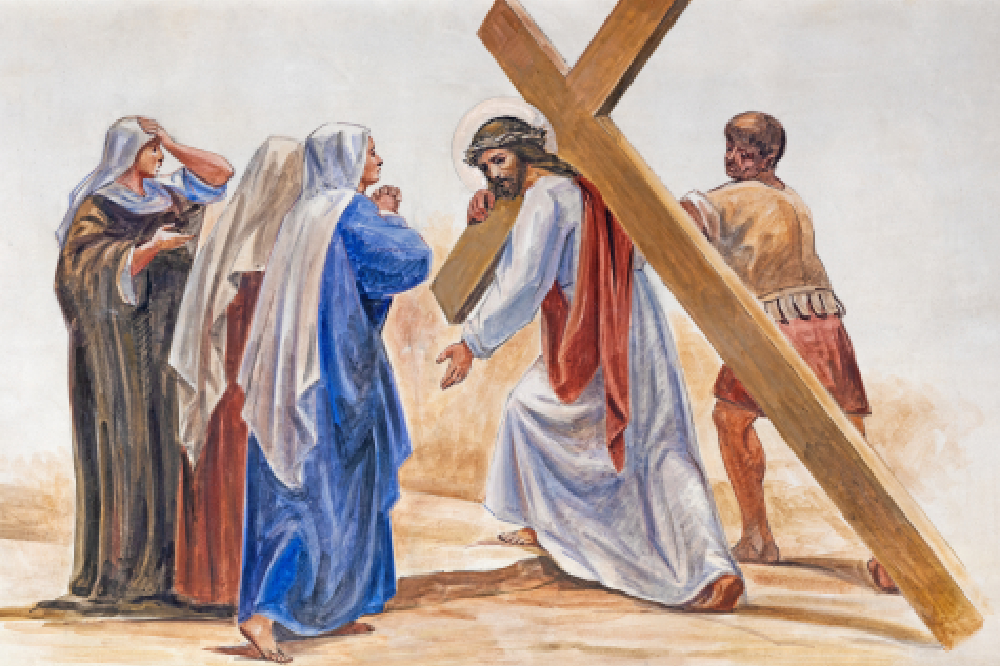
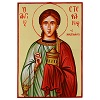
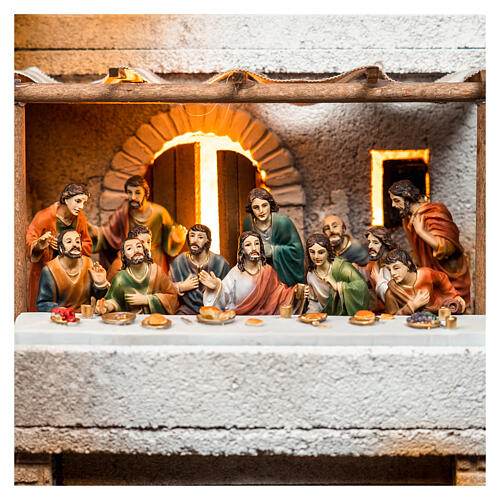
Made by Rumanian craftsmen and hand painted with tempera and gold leaf.
Why Is Saint Stephen’s Day Celebrated?
It is no coincidence that the feast of Saint Stephen falls so close to Christmas. In ancient times, it was decided that the day dedicated to celebrating the birth of Jesus should be followed by other feast days commemorating men who were especially close to Him — either because they knew Him personally, or because they played a role in spreading His word. These were the Comites Christi, the “Companions of Christ”, for in the Middle Ages it was imagined that this group of Saints formed the honour guard come to celebrate the Christ Child. This tradition had a strong appeal in popular devotion.
Christmas candles is the category dedicated to candles for Christmas to scent your home.
The Comites Christi are remembered during the so-called Octave of Christmas, the eight days between 25 December and 1 January. In particular, the three days immediately following Christmas are dedicated to:
Saint Stephen the Protomartyr (26 December)
Saint John the Apostle and Evangelist, the beloved disciple of Christ (27 December)
The Holy Innocents, Martyrs, the children killed by order of Herod (28 December)
In ancient times, the feast of Saints Peter and Paul, Apostles, also took place during the week after Christmas, but it was later moved to 29 June.
Since 1947, 26 December has been a public holiday in Italy. This was established to extend the Christmas celebrations by one day. The fact that this date coincides with the liturgical commemoration of Saint Stephen the Martyr is unrelated to this decision — though devotion to the young deacon has been deeply felt since ancient times.
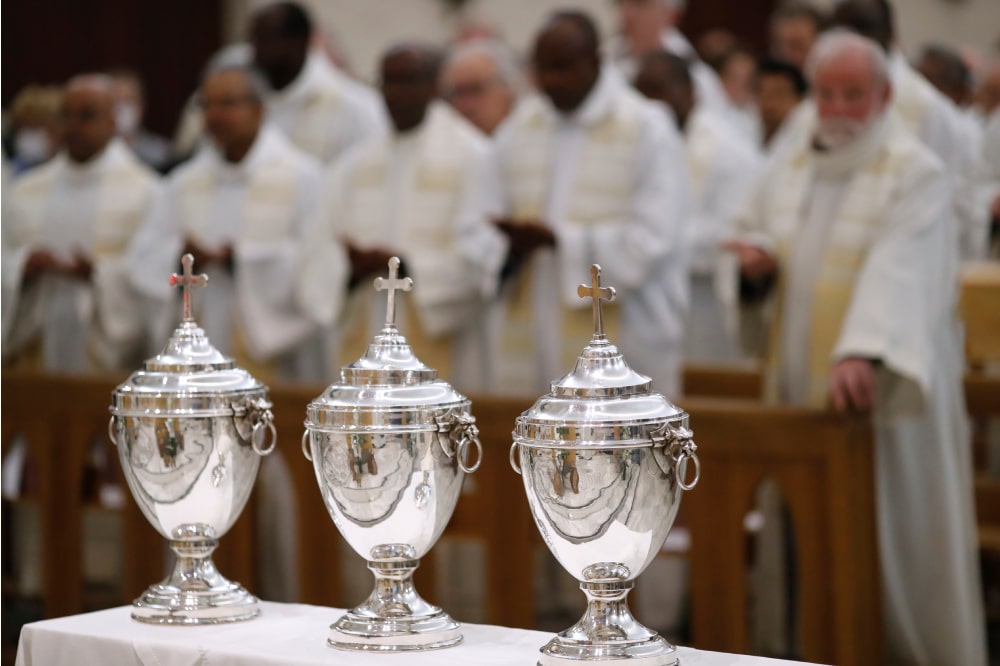
The chrism mass celebrates the mystery of the church, its unity and communion while waiting for Easter. It is also...
What’s the Future of Religion?
What’s the Future of Religion?
A Beginner’s Guide to Christianity
A Beginner’s Guide to Christianity
Mind-Blowing Statistics About Christianity You Need to Know
Mind-Blowing Statistics About Christianity You Need to Know
7681
Enter the Holyart world: $20 discount voucher valid on over 60,000 items
Come and discover Holyart, the largest e-commerce of religious articles in Europe and immediately receive a $20 voucher to use with your first purchase.
Check your mailbox: you will receive your discount within 5 minutes










 4 March 2026